Browse our range of reports and publications including performance and financial statement audit reports, assurance review reports, information reports and annual reports.
Performance audit (Auditor-General Report No. 19 of 2004–05)
Published: Friday 17 December 2004
Published
The objective of the Australian National Audit Office (ANAO) was to examine how the ATO manages its responsibilities under the Taxpayers' Charter as an important element of its performance. This involved an examination of the ATO's: systems and processes used to develop, maintain and update the Charter; strategic commitment to implementing the principles of the Charter; integration of Charter principles with its business processes; and monitoring and reporting of its performance against commitments in the Charter.
Entity
Australian Taxation Office
Performance audit (Auditor-General Report No. 35 of 2006–07)
Published: Wednesday 2 May 2007
Published
The audit objective was to assess whether the early stages of DIAC's preparations for the re-tendering of the detention and health services contracts were consistent with sound practice. The audit focused on governance arrangements, in particular the recordkeeping arrangements, roles and responsibilities of personnel, expert advisors and the probity auditor—matters raised in the previous audit report. The audit did not examine the RFT, which is not due to be issued until April 2007.
Entity
NO-DEPTS-LISTED
Performance audit (Auditor-General Report No. 7 of 2002–03)
Published: Monday 16 September 2002
Published
In 1997-98, the ANAO audited the Child Support Agency (CSA), making 12 recommendations to improve its operational performance. A related report by the Joint Committee of Public Accounts and Audit supported the general findings of the ANAO audit and reinforced three ANAO recommendations in its own report. The audit examined client service in the CSA by following-up the CSA's implementation of the recommendations contained in these two previous reports and more broadly assessing whether the CSA had improved the management and delivery of its client service sine the previous ANAO audit.
Entity
Department of Family and Community Services
Performance audit (Auditor-General Report No. 40 of 1996–97)
Published: Thursday 26 June 1997
Published
The ANAO's audit aims were to: examine the efficiency and effectiveness of DFAT's human resource management; and identify good practice, which could position the Department, and other APS agencies, to maximise opportunities afforded by the Government's emerging public sector reform agenda. The audit addressed a range of issues including the effectiveness of HR planning and forecasting, staff selection and deployment, performance management, and the fostering of relevant skills and knowledge.
Entity
Department of Foreign Affairs and Trade
Annual report
Published: Wednesday 30 September 2015
Published
This annual report documents the performance of the Australian National Audit Office (ANAO) in the financial year ending on 30 June 2015. It addresses the Requirements for Annual Reports for Departments, Executive Agencies and Other Non‑corporate Commonwealth Entities approved by the Joint Committee of Public Accounts and Audit in June 2015; the performance measures set out in the outcome and programs framework in the 2014–15 Portfolio Budget Statements; section 28 of the Auditor‑General Act 1997; and other annual reporting requirements set out in legislation.
Annual report
Published: Thursday 26 September 2002
Published
This annual report documents the performance of the Australian National Audit Office (ANAO) in the financial year ending on 30 June 2002. It includes a comment by the Auditor-General on Audit independence and effectiveness; an overview of the Auditor-General’s role and responsibilities; a report on performance; details about management and accountability, and the financial statement for the year.
Performance audit (Auditor-General Report No. 4 of 2002–03)
Published: Monday 19 August 2002
Published
The report summarises the audit and other related activities of the ANAO in the period January to June 2002. Key issues arising from performance audits tabled in this period are summarised. Appendix 1 of the Activity Report provides a short summary of each of the audits tabled between 1 January 2002 and 30 June 2002.
Entity
Audit Activity Report
Performance audit (Auditor-General Report No. 56 of 2003–04)
Published: Thursday 24 June 2004
Published
The objective of this audit was to assess the extent to which PV applications in Australia are processed in accordance with relevant laws and policies, and whether DIMIA employs appropoiate mechanisms to ensure compliance with those laws and policies.
Entity
Department of Immigration and Multicultural and Indigenous Affairs
Performance audit (Auditor-General Report No. 9 of 2005–06)
Published: Tuesday 6 September 2005
Published
The objective of this audit was to assess the provision of export assistance and support to new and irregular exporters in rural and regional Australia through the TradeStart program. The focus on rural and regional Australia reflects the priority given by the Government to providing effective business and trade assistance to small businesses and rural and regional businesses. However, broader aspects of TradeStart management, such as contract and risk management, have been assessed across the program as a whole.
Entity
Australian Trade Commission (Austrade)
Performance audit (Auditor-General Report No. 2 of 2003–04)
Published: Wednesday 13 August 2003
Published
The Audit Activity Report: January to June 2003 summarises the activity and outputs of the Australian National Audit Office for the second half of the 2002-03 reporting year. The Report outlines the key findings of performance and financial control audits, and summarises audits tabled and better practice guides published during January to June 2003.
Entity
Australian National Audit Office; Parliament
Performance audit (Auditor-General Report No. 11 of 2002–03)
Published: Thursday 3 October 2002
Published
The audit reviewed the effectiveness of HIC's approach to customer service delivery to the Australian public as customers of Medicare. The primary issues examined were whether: . HIC manages its customer service delivery performance effectively;
- HIC's approach to people management adequately supports customer service delivery;
- HIC obtains adequate information from customers on their needs, expectations, and perceptions of HIC's service delivery; and
- HIC provides adequate information to customers on its services and on the service standards that customers should expect.
Entity
Health Insurance Commission
Performance audit (Auditor-General Report No. 51 of 1999–2000)
Published: Thursday 29 June 2000
Published
The objective of the audit was to examine program management in the Training and Youth Division of the Department of Education, Training and Youth Affairs. In broad terms, the audit focused on the management frameworks at both Divisional and program level. Three of the Division's programs were selected for more detailed review as follows:
- Workplace English Language and Literacy;
- Literacy and Numeracy; and
- Support for New Apprentices.
Entity
Department of Education, Training and Youth Affairs
Performance audit (Auditor-General Report No. 27 of 2000–01)
Published: Friday 22 December 2000
Published
The audit was undertaken in the Training and Youth Division TYD) of the Department of Education, Training and Youth Affairs. The objective of the audit was to determine whether the application of Business Processing Reengineering(BPR) principles would identify improvements to the business processes of the TYD. The TYD was used in this audit to illustrate the application of BPR as a tool for agencies to identify efficiencies and enhance program effectiveness.
Entity
Department of Education, Training and Youth Affairs
Performance audit (Auditor-General Report No. 12 of 2004–05)
Published: Tuesday 19 October 2004
Published
The ANAO Audit Report No. 51 of 2001/02, Research Project Management, Commonwealth Scientific and Industrial Research Organisation, assessed the effectiveness of CSIRO in administering research projects to deliver required results. The audit made nine recommendations designed to improve project management in CSIRO. The purpose of this follow-up audit was to assess the extent to which CSIRO has implemented the recommendations of the previous audit and of the JCPAA.
Entity
Commonwealth Scientific and Industrial Research Organisation
Performance audit (Auditor-General Report No. 22 of 1996–97)
Published: Friday 13 December 1996
Published
The objective of the audit was to assess the Australian Taxation Office's approach to client service and the provision of particular client services to Individuals Non-Business clients. The INB business line deals primarily with the tax affairs of individual taxpayers. Audit criteria were developed which examined the ATO's:
- commitment to client service and understanding of client needs and expectations;
- client service strategy and delivery of client services and products; and
- measurement and achievement of service quality and client satisfaction.
Entity
Australian Taxation Office
Performance audit (Auditor-General Report No. 31 of 2002–03)
Published: Wednesday 5 March 2003
Published
This audit followed up the ANAO's 2000 performance audit report on retention of military personnel (Audit Report No.35 1999-2000 Retention of Military Personnel), which focused on examining whether ADF personnel management practices to retain personnel were commensurate with the cost of recruiting and training new personnel, or whether more cost- effective steps could be taken to reduce the separation rates of desirable personnel. The objective of the follow-up audit was to assess Defence's implementation of recommendations made in the original audit report and their effectiveness in helping Defence control the flow of trained personnel from the Services.
Entity
Department of Defence
Performance audit (Auditor-General Report No. 41 of 2002–03)
Published: Wednesday 7 May 2003
Published
Since 2000, there has been a requirement under the Environment Protection and Biodiversity Conservation Act 1999 (EPBC Act) for Commonwealth agencies to report annually on their environmental performance as well as their contribution to Ecologically Sustainable Development (ESD). The audit objective was to examine and report on the quality of Commonwealth agencies' annual reports on ESD and environment performance. The audit reviewed current practice in light of legal requirements, and provided examples of better practice.
Entity
Across Agency
Performance audit (Auditor-General Report No. 25 of 2007–08)
Published: Wednesday 27 February 2008
Published
The objective of the audit was to examine the effectiveness of the Department of Health and Ageing's administration of the Round the Clock Medicare: Investing in After Hours General Practice Services program.
Entity
Department of Health and Ageing
Performance audit (Auditor-General Report No. 22 of 2020–21)

Published: Thursday 10 December 2020
Published
The audit examined whether the COVID-19 National Medical Stockpile (NMS) procurement requirement was met through effective planning and governance arrangements.
Entity
Department of Health; Department of Industry, Science, Energy and Resources
Contact
Please direct enquiries through our contact page.
Performance audit (Auditor-General Report No. 12 of 2008–09)
Published: Wednesday 10 December 2008
Published
The audit objective was to assess the effectiveness of the implementation and administration of the AASC program by the ASC. The extent to which the ASC is able to determine that the program is achieving its objectives was also examined. Particular emphasis was given to the following areas:
- the implementation and the ongoing management of program; and
- the selection of sites and administration of grants funded under the program.
The elements of the Building a Healthy, Active Australia package undertaken by other agencies were not included in the scope of this audit.
Entity
Australian Sports Commission
Annual report
Published: Thursday 27 September 2012
Published
This annual report documents the performance of the Australian National Audit Office (ANAO) in the financial year ending on 30 June 2012. It presents an overview including the role and vision of the Office, a report on performance, details about management and accountability, and the financial results.
Performance audit (Auditor-General Report No. 36 of 2004–05)
Published: Wednesday 9 March 2005
Published
Given the importance of customer feedback to Centrelink's business, the ANAO considered it timely to conduct a series of performance audits relating to Centrelink's customer feedback systems, particularly in relation to its delivery of the services then provided on behalf of FaCS. The overarching objective of this series of ANAO performance audits of Centrelink's customer feedback systems was to assess whether Centrelink has effective processes and systems for gathering, measuring, reporting and responding effectively to customer feedback, including in relation to customer satisfaction with Centrelink services and processes.
Entity
Centrelink
Annual report
Published: Friday 30 September 2011
Published
This annual report documents the performance of the Australian National Audit Office (ANAO) in the financial year ending on 30 June 2011. It includes a foreword by the Auditor-General, an overview including the role and vision of the Office, a report on performance, details about management and accountability, and the financial results.
Performance audit (Auditor-General Report No. 18 of 2001–02)
Published: Thursday 1 November 2001
Published
The ANAO examined the performance information in the 2000-01 Portfolio Budget Statements (PBS) for a mix of ten small and large agencies. The objective of the audit was to assess the appropriateness of the performance information in the selected PBS, the reporting of performance information in annual reports and agency arrangements to identify and collect this information.
Entity
Across Agency
Annual report
Published: Thursday 16 October 2008
Published
This annual report documents the performance of the Australian National Audit Office (ANAO) in the financial year ending on 30 June 2008. It includes highlights and areas of focus for the coming year; a forward by the Auditor-General; an overview of the report; a report on performance; details about management and accountability, and the financial statement for the year.
Annual report
Published: Wednesday 28 September 2005
Published
This annual report documents the performance of the Australian National Audit Office (ANAO) in the financial year ending on 30 June 2005. It includes highlights and areas of focus for the year; a forward by the Auditor-General; an overview of the report; a report on performance; details about management and accountability, and the financial statement for the year.
Performance audit (Auditor-General Report No. 35 of 2004–05)
Published: Wednesday 9 March 2005
Published
Given the importance of customer feedback to Centrelink's business, the ANAO considered it timely to conduct a series of performance audits relating to Centrelink's customer feedback systems, particularly in relation to its delivery of the services then provided on behalf of FaCS. The overarching objective of this series of ANAO performance audits of Centrelink's customer feedback systems was to assess whether Centrelink has effective processes and systems for gathering, measuring, reporting and responding effectively to customer feedback, including in relation to customer satisfaction with Centrelink services and processes.
Entity
Centrelink
Performance audit (Auditor-General Report No. 62 of 2002–03)
Published: Monday 30 June 2003
Published
The objectives of the audit was to examine the effectiveness and efficiency of DIMIA's decision-making processes and management systems for delivering the parent and partner aspects of the family stream of the Migration Program.
The family stream of Australia's Migration Program enables the reunion of immediate family members of Australian citizens, permanent residents or eligible New Zealand citizens. It consists of four main categories;
- Partner;
- Child;
- Parent; and
- Other family.
Entity
Department of Immigration and Multicultural and Indigenous Affairs
Performance audit (Auditor-General Report No. 35 of 1998–99)
Published: Monday 19 April 1999
Published
The audit objective was to determine the DVA's performance in the economy, efficiency and administrative effectiveness of the delivery of income support payments to veterans and war widows. It was found that overall, DVA is paying the correct pension to the correct people in a timely fashion within the required accuracy levels.
Entity
Department of Veterans' Affairs
Performance audit (Auditor-General Report No. 12 of 2001–02)
Published: Thursday 20 September 2001
Published
The objective of the audit was to provide assurance to Parliament on effectiveness of FMIS implementations by:
- evaluating the effectiveness of selection and implementation management; and
- evaluating whether the implemented FMIS met the needs of agencies.
Entity
Across Agency
Annual report
Published: Wednesday 16 September 2009
Published
This annual report documents the performance of the Australian National Audit Office (ANAO) in the financial year ending on 30 June 2009. It includes a foreword by the Auditor-General, an overview of the Office, a report on performance, details about management and accountability, and the financial results.
Performance audit (Auditor-General Report No. 12 of 2009–10)
Published: Thursday 19 November 2009
Published
The audit objective was to assess the effectiveness of administrative arrangements for YA, including service delivery. The ANAO assessed DEEWR's and Centrelink's performance against three main criteria:
- objectives and strategies for the ongoing management and performance measures for YA provide a firm basis for measurement against outcomes (Chapters 2 and 3);
- YA services delivered are consistent with legislative and policy requirements, (Chapter 4); and
- monitoring arrangements provide appropriate information for assessing service delivery performance (Chapter 5).
Entity
Department of Education, Employment and Workplace Relations; Centrelink
Annual report
Published: Wednesday 19 September 2007
Published
This annual report documents the performance of the Australian National Audit Office (ANAO) in the financial year ending on 30 June 2007. It includes highlights and areas of focus for the coming year; a forward by the Auditor-General; an overview of the report; a report on performance; details about management and accountability, and the financial statement for the year.
Annual report
Published: Thursday 7 September 2006
Published
This annual report documents the performance of the Australian National Audit Office (ANAO) in the financial year ending on 30 June 2006. It includes highlights and areas of focus for the coming year; a forward by the Auditor-General; an overview of the report; a report on performance; details about management and accountability, and the financial statement for the year.
Annual report
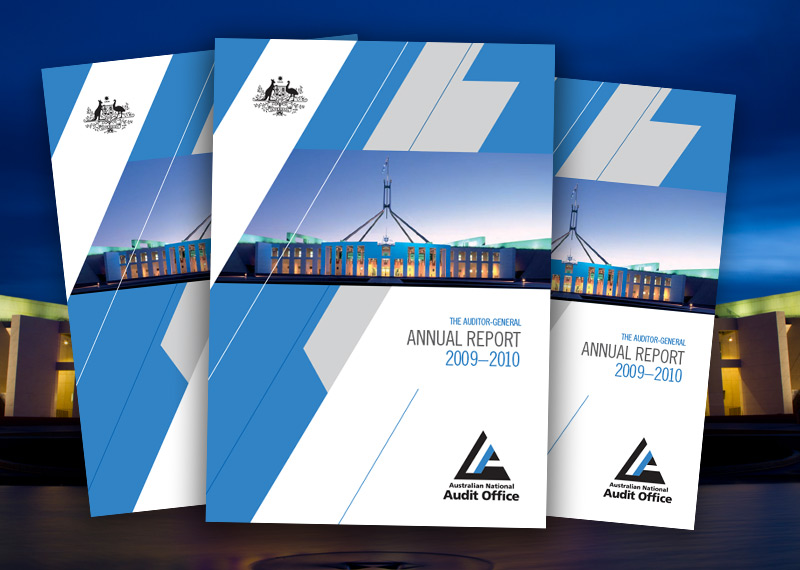
Published: Thursday 30 September 2010
Published
This annual report documents the performance of the Australian National Audit Office (ANAO) in the financial year ending on 30 June 2010. It includes a foreword by the Auditor-General, an overview including the role and responsibilities and vision of the Office, a report on performance, details about management and accountability, and the financial results.
Performance audit (Auditor-General Report No. 29 of 2002–03)
Published: Friday 7 February 2003
Published
The Audit Activity Report: July-December 2002 summarises performance audit, financial audit and other related activities for the ANAO for the period. The key issues arising from the performance audits are summarised against the ANAO themes. The appendices in the report provide a short summary of each of the audits tabled for this period, the audits in progress as at 1 January 2003 and a list of the presentations and papers given by the Auditor-General and ANAO staff.
Entity
Audit Activity Report
Performance audit (Auditor-General Report No. 11 of 2000–01)
Published: Friday 15 September 2000
Published
The audit reviewed Defence's higher-level management of its knowledge system equipment acquisition projects. These amount to $8.5b. The focus of the audit was on the opportunities for Defence to adopt a much more coherent and integrated approach to knowledge systems management prospectively rather than on emphasising current system compatibility issues.
Entity
Department of Defence
Performance audit (Auditor-General Report No. 31 of 1998–99)
Published: Thursday 18 February 1999
Published
While recognising the diversity of administrative requirements for different special payments, the audit provides a basis for comparison of performance across 14 different agencies in 1997-98 and progress made since the then Joint Committee of Public Accounts report 342 The administration of specific purpose payments. The objectives of the audit were to:
- identify and benchmark current practices in the management of performance information within SPP agreements;
- document the lessons learned including better practice from different agencies;
- provide a longitudinal analysis of progress since 1995; and
- provide practical guidance for the development and implementation of appropriate performance information systems and accountability.
Entity
Across Agency
Performance audit (Auditor-General Report No. 1 of 2008–09)
Published: Tuesday 5 August 2008
Published
The objective of the audit was to assess the effectiveness of DFAT's employment and management of its LES at Australia's overseas missions. In particular, the audit examined arrangements for: planning and risk management; guidance and training; recruitment, engagement and employment of LES; and performance management.
Entity
Department of Foreign Affairs and Trade
Performance audit (Auditor-General Report No. 14 of 2001–02)
Published: Friday 28 September 2001
Published
The objective of this follow-up audit was to assess Austrade's implementation of the recommendations contained in ANAO Report No. 4 of 1998-99 (Client Service Initiatives - Australian Trade Commission (Austrade)), and whether the implementation of the recommendations or appropriate alternative measures has improved the management and delivery of Austrade's client service.
Entity
Australian Trade Commission
Performance audit (Auditor-General Report No. 37 of 2004–05)
Published: Thursday 10 March 2005
Published
The objectives of this audit were to examine the management of business support service contracts in selected agencies to: assess the effectiveness of business support service contract management in the transition, ongoing management and monitoring and succession planning stages of the contract management lifecycle; and identify examples of better practice and opportunities for improvement for individual agencies and Australian Government agencies more broadly.
Entity
Australian Industrial Registry; ComSuper; Family Court of Australia; IP Australia; Department of Finance and Administration
Performance audit (Auditor-General Report No. 16 of 2010–11)
Published: Thursday 25 November 2010
Published
The objective of the audit was to assess whether, in relation to appeals to the SSAT and the AAT, Centrelink undertakes its role effectively, so as to support the timely implementation of the Tribunals' decisions about customers' entitlements. In assessing Centrelink's performance, the ANAO examined whether:
- the information provided by Centrelink, in relation to appeals to the SSAT and the AAT, effectively supported customers' and Tribunals' decision-making;
- the relationships and administrative arrangements between Centrelink, DEEWR and FaHCSIA supported the effective management of the appeal process and the capture of issues that may have broader implications for legislation, policy and service delivery; and
- Centrelink implemented SSAT and AAT decisions in an effective and timely manner.
The audit focused on the external review and appeal mechanisms and completes the cycle of audits on Centrelink's review and appeal system. The audit examined those appeals where an implementation action was required and did not consider SSAT and AAT appeals that were dismissed, withdrawn or were not within the Tribunals' jurisdiction.
Entity
Centrelink; Department of Education, Employment and Workplace Relations; Department of Families, Housing, Community Services and Indigenous Affairs
Performance audit (Auditor-General Report No. 36 of 2008–09)
Published: Thursday 21 May 2009
Published
The objective of the audit was to assess the effectiveness of the Department of Immigration and Citizenship's management of the Settlement Grants Program. The ANAO assessed DIAC's performance in terms of how effectively it planned for funding rounds, assessed and allocated grants, monitored and evaluated the program, and managed relationships with its stakeholders. In doing so, the ANAO focused on SGP projects that received funding in the 2007–08.
Entity
Department of Immigration and Citizenship
Annual report
Published: Tuesday 28 September 2004
Published
This annual report documents the performance of the Australian National Audit Office (ANAO) in the financial year ending on 30 June 2004. It includes highlights and areas of focus for the year; an introduction by the Auditor-General; an overview of the report; a report on performance; details about management and accountability, and the financial statement for the year.
Performance audit (Auditor-General Report No. 2 of 1998–99)
Published: Friday 10 July 1998
Published
The Audit reviewed the Commercial Support Program (CSP) within the Department of Defence. The CSP was introduced in 1991 following a review of the report, The Defence Force and the Community. Its objective is to achieve best value for money in the acquisition of support services for the Department of Defence and to give the private sector an opportunity to participate in the provision of those support services. The objective of this audit was to assess whether CSP was meeting its objectives and to identify any areas where it may be possible to improve the timeliness, and therefore cost-effectiveness, with which CSP is implemented and the quality of the process itself to produce better outcomes.
Entity
Department of Defence
Performance audit (Auditor-General Report No. 51 of 2001–02)
Published: Thursday 23 May 2002
Published
The objective of this audit was to assess the effectiveness of CSIRO in administering research projects to deliver required results. In particular, the audit examined:
- structures for project management in CSIRO;
- the alignment of project with strategic objectives;
- the adequacy of project planning; and
- CSIRO's approach to assessing project outcomes.
Entity
Commonwealth Scientific and Industrial Research Organisation
Performance audit (Auditor-General Report No. 17 of 2004–05)
Published: Wednesday 15 December 2004
Published
The objective of the Australian National Audit Office (ANAO) was to examine and report on the planning and corporate governance for the new regional delivery model of the National Action Plan for Salinity and Water Quality (NAP) program, jointly administered by the Department of Agriculture, Fisheries and Forestry and the Department of the Environment and Heritage (the Agencies)
Entity
Department of Agriculture Fisheries and Forestry; Department of the Environment and Heritage
Performance audit (Auditor-General Report No. 5 of 1997–98)
Published: Friday 17 October 1997
Published
The objective of this audit was to ascertain whether Defence performance management strategies and practices contribute to the effective and efficient management of the supply chain. In particular, it focussed on examining the extent to which the latter demonstrate identified world-class practices.
Entity
Department of Defence
Performance audit (Auditor-General Report No. 20 of 1997–98)
Published: Thursday 4 December 1997
Published
The objective of the audit was to ascertain how efficiently and effectively the ATO administers sales tax collections. The audit excluded an examination of the Australian Customs Service's sales tax administration, although it did examine coordination and liaison arrangements between the ATO and ACS. The audit approach involved analysing the ATO's performance against the five elements of the ATO's established compliance improvement process, namely:
- interpreting and clarifying sales tax law;
- identifying and understanding clients and markets (enabling tax officers to identify and analyse risks of non-compliance);
- providing education and information to clients regarding sales tax obligations, based on identified compliance risks;
- implementing administrative arrangements which ensure and/or assist taxpayers to meet their obligations; and
- detecting non-compliance and taking action to remedy instances of non-compliance.
Entity
Australian Taxation Office
Performance audit (Auditor-General Report No. 3 of 2002–03)
Published: Wednesday 31 July 2002
Published
HMAS Cerberus is a Navy base situated south-east of Melbourne, Victoria. As a major Navy training establishment, it conducts initial recruit training, and specialist category training in areas such as communications and engineering. The Australian Defence Force (ADF) Schools of Catering and Physical Training are situated there, as is a major health centre for operational and training needs. The health centre and other facilities at HMAS Cerberus were re-developed several years ago. In August 2001, the then Minister for Defence announced that, in response to continuing concern over facilities management at HMAS Cerberus, he had asked the Australian National Audit Office (ANAO) to conduct an independent investigation. The ANAO agreed to review these matters. The objective of the audit was to examine facilities management issues at HMAS Cerberus with a view to clarifying those of concern and ensuring that lessons would be learned from them to assist Defence facilities management generally.
Entity
Department of Defence
Performance audit (Auditor-General Report No. 29 of 2012–13)
Published: Tuesday 30 April 2013
Published
The audit objective was to assess the effectiveness of the Department of Veterans’ Affairs (DVA) administration of the veterans’ children education schemes.
Entity
Department of Veterans' Affairs
Performance audit (Auditor-General Report No. 21 of 2008–09)
Published: Tuesday 10 February 2009
Published
This audit focused on the approval of business system projects -projects aiming to achieve a business objective such as reduced costs or to implement a new program, in contrast with projects with a narrower technology focus such as replacing an agencyʹs desktop computers.
Entity
Department of Education, Employment and Workplace Relations; Department of Health and Ageing; Department of Veterans' Affairs
Performance audit (Auditor-General Report No. 27 of 2007–08)
Published: Wednesday 16 April 2008
Published
The objective of the audit was to assess how well EMA is meeting its objective of providing national leadership in the development of measures to reduce risk to communities and manage the consequences of disasters.
Entity
Attorney-General's Department
Performance audit (Auditor-General Report No. 10 of 2005–06)
Published: Friday 23 September 2005
Published
The audit objective was to examine the adequacy of Defence's and DMO's management of the nearly completed elements of Project Air 5276. The ANAO identified a number of causes for time delays and cost escalation in those elements. Those causes are outlined in the overall audit conclusions, to assist in the achievement of improvements in future planning and management of capital equipment acquisitions.
Entity
Department of Defence
Performance audit (Auditor-General Report No. 18 of 1998–99)
Published: Monday 7 December 1998
Published
Consistent with the ANAO's practices, and in response to a request from AusAID, a follow-up audit was conducted in the period May to November 1998 to assess the extent of implementation of the recommendations of a 1996 audit into the Management of Funding to Non-Government Organisations (NGOs)and whether the implementation of recommendations has effectively improved the management of funding to NGOs. The ANAO examined AusAID's key funding accountability documentation, tested the revised accountability arrangements and consulted a number of key stakeholders, including NGO representatives.
Entity
Australian Agency for International Development (AusAID)
Performance audit (Auditor-General Report No. 40 of 2007–08)
Published: Wednesday 11 June 2008
Published
The objective of this audit was to assess the Tax Office's implementation of the nine recommendations of Audit Report No.19 2004–05 Taxpayers' Charter, having regard to any changed circumstances affecting the implementation of the recommendations. This involved an examination of the Tax Office's:
- systems and processes used to develop, maintain and update the Charter;
- strategic commitment to implementing the principles of the Charter;
- integration of Charter principles with its business processes;
- systems for resolving disputes according to Charter principles; and
- monitoring and reporting of its performance against commitments in the Charter.
Entity
Australian Taxation Office
Speeches and papers
Published: Monday 15 October 2007
Published
Mr Ian McPhee - Auditor-General for Australia, presented at the Australian Institute of Project Management, Hobart
Performance audit (Auditor-General Report No. 41 of 2004–05)
Published: Friday 15 April 2005
Published
The objective of the audit was to evaluate the policies and practices of selected organisations to determine whether they had established sound arrangements for, and maintained effective control over, the administration of security incidents and investigations.
Entity
Australian Crime Commission; Australian Customs Service; Australian Maritime Safety Authority; Child Support Agency; Department of Finance and Administration; Attorney-General’s Department
Speeches and papers
Published: Friday 24 November 1995
Published
Mr P.J. Barrett (AM) - Auditor-General for Australia, presented to the ASCPA Annual Public Sector Accounting Convention, Canberra
Performance audit (Auditor-General Report No. 9 of 2002–03)
Published: Monday 30 September 2002
Published
The objective of the audit was to assess whether Centrelink's Balanced Scorecard (BSC) was based on key elements of better practice principles and its use assisted Centrelink to understand and communicate its performance against its strategic goals. The audit examined:
- the use of the BSC in setting Centrelink's vision and goals;
- the role of the BSC in planning;
- alignment of the BSC from the top down through the organisation and the interdependencies of scoreboards used by various support units, the definition and use of measures, including target setting and links to goals within the BSC framework; and
- its use in monitoring, reporting and feedback.
Entity
Centrelink