Browse our range of reports and publications including performance and financial statement audit reports, assurance review reports, information reports and annual reports.
This page lists completed performance audit reports. View all performance audits in-progress.
Performance audit (Auditor-General Report No. 21 of 2009–10)
Published: Thursday 4 February 2010
Published
The objective of this audit was to assess whether the WSA program has been administered effectively by the NWC/DEWHA, as relevant, and is achieving its stated program objective. Specifically, the ANAO examined whether:
- funding proposals have been assessed and approved in a fair, consistent manner and in accordance with applicable criteria, program guidelines and better practice;
- appropriate funding arrangements have been established with proponents, having regard to the size of the grant, the type of entity involved and the nature of the project; and
- DEWHA (and previously the NWC) is actively monitoring whether proponents are complying with their obligations, and grant payments are made only in accordance with funding agreements.
More broadly, the audit examined DEWHA's strategy for evaluating and reporting on the long-term benefits of the program.
Entity
Department of the Environment, Water, Heritage and the Arts; National Water Commission
Performance audit (Auditor-General Report No. 12 of 2008–09)
Published: Wednesday 10 December 2008
Published
The audit objective was to assess the effectiveness of the implementation and administration of the AASC program by the ASC. The extent to which the ASC is able to determine that the program is achieving its objectives was also examined. Particular emphasis was given to the following areas:
- the implementation and the ongoing management of program; and
- the selection of sites and administration of grants funded under the program.
The elements of the Building a Healthy, Active Australia package undertaken by other agencies were not included in the scope of this audit.
Entity
Australian Sports Commission
Performance audit (Auditor-General Report No. 20 of 2010–11)
Published: Tuesday 14 December 2010
Published
The objective of the audit was to assess the effectiveness of the Tax Office's administration of the wine tax.
Four key areas were examined in the audit: governance arrangements; interpretative assistance and advice; compliance approaches for Australian entities; and administering the rebate for New Zealand wine producers.
The ANAO conducted fieldwork in the Tax Office's Adelaide office between May and September 2010 and also held discussions with representatives from Customs, the Department of the Treasury (Treasury) and New Zealand Inland Revenue. The ANAO also consulted with representatives of wine producers, wholesalers, retailers, tax agents and key industry associations, seeking their views on elements of the Tax Office's administration of the wine tax.
Entity
Australian Taxation Office
Performance audit (Auditor-General Report No. 9 of 2011–12)
Published: Thursday 20 October 2011
Published
The audit objective was to assess the extent to which DEEWR and FaHCSIA have effectively managed the planning and consultation phases for the IBF program and the IBHP program. The audit scope included consideration of the issues likely to affect the ongoing operation and sustainability of the facilities.
Entity
Department of Education, Employment and Workplace Relations; Department of Families, Housing, Community Services and Indigenous Affairs; Aboriginal Hostels Limited; Northern Territory Department of Education and Training
Performance audit (Auditor-General Report No. 46 of 2003–04)
Published: Thursday 20 May 2004
Published
The objective of the audit was to examine and report on the economy, efficiency and effectiveness of the courts' client service arrangements for family law clients. The audit also assessed the effectiveness of the coordination between the two courts, and of their administration of Primary Dispute Resolution (PDR) services.
Entity
Family Court of Australia; Federal Magistrates Court
Performance audit (Auditor-General Report No. 26 of 2015–16)
Published: Tuesday 15 March 2016
Published
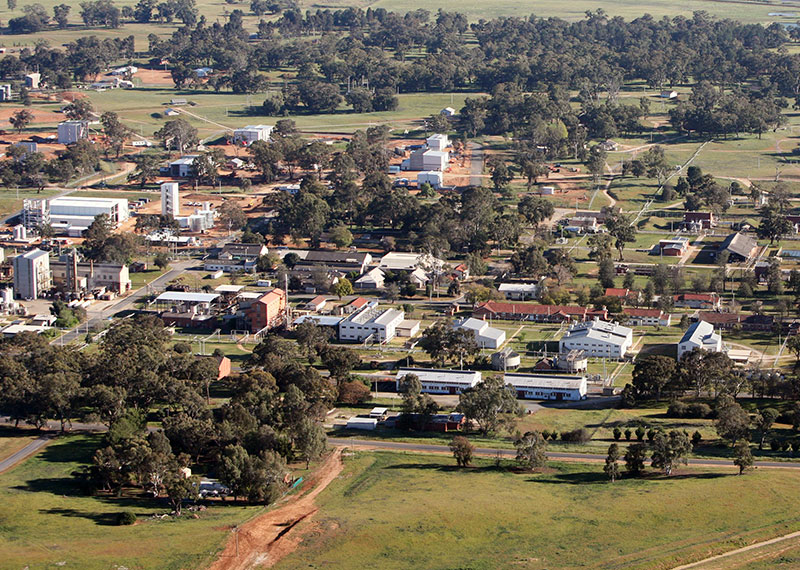
The audit objective is to assess the effectiveness of the Department of Defence's management of the Mulwala Redevelopment Project.
Entity
Department of Defence
Contact
Please direct enquiries relating to reports through our contact page.
Performance audit (Auditor-General Report No. 1 of 2003–04)
Published: Thursday 31 July 2003
Published
The audit objective was to assess the adequacy of the Commonwealth's administration of three key components of the Agriculture - Advancing Australia package: the FarmBis II program, the Farm Help program and the Farm Management Deposits scheme. Broadly, the audit examined the areas of strategic management, managing compliance, program promotion, performance monitoring and evaluation, and performance results.
Entity
Department of Agriculture, Fisheries and Forestry; Centrelink; Australian Taxation Office
Performance audit (Auditor-General Report No. 9 of 2005–06)
Published: Tuesday 6 September 2005
Published
The objective of this audit was to assess the provision of export assistance and support to new and irregular exporters in rural and regional Australia through the TradeStart program. The focus on rural and regional Australia reflects the priority given by the Government to providing effective business and trade assistance to small businesses and rural and regional businesses. However, broader aspects of TradeStart management, such as contract and risk management, have been assessed across the program as a whole.
Entity
Australian Trade Commission (Austrade)
Performance audit (Auditor-General Report No. 36 of 2012–13)
Published: Tuesday 21 May 2013
Published
The objective of the audit was to assess the effectiveness of the Commonwealth Environmental Water Office’s administration of environmental water holdings.
Entity
Department of Sustainability, Environment, Water, Population and Communities
Contact
Please direct enquiries relating to reports through our contact page.
Performance audit (Auditor-General Report No. 43 of 2005–06)
Published: Wednesday 31 May 2006
Published
The overall objective of the audit was to assess whether the RSS Programme is effective and efficient in providing assurance on the levels of payment error and the resultant risks to the integrity of Australian Government outlays for payments administered by Centrelink. Specifically, the audit assessed whether: the RSS Programme meets the objectives outlined for it in the Portfolio Budget Statements under which funding was provided; there is an adequate methodology underpinning the RSS reviews; the RSS reviews are conducted effectively and efficiently, and adequate quality assurance mechanisms exist to assure the results obtained from the RSS reviews; and reporting by the agencies of the results of the RSS Programme is adequate and takes into consideration the issues identified in Audit Report No. 44 2002–03 Review of the Parenting Payment Single Program, and Audit Report No. 17 2002–03 Age Pension Entitlements.
Entity
Department of Family Community Services and Indigenous Affairs; Department of Employment and Workplace Relations; Department of Education Science and Training; Centrelink