Browse our range of reports and publications including performance and financial statement audit reports, assurance review reports, information reports and annual reports.
Performance audit (Auditor-General Report No. 3 of 2012–13)
Published: Wednesday 19 September 2012
Published
The objective of the audit was to assess the effectiveness of Regional Australia’s management of the design and implementation of the first application round of the RDAF program.
The establishment of a new infrastructure program to fund projects identified by Regional Development Australia committees in regional areas was one of the initiatives established to deliver on the Government's September 2010 agreement with the Independent Members for Lyne and New England. The program was to fund projects that support the infrastructure needs and economic and community growth of Australia’s regions.
Entity
Department of Regional Australia, Local Government, Arts and Sport
Performance audit (Auditor-General Report No. 28 of 2002–03)
Published: Friday 7 February 2003
Published
The audit assessed the operations of the four Northern Territory Land Councils which provide a range of services to Aboriginal people under the Aboriginal Land Rights (Northern Territory) Act 1976. The audit also assessed the Aboriginal and Torres Strait Islander Commision's (ATSIC) administration of the Aboriginals Benefit Account, which provides funding to the Land Councils under the same Act. The objectives of the audit were to assess:
- whether the governance arrangements used by ATSIC and the Land Councils are appropriate;
- whether ATSIC meets its legislative requirements concerning the Aboriginals Benefit Account in an effective and efficient way; and
- whether the Land Councils are effective and efficient in managing their recourses to meet the objectives of the Aboriginal Land Rights (Northern Territory) Act 1976.
Entity
Aboriginal and Torres Strait Islander Commission; Anindilyakwa Land Council; Central Land Council; Northern Land Council; Tiwi Land Council
Performance audit (Auditor-General Report No. 25 of 1999–2000)
Published: Wednesday 5 January 2000
Published
The objective of this audit was to form an opinion on the adequacy of, and to identify best practice in, Commonwealth agencies' electricity procurement systems and procedures. In doing so, the ANAO also formed an opinion on the level and results of participation by Commonwealth agencies in the National Electricity Market. The audit concentrated on adherence by agencies to the principles of the Commonwealth Procurement Guidelines: Core Policies and Principles (March 1998), emphasising the importance of Commonwealth agencies achieving value-for-money (VFM) in their purchasing. VFM is one of the six principles on which the Guidelines are based.
Entity
Australian Greenhouse Office; Commonwealth Scientific and Industrial Research Organisation; Department of Defence; Department of Finance and Administration
Performance audit (Auditor-General Report No. 3 of 1998–99)
Published: Wednesday 12 August 1998
Published
This is a follow-up audit to Audit Report No. 16, 1995-1996, Assessable Government Industry Assistance. This audit examined whether the Australian Taxation Office (ATO) had implemented the appropriate balance of compliance strategies to ensure that Australian Government Industry Assistance (AGIA) is adequately identified, disclosed to the ATO, and the revenue collected in an efficient and administratively effective manner. The objective of this audit was to report on the action taken by the Australian Taxation Office in addressing the recommendations of the 1996 Audit Report.
Entity
Australian Taxation Office
Performance audit (Auditor-General Report No. 36 of 2000–01)
Published: Friday 18 May 2001
Published
The objective of the audit was to form an opinion on ATSIC's management of the Municipal Services component of the Community Housing and Infrastructure Program (CHIP). The audit examined how effectively ATSIC specifies and implements its role, the adequacy with which it identifies relative needs for support from the program among Indigenous communities, and how it leverages improved outcomes from other potential funding sources.
Entity
Aboriginal and Torres Strait Islander Commission
Performance audit (Auditor-General Report No. 53 of 2000–01)
Published: Wednesday 27 June 2001
Published
This performance audit is the first property management audit that the ANAO has conducted since the FMA Act came into effect in 1997, with the associated devolution of responsibility to agency heads. The audit included coverage of office accommodation currently leased in Australia from the private sector. This office accommodation was housing the functions and activities of clerical, technical or professional staff, including conference and meeting rooms and ministerial suites but excluding basements, car parks, theatrettes, and cafeterias.
Entity
Across Agency
Performance audit (Auditor-General Report No. 37 of 1997–98)
Published: Friday 20 March 1998
Published
The purpose of this follow-up audit was to report on action taken by the Department of Social Security and Centrelink in addressing the recommendations of Audit Report No.23 1993-94 Protection of Confidential Client Information from Unauthorised Disclosure. The objectives were to:
- ascertain the extent to which the recommendations of the original audit have been implemented;
- identify other changes made in relation to data confidentiality within the Social Security portfolio since 1993;
- assess the impact of the changes made; and
- identify any scope for further improvement.
Entity
Centrelink; Department of Social Security
Performance audit (Auditor-General Report No. 19 of 1999–2000)
Published: Monday 22 November 1999
Published
The audit reviewed the operations of the Civil Aviation Authority (CASA), which has prime responsibility for regulating aviation safety in Australia. The audit objectives were to assess the efficiency and effectiveness of the management systems and procedures used by CASA to ensure compliance with regulatory controls by Air Operator's Certificate holders operating passenger-carrying aircraft within High Capacity Regular Public Transport; Low Capacity Regular Public Transport and charter industry sectors; and Certificate of Approval holders. Aviation safety compliance includes entry control, surveillance and enforcement.
Entity
Civil Aviation Safety Authority
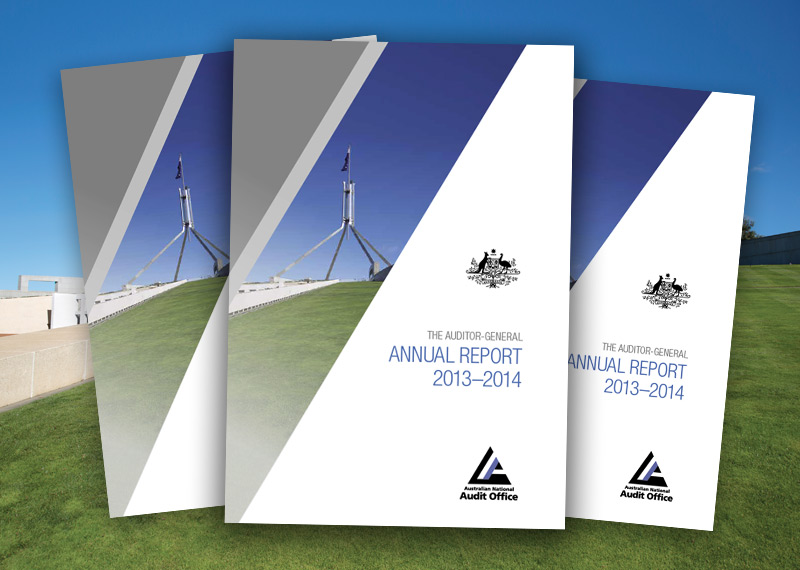
Annual report
Published: Tuesday 30 September 2014
Published
This annual report documents the performance of the Australian National Audit Office (ANAO) in the financial year ending on 30 June 2014. It addresses the Requirements for Annual Reports for Departments, Executive Agencies and FMA Act Bodies approved by the Joint Committee of Public Accounts and Audit in May 2014; the performance measures set out in the outcome and programs framework in the 2013–14 Portfolio Budget Statements; section 28 of the Auditor-General Act 1997; and other annual reporting requirements provided for in legislation.
Performance audit (Auditor-General Report No. 33 of 2014–15)

Published: Wednesday 29 April 2015
Published
The audit objective was to assess the effectiveness of the Australian Organ and Tissue Donation and Transplantation Authority's administration of community awareness, professional education and donor family support activities intended to increase organ an
Entity
Australian Organ and Tissue Donation and Transplantation Authority
Contact
Please direct enquiries relating to reports through our contact page.