Browse our range of reports and publications including performance and financial statement audit reports, assurance review reports, information reports and annual reports.
Performance audit (potential)
Potential audit: 2025-26
Potential
This audit would examine the effectiveness of the Future Drought Fund (FDF). The FDF was established in 2019 to provide funding for drought resilience initiatives. The Future Drought Fund (Drought Resilience Funding Plan 2024–2028) Determination 2024 includes funding principles. The Funding Plan provides a high-level principles-based framework to guide all FDF spending. The Productivity Commission carried out a review of the Future Drought Fund (FDF) and released their Inquiry Report on 26 September 2023, which included 14 recommendations.
Entity
Department of Agriculture, Fisheries and Forestry; Regional Investment Corporation
Contact
Please direct enquiries through our contact page.
Performance audit (Auditor-General Report No. 26 of 1995–96)
Published: Monday 17 June 1996
Published
The Department of Defence is responsible for administering the Defence export facilitation program which is aimed at promoting Australian defence-relevant exports. The Department administers the program in cooperation with AUSTRADE. Defence is also responsible for administering export controls on defence and related goods and dual-use goods. The Department of Foreign Affairs and Trade is responsible for controls on chemical and biological weapons precursors. The Department of Primary Industries and Energy is responsible for controls on nuclear-specific technology and source/fissionable material. The Australian Customs Service implements barrier controls at ports and airports. In September 1993 the then Minister for Trade referred to the Joint Standing Committee on Foreign Affairs, Defence and Trade (JSCFADT) an inquiry into the implications of Australian defence exports. The JSCFADT's Report on the Implications of Australian Defence Exports (September 1994) recommended, inter alia, that the Auditor-General conduct a performance audit of the operations of the guidelines concerning the controls on the export of defence and related goods, the export control process, and all export facilitation activities. The Auditor-General agreed to undertake an audit, which commenced in May 1995 as a preliminary study and was designated as a performance audit on 30 August 1995.
Entity
Department of Defence
Performance audit (potential)
Potential audit: 2025-26
Potential
This audit would assess the effectiveness of the processes to design and co-ordinate programs to address rates of family and gendered violence, and out of home care, under the National Agreement on Closing the Gap.
Target 12 of the National Agreement on Closing the Gap is to reduce the rate of over-representation of Aboriginal and Torres Strait Islander children in out-of-home care by 45 per cent by 2031. Target 13 is to reduce the rate of all forms of family violence and abuse against Aboriginal and Torres Strait Islander women and children by at least 50 per cent by 2031. Both targets seek to achieve the goal of stronger families. The Australian government has agreed to commitments under the National Plan to End Violence against Women and Children 2022–2032 and the Aboriginal and Torres Strait Islander Action Plan 2023–25. The Department of Social Services plays a leading role in supporting the achievement of targets 12 and 13. The National Indigenous Australians Agency is responsible for leading and coordinating the development and implementation of Australia’s Closing the Gap targets in partnership with Indigenous Australians.
The ANAO agreed to consider an audit into target 13 in response to recommendation 8 of the Senate Standing Committee on Legal and Constitutional Affairs’ August 2024 report into Missing and Murdered First Nations Women and Children.
Entity
Department of Social Services; National Indigenous Australians Agency; Attorney-General's Department
Contact
Please direct enquiries through our contact page.
Performance audit (Auditor-General Report No. 17 of 2014–15)

Published: Thursday 18 December 2014
Published
The objective of the audit was to examine the effectiveness of Navy’s strategy for recruiting and retaining personnel with specialist skills. The effective delivery of Navy capability depends on Navy having available sufficient numbers of skilled personnel to operate and maintain its fleet of sea vessels and aircraft, and conduct wide‑ranging operations in dispersed locations. Without the right personnel, Navy capability is reduced. Navy’s budget for 2014–15 included $1.86 billion in employee expenses.
The audit concluded that, in its strategic planning, Navy had identified its key workforce risks and their implications for Navy capability. To address these risks Navy had continued to adhere to its traditional ‘raise, train and sustain’ workforce strategy; developed a broad range of workforce initiatives that complemented its core approach; and sought to establish contemporary workforce management practices. However, long‑standing personnel shortfalls in a number of ‘critical’ employment categories had persisted, and Navy had largely relied on retention bonuses as a short‑ to medium‑term retention strategy.
Navy had developed a broad range of workforce initiatives, some designed specifically to address workforce shortages in its critical employment categories. To date, Navy had primarily relied on paying retention bonuses and other financial incentives; recruiting personnel with prior military experience to work in employment categories with significant workforce shortfalls; and using Navy Reserves in continuous full time roles. Ongoing work was required for Navy to firmly establish a range of promising workforce management practices, including providing the right training at the right time; more flexible approaches to managing individuals’ careers; and improving workplace culture, leadership and relationships. More flexible and tailored workforce management practices could help address the underlying causes of workforce shortfalls, particularly when the traditional approaches were not gaining sufficient traction.
The ANAO made two recommendations aimed at Navy: drawing on external human resource expertise to inform the development and implementation of its revised workforce plan; and evaluating the impact of retention bonuses on the Navy workforce to determine their future role within its overall workforce strategy.
Entity
Department of Defence
Contact
Please direct enquiries relating to reports through our contact page.
Annual report
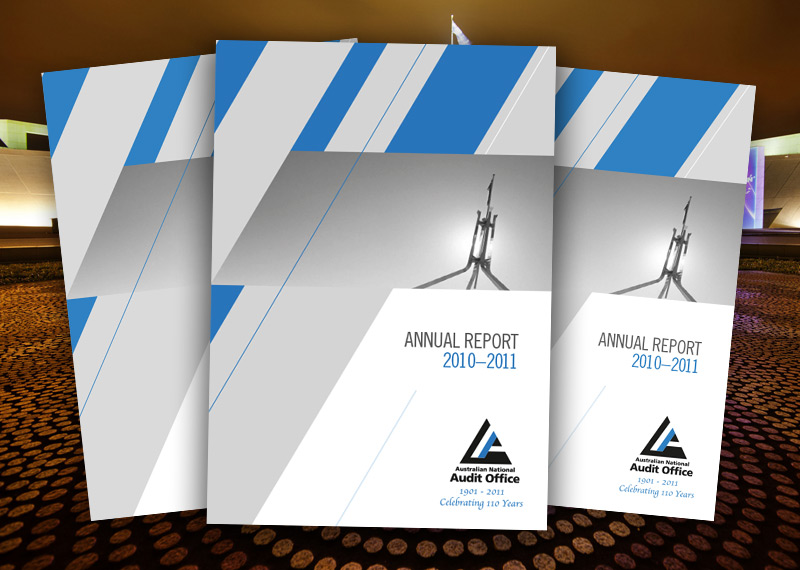
Published: Friday 30 September 2011
Published
This annual report documents the performance of the Australian National Audit Office (ANAO) in the financial year ending on 30 June 2011. It includes a foreword by the Auditor-General, an overview including the role and vision of the Office, a report on performance, details about management and accountability, and the financial results.
Performance audit (Auditor-General Report No. 18 of 1999–2000)
Published: Monday 15 November 1999
Published
Government service delivery through the Internet presents both significant opportunities and challenges in the delivery of on-line services. Depending on the level of sophistication of the application, the Internet allows Commonwealth agencies to publish information, interact with clients in the exchange of information, and/or transact business electronically. The over-all objective of this audit was to determine Commonwealth agencies' preparedness to achieve the Government's goal of all appropriate services being Internet-deliverable by 2001. The audit sought to assess:
- the extent to which agencies considered that they would be able to achieve that goal;
- what type of services agencies were delivering or planning to deliver on the Internet; and
- whether agencies had identified barriers and possible solutions to that delivery.
Entity
Across Agency
Performance audit (Auditor-General Report No. 20 of 2000–01)
Published: Thursday 30 November 2000
Published
The objectives of the audit were to: assess the extent to which the Government's sale objectives were achieved; assess the effectiveness of the management of the public share offer; and identify principles of sound administrative practice to facilitate improved administrative arrangements for future Commonwealth public share offers.
Entity
Department of Finance and Administration
Performance audit (Auditor-General Report No. 19 of 2002–03)
Published: Monday 2 December 2002
Published
The audit examined the ATO's management of its relationship with tax practitioners (tax agents and the wider group of professionals working on taxation matters for clients). However, our main focus was the ATO's management of its relationship with tax agents because they are the core element of the tax practitioner grouping and their role is fundamental to the effective operation of the tax system. The objective of the audit was to assess how well the ATO manages its relationship with tax practitioners, focussing on selected ATO relationships with tax practitioners, in particular its regulatory relationship with tax agents, its service support relationship with tax agents and its relationship with tax agents and members of the wider tax practitioner group in the professional bodies as key stakeholders in tax administration.
Entity
Australian Taxation Office
Request for audit
Responded: Friday 3 July 2020
Response provided
The Auditor-General responded on 27 February 2020 to correspondence from senators Larissa Waters and Janet Rice dated 14 February 2020, requesting that the Auditor-General conduct an investigation to examine the decision-making process under the Community Development Grants Programme.
The Auditor-General responded on 3 July 2020 to follow-up correspondence from senators Larissa Waters and Janet Rice dated 9 June 2020, requesting that the Auditor-General reconsider including a review of the decision-making process under the Community Development Grants Programme as part of the ANAO 2020-21 Annual Audit Work Program.
Contact
Please direct enquiries relating to requests for audit through our contact page.
Performance audit (potential)
Potential audit: 2025-26
Potential
This audit would assess the effectiveness of the Australian Taxation Office’s (ATO) management of confidential information.
The ATO manages commercially and legally sensitive information as part of its administration of the taxation and superannuation systems. Mobility between the public and private sector presents challenges to entities like the ATO to ensure that confidential information is not compromised. The provisions of the APS Code of Conduct, the Public Service Regulations 1999, the Privacy Act 1988, the Crimes Act 1914 and specific secrecy offences in Commonwealth laws outline the responsibilities of employees and agencies to manage confidential information.
Entity
Australian Taxation Office
Contact
Please direct enquiries through our contact page.