Browse our range of reports and publications including performance and financial statement audit reports, assurance review reports, information reports and annual reports.
Performance audit (Auditor-General Report No. 55 of 2012–13)
Published: Wednesday 26 June 2013
Published
The objective of the audit was to assess the effectiveness of the Department of Education, Employment and Workplace Relations’ management of the Australian Government’s contribution to the Covenant. The scope of the audit is the Australian Government’s role in the initial establishment of the Covenant and its ongoing contribution through other employment programs.
Entity
Department of Education, Employment and Workplace Relations
Contact
Please direct enquiries relating to reports through our contact page.
Performance audit (Auditor-General Report No. 28 of 2006–07)
Published: Thursday 22 February 2007
Published
The objective of the audit was to assess the effectiveness of the major elements of Centrelink's central, strategic level project management arrangements, as defined in the CPMF. It focused on how well:
- the CPMF supports better management and service delivery in Centrelink;
- the CPMF supports project managers and projects to comply with better project management principles, relevant legislation and guidelines; and
- Centrelink monitors project performance and encouraged the attainment of project objectives.
Entity
Centrelink
Performance audit (Auditor-General Report No. 18 of 2013–14)
Published: Wednesday 5 February 2014
Published
The objective of the audit was to assess the effectiveness of the Bureau of Meteorology’s implementation of the Improving Water Information Program.
Entity
Bureau of Meteorology
Contact
Please direct enquiries relating to reports through our contact page.
Performance audit (Auditor-General Report No. 34 of 2007–08)
Published: Wednesday 21 May 2008
Published
The objective of the audit was to determine the effectiveness of DoHA's administration of the MoU between the Government and the pathology profession, including monitoring whether the MoU is achieving its objectives
Entity
Department of Health and Ageing
Performance audit (Auditor-General Report No. 15 of 2007–08)
Published: Thursday 29 November 2007
Published
The objective of this follow-up audit is to assess the Tax Office's progress in implementing the recommendations of Audit Report No.59 2002–03, Administration of Australian Business Number Registrations, having regard to any changed circumstances, or new administrative issues, affecting the implementation of those recommendations.
Entity
Australian Taxation Office
Performance audit (Auditor-General Report No. 16 of 2008–09)
Published: Monday 22 December 2008
Published
The objective of the audit was to assess the adequacy and effectiveness of the BCM practices and procedures within the Tax Office in preparing for, or responding to, disruptions to ‘business as usual' operations.
Entity
Australian Taxation Office
Annual report
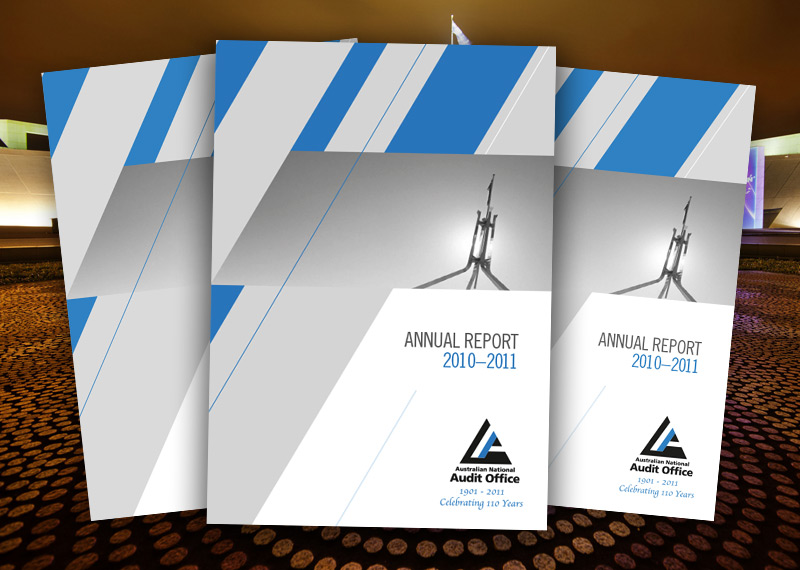
Published: Friday 30 September 2011
Published
This annual report documents the performance of the Australian National Audit Office (ANAO) in the financial year ending on 30 June 2011. It includes a foreword by the Auditor-General, an overview including the role and vision of the Office, a report on performance, details about management and accountability, and the financial results.
Performance audit (Auditor-General Report No. 22 of 2005–06)
Published: Thursday 22 December 2005
Published
The objective of the audit was to assess and report on the progress being made by agencies subject to the Financial Management & Accountability Act 1997 and entities subject to the Commonwealth Authorities & Companies Act 1997: in realising value for money from the procurement process, with a specific focus on buildings, services and products using whole of life cycle assessments; and in the consideration and management of environmental impacts in specifications and contracts. The emphasis of the audit was on green office procurement and sustainable business practices and the value for money within this context. As such, the audit report provides a status report on the implementation of ESD within the office environment of the Australian Government. The audit used a survey approach in conjunction with selected audit investigations to obtain information across 71 agencies and entities selected on the basis of materiality in procurement and coverage across large, medium and small organisations. The agencies selected represented approximately 35 per cent of all government bodies and over 95 per cent of all procurement spending noted on the Department of Finance and Administration (Finance) database on contracts.
Entity
across agency
Speeches and papers
Published: Thursday 14 February 2002
Published
Mr P.J. Barrett (AM) - Auditor-General for Australia, presented at the Global Working Group Meeting, Wellington, New Zealand
Performance audit (Auditor-General Report No. 19 of 2007–08)
Published: Tuesday 22 January 2008
Published
The current audit has focussed on Stage 2 of the Scheme. Its objective was to assess whether ACIS is being administered effectively by DIISR and, as relevant, by Customs. In particular, the audit examined the department's arrangements for:
- assessing the eligibility of participants to receive duty credits;
- calculating duty credits accurately and adhering to the funding limits for the Scheme;
- checking the integrity of participants' claims, which are self-assessed;
- accounting for the duty credits transferred to and used at Customs; and
- measuring and reporting on the performance of ACIS.
The audit also followed up on whether the ANAO's previous recommendations have been addressed.
Entity
Department of Innovation, Industry, Science and Research; Australian Customs Service