Browse our range of reports and publications including performance and financial statement audit reports, assurance review reports, information reports and annual reports.
Speeches and papers
Published: Thursday 20 November 2003
Published
Mr P.J. Barrett (AM) - Auditor-General for Australia, presented at the CPA Australia National Public Sector Convention, Perth
Performance audit (Auditor-General Report No. 6 of 1997–98)
Published: Monday 20 October 1997
Published
The objective of the audit was to review the efficiency and administrative effectiveness of the Commercial Compliance Branch's risk management processes and to establish whether the approach provided a sound foundation for the development and application of risk management across the Australian Customs Service. The ANAO also examined the wider risk management context across ACS in order to appreciate how risk management processes in the Branch related to the agency as a whole.
Entity
Australian Customs Service
Performance audit (Auditor-General Report No. 34 of 1996–97)
Published: Tuesday 27 May 1997
Published
The objective of the audit was to assess the efficiency and effectiveness of the provision of health services to the Australian Defence Force Regular forces. Audit criteria were developed which examined health services policy and strategic planning, resource management, the tri-Service provision of medical, dental and other health care, the operation of and planning for major medical facilities, health care management information systems, occupational health and safety and the supply of health materiel.
Entity
Department of Defence
Performance audit (Auditor-General Report No. 45 of 2022–23)
Published: Thursday 29 June 2023
Published
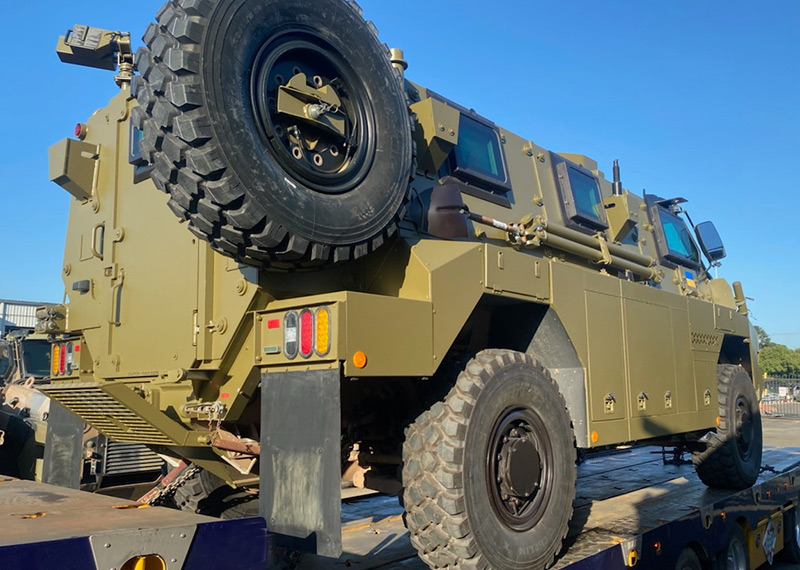
The objective of this audit was to examine the effectiveness of the Department of Defence’s development and implementation of Australia’s approach to providing military assistance to the Government of Ukraine.
Entity
Department of Defence
Contact
Please direct enquiries through our contact page.
Major projects report (Auditor-General Report No. 9 of 2008–09)
Published: Thursday 27 November 2008
Published
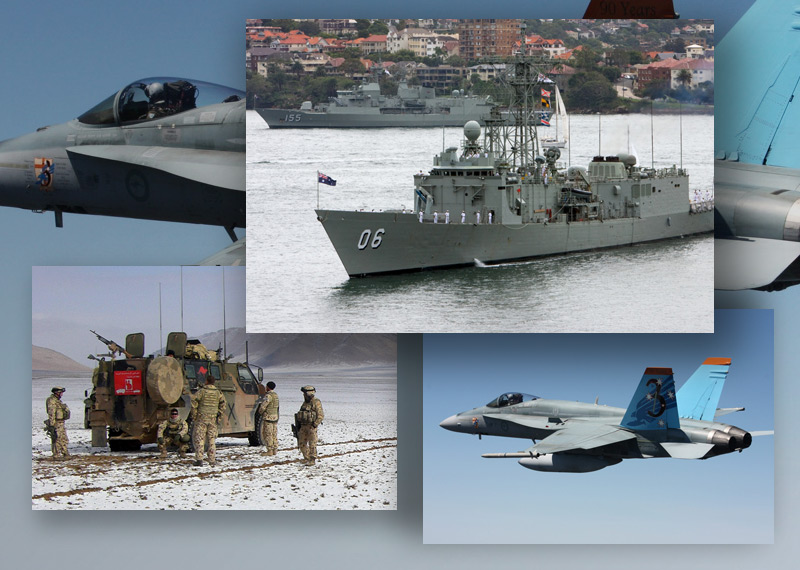
This first Assurance Report on the status of selected Defence equipment acquisition projects, which has the support of the Parliament and the Government, represents a substantial step towards improving transparency and public accountability in major Defence procurement projects. It is the pilot of an annual Defence Materiel Organisation (DMO) Major Projects Report, and was developed in conjunction with the DMO. It covers the cost, schedule and capability progress achieved by nine DMO projects, which had an approved budget totalling $13.535 billion as at 30 June 2008.
This report is organised into three parts. Part 1 comprises an ANAO overview and Auditor–General's Foreword. Part 2 comprises the Major Projects Report prepared by DMO, including an overview reflecting DMO's perspective on their business and on the nine projects included in the. Part 3 incorporates the Auditor-General's Review Report, the statement by the CEO DMO, and the information prepared by DMO in the form of standardised Project Data Summary Sheets covering each of the nine pilot projects.
In the next 12 months, the ANAO will review 15 DMO projects planned for inclusion in the 2008-09 DMO Major Projects Report, with the number of projects rising to 30 projects in subsequent years. The ANAO will also work with DMO to refine the approach adopted for providing assurance on each project's progress toward achieving Final Operational Capability. The ANAO will also consider the inclusion of an analysis of each project's emerging trends, as appropriate, to complement DMO's intention to provide improved analysis of project management performance regarding all projects included in the Major Projects Report.
Entity
Defence Materiel Organisation
Performance audit (Auditor-General Report No. 6 of 2005–06)
Published: Thursday 18 August 2005
Published
The objective of this audit was to assess whether DEWR had implemented ESC3 and its computer system EA3000, efficiently and effectively. The primary focus is on the period of change from the previous employment services contract to ESC3 and the first full year of its operation, 2003-04. The scope of the audit was limited to the implementation of Job Network services under ESC3, the introduction of the supporting computer application, EA3000, and DEWR's use of modelling to estimate the effects of the APM. The audit did not test the effectiveness of the APM. DEWR has a plan to evaluate the new model. A separate, concurrent ANAO audit assessed DEWR's oversight of Job Network services to job seekers.
Entity
Department of Employment and Workplace Relations; Centrelink
Performance audit (Auditor-General Report No. 34 of 2007–08)
Published: Wednesday 21 May 2008
Published
The objective of the audit was to determine the effectiveness of DoHA's administration of the MoU between the Government and the pathology profession, including monitoring whether the MoU is achieving its objectives
Entity
Department of Health and Ageing
Performance audit (Auditor-General Report No. 20 of 2005–06)
Published: Tuesday 6 December 2005
Published
The objective of this audit was to assess the Private Health Insurance Administration Council's (PHIAC's) administrative effectiveness as a regulator of private health insurance. In making this assessment, the Australian National Audit Office (ANAO) addressed the following criteria: whether PHIAC monitored compliance with its legislative requirements and analysed related data; whether PHIAC addressed and managed non-compliance with its legislative requirements; and whether PHIAC's governance and organisation supported the performance of its legislative functions. Although the Department of Health and Ageing (Health) also has a role in the regulation of the private health insurance industry under the National Health Act 1953 (Health Act), Health's regulatory activities were outside the scope of this audit.
Entity
Private Health Insurance Administration Council
Speeches and papers
Published: Saturday 26 June 2004
Published
Mr P.J. Barrett (AO) - Auditor-General for Australia, an Occasional Paper
Performance audit (Auditor-General Report No. 28 of 2003–04)
Published: Thursday 12 February 2004
Published
The report summarises performance audit, financial statement audit and other related activities for the ANAO for the period July to December 2003. The key issues arising from performance audits tabled in this period are summarised against the ANAO themes. The report also summarises financial audits and other financial audit activities conducted by the ANAO during the period July to December 2003. It discusses significant issues such as the: consolidated financial statements and the final budget outcome; harmonisation of Australian Generally accepted accounting practices and Government Finance Statistics; adoption of International Financial Reporting Standards; timing for Financial Statements Preparation; and the audit of the CFS 2002-03.
Entity
ANAO