Browse our range of reports and publications including performance and financial statement audit reports, assurance review reports, information reports and annual reports.
Performance audit (Auditor-General Report No. 13 of 2015–16)

Published: Thursday 10 December 2015
Published
The objective of the audit was to assess the effectiveness of the Department of Immigration and Border Protection’s (DIBP) management of compliance with visa conditions. To form a conclusion against this objective, the ANAO assessed whether DIBP:
- effectively manages risk and intelligence related to visa holders’ non-compliance with their visa conditions;
- promotes voluntary compliance through targeted campaigns and services that are appropriate and accessible to the community;
- conducts onshore compliance activities that are effective and appropriately targeted; and
- has effective administrative arrangements to support visa holders’ compliance with their visa conditions.
Entity
Department of Immigration and Border Protection
Contact
Please direct enquiries relating to reports through our contact page.
Annual report

Published: Thursday 24 August 2023
Published
This annual report documents the performance of the Australian National Audit Office (ANAO) in the financial year ended 30 June 2023. The report addresses all applicable obligations under the Public Governance, Performance and Accountability Act 2013; the Public Governance, Performance and Accountability Rule 2014; the Auditor-General Act 1997; the performance measures set out in the outcome and programs framework in the ANAO’s Portfolio Budget Statements 2022–23 and in the ANAO Corporate Plan 2022–23; and annual reporting requirements set out in other relevant legislation.
Contact
Please direct enquiries through our contact page.
Request for audit
Responded: Friday 24 July 2020
Response provided
The Auditor-General responded on 11 March 2020 to follow-up correspondence from Senator Sarah Hanson-Young, requesting an audit into the Federal and South Australian governments’ agreement to reduce SA’s Murray-Darling river water allocation by 100GL and Commonwealth funding provided to increase the use of the state’s desalination plant to replace the water. The Auditor-General responded to the original correspondence from Senator Hanson-Young on 19 December 2019. The Auditor-General provided a follow-up response to Senator Hanson-Young on 24 July 2020.
Contact
Please direct enquiries relating to requests for audit through our contact page.
Performance audit (Auditor-General Report No. 38 of 1997–98)
Published: Tuesday 24 March 1998
Published
The objectives in auditing the sale were to assess the extent to which the Government's sale objectives were achieved; review the efficiency of the management of the sale process; assess whether the sale arrangements adequately protected the Commonwealth's interests, including minimising ongoing Commonwealth risk; and identify principles of sound administrative practice to facilitate improved arrangements for future trade sales, particularly the later phases of airport sales.
Entity
Department of Transport and Regional Development; Office of Asset Sales and IT Outsourcing
Performance audit (Auditor-General Report No. 13 of 1999–2000)
Published: Monday 11 October 1999
Published
The Department of Defence spends some $2.4 billion a year on major equipment acquisition projects. The audit objective was to assess Defence's arrangements for higher-level management of major equipment acquisition projects. The principal aim was to formulate practical recommendations that would both enhance Defence's management of major acquisition projects and provide a degree of assurance about its ongoing apparent capacity to do so efficiently and effectively.
Entity
Department of Defence
Performance audit (Auditor-General Report No. 17 of 2014–15)

Published: Thursday 18 December 2014
Published
The objective of the audit was to examine the effectiveness of Navy’s strategy for recruiting and retaining personnel with specialist skills. The effective delivery of Navy capability depends on Navy having available sufficient numbers of skilled personnel to operate and maintain its fleet of sea vessels and aircraft, and conduct wide‑ranging operations in dispersed locations. Without the right personnel, Navy capability is reduced. Navy’s budget for 2014–15 included $1.86 billion in employee expenses.
The audit concluded that, in its strategic planning, Navy had identified its key workforce risks and their implications for Navy capability. To address these risks Navy had continued to adhere to its traditional ‘raise, train and sustain’ workforce strategy; developed a broad range of workforce initiatives that complemented its core approach; and sought to establish contemporary workforce management practices. However, long‑standing personnel shortfalls in a number of ‘critical’ employment categories had persisted, and Navy had largely relied on retention bonuses as a short‑ to medium‑term retention strategy.
Navy had developed a broad range of workforce initiatives, some designed specifically to address workforce shortages in its critical employment categories. To date, Navy had primarily relied on paying retention bonuses and other financial incentives; recruiting personnel with prior military experience to work in employment categories with significant workforce shortfalls; and using Navy Reserves in continuous full time roles. Ongoing work was required for Navy to firmly establish a range of promising workforce management practices, including providing the right training at the right time; more flexible approaches to managing individuals’ careers; and improving workplace culture, leadership and relationships. More flexible and tailored workforce management practices could help address the underlying causes of workforce shortfalls, particularly when the traditional approaches were not gaining sufficient traction.
The ANAO made two recommendations aimed at Navy: drawing on external human resource expertise to inform the development and implementation of its revised workforce plan; and evaluating the impact of retention bonuses on the Navy workforce to determine their future role within its overall workforce strategy.
Entity
Department of Defence
Contact
Please direct enquiries relating to reports through our contact page.
Performance audit (Auditor-General Report No. 1 of 2000–01)
Published: Monday 24 July 2000
Published
The audit was structured to provide an overview of the administration of Commonwealth assistance to the agrifood industry. In particular, the ANAO sought to form a view on the extent to which four key agencies (Agriculture, Fisheries and Forestry-Australia, the Department of Foreign Affairs and Trade, the Department of Transport and Regional Services and Austrade) are able to demonstrate their success in achieving the Government's objectives for the Australian agrifood industry by assessing agencies' agrifood-related: planned outcomes; performance information; and reporting.
Entity
Agriculture Fisheries and Forestry - Australia; Australian Trade Commission; Department of Foreign Affairs and Trade; Department of Transport and Regional Services
Major projects report (Auditor-General Report No. 14 of 2023–24)

Published: Friday 9 February 2024
Published
Increased transparency and accountability on progress with major Defence equipment acquisitions has been a focus of parliamentary interest for some time. Beginning in 2007–08, an annual program has been established in conjunction with the Department of Defence to enable the ANAO to review and report to the Parliament on the status of major Defence acquisition projects, as set out in the Major Projects Report. The review includes information relating to the cost, schedule and progress towards delivery of required capability of individual projects as at 30 June each year. The Report is undertaken at the request of the Joint Committee of Public Accounts and Audit.
Entity
Department of Defence
Contact
Please direct enquiries through our contact page.
Request for audit
Responded: Friday 3 July 2020
Response provided
The Auditor-General responded on 27 February 2020 to correspondence from senators Larissa Waters and Janet Rice dated 14 February 2020, requesting that the Auditor-General conduct an investigation to examine the decision-making process under the Community Development Grants Programme.
The Auditor-General responded on 3 July 2020 to follow-up correspondence from senators Larissa Waters and Janet Rice dated 9 June 2020, requesting that the Auditor-General reconsider including a review of the decision-making process under the Community Development Grants Programme as part of the ANAO 2020-21 Annual Audit Work Program.
Contact
Please direct enquiries relating to requests for audit through our contact page.
Performance audit (Auditor-General Report No. 30 of 2002–03)
Published: Thursday 27 February 2003
Published
The Service Chiefs of Navy, Army and Air Force are accountable to the Chief of the Defence Force for the way that equipment is used by their Service. They are also accountable for the safety, fitness for service and environmental compliance of the equipment. The audit report deals with the way that the Service Chiefs are assured of the safety and suitability for service of the Australian Defence Force's (ADF's) ordnance systems. Ordnance systems include munitions such as missiles, shells and mines, and the auxiliary material necessary to aim, launch and guide munitions.
Entity
Department of Defence
Performance audit (Auditor-General Report No. 11 of 1998–99)
Published: Wednesday 21 October 1998
Published
Fedlink was to comprise two elements: a high capacity telecommunications infrastructure (phase 1) and information technology applications which support Internet and Intranet communication, and transactions in a secure environment (phase 2) [which never went ahead]. OGIT sought the services of the ANAO to provide an opinion on the probity of the methodology and procedures applied in the evaluation process for phase 1. Therefore the objectives of this audit were to assist OGIT in the timely identification of any deficiencies in the evaluation of responses from suppliers and options for addressing the deficiencies.
Entity
Department of Finance and Administration; Office of Government Information Technology
Performance audit (Auditor-General Report No. 17 of 2000–01)
Published: Monday 4 December 2000
Published
The objectives of the audit were to: assess compliance with the Stevedoring Levy (Collection) Act 1998 and Stevedoring Levy (Imposition) Act 1998 and other relevant legislation; assess the effectiveness of the administrative and financial controls regarding the collection of the Stevedoring Levy by DoTRS and the provision of redundancy payments to eligible employees of stevedoring companies and the management of the funding of those payments by way of borrowings by MIFCo; and review the administrative efficiency of the redundancy payment and Stevedoring Levy collection aspects of the waterfront redundancy scheme.
Entity
Department of Transport and Regional Services; Maritime Industry Finance Company Ltd
Performance audit (Auditor-General Report No. 40 of 1997–98)
Published: Friday 17 April 1998
Published
The objectives for the audit were to assess the:
- economy, administrative effectiveness, and accountability of DVA's management of the purchase of hospital services from State and Territory governments; and
- strategies adopted by DVA to manage change associated with its purchase of hospital care services from State and Territory governments.
The twin aims were to provide assurance to stakeholders and to identify any area in which improvements could be made to achieve better results.
Entity
Department of Veterans' Affairs
Potential topic
Potential topic: 2026-27
Potential
The ANAO could examine the measures to reduce the backlog in processing of visas, modernise the visa system and embed simplification. The ANAO agreed to consider this topic in response to Recommendation 17 of the Joint Standing Committee on Migration in its September 2024 report Migration, Pathway to Nation Building. The Department of Home Affairs has introduced new measures in its performance framework that relate to efficiency, quality, timeliness and output in visa processing. An audit could also consider the extent to which the introduction of the new performance measures has been supported by, or driven the development of, improved visa program management practices.
Entity
Department of Home Affairs
Contact
Please direct enquiries through our contact page.
Performance audit (Auditor-General Report No. 4 of 1995–96)
Published: Tuesday 17 October 1995
Published
This audit reviewed:
- the methods used by the Department of Social Security (DSS) to determine and allocate staff numbers to Regional Offices. It sought to ascertain whether the allocations resulting from these methods met the demands placed on Regional Offices and the scope for improvement to these methods; and
- the scope for improvements to the benefit delivery process and other aspects of Regional Office operations that could lead to significant productivity gains or client service benefits.
Entity
Department of Social Security
Performance audit (Auditor-General Report No. 31 of 1996–97)
Published: Tuesday 13 May 1997
Published
The ANAO's purpose was to report on:
- the HIC's management of approaches to minimise medifraud and inappropriate practice;
- HIC's reporting of its performance on these matters to stakeholders;
- the methodology used by the HIC to estimate the extent of fraud and inappropriate practice, including comment on the reliability of the estimates; and
- the HIC's implementation of the major recommendations from Medifraud and Excessive Servicing - Audit Report No.17 1992-93.
Entity
Health Insurance Commission
Performance audit (Auditor-General Report No. 22 of 1998–99)
Published: Tuesday 15 December 1998
Published
The audit reviewed six budget-funded agencies (Australian Customs Service, Australian Taxation Office, Centrelink, Department of Defence, Department of Education, Training and Youth Affairs, and Department of Immigration and Multicultural Affairs) and two off-budget entities (Airservices Australia and Reserve Bank of Australia). The ANAO also examined the Office for Government Online's (OGO, formerly the Office of Government Information Technology, or OGIT) whole-of-government coordination of the Commonwealth's Year 2000 efforts.
Entity
Australian Customs Service; Australian Taxation Office; Centrelink; Department of Defence; Department of Education, Training and Youth Affairs; Department of Immigration and Multicultural Affairs
Performance audit (Auditor-General Report No. 23 of 2001–02)
Published: Friday 7 December 2001
Published
The audit reviewed the broadcasting planning and licensing operations of the Australian Broadcasting Authority, which is responsible for planning the availability of segments of the broadcasting services bands used by radio and television for analogue and digital broadcasting. The objective was to assess the ABA's management of licence area planning and the subsequent issue of broadcasting licences, focussing on analogue radio planning and identifying improved administrative practices, where possible, together with the main factors that have contributed to the delays to date in achieving the planning timetable.
Entity
Australian Broadcasting Authority
Annual report
Published: Tuesday 14 August 2018
Published
This annual report documents the performance of the Australian National Audit Office (ANAO) in the financial year ending on 30 June 2018. The report addresses all applicable obligations under the Public Governance, Performance and Accountability Act 2013 (PGPA Act); the Public Governance, Performance and Accountability Rule 2014 (PGPA Rule); the Auditor-General Act 1997; the performance measures set out in the outcome and programs framework in the ANAO’s 2017–18 Portfolio Budget Statements (PBS) and the ANAO 2017–18 Corporate Plan and annual reporting requirements set out in other relevant legislation.
Contact
Please direct enquiries relating to annual reports through our contact page.
Performance audit (Auditor-General Report No. 20 of 1999–2000)
Published: Monday 22 November 1999
Published
Special Benefit is a social security income support payment for people who are unable to support themselves or their dependents, and who are not otherwise entitled to any other income support payment. Its objective is to ensure that such people have adequate levels of income. The objective of the audit was to assess the extent to which new claims for Special Benefit had been determined in compliance with the Social Security Act, the Guide to the Act and other relevant guidelines, and whether Centrelink and FaCS had appropriate procedures to help ensure such compliance.
Entity
Centrelink; Department of Family and Community Services
Performance audit (Auditor-General Report No. 62 of 2002–03)
Published: Monday 30 June 2003
Published
The objectives of the audit was to examine the effectiveness and efficiency of DIMIA's decision-making processes and management systems for delivering the parent and partner aspects of the family stream of the Migration Program.
The family stream of Australia's Migration Program enables the reunion of immediate family members of Australian citizens, permanent residents or eligible New Zealand citizens. It consists of four main categories;
- Partner;
- Child;
- Parent; and
- Other family.
Entity
Department of Immigration and Multicultural and Indigenous Affairs
Performance audit (Auditor-General Report No. 3 of 1997–98)
Published: Sunday 28 September 1997
Published
The objective of the audit was to examine the effectiveness of the management and control of program evaluation in the Australian Public Service. The ANAO made an assessment against criteria which were designed to test whether agencies were undertaking evaluations in a way which would enhance their overall effectiveness. The main issues examined were:
- approaches to evaluation planning;
- the conduct of individual evaluations;
- the quality of evaluation reports; and
- the impact of evaluations.
Entity
Across Agency
Performance audit (Auditor-General Report No. 34 of 2000–01)
Published: Thursday 17 May 2001
Published
The Age Pension is a social security income support payment available to Australian residents and eligible Australians residing overseas who have reached Age Pension age and whose income and assets are under certain limits. In 1999-2000, approximately $14 billion was paid to approximately 1.7 million Age Pension recipients. Payment of Age Pension is made under the Social Security Law and in accordance with the Guide to the Social Security Law prepared by the Department of Family and Community Services (FaCS). FaCS has contracted Centrelink under a Business Partnership Agreement (BPA) to administer the payment of Age Pension to eligible customers. The objective of the audit was to assess the extent to which new claims for Age Pension had been assessed in compliance with the legislation and other relevant guidelines developed by Centrelink, and whether Centrelink employed appropriate mechanisms to help ensure such compliance. In particular, the ANAO sought evidence with respect to: payment at the right rate, from the right date, to the right person with the right product, for new claims assessed during the audit sample period (that is, in accordance with the working definition of accuracy within Centrelink); the accuracy of Centrelink?s own reporting on compliance, as reported to FaCS under the BPA; and the application of appropriate mechanisms to help ensure such compliance.
Entity
Centrelink
Performance audit (Auditor-General Report No. 42 of 2000–01)
Published: Wednesday 30 May 2001
Published
The Australian Prudential Regulation Authority (APRA) was established on 1 July 1998 as the prudential regulator of banks and other authorised deposit-taking institutions (ADIs), life insurance companies (including friendly societies), general insurance companies, superannuation funds and retirement savings accounts. ANAO's objectives for this audit were to assess the efficiency and effectiveness of APRA's prudential supervision of banks. Prudential supervision aims to protect depositors by ensuring that financial institutions adopt prudent risk management practices designed to ensure their continuing solvency and liquidity. APRA is a relatively new organisation, established in July 1998 and becoming responsible for prudential supervision of all ADIs from July 1999. ANAO concluded that there are steps APRA can take in a number of areas to improve its supervisory practices, including improving the administration of the ADI supervisory levy; strengthening its risk management approach; and maintaining closer adherence to international standards for prudential supervision issued by the Basle Committee on Banking Supervision. ANAO made five recommendations concerning administration of levies, risk-based supervision and supervision of cross-border banking. APRA agreed, or agreed with qualifications, to all recommendations, as well as agreeing with the overall audit conclusions.
Entity
Australian Prudential Regulation Authority
Performance audit (Auditor-General Report No. 23 of 1997–98)
Published: Monday 22 December 1997
Published
This audit was undertaken in response to a request from the Prime Minister concerning matters primarily relating to travel allowance claims made by a former minister. The focus of the audit was on the administration of travel claims under the current policy arrangements and did not examine alternative models, which may involve policy issues, which are clearly matters for Government.
Entity
Across Agency
Performance audit (Auditor-General Report No. 44 of 1997–98)
Published: Wednesday 13 May 1998
Published
The Australian Diplomatic Communications Network was developed to provide a secure communication and automation capability for domestic offices and overseas posts. The audit focussed on project management of the ADCNET project, and in particular:
- how effectively the ADCNET project was managed;
- how effectively project risks were managed; and
- the extent to which project management processes have established whether ADCNET meets the specifications set by, and the expectations held by, DFAT, as well as any lessons to be learnt for this and other future projects.
Entity
Department of Foreign Affairs and Trade
Performance audit (Auditor-General Report No. 17 of 1998–99)
Published: Wednesday 25 November 1998
Published
Simulators are devices that provide personnel with training and practice by reproducing the behaviour of operational equipment. Defence records indicate that since 1960 the Defence Organisation has spent about $1 billion on acquiring simulators for training purposes. Over the next five years Defence proposes to spend a further $1.1 billion on simulation. The objective of the audit was to assess whether Defence had developed appropriate policies to provide guidance to personnel in the acquisition and use of aerospace simulators and the effectiveness of its procedures in achieving best value for the Commonwealth in relation to aerospace simulators.
Entity
Department of Defence
Performance audit (Auditor-General Report No. 55 of 2001–02)
Published: Friday 7 June 2002
Published
Although the audit examined broader aspects of the ATO's administration (such as, tobacco excise governance arrangements, intelligence capability and compliance and investigations activities), we placed particular emphasis on the strategies used by the ATO to address the proliferation of chop-chop (Australian grown tobacco sold illicitly in a chopped up form for $80 to $100 per kilogram. In comparison, 50 grams of legal roll-you-own tobacco costs around $16 i.e. $320 per kilogram) in the Australian markets, as it is an area of major risk to tobacco excise revenue.
Entity
Australian Taxation Office
Performance audit (Auditor-General Report No. 6 of 2000–01)
Published: Wednesday 23 August 2000
Published
The objective of the audit was to assess the framework and systems that DHAC has in place to prevent, control, monitor, detect and investigate fraud. The ANAO concluded that DHAC had taken appropriate steps to protect Commonwealth resources under its administration from fraudulent misappropriation by developing a sound fraud control framework, the effectiveness of which is illustrated by the relatively low incidence of reported fraud in the department over the last few years. The framework also includes key elements for preventing and dealing with fraud in line with the Commonwealth's Fraud Control Policy.
Entity
Department of Health and Aged Care
Performance audit (Auditor-General Report No. 50 of 1997–98)
Published: Thursday 25 June 1998
Published
The audit assessed the effectiveness of the governance framework for the management of the transition from the existing red meat industry structures to new structures which increased industry's role in self determination and self regulation and minimised the involvement of Government. Matters considered included the effectiveness of:
- planning for the implementation of the new arrangements;
- management of the risks associated with the implementation of the new arrangements;
- management structures used in the transition arrangements; and
- accountability arrangements for ongoing Commonwealth involvement.
Entity
Across Agency
Performance audit (Auditor-General Report No. 40 of 1999–2000)
Published: Wednesday 26 April 2000
Published
Tactical fighter operations (TFOs) form the basis of Australia's current military capability to ensure air superiority. Air superiority over the Australian territory and maritime approaches is an essential element in Australia's defence strategy. The audit objectives were to:
- assess whether the resources used to provide the F/A-18 tactical fighter force operational capability are managed cost-effectively; and
- identify areas for improvement in the coordination, planning and practices employed in administration of tactical fighter operations.
Entity
Department of Defence
Performance audit (Auditor-General Report No. 43 of 2002–03)
Published: Thursday 8 May 2003
Published
The objectives of the audit were to:
- evaluate the extent to which the Government's sale objectives were achieved, with a focus on those objectives relating to the optimisation of sale proceeds and minimisation of risk to the Commonwealth;
- examine the effectiveness of the management of the sale process to ensure the Commonwealth received fair value; and
- within the context of broader Commonwealth debt management considerations, assess the application of the sale proceeds to repaying Commonwealth debt and the extent to which public debt interest payments may be reduced.
Entity
Across Agency
Request for audit
Responded: Friday 26 March 2021
Response provided
The Auditor-General responded on 23 December 2020 to correspondence from the Hon Dr Andrew Leigh MP dated 8 December 2020, requesting that the Auditor-General conduct an investigation to examine the JobKeeper scheme. The Auditor-General provided a follow-up response on 8 February 2021, advising the Hon Dr Andrew Leigh MP that a performance audit Administration of the JobKeeper Scheme has commenced.
The Auditor-General responded on 26 March 2021 to follow-up correspondence from the Hon Dr Andrew Leigh MP dated 2 March 2021, requesting that the Auditor-General explore specific aspects of the JobKeeper scheme.
Contact
Please direct enquiries relating to request for audit through our contact page.
Insights: Audit lessons

Published: Wednesday 6 June 2018
Published
This edition of audit insights covers performance audit reports tabled in the Parliament during the third quarter of 2017-18. The focus is on the key learning that value for money can be significantly enhanced through officials engaged in a procurement ensuring they gain a full understanding of what is being purchased, for what outcome and the market they're operating in.
Contact
Please direct enquiries through our contact page.
Performance audit (Auditor-General Report No. 24 of 2001–02)
Published: Monday 10 December 2001
Published
Major capital equipment contributes importantly to the capabilities of the Australian Defence Force (ADF) to achieve the Defence mission, that is, the defence of Australia and its national interests. The Defence Materiel Organisation (DMO) is the relatively new Defence organisation responsible for the acquisition and through-life support of Defence equipment and systems. DMO's stated purpose is to equip and sustain the ADF. In 2001-02, it will spend $2.9 billion on progressing some 270 major capital equipment acquisition projects. This preliminary study for the audit focused on DMO reporting on the status of major equipment acquisition projects.
Entity
Department of Defence
Performance audit (Auditor-General Report No. 47 of 1997–98)
Published: Tuesday 23 June 1998
Published
The objectives of this audit were to assess, with respect to guarantees, indemnities and letters of comfort:
- changes in the size and nature of the Commonwealth's reported exposure since 30 June 1995;
- the extent of improvement in agencies' management and monitoring of the Commonwealth's exposure to these instruments;
- the approach of agencies to effective risk management and control of Commonwealth exposures to these instruments; and
- whether current reporting practices provide a sufficiently comprehensive coverage for public accountability purposes, at both the agency and whole of government levels.
Entity
Across Agency
Potential topic
Potential topic: 2026-27
Potential
The ANAO could examine Services Australia’s administration of payments and related services on behalf of other Australian Government entities. Services Australia provides a range of programs, services and payments for, and on behalf of, nine Australian Government entities. Payments are made to customers in relation to Centrelink (Social Security such as income support and the age pension), health (such as aged care, Medicare and Pharmaceutical Benefit Scheme payments) and child support. In 2024–25, Services Australia made $263 billion in payments. A further $777.8 million was made in emergency payments. A series of audits would examine the management of one or more payment type (such as disability support pension and/or the paid parental leave scheme).
Entity
Services Australia
Contact
Please direct enquiries through our contact page.
Performance audit (Auditor-General Report No. 32 of 1999–2000)
Published: Thursday 17 February 2000
Published
Industry levies play a significant role in the provision of many public services and fund a range of activities undertaken by regulatory bodies such as the Australian Prudential Regulation Authority (APRA), through to financing reform of the Australian waterfront labour force. The objectives of this audit were to assess:
- the coverage, revenue and expenses of non-primary industry levies;
- the effectiveness of selected entities' financial management of non-primary industry levies; and
- areas of better administrative practice relating to the financial management of non-primary industry levies.
Entity
Across Agency
Performance audit (Auditor-General Report No. 33 of 1999–2000)
Published: Monday 13 March 2000
Published
The objective of the performance audit was to assess the administrative effectiveness of DIMA's business entry program against the background of the Business and Temporary Entry program objective, with particular regard to whether:
- the existing performance management mechanisms and compliance monitoring strategies support the achievement of program outcomes and outputs;
- the quality of decision-making;
- business processes facilitate prompt visa decision-making consistent with program objectives; and
- decision-making support mechanisms promote robust and timely decision-making.
Entity
Department of Immigration and Multicultural Affairs
Performance audit (Auditor-General Report No. 5 of 2002–03)
Published: Friday 23 August 2002
Published
The audit examined the administrative effectiveness of arrangements between Health and HIC, in relation to the management and administration of the Medicare Benefits Scheme and the Pharmaceutical Benefits Scheme. Health predominantly exercises a policy and leadership role within the health portfolio - HIC delivers a range of health services directly to the public and members of the health industry. Both agencies have stated that they recognise the importance of working together, as partners in their respective roles, to maximise their performance in the achievement of health portfolio outcomes and to discharge their respective responsibilities. This joint commitment is embodied in a written agreement - called the Strategic Partnership Agreement (SPA).
Entity
Department of Health and Aged Care; Health Insurance Commission
Performance audit (Auditor-General Report No. 14 of 1998–99)
Published: Thursday 12 November 1998
Published
The objective of the audit was to ascertain and report to the Parliament on the ATO's administration of PPS and to identify opportunities for improvement. Four key compliance issues were identified: reporting PPS income, claiming PPS credits, remitting PPS income, claiming PPS credits, remitting PPS deductions, and managing PPS exemptions and variations. In addition, the following key aspects were considered: PPS risk assessments, coordination of PPS administration between the Small Business Income and Withholding & Indirect Taxes business lines, and PPS compliance project performance information.
Entity
Australian Taxation Office
Performance audit (Auditor-General Report No. 13 of 1996–97)
Published: Monday 18 November 1996
Published
The purpose of the audit was to examine how efficiently and effectively the ATO managed its collection of outstanding tax debt. A framework for analysing the ATO's approach to collecting outstanding debt was established by the ANAO. This framework reflected five key criteria in the collection process as they apply to managing outstanding debt, namely:
- initiatives to promote timely payment;
- identification of outstanding debt;
- setting priorities for collecting outstanding debt;
- management of collection practices; and
- collection results.
Entity
Australian Taxation Office
Potential topic
Potential topic: 2027-29
Potential
The ANAO could assess the procurement (and/or contract management) of providers for the National Plan to End Violence against Women and Children, specifically, the Leaving Violence Program. The Leaving Violence Program provides victims of domestic violence financial support and up to 12 weeks of services to promote their safety. DSS launched the Leaving Violence Program in July 2025, the successor to the Ending Violence Payment, and awarded the primary contract to Telstra Health. The program has been allocated $925.2 million over five years. The Joint Committee of Public Accounts and Audit expressed an opinion in its inquiry into the contract management frameworks operated by Commonwealth entities, that value for money is lost if good procurement is undermined by poor contract management.
Entity
Department of Social Services
Contact
Please direct enquiries through our contact page.
Performance audit (Auditor-General Report No. 7 of 1995–96)
Published: Wednesday 15 November 1995
Published
The purpose of the audit was to ascertain the extent to which financial management arrangements helped the department to achieve its objectives and the way that these could be improved in the light of the department's management reforms generally.
Elements of the Financial Management Improvement Program, and the accrual reporting framework, were at an evolutionary stage in the department. The audit therefore focused on quite fundamental financial management issues, including:
- the ability of financial management systems to provide information that was timely, accurate and relevant to the needs of management and other users; and
- the extent of coordination and control of financial management across departmental programs and between National and State Offices.
Entity
Department of Veterans' Affairs
Insights: Audit lessons
Published: Friday 23 March 2018
Published
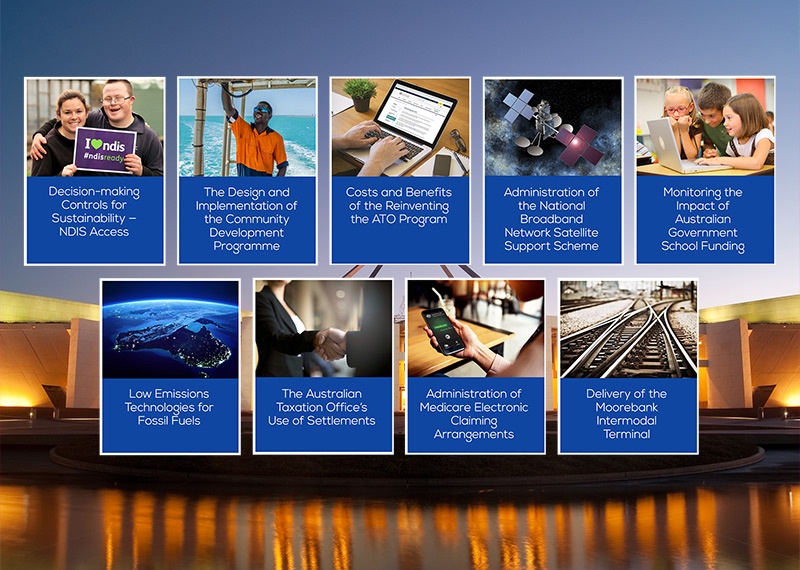
This edition of audit insights draws together key learnings from Australian National Audit Office (ANAO) reports tabled in the Parliament of Australia from October to December 2017. It provides insights into policy and program design – evidence and evaluation, record keeping, and the Australian Government Procurement Contract Reporting information report.
Contact
Please direct enquiries through our contact page.
Performance audit (Auditor-General Report No. 51 of 2002–03)
Published: Thursday 19 June 2003
Published
Defence has long provided housing assistance for members of the Australian Defence Force (ADF) and their families. In 1988, this function passed to the Defence Housing Authority (DHA), which was established to provide suitable housing to meet Defence's operational needs. In 2000, Defence and DHA signed a Services Agreement valued at $3.5 billion over 10 years. The objective of the audit was to assess whether Defence's management of its housing and relocation services provided for ADF members meets specified requirements; and to make practical recommendations for more efficient, effective and economical use of public resources provided for this purpose.
Entity
Department of Defence
Performance audit (Auditor-General Report No. 49 of 1998–99)
Published: Tuesday 29 June 1999
Published
The objective was to assess the extent to which staff reductions have been managed in a sound strategic and cost-effective manner consistent with the Government's guidelines and the ANAO's 1996 better practice guide Managing APS Staff Reductions. The audit focussed on 3 agencies - the Australian Taxation Office, the former Department of Primary Industry and Energy, and the former Department of Transport and Regional Development. The ANAO found that the majority of staff reductions were achieved through retrenchment rather than natural attrition; and that decisions on the number of retrenchments were not always supported by an assessment of the impact of the reductions on the agencies' abilities to conduct their business.
Entity
Public Service and Merit Protection Commission and Other Agencies
Performance audit (Auditor-General Report No. 16 of 2000–01)
Published: Wednesday 29 November 2000
Published
The objective of this audit was to assess the administration of internal fraud control arrangements in the ATO and to identify areas with potential for improvement as well as identified better practice. To achieve this objective the ANAO focussed on five key areas. These were:
- the application of the ATO's corporate governance processes to the internal fraud control activities;
- the prevention of internal fraud within the ATO;
- the related use of information technology to minimise fraud risks;
- the detection of internal fraud within the ATO; and
- ATO fraud investigation procedures and practices.
Entity
Australian Taxation Office
Performance audit (Auditor-General Report No. 26 of 1999–2000)
Published: Friday 14 January 2000
Published
In a military context, individual readiness refers to the ability of an individual member to be deployed, within a specified notice period, on operations, potentially in a combat environment, to perform the specific skills in which he or she has been trained. Individual readiness is the foundation on which military preparedness is built. Maintenance of a specified level of individual readiness in peacetime (along with other factors such as equipment readiness and collective training) influences the speed with which personnel can deploy on operations. The objective of this audit is to ensure that members can be deployed on operations, potentially in a combat environment, to perform their specific skills within a notice period of 30 days.
Entity
Department of Defence
Performance audit (Auditor-General Report No. 11 of 2002–03)
Published: Thursday 3 October 2002
Published
The audit reviewed the effectiveness of HIC's approach to customer service delivery to the Australian public as customers of Medicare. The primary issues examined were whether: . HIC manages its customer service delivery performance effectively;
- HIC's approach to people management adequately supports customer service delivery;
- HIC obtains adequate information from customers on their needs, expectations, and perceptions of HIC's service delivery; and
- HIC provides adequate information to customers on its services and on the service standards that customers should expect.
Entity
Health Insurance Commission
Performance audit (Auditor-General Report No. 3 of 2001–02)
Published: Tuesday 17 July 2001
Published
Taxation rulings are a key mechanism used by the Australian Taxation Office (ATO) to disseminate the Commissioner of Taxation's interpretative advice on Australian taxation law. The objective of the audit was to:
report to Parliament on the operation of the ATO's administration of taxation rulings (public, private and oral rulings); and where appropriate, make recommendations for improvements, having regard to considerations of: efficiency and effectiveness of the ATO's administration of the rulings system, particularly in relation to the achievement of the objectives set by Parliament for the rulings system; the ATO's systems' capacity to deliver consistency and fairness for taxpayers; and good corporate governance, including the control framework.
Entity
Australian Taxation Office
Potential topic
Potential topic: 2026-27
Potential
The ANAO could examine whether Services Australia’s procurement and contract management activities are complying with the Commonwealth Procurement Rules and demonstrating the achievement of value for money. The ANAO could examine one or more procurement and/or contract management activity of Services Australia. The ANAO could consider whether the procurement and/or contract management activity demonstrated value for money, ethical, efficient, effective and/or economical practice, if it was transparent and accountable, whether it supported broader government objectives, and/or whether risks were identified and managed. An audit of contract management may also consider whether: contracts effectively set milestones and establish performance standards; variations and extensions delivered value for money; transition of services is appropriately planned and managed to ensure continuity of service; and contract management and administration arrangements are in place and are operating effectively.
Entity
Services Australia
Contact
Please direct enquiries through our contact page.
Performance audit (Auditor-General Report No. 25 of 1995–96)
Published: Wednesday 22 May 1996
Published
The audit examined how well performance information for programs administered by the (now) Department of Employment, Education, Training and Youth Affairs (DEETYA) facilitates good decision-making and provides a suitable framework for control and accountability for performance.
Entity
Department of Employment, Education, Training and Youth Affairs
Performance audit (Auditor-General Report No. 43 of 1998–99)
Published: Wednesday 2 June 1999
Published
Networking the Nation was established with effect from 1 July 1997 to support activities and projects designed to meet a range of telecommunications needs in regional, rural and remote Australia. Funding is provided by the Regional Telecommunications Infrastructure Fund. The program provides total support of $250 million, of which $50 million was to be allocated annually for the five year period from 1997-98. Funding decisions for grants are the responsibility of an independent Board appointed by the Minister for Communications, Information Technology and the Arts. The objectives of the audit were to examine the administration of the program with a view to ascertaining the scope for improving administration and to provide assurance on the equity, efficiency and effectiveness of the management and administrative processes applied in the administration of grants under the program.
Entity
Department of Communications, Information Technology and the Arts
Potential topic
Potential topic: 2026-27
Potential
The ANAO could assess the Department of Defence’s development and delivery of selected autonomous maritime capabilities (uncrewed). The 2024 National Defence Strategy (NDS) identified the investment in uncrewed and autonomous systems as one of the government’s key priorities. The 2026 NDS emphasised government’s continued investment in the development of autonomous underwater and surface vessels and the role of the autonomous capabilities such as Ghost Shark, Bluebottle and Speartooth in providing ‘opportunities to strengthen the long-term commercial viability of Australian production lines’ as well as the potential for ‘significant export opportunities.’ The 2026 Integrated Investment Program (IIP) documents a planned investment of between $4.8 to $5.8 billion over the decade in the development of autonomous and uncrewed undersea warfare capabilities. An audit could provide independent assurance to the Parliament on Defence’s acquisition processes for these uncrewed maritime capabilities to determine if the desired effect is being delivered.
Entity
Department of Defence
Contact
Please direct enquiries through our contact page.
Performance audit (Auditor-General Report No. 12 of 1997–98)
Published: Thursday 13 November 1997
Published
The objective of the audit was to evaluate the Department's performance in pursuit of selected PBS program objectives and outcomes, including to investigate and evaluate the economy, efficiency, administrative effectiveness and accountability of the management of the listing process as a significant element of the program. This involved a review of the developments in the listing process over recent years including: the establishment of a comprehensive database of major applications for PBS listing between 1991 and 1996, which facilitated a detailed analysis of the time taken to list drugs on the PBS schedule; a technical consultancy into the DHFS' Guidelines to industry for preparation of applications for PBS listing, and into the use of the economic analysis in assessing proposals for PBS listing; and a review of the selection process including the operations of the PBS advisory committees.
Entity
Department of Health and Family Services
Potential topic
Potential topic: 2026-27
Potential
The ANAO could assess the administration of Australian Government grant funding used to improve conditions in the 46 town camps located throughout the Northern Territory (NT). The audit could include funding provided under the Australian Government’s plan for A Better, Safer Future for Central Australia (Central Australia Plan) in addition to other grants programs. The National Indigenous Australians Agency (NIAA) is responsible for implementing the Central Australia Plan and Indigenous Advancement Strategy grant programs. Other Australian Government entities such as the Attorney-General’s Department; Department of Health, Disability and Ageing; and Department of Social Services also provide grant funding to organisations in the NT. Principle 4 of the Commonwealth Grants Rules and Principles (‘an outcomes orientation’) emphasises the importance of establishing clear objectives and performance evaluation and reporting. Principle 6 (‘achieving value with relevant money’) emphasises the importance of effective stakeholder engagement, risk management, design and ongoing monitoring and management.
Entity
National Indigenous Australians Agency
Contact
Please direct enquiries through our contact page.
Performance audit (Auditor-General Report No. 23 of 2002–03)
Published: Friday 20 December 2002
Published
Physical Security Arrangements in Commonwealth Agencies, No.23 2002-2003 Protective security involves the total concept of information, personnel, physical, information technology and telecommunications security. The Commonwealth's Protective Security policy is outlined in the Protective Security Manual (PSM). It provides specific guidance to agencies on the protection of the Commonwealth's assets, personnel and clients from potential security threats. This audit evaluated the protective security policies and practices of seven Commonwealth agencies to determine whether they had established an appropriate physical security control framework based on the principles outlined in Part E of the Commonwealth's Protective Security Manual. The ANAO also examined whether agencies had considered the risks of, and developed an appropriate policy statement on, the physical security arrangements for employees who work from home.
Entity
Across Agency
Performance audit (Auditor-General Report No. 11 of 2001–02)
Published: Wednesday 19 September 2001
Published
In May 1997, the $1 billion Federation Fund was announced as part of the 1997-98 Budget to mark the Centenary of Federation. One component, the Federation Fund Major Projects ($906.8m), was to provide financial assistance to a number of major projects of national significance; by generating jobs in the construction industry and by making a significant and ongoing contribution to Australia and the Australian economy. Projects were expected to be geographically spread around Australia and well advanced, but not necessarily complete, by 2001. Commonwealth monies were intended to fully fund projects; augment existing funding; or match funding from other sources. The objective of the audit was to determine the extent to which the administration of the Federation Fund programme met identified better practice in relation to policy development and programme planning; the process of calling for, assessing, approving and announcing proposals; and ongoing programme and project management.
Entity
Across Agency
Corporate

Published: Friday 1 December 2023
Published
The ANAO regards integrity as a core value of the organisation — critical in sustaining the confidence of Parliament, strengthening public trust in government and delivering quality audit products. Maintaining strong institutional integrity is critical to the operations and reputation of the ANAO.
The ANAO Integrity Framework provides an overarching structure to the integrity control system, supporting our institution’s integrity. The framework serves to assist in ethical decision making and risk, fraud and misconduct management.
Beyond its control system, the ANAO maintains an enduring focus on promoting integrity as a value that is embedded in our work and culture. The ANAO recognises that integrity demands quality not only in our products but also in the behaviours of our people.
The ANAO Integrity Advisor supports the effective and ongoing application of the Integrity Framework by providing advice to staff regarding integrity matters. The Integrity Advisor is responsible for increasing integrity awareness across the organisation and for reporting annually to the ANAO Executive Board of Management on actions taken under the Framework. The Auditor-General has published the ANAO Integrity Framework and Report for 2022–23 to provide increased transparency of the measures we undertake to maintain a high-integrity culture in the ANAO.
Contact
Please direct enquiries through our contact page.