Browse our range of reports and publications including performance and financial statement audit reports, assurance review reports, information reports and annual reports.
Performance audit (Auditor-General Report No. 1 of 2009–10)
Published: Tuesday 4 August 2009
Published
In two letters dated 19 and 22 June 2009, the Prime Minister requested a performance audit of a range of matters relating to representations to the Treasury regarding automotive finance arrangements for car dealers. In response to these requests, the Auditor-General decided that ANAO would undertake a performance audit under section 18 of the Auditor-General Act 1997 (Auditor-General Act). The audit objective, based on the matters raised in the Prime Minister's correspondence and in the Parliament, was to examine and report on:
- any representations to the Treasury since October 2008 from all sources regarding automotive finance arrangements for car dealers, including any made in relation to John Grant Motors;
- the nature of these representations;
- the manner in which the representations were responded to by officials, having regard to any relevant standards and procedures; and
- any related administrative matters that came to attention.
Entity
Department of the Treasury; Department of the Prime Minister and Cabinet
Performance audit (Auditor-General Report No. 29 of 2011–12)
Published: Tuesday 3 April 2012
Published
The audit objective was to report on the administration of the Australia Network tender process and to identify lessons learned from the conduct of the process to inform future procurement activities.
Entity
Department of Foreign Affairs and Trade, Department of Broadband, Communications and the Digital Economy and Department of the Prime Minister and Cabinet
Speeches and papers
Published: Thursday 22 May 2014
Published
Mr Mr Ian McPhee - Auditor-General for Australia, presented at the Institute of Public Administration Australia (ACT Division)
Annual report
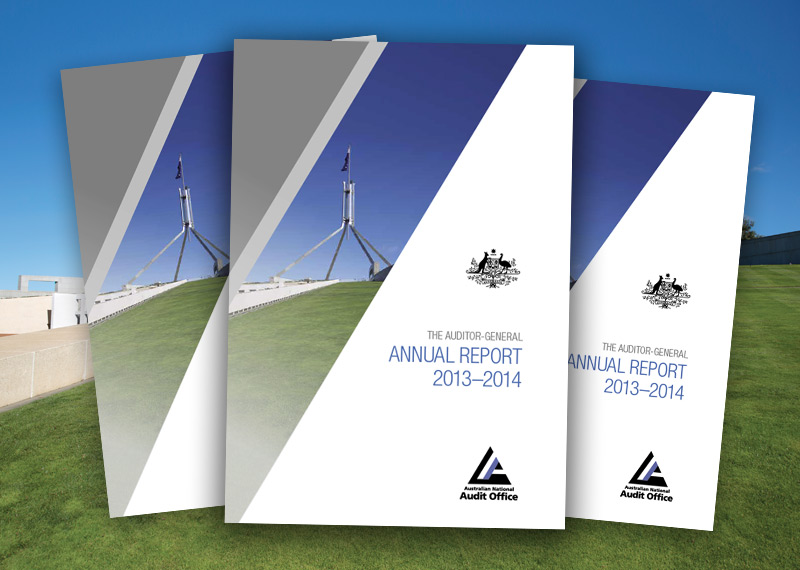
Published: Tuesday 30 September 2014
Published
This annual report documents the performance of the Australian National Audit Office (ANAO) in the financial year ending on 30 June 2014. It addresses the Requirements for Annual Reports for Departments, Executive Agencies and FMA Act Bodies approved by the Joint Committee of Public Accounts and Audit in May 2014; the performance measures set out in the outcome and programs framework in the 2013–14 Portfolio Budget Statements; section 28 of the Auditor-General Act 1997; and other annual reporting requirements provided for in legislation.
Speeches and papers
Published: Friday 18 May 2007
Published
Mr Ian McPhee - Auditor-General for Australia, presented at the Queensland Regional Heads Forum
Performance audit (Auditor-General Report No. 18 of 2003–04)
Published: Wednesday 10 December 2003
Published
The Australian National Audit Office (ANAO) completed a performance audit of the ATO's use of AUSTRAC data in August 2000, titled The AustralianTaxation Office's Use of AUSTRAC Data, Audit Report No. 7 2000-2001. It found that the ATO had used AUSTRAC data to achieve a significant improvement in the collection of taxation revenue. The ANAO considered that the ATO could build on this success by using AUSTRAC data more effectively at both the strategic and operational levels. The audit made six recommendations. The ATO agreed with all recommendations. The objective of this follow-up performance audit was to assess the ATO's progress in implementing the recommendations of Audit Report No 7 2000-2001, The Australian Taxation Office's Use of AUSTRAC Data.
Entity
Australian Taxation Office
Performance audit (Auditor-General Report No. 8 of 2003–04)
Published: Monday 20 October 2003
Published
The audit is a follow-up of ANAO Audit Report No.33 of 1997-98, which assessed the effectiveness and efficiency of the Commonwealth's management of the Great Barrier Reef and made seven recommendations for improvement. The objective of the follow-up audit was to assess the extent to which the Great Barrier Reef Marine Park Authority, which is responsible for advising the Commonwealth on the care and developement of the Marine Park, has implemented the recommendations of the earlier audit.
Entity
The Great Barrier Reef Marine Park Authority
Performance audit (Auditor-General Report No. 44 of 2000–01)
Published: Tuesday 5 June 2001
Published
The audit was conducted as a joint financial statement and performance audit of DVA's Information Technology (IT) systems. The objective of the financial statement component of the audit was to express an opinion on whether DVA could rely on its IT systems to support production of a reliable set of financial information for the financial statements. The objective of the performance audit component was to determine whether DVA's IT systems outputs adequately met quality and service delivery targets.
Entity
Department of Veterans' Affairs
Performance audit (Auditor-General Report No. 6 of 2011–12)
Published: Thursday 15 September 2011
Published
The audit objective was to assess the effectiveness of DEEWR’s administration of FWEIP. The three high level criteria that were used to make this assessment were the appropriateness of DEEWR’s:
- program planning and design;
- selection and engagement of providers; and
- program monitoring, reporting and evaluation.
Entity
Department of Education, Employment and Workplace Relations
Performance audit (Auditor-General Report No. 21 of 2002–03)
Published: Wednesday 11 December 2002
Published
The audit examined whether the Department of Health and Ageing had the performance information necessary to administer the Australian Health Care Agreements. A strong focus of the audit was accountability for performance given the significant size of Commonwealth financial assistance, more than $29.6 billion over 5 years, provided to the States and Territories for the provision of health care services.
Entity
Department of Health and Ageing