Browse our range of reports and publications including performance and financial statement audit reports, assurance review reports, information reports and annual reports.
Performance audit (Auditor-General Report No. 27 of 2001–02)
Published: Monday 17 December 2001
Published
The audit examined the management of software licensing by five Commonwealth agencies. The objective of the audit was to provide assurance to these agencies and the Parliament that:
- effective controls are in place to ensure the physical security of software media;
- the risks associated with the use of illegal software are being effectively managed; and
- compliance with software licence conditions is being adequately monitored.
Entity
Across Agency
Performance audit (Auditor-General Report No. 54 of 2016–17)

Published: Thursday 1 June 2017
Published
The objective of the audit was to assess the selected entities’ progress in implementing the corporate planning requirements under the Public Governance, Performance and Accountability Act 2013 and related PGPA Rule 2014.
This audit assessed corporate plans for the 2016–17 reporting period, and complements the report published in August 2016 which assessed corporate plans for the 2015–16 reporting period.
Entity
Comcare; Department of Education and Training; Department of the Prime Minister and Cabinet; National Library of Australia
Contact
Please direct enquiries relating to reports through our contact page.
Audit manual
Updated: Tuesday 9 September 2025
Updated
The Performance Statements Audit Services Group (PSASG) volume of the ANAO Audit Manual applies to the performance statements audit activity performed by PSASG.
Contact
Please direct enquiries through our contact page.
Performance audit (Auditor-General Report No. 42 of 2006–07)
Published: Tuesday 12 June 2007
Published
The objective of the audit is to assess the effectiveness of the ATO's administration of debt collection. Micro-business debt is a particular focus of attention. The three key areas examined are:
- strategies–especially the ATO's initiatives trialled in 2006;
- infrastructure–the IT systems, people, policy and processes and risk management framework supporting the collection of debt; and
- management and governance–planning, monitoring and reporting mechanisms and liaison with stakeholders.
The ANAO focused on the work of the campaigns area within the Debt Line, which has collection responsibility for 90 per cent of collectable debt cases and responsibility for other key, centralised functions such as reporting, quality assurance review, consistency and best practice, and the debt collection initiatives.
Entity
NO-DEPTS-LISTED
Performance audit (Auditor-General Report No. 29 of 2007–08)
Published: Wednesday 23 April 2008
Published
The objective of the audit was to review the effectiveness of the department's administration of the PSPI. To achieve this, the ANAO considered the department's program planning and design, service delivery arrangements and monitoring, review and reporting activities. The decision which resulted in the replacement of ASSPA with PSPI was a policy decision of the Government and, thus, was beyond the scope of this audit.
Entity
Department of Education, Employment and Workplace Relations
Performance audit (Auditor-General Report No. 4 of 2007–08)
Published: Wednesday 8 August 2007
Published
The objective of this follow up audit was to examine Customs' implementation of the eight recommendations in the ANAO Report No.16 2004–05 and the two related recommendations from JCPAA Report 404. The audit has had regard to issues affecting the implementation of the recommendations and has taken into account changed circumstances and new administrative arrangements since the previous audit.
Entity
Australian Customs Service
Insights: Audit practice
Published: Wednesday 25 October 2017
Published
Effective, engaging and accessible communication remains an ongoing focus for the Australian National Audit Office (ANAO), given the important role that we play in providing assurance to the Parliament of Australia, and improving public sector administration.
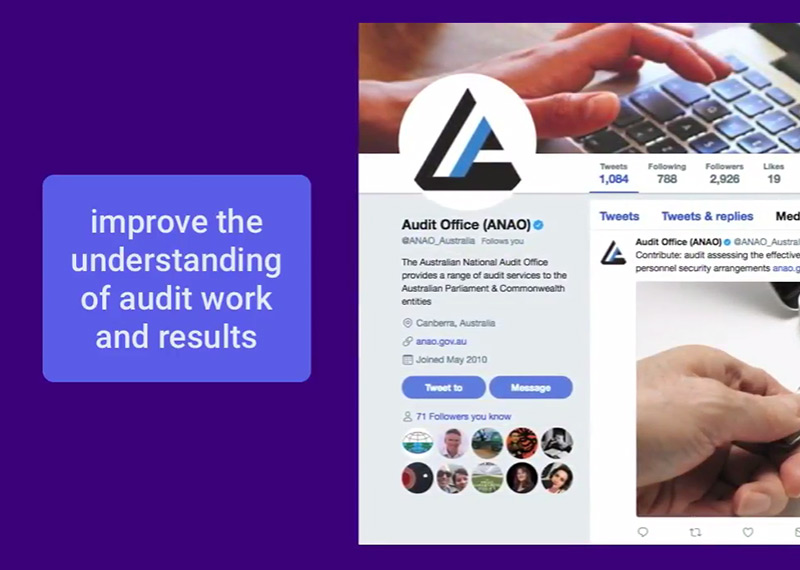
In this edition of audit insights we discuss our external communication and engagement activities including website email subscriptions, our draft annual audit work program, contribute to an audit, our transparency and accountability initiatives, and social media.
Contact
Please direct enquiries relating to Audit insights through our contact page.
Performance audit (Auditor-General Report No. 15 of 2010–11)
Published: Thursday 18 November 2010
Published
The objective of the audit was to assess FSANZ's administration of its food standard functions, as specified in the Food Standards Australia New Zealand Act, 1991 (last amended 2007).
Particular emphasis was given to whether:
- FSANZ's performance management and reporting provided effective support and ensures accountability;
- FSANZ effectively administered its food standard development and variation function, including its stakeholder management; and
- FSANZ effectively monitored the implementation of its standards and coordinates relevant jurisdictions to address market failures.
Entity
Food Standards Australia New Zealand
Performance audit (Auditor-General Report No. 11 of 2010–11)
Published: Thursday 30 September 2010
Published
The objective of the audit was to assess how well agencies had implemented the CPGs and relevant FMA legislation when undertaking Direct Source procurement.
The audit examined whether selected agencies had developed a sound procurement framework; appropriately classified procurement methods when meeting external reporting requirements; implemented the CPGs and relevant legislation when Direct Sourcing; and established effective procurement monitoring and review arrangements.
The ANAO selected four FMA Act agencies to provide a cross-section of the 104 agencies that reported procurement activity in AusTender in
2008–09. The agencies selected for audit were:
- the Department of Families, Housing, Community Services and Indigenous Affairs (FaHCSIA);
- the Department of Innovation, Industry, Science and Research (Innovation);
- the Department of Veterans' Affairs (DVA); and
- the Australian Crime Commission (ACC).
The ANAO examined a stratified random sample of 645 procurements valued at $10 000 and over, across the four agencies. More detailed testing was undertaken for the 285 Direct Source procurements in the sample.
Entity
Across Agencies
Speeches and papers

Published: Wednesday 8 August 2018
Published
Grant Hehir, Auditor-General for Australia, attended the 18th Meeting of INTOSAI Working Group on Environmental Auditing in Bundung Indonesia in July 2018, and presented a keynote address titled Sharing experience on auditing urban environmental management. The accompanying paper to the speech is available here.
Contact
Please direct enquiries through our contact page.