Browse our range of reports and publications including performance and financial statement audit reports, assurance review reports, information reports and annual reports.
Performance audit (Auditor-General Report No. 32 of 1997–98)
Published: Tuesday 17 February 1998
Published
The objective of the audit was to assess the economy, efficiency and administrative effectiveness, including accountability, of the management of boat people by the Department and the providers of major related services to DIMA such as: the Coastwatch Service within the Australian Customs Service and the Australian Protective Service within the Attorney-General's portfolio. The audit examined key issues in the management of boat people largely from a risk management perspective. The audit conclusions are presented in terms of: the economy, efficiency and administrative effectiveness, including the accountability, of operations; and the administrative functions which support the management of boat people, such as detection, reception of boats and costs.
Entity
Department of Immigration and Multicultural Affairs; Australian Protective Service; Australian Customs Service
Corporate

Published: Wednesday 19 July 2017
Published
The ANAO 2017–18 Corporate Plan is the ANAO's key strategic planning document. It guides our operating environment and sets out how we will deliver on our purpose. The corporate plan is complemented by the annual audit work program which reflects the ANAO's strategy and deliverables for the coming year.
Contact
Please direct enquiries about our corporate plan through our contact page.
Performance audit (Auditor-General Report No. 4 of 2005–06)
Published: Thursday 4 August 2005
Published
The objectives of the audit were to assess the Commonwealth's management of contractual rights and obligations under the Sale Agreements. In particular the audit sought to: assess the Commonwealth's management of contractual warranties and indemnities; assess DoTARS' management of each purchaser's compliance with contractual commitments to capital expenditure; and examine the effectiveness of the development and management of contractual arrangements for concessional rail passenger travel provided by the Commonwealth.
Entity
Department of Transport and Regional Services; Department of Veterans’ Affairs; Department of Family and Community Services
Performance audit (Auditor-General Report No. 44 of 2004–05)
Published: Wednesday 25 May 2005
Published
The objective of the audit was to examine Defence's management of leases that have resulted from property sale and leaseback transactions. Leases subject to review were for a period of ten or more years and included the following six properties: the Defence Plazas in Sydney and Melbourne; the Hydrographic Office Wollongong; DNSDC Moorebank; Campbell Park Offices in Canberra; and ADC Weston Creek in Canberra. The audit examined the process for identifying the properties for sale and leaseback and the sale approval process. The audit sought to determine the basis on which the properties were proposed for sale and leaseback and the financial impact for the Government. The audit also reviewed the lease terms and conditions to determine whether they protect the Government's interests, and examined Defence's management of commitments arising from the leases.
Entity
Across Agencies
Insights: Audit lessons

Published: Monday 16 October 2023
Published
The aim of Insights: Audit Lessons (formerly Audit Insights) is to communicate lessons from our audit work and to make it easier for people working within the Australian public sector to apply those lessons.
This edition of Insights: Audit Lessons is targeted at Australian Government officials who are working in governance roles or who have responsibility for ensuring effective oversight and management of probity. Although it is based on audits of financial regulators, the lessons for managing probity risks can be applied across the public sector.
Contact
Please direct enquiries through our contact page.
Corporate
Published: Thursday 30 November 2017
Published
The Australian National Audit Office provided a submission on 10 November 2017 to the statutory review of the Public Governance, Performance and Accountability Act 2013 (PGPA Act) and Public Governance, Performance and Accountability Rule 2014 (PGPA Rule).
Contact
Please direct enquiries through our contact page.
Performance audit (Auditor-General Report No. 14 of 1999–2000)
Published: Tuesday 12 October 1999
Published
The audit reviewed Commonwealth debt management procedures. The audit objectives were to:
- review, and consider opportunities to improve, the reporting and disclosure of the Commonwealth's public debt;
- assess the effectiveness of the raising, management and retirement of Commonwealth debt, consistent with an acceptable degree of risk exposure; and
- determine whether there are opportunities to improve the Commonwealth's approach to the raising, management and retirement of Commonwealth debt.
Entity
Across Agency
Performance audit (Auditor-General Report No. 26 of 1996–97)
Published: Tuesday 11 February 1997
Published
The objective of Phase Two of the audit was to examine the efficiency and effectiveness of operations of ATSIC Central, State and Regional Offices in relation to the administration of the Community Development Employment Projects Scheme. The ANAO established key criteria to assess progress against the implementation of the Phase One recommendations and further assess the efficiency and effectiveness of CDEP administration. The main areas examined were: planning, including reports of progress against plans and the development and use of performance information; monitoring, including client feedback and the review process at the Regional Office level; the implementation and effectiveness of management information systems in relation to CDEP; and the development and implementation of quality assuranced processes at State/Regional level.
Entity
Aboriginal and Torres Strait Islander Commission
Performance audit (Auditor-General Report No. 24 of 2003–04)
Published: Saturday 31 January 2004
Published
A Special Account is a mechanism used to record amounts in the Consolidated Revenue Fund that are set aside for specified purposes. A total of $3.40 billion was reported as held in Special Accounts as of 30 June 2003, with $10.33 billion reported as credited to Special Accounts in 2002-03 and $10.06 billion in reported payments (debits) from these Accounts. The audit examined the establishment, management and abolition of Special Accounts by Commonwealth agencies, as well as compliance with legal requirements
Entity
Across Agency
Performance audit (Auditor-General Report No. 24 of 2014–15)
Published: Thursday 26 February 2015
Published
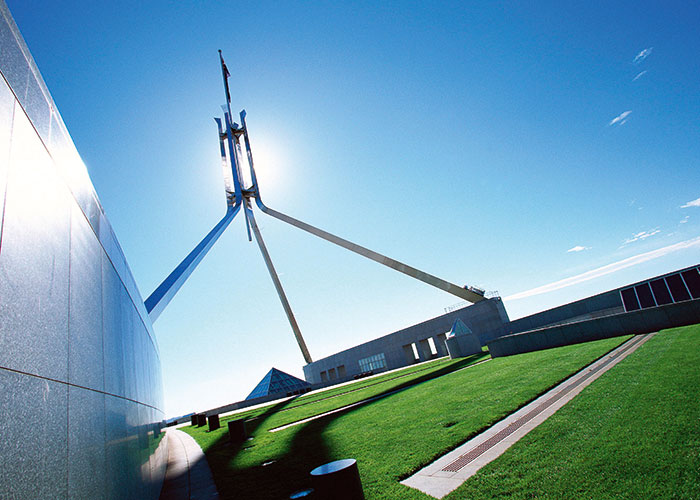
The objective of the audit was to assess the effectiveness of the Department of Parliamentary Services’ management of assets and contracts to support the operations of Parliament House.
Entity
Department of Parliamentary Services
Contact
Please direct enquiries relating to reports through our contact page.