Browse our range of reports and publications including performance and financial statement audit reports, assurance review reports, information reports and annual reports.
Performance audit (Auditor-General Report No. 28 of 2007–08)
Published: Tuesday 22 April 2008
Published
The objective of the audit was to review selected Defence public works projects submitted in the three year period ending mid 2007 to assess whether they had been submitted in accordance with the Committee's prevailing requirements for notification and review prior to entering into financial commitments for public works. The audit also examined the procedures applied by Defence to refer public works projects to the Committee, and identified administrative practices that may improve adherence with relevant legislative and administrative referral requirements.
Entity
Department of Defence
Annual report
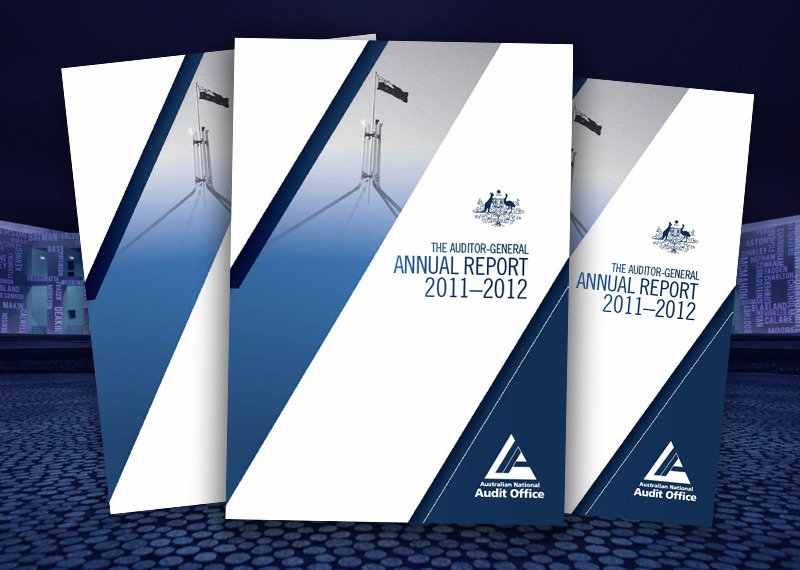
Published: Thursday 27 September 2012
Published
This annual report documents the performance of the Australian National Audit Office (ANAO) in the financial year ending on 30 June 2012. It presents an overview including the role and vision of the Office, a report on performance, details about management and accountability, and the financial results.
Performance audit (Auditor-General Report No. 46 of 2002–03)
Published: Friday 6 June 2003
Published
Australian Industry Involvement Program. Department of Defence The audit examined the management by Defence of its Australian Industry Involvement (AII) Program. AII is the major program through which Defence gives effect to government policy on Australian industry. The objective of the audit was to assess the extent to which the AII Program has achieved its two policy objectives, which are to :
- develop and sustain strategically important capabilities in Australian industry to support Australian Defence Force operations and Defence capability development; and
- maximise Australian industry involvement in Defence's procurement of goods and services, consistent with the government procurement policy objective of achieving best value for money to the Commonwealth.
Entity
Department of Defence
Performance audit (Auditor-General Report No. 48 of 1999–2000)
Published: Monday 19 June 2000
Published
The objective of the follow-up audit was to review the effectiveness of the DETYA International Services (DIS) cost recovery operational model. The initial audit of DIS was undertaken in 1997-98 (Audit Report No.35).
Entity
Department of Education, Training and Youth Affairs
Performance audit (Auditor-General Report No. 24 of 2007–08)
Published: Tuesday 26 February 2008
Published
The audit objective was to determine whether DIAC's biometrics program had appropriate:
- business review processes (including a business case);
- authorisation;
- business and IT governance arrangements; and
- IT project management and systems development arrangements.
Entity
Department of Immigration and Citizenship
Performance audit (Auditor-General Report No. 31 of 2001–02)
Published: Wednesday 13 February 2002
Published
The report summarises the audit and other related activities of the ANAO in the period July to December 2001. Key issues arising from performance audits tabled in this period are summarised.
Entity
Audit Activity Report
Performance audit (Auditor-General Report No. 54 of 2004–05)
Published: Wednesday 22 June 2005
Published
A Health Care Card (HCC) is one of three types of concession cards issued by Centrelink for the Australian Government. The objectives of the audit were to assess: the effectiveness of whole of government approaches to administering HCCs by FaCS, Centrelink, Health and HIC; the adequacy ofperformance information relating to HCCs, including monitoring the use of the card and its budgetary impact, as well as the cost of administering HCCs; and the effectiveness of controls relating to the issue, maintenance and cancellation of the HCC; and to limit its incorrect or fraudulent use.
Entity
Health Insurance Commission; Department of Health and Ageing; Centrelink; Department of Family and Community Services
Performance audit (Auditor-General Report No. 8 of 2010–11)
Published: Thursday 23 September 2010
Published
The audit examined the effectiveness of DEEWR's administrative arrangements supporting the delivery of Indigenous childcare services through MACS and crèches, including the approaches DEEWR uses to monitor the achievement of the BBF sub-program objective.
In conducting the audit, the Australian National Audit Office (ANAO) reviewed three key areas:
- program administration—DEEWR's administrative systems and processes supporting the delivery of Indigenous childcare services through MACS and crèches and the broader BBF sub-program;
- management of service provider funding agreements—DEEWR's systems and processes for managing MACS and crèche service providers' funding agreements; and
- monitoring and reporting performance—the effectiveness of DEEWR's processes for monitoring the performance of service providers, and the achievement of the outputs and outcomes of the BBF sub-program.
The ANAO sought not to duplicate the work of DEEWR's Internal Audit function, and in doing so referred to the findings of the recent internal audit review of the CCSSP, where these were relevant and appropriate.
Entity
Department of Education, Employment and Workplace Relations
Performance audit (Auditor-General Report No. 46 of 2005–06)
Published: Wednesday 14 June 2006
Published
The objective of this follow-up audit was to review FaCSIA's progress in implementing the recommendations of Audit Report No.17 1999–2000. The focus was whether FaCSIA had maintained or improved its oversight, coordination and administration of the CSHA for both the 1999 CSHA and the 2003 CSHA, in line with the recommendations and findings identified in the previous ANAO audit.
Entity
Department of Families Community Services and Indigenous Affairs
Performance audit (Auditor-General Report No. 47 of 2010–11)
Published: Wednesday 8 June 2011
Published
The objective of the audit was to assess the effectiveness of CSIRO’s development and administration of selected National Research Flagships. In assessing CSIRO’s performance, the ANAO examined whether:
- mechanisms were in place to develop and implement the Flagships, within the context of the broader CSIRO change program;
- governance arrangements for Flagships incorporated sound oversight, planning and reporting arrangements; and
- periodic review activities were used to assess and improve the operation of the Flagships.
Entity
Commonwealth Scientific and Industrial Research Organisation