Browse our range of reports and publications including performance and financial statement audit reports, assurance review reports, information reports and annual reports.
Performance audit (Auditor-General Report No. 10 of 2001–02)
Published: Monday 17 September 2001
Published
The objectives of the audit were to determine whether agencies have implemented appropriate risk management strategies for the new banking arrangements, which came into operation on 1 July 1999 and whether cash funds are being managed in accordance with the appropriate legislation, the Commonwealth's agency banking guidance and generally accepted accounting practices. The scope of the audit was restricted to the departmental cash funds management and focused on risk management processes and management accounting controls adopted in the forecasting of cash flows, operation of bank accounts and placement of funds. The audit examined seven agencies, which are not named in the report.
Entity
Across Agency
Performance audit (Auditor-General Report No. 47 of 2000–01)
Published: Thursday 7 June 2001
Published
Quarantine policies and operations are the responsibility of the Department of Agriculture, Fisheries and Forestry - Australia (AFFA). The objective of this audit was to assess AFFA's management of plant and animal quarantine services, and the implementation and impact of the Government Response (1997) to the Quarantine Review Committee Report. The audit in particular assessed the setting of quarantine priorities through assessing and managing risk; management of the continuum of quarantine operations; and management of Import Risk Analyses to deliver and review quarantine policies. Stakeholder consultation and advisory processes were also assessed in addressing these issues. A key issue examined was the effectiveness of AFFA quarantine operations in international mail and airports preventing the entry of quarantinable material. The ANAO made eight recommendations aimed at improving operational risk based resource allocation; pre-border management of quarantine risk; the effectiveness of quarantine operations at the Australian border; and priority setting and transparency of the IRA process. AFFA agreed to all eight ANAO recommendations.
Entity
Agriculture Fisheries and Forestry - Australia Department of Agriculture
Speeches and papers
Published: Tuesday 3 June 1997
Published
Mr P.J. Barrett (AM) - Auditor-General for Australia, presented to the Australian Taxation Office Staff Conference, Canberra
Performance audit (Auditor-General Report No. 28 of 2006–07)
Published: Thursday 22 February 2007
Published
The objective of the audit was to assess the effectiveness of the major elements of Centrelink's central, strategic level project management arrangements, as defined in the CPMF. It focused on how well:
- the CPMF supports better management and service delivery in Centrelink;
- the CPMF supports project managers and projects to comply with better project management principles, relevant legislation and guidelines; and
- Centrelink monitors project performance and encouraged the attainment of project objectives.
Entity
Centrelink
Performance audit (Auditor-General Report No. 20 of 2000–01)
Published: Thursday 30 November 2000
Published
The objectives of the audit were to: assess the extent to which the Government's sale objectives were achieved; assess the effectiveness of the management of the public share offer; and identify principles of sound administrative practice to facilitate improved administrative arrangements for future Commonwealth public share offers.
Entity
Department of Finance and Administration
Performance audit (Auditor-General Report No. 31 of 2003–04)
Published: Wednesday 25 February 2004
Published
This report relates to the fifth audit of Financial Management and Accountability Act 1997 (FMA Act) agencies' compliance with the Senate Order for Departmental and Agency Contracts, (the Senate Order) to list, on the Internet, contract details for the Financial Year 2002-2003 reporting period. The audit was conducted in accordance with the Senate Order request for the Auditor - General to undertake twice - yearly examinations of agency contracts listed on the Internet, and to report whether there had been any inappropriate use of confidentiality provisions. The objectives of the audit were to assess agency performance in relation to compiling the Internet listings required by the Senate Order and the appropriateness of the use of confidentiality of provisions in Commonwealth contracts.
Entity
Australian Industrial Registry; Australian Taxation Office; Department of Communications Information Technology and the Arts; Department of the Environment and Heritage; Federal Court of Australia; National Office for the Information Economy
Annual report
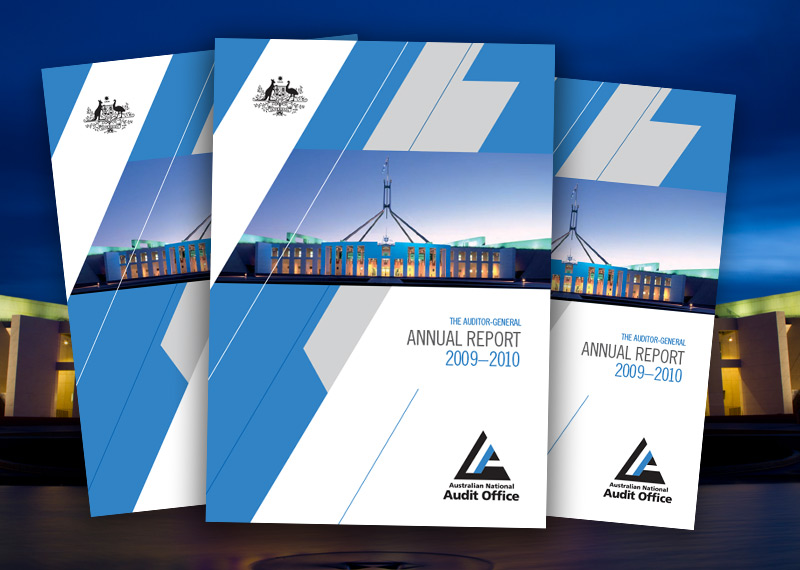
Published: Thursday 30 September 2010
Published
This annual report documents the performance of the Australian National Audit Office (ANAO) in the financial year ending on 30 June 2010. It includes a foreword by the Auditor-General, an overview including the role and responsibilities and vision of the Office, a report on performance, details about management and accountability, and the financial results.
Performance audit (Auditor-General Report No. 41 of 2005–06)
Published: Wednesday 24 May 2006
Published
The audit objective was to assess Health's administration of primary care funding, with a focus on the administrative practices of the Primary Care Division and Health's State and Territory Offices. In forming an opinion on the audit objective, the ANAO reviewed 41 agreements, with a combined value of $252 million. The ANAO also reviewed relevant documentation and files, interviewed programme officers and met with a number of stakeholders. The audit comments on a range of issues, including the utility of funding agreements, monitoring, payments, and support for administrators.
Entity
Department of Health and Ageing
Performance audit (Auditor-General Report No. 32 of 2004–05)
Published: Wednesday 9 March 2005
Published
Given the importance of customer feedback to Centrelink's business, the ANAO considered it timely to conduct a series of performance audits relating to Centrelink's customer feedback systems, particularly in relation to its delivery of the services then provided on behalf of FaCS. The overarching objective of this series of ANAO performance audits of Centrelink's customer feedback systems was to assess whether Centrelink has effective processes and systems for gathering, measuring, reporting and responding effectively to customer feedback, including in relation to customer satisfaction with Centrelink services and processes.
Entity
Centrelink
Performance audit (Auditor-General Report No. 22 of 1999–2000)
Published: Wednesday 22 December 1999
Published
The audit reviewed the operations of the Bureau of Meteorology. The Bureau's functions include the taking and recording of meteorological observations and other observations required for the purposes of meteorology; the forecasting of weather and of the state of the atmosphere; the issue of warnings of weather conditions likely to endanger life or property; the supply, publication and promotion of meteorological information; and cooperation with international meteorological agencies in relation to the functions just listed. The objectives of the audit were to:
- use national and international benchmarks to evaluate the Bureau's performance in terms of timeliness, cost and quality of weather services to meet the needs of clients; and
- assess how well the Bureau is placed in measuring its outputs/outcomes within the context of the Accrual Budgeting Framework.
Entity
Department of the Environment and Heritage