Browse our range of reports and publications including performance and financial statement audit reports, assurance review reports, information reports and annual reports.
Performance audit (Auditor-General Report No. 6 of 2008–09)
Published: Tuesday 30 September 2008
Published
The objective of the audit was to assess whether Customs has implemented effective measures to control IUU fishing in the Southern Ocean. The audit examined Customs' management and coordination of enforcement operations in the Southern Ocean, with particular emphasis on:
- the approach to assessing and reporting SOMPR program performance, and whether outcomes are being met;
- coordination with other stakeholder agencies to meet program outcomes;
- the operational planning framework, management of human and physical resources and contract management; and
- the management of the deployment and operation of program maritime assets.
Entity
Australian Customs Service
Speeches and papers
Published: Wednesday 26 July 2000
Published
Mr P.J. Barrett (AM) - Auditor-General for Australia, presented at the Australian Corporate Lawyers Association and the Australian Institute of Administrative Law Conference on Outsourcing
Performance audit (Auditor-General Report No. 38 of 2007–08)
Published: Wednesday 4 June 2008
Published
The objective of this audit was to assess the effectiveness of DEEWR's administration of Job Network service fees. The ANAO examined DEEWR's arrangements to:
- specify the nature and level of services to be supplied by JNMs and to communicate this to the JNMS;
- calculate and pay service fees in accordance with the Employment Services Contract (ESC) 2006–2009 it has with JNMs; and
- obtain assurance that JNMs have delivered services in accordance with the contract.
Entity
Department of Education, Employment and Workplace Relations
Annual report
Published: Friday 30 September 2011
Published
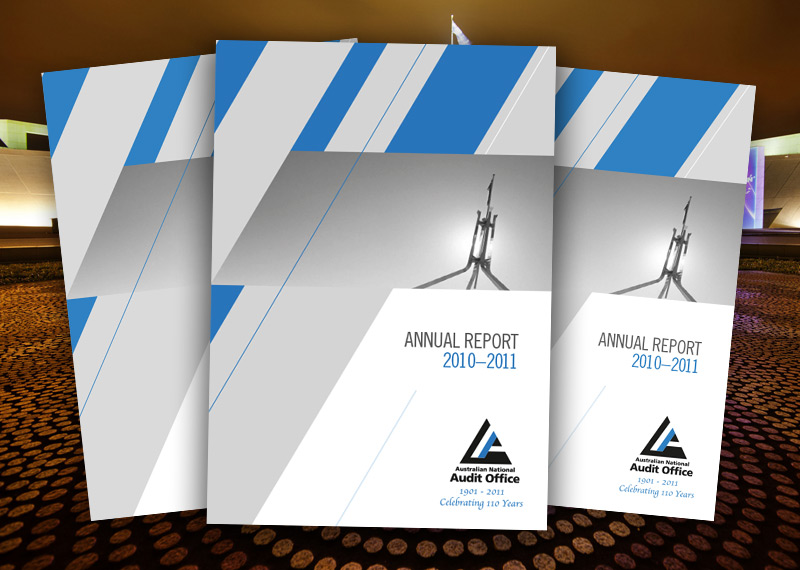
This annual report documents the performance of the Australian National Audit Office (ANAO) in the financial year ending on 30 June 2011. It includes a foreword by the Auditor-General, an overview including the role and vision of the Office, a report on performance, details about management and accountability, and the financial results.
Performance audit (Auditor-General Report No. 47 of 2004–05)
Published: Tuesday 31 May 2005
Published
The objective of this audit was to the examine action taken by the ATO to improve TFN integrity, particularly through the implementation of the recommendations made in:Report No.37, taking into account any changed circumstances, or new administrative issues, affecting the implementation of those recommendations; and Numbers on the Run, taking into account that the Government has not formally responded to the report at this time.The audit also aimed to identify further opportunities for the ATO to improve the effectiveness and efficiency of the TFN system. The report of this audit is necessarily detailed as it considers each of the recommendations and the extent to which they have been implemented.
Entity
Australian Taxation Office
Performance audit (Auditor-General Report No. 36 of 1997–98)
Published: Monday 2 March 1998
Published
This report is the second in a series of reports to be tabled at six-monthly intervals. It summarises the audit and other activities of the ANAO in the period July to December 1997.
Entity
Audit Activity Report
Speeches and papers
Published: Wednesday 26 June 2002
Published
Mr P.J. Barrett (AM) - Auditor-General for Australia, presented at the International Quality & Productivity Centre Seminar
Performance audit (Auditor-General Report No. 43 of 2003–04)
Published: Friday 23 April 2004
Published
The objective of the audit was to provide assurance to Parliament concerning the adequacy of Defence preparedness management systems and to identify possible areas for improvement. The audit focused on the systems and processes that Defence uses to manage preparedness. We did not review the preparedness levels of specific capabilities, nor did we cover capital acquisition processes. The audit included coverage of: - preparedness systems architecture; - control and direction of preparedness; - coordination among contributors to preparedness; and - performance management and preparedness.
Entity
Department of Defence
Annual report
Published: Wednesday 19 September 2007
Published
This annual report documents the performance of the Australian National Audit Office (ANAO) in the financial year ending on 30 June 2007. It includes highlights and areas of focus for the coming year; a forward by the Auditor-General; an overview of the report; a report on performance; details about management and accountability, and the financial statement for the year.
Performance audit (Auditor-General Report No. 26 of 2002–03)
Published: Thursday 16 January 2003
Published
The main objectives of the audit were to examine DOTARS' response to the heightened threat environment following the events of 11 September 2001, and to determine the extent to which DOTARS' monitoring and compliance regime ensures that the aviation industry complies with its security obligations. The scope of the audit included:
- the respective roles and responsibilities of the organisations involved in aviation security;
- the setting of security settings; DOTARS' monitoring of airport, airline and cargo security;
- the action DOTARS takes in response to security breaches; and
- evaluation of aviation security.
Entity
Department of Transport and Regional Services