Browse our range of reports and publications including performance and financial statement audit reports, assurance review reports, information reports and annual reports.
Performance audit (Auditor-General Report No. 16 of 2013–14)
Published: Wednesday 29 January 2014
Published
The objective of the audit was to assess the effectiveness of the administration of the Smart Grid, Smart City Program, including the establishment, implementation and ongoing management of the program.
Entity
Department of the Environment; Department of Industry
Contact
Please direct enquiries relating to reports through our contact page.
Performance audit (Auditor-General Report No. 13 of 1999–2000)
Published: Monday 11 October 1999
Published
The Department of Defence spends some $2.4 billion a year on major equipment acquisition projects. The audit objective was to assess Defence's arrangements for higher-level management of major equipment acquisition projects. The principal aim was to formulate practical recommendations that would both enhance Defence's management of major acquisition projects and provide a degree of assurance about its ongoing apparent capacity to do so efficiently and effectively.
Entity
Department of Defence
Performance audit (Auditor-General Report No. 37 of 1996–97)
Published: Wednesday 18 June 1997
Published
The objective of the audit was to provide assurance about the Australian Taxation Office's risk management approach and to add value to its administration by analysing the economy, efficiency, administrative effectiveness, equity and accountability of the related processes employed within the organisation. The ANAO reviewed the formal risk management process that the ATO uses to deal with all sources of risk for the organisation.
Entity
Australian Taxation Office
Annual report
Published: Wednesday 19 September 2007
Published
This annual report documents the performance of the Australian National Audit Office (ANAO) in the financial year ending on 30 June 2007. It includes highlights and areas of focus for the coming year; a forward by the Auditor-General; an overview of the report; a report on performance; details about management and accountability, and the financial statement for the year.
Annual report
Published: Thursday 7 September 2006
Published
This annual report documents the performance of the Australian National Audit Office (ANAO) in the financial year ending on 30 June 2006. It includes highlights and areas of focus for the coming year; a forward by the Auditor-General; an overview of the report; a report on performance; details about management and accountability, and the financial statement for the year.
Performance audit (Auditor-General Report No. 48 of 2012–13)
Published: Wednesday 19 June 2013
Published
The objective of the audit was to assess the effectiveness of the Department of Families, Housing, Community Services and Indigenous Affairs' (FaHCSIA) administration and management of the Targeted Community Care (Mental Health) Program.
Entity
Department of Families, Housing, Community Services and Indigenous Affairs
Contact
Please direct enquiries relating to reports through our contact page.
Performance audit (Auditor-General Report No. 9 of 2002–03)
Published: Monday 30 September 2002
Published
The objective of the audit was to assess whether Centrelink's Balanced Scorecard (BSC) was based on key elements of better practice principles and its use assisted Centrelink to understand and communicate its performance against its strategic goals. The audit examined:
- the use of the BSC in setting Centrelink's vision and goals;
- the role of the BSC in planning;
- alignment of the BSC from the top down through the organisation and the interdependencies of scoreboards used by various support units, the definition and use of measures, including target setting and links to goals within the BSC framework; and
- its use in monitoring, reporting and feedback.
Entity
Centrelink
Performance audit (Auditor-General Report No. 19 of 1999–2000)
Published: Monday 22 November 1999
Published
The audit reviewed the operations of the Civil Aviation Authority (CASA), which has prime responsibility for regulating aviation safety in Australia. The audit objectives were to assess the efficiency and effectiveness of the management systems and procedures used by CASA to ensure compliance with regulatory controls by Air Operator's Certificate holders operating passenger-carrying aircraft within High Capacity Regular Public Transport; Low Capacity Regular Public Transport and charter industry sectors; and Certificate of Approval holders. Aviation safety compliance includes entry control, surveillance and enforcement.
Entity
Civil Aviation Safety Authority
Annual report
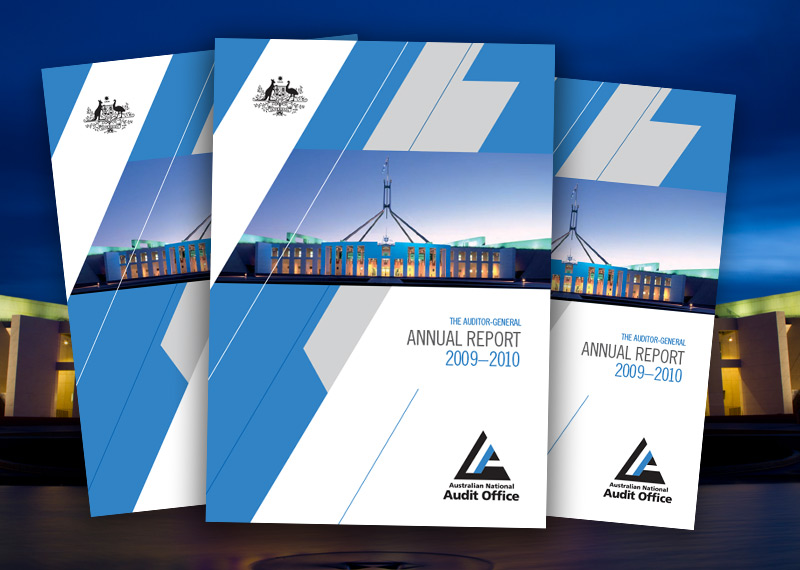
Published: Thursday 30 September 2010
Published
This annual report documents the performance of the Australian National Audit Office (ANAO) in the financial year ending on 30 June 2010. It includes a foreword by the Auditor-General, an overview including the role and responsibilities and vision of the Office, a report on performance, details about management and accountability, and the financial results.
Performance audit (Auditor-General Report No. 66 of 2001–02)
Published: Friday 28 June 2002
Published
The audit followed-up the ANAO's original audit report into the aviation safety regulatory activities of the Civil Aviation Safety Authority (CASA) (Audit Report No.19 1999-2000 Aviation Safety Compliance). The objective of the follow-up audit were to determine, in respect of issues addressed by the original audit recommendations, whether CASA has made satisfactory progress to improve its aviation safety surveillance and compliance activities; and whether the introduction of new strategies for further improvement is being appropriately managed.
Entity
Civil Aviation Safety Authority