Browse our range of reports and publications including performance and financial statement audit reports, assurance review reports, information reports and annual reports.
Annual report
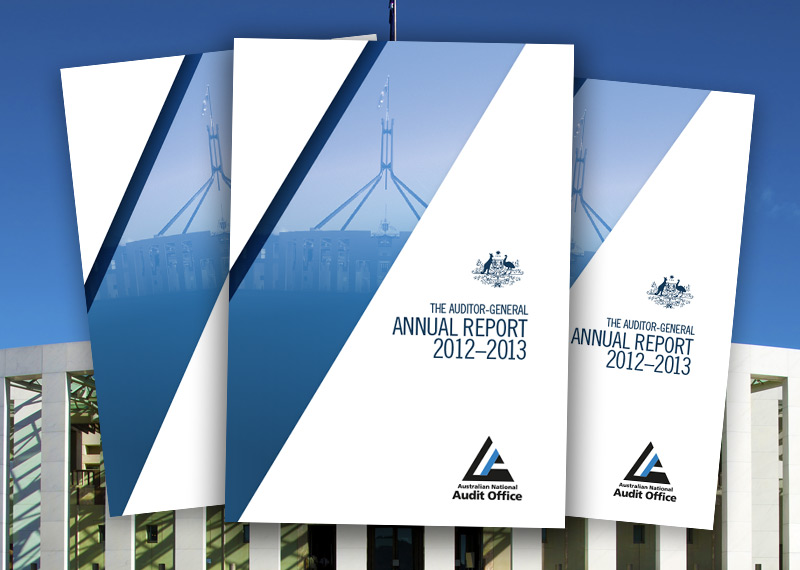
Published: Monday 30 September 2013
Published
This annual report documents the performance of the Australian National Audit Office (ANAO) in the financial year ending on 30 June 2013. It addresses the Requirements for Annual Reports for Departments, Executive Agencies and FMA Act Bodies approved by the Joint Committee of Public Accounts and Audit in June 2013; the performance measures set out in the outcomes and programs framework in the 2012–13 Portfolio Budget Statements; section 28 of the Auditor-General Act 1997; and other annual reporting requirements set out in legislation.
Performance audit (Auditor-General Report No. 45 of 2010–11)
Published: Tuesday 31 May 2011
Published
The objective of the audit was to assess the effectiveness of the Tax Office’s administration of the LCT, including aspects of the tax administered by Customs on behalf of the Tax Office.
Entity
Australian Taxation Office
Performance audit (Auditor-General Report No. 41 of 2017–18)

Published: Monday 21 May 2018
Published
The objective of this audit was to assess the effectiveness of the Efficiency through Contestability Programme in supporting entities to improve the efficient delivery of government functions.
Entity
Across Entities
Contact
Please direct enquiries through our contact page.
Performance audit (Auditor-General Report No. 35 of 2010–11)
Published: Wednesday 30 March 2011
Published
The objective of the audit was to assess the effectiveness of DFAT's management of the overseas leased estate. In particular, the audit examined whether DFAT:
- has effective governance, reporting and funding arrangements in place to support the sound management and oversight of the overseas leased estate;
- effectively manages overseas leased chancery and residential property on a day-to-day basis; and
- manages relationships with landlords and attached agencies effectively and adequately consults with stakeholders.
Entity
Department of Foreign Affairs and Trade
Performance audit (Auditor-General Report No. 41 of 2010–11)
Published: Tuesday 17 May 2011
Published
The objective of the audit was to examine the effectiveness of the management of maintenance of the Defence estate, taking particular account of planning and delivery aspects.
The audit examined: Defence’s policies, procedures, processes and supporting tools related to the planning and delivery of the maintenance of the estate; and services provided to Defence by private sector firms in relation to maintenance activities. The audit did not focus on contract management matters, nor on the systems used by Defence to maintain information related to estate maintenance.
Entity
Department of Defence
Performance audit (Auditor-General Report No. 38 of 2010–11)
Published: Wednesday 20 April 2011
Published
The objective of the audit was to assess the effectiveness of annual Certificate of Compliance processes for FMA Act agencies. To form a conclusion against the audit objective, the audit considered: Finance’s administration of the Certificate process at a whole-of-government level; selected agencies’ annual Certificate processes; and, the design and impact of the Certificate.
Entity
Across Agencies
Performance audit (Auditor-General Report No. 49 of 2010–11)
Published: Tuesday 21 June 2011
Published
The objective of the audit was to assess the effectiveness of the ATO’s administration of the Fuel Tax Credits Scheme. Particular emphasis was given to the Fuel Scheme’s governance and reporting arrangements, risk management strategies and compliance management program.
Entity
Australian Taxation Office
Performance audit (Auditor-General Report No. 50 of 2010–11)
Published: Tuesday 21 June 2011
Published
The objective of the audit was to assess the effectiveness of the services delivered through ATO shopfronts to individual and micro enterprise tax clients. Particular emphasis was given to the delivery of services to clients and planning and reporting processes for shopfront services.
Entity
Australian Taxation Office
Performance audit (Auditor-General Report No. 32 of 2010–11)
Published: Tuesday 1 March 2011
Published
The objective of the audit was to assess the administrative effectiveness of AGD's management of the Northern Territory Night Patrols Program.
Entity
Attorney-General's Department
Performance audit (Auditor-General Report No. 42 of 2010–11)
Published: Wednesday 18 May 2011
Published
The objective of the audit was to assess whether the Council Allocation component of the RLCIP has been effectively designed, implemented and administered. The audit examined each of the three funding rounds, albeit with a focus on the first round (as it was due to be completed by 30 September 2009), with the second round not due to be completed until late in the audit timetable (31 December 2010) and third round funding agreements being signed and payments being made at the time audit work was completed.
Entity
Department of Regional Australia, Regional Development and Local Government