Browse our range of reports and publications including performance and financial statement audit reports, assurance review reports, information reports and annual reports.
Performance audit (Auditor-General Report No. 22 of 1999–2000)
Published: Wednesday 22 December 1999
Published
The audit reviewed the operations of the Bureau of Meteorology. The Bureau's functions include the taking and recording of meteorological observations and other observations required for the purposes of meteorology; the forecasting of weather and of the state of the atmosphere; the issue of warnings of weather conditions likely to endanger life or property; the supply, publication and promotion of meteorological information; and cooperation with international meteorological agencies in relation to the functions just listed. The objectives of the audit were to:
- use national and international benchmarks to evaluate the Bureau's performance in terms of timeliness, cost and quality of weather services to meet the needs of clients; and
- assess how well the Bureau is placed in measuring its outputs/outcomes within the context of the Accrual Budgeting Framework.
Entity
Department of the Environment and Heritage
Performance audit (Auditor-General Report No. 46 of 1999–2000)
Published: Tuesday 13 June 2000
Published
The audit reviewed the High Wealth Individuals Taskforce, a comprehensive compliance program with the Australian Taxation Office. The objective of the audit was to examine and report on the management and operations of the taskforce. In doing so, the audit reviewed the Australian Taxation Office's own evaluation of the taskforce and assessed whether, and to what extent, the taskforce delivered the outcomes specified by the Government.
Entity
Australian Taxation Office
Speeches and papers
Published: Wednesday 26 June 2002
Published
Mr P.J. Barrett (AM) - Auditor-General for Australia, presented at the International Quality & Productivity Centre Seminar
Performance audit (Auditor-General Report No. 37 of 2006–07)
Published: Thursday 17 May 2007
Published
The audit objective was to assess the effectiveness of DIAC's administration of the health requirement of the Migration Act 1958 (the Act). To achieve this objective, the ANAO examined whether DIAC was setting and implementing the health requirement in accordance with the Act, the Migration Regulations 1994 (the Regulations), and DIAC's own guidelines.
Entity
Department of Health and Ageing
Performance audit (Auditor-General Report No. 19 of 1999–2000)
Published: Monday 22 November 1999
Published
The audit reviewed the operations of the Civil Aviation Authority (CASA), which has prime responsibility for regulating aviation safety in Australia. The audit objectives were to assess the efficiency and effectiveness of the management systems and procedures used by CASA to ensure compliance with regulatory controls by Air Operator's Certificate holders operating passenger-carrying aircraft within High Capacity Regular Public Transport; Low Capacity Regular Public Transport and charter industry sectors; and Certificate of Approval holders. Aviation safety compliance includes entry control, surveillance and enforcement.
Entity
Civil Aviation Safety Authority
Performance audit (Auditor-General Report No. 34 of 1997–98)
Published: Tuesday 24 March 1998
Published
The audit reviewed the Defence's $5.05 billion New Submarine Project which commenced in 1982 and involves design and construction of six Collins class submarines and associated supplies and services. The objectives of the audit were to assess project management by the Department's Project Office in the light of accepted better-practice project management techniques. It also aimed to derive lessons learnt and recommendations that could be applied to the Project and to similar Defence projects now and in the future. The audit follows a 1992 audit of the Project by the ANAO and a review by the Joint Committee of Public Accounts in 1995.
Entity
Department of Defence
Speeches and papers
Published: Friday 31 May 2002
Published
Mr P.J. Barrett (AM) - Auditor-General for Australia, presented an Occasional Paper
Performance audit (Auditor-General Report No. 41 of 1999–2000)
Published: Friday 28 April 2000
Published
The Commonwealth has significant involvement in national emergency management arrangements through its roles in planning, coordination between agencies, operational response, financial support, education and training, public awareness and research activities. The objectives of this performance audit were to identify the Commonwealth's current emergency management arrangements; to provide assurance to Parliament concerning the adequacy of the arrangements; and to highlight areas for improvement.
Entity
Across Agency
Performance audit (Auditor-General Report No. 8 of 2000–01)
Published: Thursday 7 September 2000
Published
The audit reviewed the Amphibious Transport Ship Project, involving the acquisition and modification of two second-hand US Navy ships . The objective of the audit was to assess the efficiency and effectiveness of Defence's management of the project, focusing on the capability development process, costs and schedule issues, contract issues, the management of project risks and project review processes.
Entity
Department of Defence
Performance audit (Auditor-General Report No. 36 of 2007–08)
Published: Thursday 29 May 2008
Published
The objective of the audit was to assess the Tax Office's strategies to address tax haven compliance risks. Particular emphasis was given to the Tax Office's:
- management arrangements relating to the administration of tax haven compliance risks;
- risk management framework for the identification and evaluation of compliance risks, specifically the activities of the Offshore Compliance Program (OCP); and
- risk mitigation strategies.
The audit did not include an examination of cases related to the promoters of tax haven related schemes nor the criminal use of tax havens.
Entity
Australian Taxation Office
Performance audit (Auditor-General Report No. 23 of 1999–2000)
Published: Monday 20 December 1999
Published
The objectives of this audit were to improve: the accountability of the Australian Taxation Office to Parliament and the Government by the provision of advice that follows up on the ATO's implementation of the previous ANAO Report; and on the recommendations of the then Joint Committee of Public Accounts arising from its consideration of that Report and the efficiency, effectiveness and equity of debt collection by the ATO.
Entity
Australian Taxation Office
Performance audit (Auditor-General Report No. 52 of 2013–14)
Published: Wednesday 25 June 2014
Published
The audit objective was to assess the Department of Defence’s progress in delivering Multi-Role Helicopters (MRH90 aircraft) to the ADF through AIR 9000 Phases 2, 4 and 6, within approved cost, schedule and performance parameters.
Entity
Department of Defence; Defence Materiel Organisation
Contact
Please direct enquiries relating to reports through our contact page.
Performance audit (Auditor-General Report No. 22 of 2006–07)
Published: Tuesday 6 February 2007
Published
The audit objective was to examine progress in the development of an overarching approach and guidance for the management of the Commonwealth's intellectual property (Recommendation No. 2 of Audit Report No. 25 of 2003–04).
Entity
NO-DEPTS-LISTED
Performance audit (Auditor-General Report No. 45 of 2005–06)
Published: Tuesday 13 June 2006
Published
The audit objective was to form an opinion on the adequacy of a select group of Australian Government agencies' management of Internet security, including following-up on agencies' implementation of recommendations from the ANAO's 2001 audit. The agencies audited were Australian Customs Service (ACS), Australian Federal Police (AFP), Australian Radiation Protection and Nuclear Safety Agency (ARPANSA), Department of Employment and Workplace Relations (DEWR), Department of Industry, Tourism and Resources (DITR) and Medicare Australia. Factors considered in selecting agencies were agency size based on funding levels, whether the agency was included in ANAO's 2001 audit (ACS, ARPANSA, and DEWR), whether the agency's ICT was managed in-house or outsourced, and the nature of the agency's website (that is, general or restricted access).
Entity
across agencies
Speeches and papers
Published: Friday 16 November 2001
Published
Mr P.J. Barrett (AM) - Auditor-General for Australia, presented at the CPA South Australia Annual Congress 2001, 'Riding the Next Wave'
Performance audit (Auditor-General Report No. 4 of 1997–98)
Published: Friday 17 October 1997
Published
The objective of the audit was to review AUSTEL and the Spectrum Management Agency's approaches to service delivery against recognised good practice and to identify opportunities for the new Australian Communications Authority to adopt the relevant features of these approaches in its service delivery.
Entity
Australian Telecommunications Authority (AUSTEL); Spectrum Management Agency
Performance audit (Auditor-General Report No. 50 of 2012–13)
Published: Thursday 20 June 2013
Published
The objective of the audit was to assess the effectiveness of the Department of Health and Ageing’s administration of the GP Super Clinics program to support improved community access to integrated GP and primary health care services.
Entity
Department of Health and Ageing
Contact
Please direct enquiries relating to reports through our contact page.
Performance audit (Auditor-General Report No. 51 of 2010–11)
Published: Tuesday 21 June 2011
Published
To examine the effectiveness of the Department of Health and Ageing’s administration of the Access to Allied Psychological Services Program.
Entity
Department of Health and Ageing
Performance audit (Auditor-General Report No. 40 of 2008–09)
Published: Tuesday 2 June 2009
Published
The objective of the audit was to assess the effectiveness of DoHA's management of the planning and allocation of aged care places and capital grants, in accordance with the Aged Care Act 1997.
Entity
Department of Health and Ageing
Performance audit (Auditor-General Report No. 24 of 2002–03)
Published: Friday 20 December 2002
Published
The ANAO assessed agencies' progress in implementing the seven recommendations of Audit Report No.47 of 1998-99, Energy Efficiency in Commonwealth Operations. The Objectives of the follow-up audit were to
(i) asses the extent to which selected Commonwealth agencies have implemented the recommendations of Report No. 47 of 1998-1999, taking account of any changed circumstances or new administrative issues identified as impacting upon implementation of these recommendations; and
(ii) offer continued assurance to the Parliament on the management of Commonwealth agencies' compliance with the Commonwealth energy efficiency requirements, and to identify areas of better practice in energy management by those agencies.
Entity
Across Agency
Performance audit (Auditor-General Report No. 35 of 2010–11)
Published: Wednesday 30 March 2011
Published
The objective of the audit was to assess the effectiveness of DFAT's management of the overseas leased estate. In particular, the audit examined whether DFAT:
- has effective governance, reporting and funding arrangements in place to support the sound management and oversight of the overseas leased estate;
- effectively manages overseas leased chancery and residential property on a day-to-day basis; and
- manages relationships with landlords and attached agencies effectively and adequately consults with stakeholders.
Entity
Department of Foreign Affairs and Trade
Performance audit (Auditor-General Report No. 37 of 2008–09)
Published: Monday 25 May 2009
Published
The objectives of the audit were to:
- determine the extent to which government entities complied with the requirement to publish and maintain documents online that were presented to the Parliament;
- evaluate selected government entities' policies and practices regarding online publishing; and
- assess AGIMO's policy and guidance in support of online publishing.
To address this objective the audit was conducted in three parts. Firstly, we reviewed a sample of papers tabled between 2000 and 2008 in order to assess their availability online. Next, we examined the online publishing practices of five government entities. These were the: Australian Federal Police (AFP); Department of the House of Representatives (DHR); Department of Infrastructure, Transport, Regional Development and Local Government (Infrastructure); Department of the Treasury (Treasury); and National Archives of Australia (NAA). Finally, we reviewed AGIMO's role in supporting government entities in their online publishing practices.
Entity
Across Agencies
Performance audit (Auditor-General Report No. 4 of 2005–06)
Published: Thursday 4 August 2005
Published
The objectives of the audit were to assess the Commonwealth's management of contractual rights and obligations under the Sale Agreements. In particular the audit sought to: assess the Commonwealth's management of contractual warranties and indemnities; assess DoTARS' management of each purchaser's compliance with contractual commitments to capital expenditure; and examine the effectiveness of the development and management of contractual arrangements for concessional rail passenger travel provided by the Commonwealth.
Entity
Department of Transport and Regional Services; Department of Veterans’ Affairs; Department of Family and Community Services
Speeches and papers
Published: Friday 21 June 2002
Published
Mr P.J. Barrett (AM) - Auditor-General for Australia, presented at the Senate Occasional Lecture Series
Performance audit (Auditor-General Report No. 34 of 2013–14)
Published: Thursday 29 May 2014
Published
The objective of this audit was to assess the effectiveness of arrangements for implementing and monitoring the implementation of ANAO performance audit recommendations in the Department of Agriculture and the Department of Human Services.
Entity
Department of Agriculture, Department of Human Services
Contact
Please direct enquiries relating to reports through our contact page.
Performance audit (Auditor-General Report No. 25 of 2008–09)
Published: Wednesday 11 March 2009
Published
The objective of this audit was to assess and report on the progress being made by Government agencies in achieving better practice in green office procurement and sustainable office management. The scope of the audit included agencies incorporated under the Financial Management and Accountability Act 1997 as well as a sample of bodies incorporated under the Commonwealth Authorities and Companies Act 1997. Sixty-three agencies were included in an audit survey. Detailed validation was carried out in nine of these agencies.
Entity
Across Entities
Performance audit (Auditor-General Report No. 44 of 2006–07)
Published: Thursday 14 June 2007
Published
The objective of the audit was to assess the effectiveness of the Tribunals' management of their operations. To this end, the audit examined whether the MRT and the RRT:
- have achieved intended operational efficiencies from the introduction of common facilities, services and resourcing;
- have established appropriate arrangements for governance, business planning and guidance of Members and staff, and for performance monitoring and reporting of Tribunal operations;
- finalise cases within Tribunal time and productivity standards; and
- provide applicants with services in accordance with service standards.
The audit covered Tribunal operations for review of visa decisions. The correctness of individual decisions was not assessed as part of the audit.
The audit focused particularly on developments in the Tribunals' management performance in the four year period from 2001–02 to 2004–05.
Entity
Migration Review Tribunal; Refugee Review Tribunal
Performance audit (Auditor-General Report No. 9 of 2003–04)
Published: Wednesday 22 October 2003
Published
The audit assessed whether Centrelink has effective Business Continuity Management and/or associated risk management procedures and plans in place that: minimise the likelihood of a significant business outage; and in the event of such an outage, minimise disruption of critical services to customers. The audit also assessed whether Centrelink services satisfy special community demands in times of emergency.
Entity
Centrelink
Performance audit (Auditor-General Report No. 30 of 2002–03)
Published: Thursday 27 February 2003
Published
The Service Chiefs of Navy, Army and Air Force are accountable to the Chief of the Defence Force for the way that equipment is used by their Service. They are also accountable for the safety, fitness for service and environmental compliance of the equipment. The audit report deals with the way that the Service Chiefs are assured of the safety and suitability for service of the Australian Defence Force's (ADF's) ordnance systems. Ordnance systems include munitions such as missiles, shells and mines, and the auxiliary material necessary to aim, launch and guide munitions.
Entity
Department of Defence
Performance audit (Auditor-General Report No. 25 of 2007–08)
Published: Wednesday 27 February 2008
Published
The objective of the audit was to examine the effectiveness of the Department of Health and Ageing's administration of the Round the Clock Medicare: Investing in After Hours General Practice Services program.
Entity
Department of Health and Ageing
Annual report
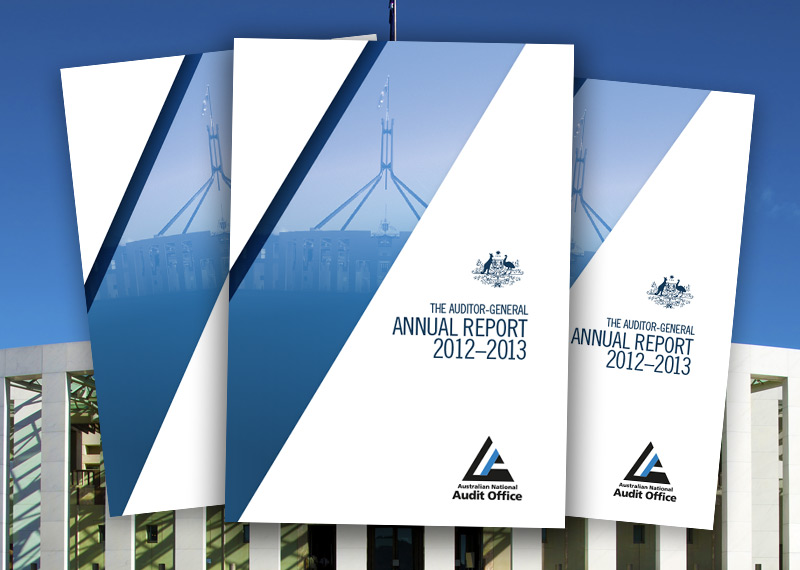
Published: Monday 30 September 2013
Published
This annual report documents the performance of the Australian National Audit Office (ANAO) in the financial year ending on 30 June 2013. It addresses the Requirements for Annual Reports for Departments, Executive Agencies and FMA Act Bodies approved by the Joint Committee of Public Accounts and Audit in June 2013; the performance measures set out in the outcomes and programs framework in the 2012–13 Portfolio Budget Statements; section 28 of the Auditor-General Act 1997; and other annual reporting requirements set out in legislation.
Performance audit (Auditor-General Report No. 39 of 2000–01)
Published: Monday 28 May 2001
Published
The audit was conducted as a joint financial statement and performance audit of Centrelink's Information and Technology (I&T) systems. The objective of the financial statement component of the audit was to express an opinion on whether Centrelink could rely on its I&T systems to support production of a reliable set of financial information for the financial statements. The objective of the performance audit component was to determine whether Centrelink's I&T systems outputs adequately met quality and service delivery targets.
Entity
Centrelink
Performance audit (Auditor-General Report No. 26 of 2002–03)
Published: Thursday 16 January 2003
Published
The main objectives of the audit were to examine DOTARS' response to the heightened threat environment following the events of 11 September 2001, and to determine the extent to which DOTARS' monitoring and compliance regime ensures that the aviation industry complies with its security obligations. The scope of the audit included:
- the respective roles and responsibilities of the organisations involved in aviation security;
- the setting of security settings; DOTARS' monitoring of airport, airline and cargo security;
- the action DOTARS takes in response to security breaches; and
- evaluation of aviation security.
Entity
Department of Transport and Regional Services
Performance audit (Auditor-General Report No. 7 of 2001–02)
Published: Thursday 9 August 2001
Published
The report summarises the audit and other related activities of the ANAO in the period January to June 2001. Key issues arising from performance audits tabled in this period are summarised against ANAO themes of:
- corporate governance including human resource management, financial management, and performance information;
- service delivery including the impact of e-government;
- procurement and contract management; and
- information technology.
Appendix 1 of the Activity Report provides a short summary of each of the performance audits tabled between 1 January 2001 and 30 June 2001.
Entity
NO-DEPTS-LISTED
Performance audit (Auditor-General Report No. 53 of 2000–01)
Published: Wednesday 27 June 2001
Published
This performance audit is the first property management audit that the ANAO has conducted since the FMA Act came into effect in 1997, with the associated devolution of responsibility to agency heads. The audit included coverage of office accommodation currently leased in Australia from the private sector. This office accommodation was housing the functions and activities of clerical, technical or professional staff, including conference and meeting rooms and ministerial suites but excluding basements, car parks, theatrettes, and cafeterias.
Entity
Across Agency
Performance audit (Auditor-General Report No. 11 of 2001–02)
Published: Wednesday 19 September 2001
Published
In May 1997, the $1 billion Federation Fund was announced as part of the 1997-98 Budget to mark the Centenary of Federation. One component, the Federation Fund Major Projects ($906.8m), was to provide financial assistance to a number of major projects of national significance; by generating jobs in the construction industry and by making a significant and ongoing contribution to Australia and the Australian economy. Projects were expected to be geographically spread around Australia and well advanced, but not necessarily complete, by 2001. Commonwealth monies were intended to fully fund projects; augment existing funding; or match funding from other sources. The objective of the audit was to determine the extent to which the administration of the Federation Fund programme met identified better practice in relation to policy development and programme planning; the process of calling for, assessing, approving and announcing proposals; and ongoing programme and project management.
Entity
Across Agency
Performance audit (Auditor-General Report No. 31 of 1996–97)
Published: Tuesday 13 May 1997
Published
The ANAO's purpose was to report on:
- the HIC's management of approaches to minimise medifraud and inappropriate practice;
- HIC's reporting of its performance on these matters to stakeholders;
- the methodology used by the HIC to estimate the extent of fraud and inappropriate practice, including comment on the reliability of the estimates; and
- the HIC's implementation of the major recommendations from Medifraud and Excessive Servicing - Audit Report No.17 1992-93.
Entity
Health Insurance Commission
Speeches and papers
Published: Monday 11 June 2001
Published
Mr P.J. Barrett (AM) - Auditor-General for Australia, presented at the INTOSAI Working Group
Performance audit (Auditor-General Report No. 2 of 2002–03)
Published: Wednesday 24 July 2002
Published
The audit examined the Aboriginal and Torres Strait Islander Commission's (ATSIC's) grant management practices. The audit sought to determine if ATSIC provides fair and equal access to funding, what the risks to the grants program are, if decision-makers receive the key information they need to make informed funding decisions, and if ATSIC staff complying with grants procedures. The ANAO did not examine the appropriateness of the funding decisions made by regional councils.
Entity
Aboriginal and Torres Strait Islander Commission
Performance audit (Auditor-General Report No. 15 of 2005–06)
Published: Tuesday 15 November 2005
Published
The objective of the audit was to assess the Commonwealth's administration of the grants component of the R&D Start program. Lessons for the new Commercial Ready program have been identified in the audit. Accordingly, recommendations arising from this audit are directed, when appropriate, to the Commercial Ready program. As most financial assistance is in the form of grants, the loans component of the program was excluded from the audit.
Entity
Department of Industry Tourism and Resources; Industry Research and Development Board
Performance audit (Auditor-General Report No. 27 of 2008–09)
Published: Friday 27 March 2009
Published
The objectives of this audit were to assess the progress of the M113 Armoured Personnel Carrier Upgrade Project against stated schedule, cost and technical performance objectives; and Defence Materiel Organisation's (DMO's) progress in implementing the recommendations and addressing the findings of ANAO Audit Report No. 3 2005–06, Management of the M113 Armoured Personnel Carrier Upgrade Project.
Entity
Department of Defence
Performance audit (Auditor-General Report No. 14 of 2010–11)
Published: Thursday 28 October 2010
Published
The objective of the audit was to assess whether entities properly accounted for software assets, and adopted an integrated planning approach to inform software asset investment decisions.
The main focus of the audit was on whether entities accounted for software costs in accordance with relevant accounting standards and the FMOs, paying particular attention to the standard elements of an internal control framework and accounting practices. In addition, in the context of software asset planning, the audit considered whether entities assessed the risks associated with software assets, used life-cycle costing approaches, and aligned ICT and capital management plans, to inform decision-making on software asset investments.
Entity
Australian Bureau of Statistics; Civil Aviation Safety Authority; IP Australia
Performance audit (Auditor-General Report No. 34 of 1998–99)
Published: Wednesday 31 March 1999
Published
The objective of the audit was to ascertain and report to Parliament on the Australian Taxation Office's administration of the Fringe Benefits Tax and to identify opportunities for improvement. The ANAO identified five key issues relevant to the effective administration of FBT:
- knowledge of the taxpayer base;
- education of taxpayers;
- client service - advice handling;
- other enforcement activities - audits and reviews; and
- the systems required to support the administration of FBT, including staff skills and training information systems.
Entity
Australian Taxation Office
Performance audit (Auditor-General Report No. 37 of 2007–08)
Published: Tuesday 3 June 2008
Published
The objective of this audit was to assess whether agencies had effectively administered credit cards, including having complied with legislative and internal requirements.
Entity
NO-DEPTS-LISTED
Performance audit (Auditor-General Report No. 9 of 1997–98)
Published: Thursday 23 October 1997
Published
The audit objectives were to report on the efficiency and effectiveness of selected agencies' management of telecommunications services. The specific purpose was to:
- identify the potential for more effective management of telecommunications services;
- consider the appropriateness of Commonwealth agencies' management of telecommunications services to take advantage of technological opportunities; and
- identify the elements of sound administration in the management of telecommunications services.
The audit criteria addressed agencies' performance against benchmarks of sound administrative practice in relation to procurement; planning; business process re-engineering; financial management; and performance management. The audit focussed primarily on telecommunications services, as distinct from capital items and equipment.
Entity
Across Agency
Performance audit (Auditor-General Report No. 56 of 2001–02)
Published: Thursday 13 June 2002
Published
The objective of the audit was to determine whether DIMIA's workforce planning systems are effectively supporting human resource management practices, which contribute to the efficient and effective achievement of project outcomes.
Entity
Department of Immigration and Multicultural And Indigenous Affairs
Performance audit (Auditor-General Report No. 17 of 1998–99)
Published: Wednesday 25 November 1998
Published
Simulators are devices that provide personnel with training and practice by reproducing the behaviour of operational equipment. Defence records indicate that since 1960 the Defence Organisation has spent about $1 billion on acquiring simulators for training purposes. Over the next five years Defence proposes to spend a further $1.1 billion on simulation. The objective of the audit was to assess whether Defence had developed appropriate policies to provide guidance to personnel in the acquisition and use of aerospace simulators and the effectiveness of its procedures in achieving best value for the Commonwealth in relation to aerospace simulators.
Entity
Department of Defence
Performance audit (Auditor-General Report No. 35 of 2008–09)
Published: Thursday 21 May 2009
Published
The objective of the audit was to assess the effectiveness of DIAC's management of MAL. The scope was confined to DIAC's management and use of the system: it did not examine the work of others with an interest in the system, such as security agencies.
Entity
Department of Immigration and Citizenship
Speeches and papers
Published: Saturday 26 June 2004
Published
Mr P.J. Barrett (AO) - Auditor-General for Australia, an Occasional Paper
Performance audit (Auditor-General Report No. 19 of 2004–05)
Published: Friday 17 December 2004
Published
The objective of the Australian National Audit Office (ANAO) was to examine how the ATO manages its responsibilities under the Taxpayers' Charter as an important element of its performance. This involved an examination of the ATO's: systems and processes used to develop, maintain and update the Charter; strategic commitment to implementing the principles of the Charter; integration of Charter principles with its business processes; and monitoring and reporting of its performance against commitments in the Charter.
Entity
Australian Taxation Office
Speeches and papers
Published: Monday 3 February 2003
Published
Mr P.J. Barrett (AM) - Auditor-General for Australia, presented to the Australasian Council of Public Accounts Committees (ACPAC)
Performance audit (Auditor-General Report No. 25 of 2011–12)
Published: Thursday 9 February 2012
Published
The objective of the audit was to assess the effectiveness of the Project Wickenby taskforce in making Australia unattractive for international tax fraud and evasion by detecting, deterring and dealing with the abusive use of secrecy havens by Australian taxpayers.
Entity
Australian Taxation Office, Australian Crime Commission and Australian Federal Police
Performance audit (Auditor-General Report No. 43 of 2008–09)
Published: Tuesday 23 June 2009
Published
The objective of the audit, in examining the construction of the CIIDC, was to assess:
- the adequacy of the planning and delivery processes for the project;
- the value-for-money achieved in the delivery of the project, including with regard to the suitability of the centre for its intended purpose; and
- the extent to which the Public Works Committee Act.
Entity
Department of Finance and Deregulation
Performance audit (Auditor-General Report No. 2 of 2008–09)
Published: Wednesday 6 August 2008
Published
The objective of this audit was to assess the effectiveness of Tourism Australia's governance arrangements, the management of its marketing contracts, and whether outcomes are being achieved. The audit reviewed Tourism Australia's:
- procurement processes for selecting service providers;
- management of service provider contracts; and
- governance framework including planning, performance management and reporting.
Entity
Tourism Australia
Performance audit (Auditor-General Report No. 11 of 2000–01)
Published: Friday 15 September 2000
Published
The audit reviewed Defence's higher-level management of its knowledge system equipment acquisition projects. These amount to $8.5b. The focus of the audit was on the opportunities for Defence to adopt a much more coherent and integrated approach to knowledge systems management prospectively rather than on emphasising current system compatibility issues.
Entity
Department of Defence
Performance audit (Auditor-General Report No. 10 of 2003–04)
Published: Monday 27 October 2003
Published
As part of its 2001 inquiry into the recruitment and retention of Australian Defence Force (ADF) personnel, the Senate Foreign Affairs, Defence and Trade References Committee reviewed Defence's contract with Manpower Services (Australia) Pty Ltd for trialling the outsourcing of recruiting services to the ADF. In its subsequent report, the Committee commented that the original contractual arrangements deserved further scrutiny by the ANAO. The objective of the audit was to examine Defence's management of the contractual arrangements for the provision of recruiting services to the ADF. In examining the management of the contract, the ANAO looked at the evaluations conducted at the end of each contractual phase, roles and responsibilities associated with ADF recruiting, and Defence's monitoring of contractual performance and management of risks associated with ADF recruiting.
Entity
Department of Defence
Performance audit (Auditor-General Report No. 51 of 2005–06)
Published: Wednesday 28 June 2006
Published
The audit objectives were to report on the implementation status of the parliamentary resolutions and other actions arising out of the six recommendations made in the final PSC Report, Review by the Parliamentary Service Commissioner of Aspects of the Administration of the Parliament. The audit also broadly examined the impact of implementation of the parliamentary resolutions on aspects of: the level of services provided to the Parliament generally following amalgamation of the three former parliamentary departments into the Department of Parliamentary Services; and accommodation space within Parliament House. The designated audit agency was the Department of Parliamentary Services (DPS).
Entity
Department of Parliamentary Services
Performance audit (Auditor-General Report No. 3 of 2004–05)
Published: Friday 23 July 2004
Published
The objective of the audit was to assess whether selected Commonwealth organisations had utilised better practice principles when establishing the role, and managing the use of their internal audit groups. In order to evaluate internal audit, the Australian National Audit Office (ANAO) first considered the status and accountabilities of internal audit within the overall governance framework of the organisations audited, in particular its accountabilities to the audit committee.
Entity
Department of Defence
Performance audit (Auditor-General Report No. 25 of 2000–01)
Published: Wednesday 20 December 2000
Published
The study examined aggregated benchmarking measures of cost, efficiency quality and better practice for nineteen Commonwealth organisations and compared the results with that of an international group. The objective of the study was to obtain and report on over time quantitative and qualitative data relating to finance function activities as they operate in Commonwealth organisations.
Entity
Across Agency
Performance audit (Auditor-General Report No. 42 of 2012–13)
Published: Thursday 6 June 2013
Published
The objective of the audit was to assess the effectiveness of the Department of Human Services' (DHS) administration of the shopfront co-location of DHS services.
Entity
Department of Human Services
Contact
Please direct enquiries relating to reports through our contact page.
Performance audit (Auditor-General Report No. 12 of 2009–10)
Published: Thursday 19 November 2009
Published
The audit objective was to assess the effectiveness of administrative arrangements for YA, including service delivery. The ANAO assessed DEEWR's and Centrelink's performance against three main criteria:
- objectives and strategies for the ongoing management and performance measures for YA provide a firm basis for measurement against outcomes (Chapters 2 and 3);
- YA services delivered are consistent with legislative and policy requirements, (Chapter 4); and
- monitoring arrangements provide appropriate information for assessing service delivery performance (Chapter 5).
Entity
Department of Education, Employment and Workplace Relations; Centrelink
Performance audit (Auditor-General Report No. 34 of 2003–04)
Published: Friday 5 March 2004
Published
In 1997, and subsequently in 1999, the Australian Government introduced two major spending packages with a total value of almost $1 billion. These spending packages were designed to address the challenges posed by the issue of climate change and to meet Australia's domestic and international commitments. Since its inception in 1998, the Australian Greenhouse Office has been responsible for the implementation of greenhouse related programs from these two major spending packages. The objective of the audit was to examine and report on the administrative efficiency and effectiveness of seven major programs administered by the Australian Greenhouse Office.
Entity
Australian Greenhouse Office
Performance audit (Auditor-General Report No. 38 of 2011–12)
Published: Tuesday 5 June 2012
Published
The objective of the audit was to assess the effectiveness of DSEWPaC's administration of PIIOP, including the acquisition of water access entitlements and progress towards achieving the program's objectives.
Entity
Department of Sustainability, Environment, Water, Population and Communities
Speeches and papers
Published: Thursday 1 April 2004
Published
Mr P.J. Barrett (AM) - Auditor-General for Australia, Address to University of Canberra students participating in the Graduate Certificate in Performance Auditing
Performance audit (Auditor-General Report No. 41 of 2010–11)
Published: Tuesday 17 May 2011
Published
The objective of the audit was to examine the effectiveness of the management of maintenance of the Defence estate, taking particular account of planning and delivery aspects.
The audit examined: Defence’s policies, procedures, processes and supporting tools related to the planning and delivery of the maintenance of the estate; and services provided to Defence by private sector firms in relation to maintenance activities. The audit did not focus on contract management matters, nor on the systems used by Defence to maintain information related to estate maintenance.
Entity
Department of Defence
Performance audit (Auditor-General Report No. 55 of 2010–11)
Published: Thursday 23 June 2011
Published
The objective of this audit was to assess the effectiveness of the Department of Immigration and Citizenship's (DIAC) administration of the character requirements of the Migration Act.
Entity
Department of Immigration and Citizenship
Performance audit (Auditor-General Report No. 47 of 2005–06)
Published: Wednesday 21 June 2006
Published
The objective of the audit was to assess whether FaCSIA administers grants effectively, according to better practice guidelines, and consistently across geographic areas and the range of programmes included in the scope of the audit. The scope of the audit included grants administered by FaCSIA between 1 July 2002 and 30 June 2005, relating to programmes falling within four of the five groups of programmes providing funding for families and communities namely: Community Support; Family Assistance; Childcare Support; and Youth and Student Support. In total, these groups involved total expenditure of some $533 million in 2004–05.
Entity
Department of Families Community Services and Indigenous Affairs
Major projects report (Auditor-General Report No. 20 of 2011–12)

Published: Tuesday 20 December 2011
Published
The objective of this report is to provide a formal conclusion on the review of the Project Data Summary Sheets by the Auditor-General, including comprehensive information on the status of projects as reflected in the PDSSs prepared by the DMO.
Entity
Defence Materiel Organisation
Speeches and papers
Published: Friday 30 November 2001
Published
Mr P.J. Barrett (AM) - Auditor-General for Australia, presented to the Institute of Public Administration Australia
Performance audit (Auditor-General Report No. 23 of 1998–99)
Published: Thursday 17 December 1998
Published
The audit evaluated the effectiveness of the accountability and oversight arrangements for statutory bodies within the former Primary Industries and Energy portfolio (most of which are now part of the Agriculture, Fisheries and Forestry portfolio). The audit focused on accountability of the statutory bodies to the Minister and through the Minister to Parliament; it did not directly address accountability to industry stakeholders and levy papers.
Entity
Across Agency
Performance audit (Auditor-General Report No. 37 of 1997–98)
Published: Friday 20 March 1998
Published
The purpose of this follow-up audit was to report on action taken by the Department of Social Security and Centrelink in addressing the recommendations of Audit Report No.23 1993-94 Protection of Confidential Client Information from Unauthorised Disclosure. The objectives were to:
- ascertain the extent to which the recommendations of the original audit have been implemented;
- identify other changes made in relation to data confidentiality within the Social Security portfolio since 1993;
- assess the impact of the changes made; and
- identify any scope for further improvement.
Entity
Centrelink; Department of Social Security
Performance audit (Auditor-General Report No. 10 of 2012–13)
Published: Tuesday 13 November 2012
Published
The objective of the audit was to assess the Department of Health and Ageing’s (DoHA’s) implementation and ongoing management of the Aged Care Complaints Scheme and the effectiveness of DoHA’s complaint management systems in supporting service delivery and regulatory outcomes.
Entity
Department of Health and Ageing
Performance audit (Auditor-General Report No. 45 of 2008–09)
Published: Wednesday 24 June 2009
Published
The audit objective was to assess the effectiveness of the department's administration of general recurrent grants for non-government schools. The audit examined key processes in the department's administration ofgeneral recurrent grants for non-government schools for 2005–08 in accordance with the Schools Assistance (Learning Together—Achievement Through Choice and Opportunity) Act 2004.
Entity
Department of Education, Employment and Workplace Relations
Performance audit (Auditor-General Report No. 26 of 2004–05)
Published: Thursday 10 February 2005
Published
This audit was designed to identify the methods used by selected agencies to measure the efficiency and effectiveness of their delivery of services through the Internet, and to evaluate the adequacy of these methods. ANAO also identified better practices, lessons learned and opportunities for improvements.
Entity
Austrade; Centrelink; Child Support Agency; Department of Veteran's Affairs; Health and Ageing; National Archives; Finance
Performance audit (Auditor-General Report No. 5 of 2007–08)
Published: Thursday 16 August 2007
Published
The objective of this audit was to assess the progress made by DoHA and Medicare Australia (recommendation 3) in addressing the four recommendations from ANAO Audit Report No.50, 2000–01 designed to improve the administration and performance of NCSP.
Entity
Department of Health and Ageing
Performance audit (Auditor-General Report No. 3 of 2008–09)
Published: Tuesday 23 September 2008
Published
The objective of the audit was to assess the effectiveness of the management and administration of the Communications Fund, including an assessment of:
- the development and implementation of appropriate investment strategies; and
- the robustness of the governance structures and controls relating to investment activities.
Entity
Department of Broadband, Communications and the Digital Economy; Department of Finance and Deregulation
Performance audit (Auditor-General Report No. 36 of 2001–02)
Published: Wednesday 13 March 2002
Published
In view of the significant level of investment by Commonwealth agencies in the implementation and production of Financial Management Information Systems (FMISs), the ANAO, in conjunction with Gartner, undertook a benchmarking study within the Commonwealth budget sector with the objective of determining and reporting on FMIS:
- implementation and production costs; and
- implementation timeframes.
The benchmarking study also provides some data on resource support, size, volume and utilisation of the FMIS information. These data and metrics have significant implications for FMIS product selection. This study follows on from ANAO Audit Report No.12 'Selection, Implementation and Management of Financial Management Information Systems in Commonwealth Agencies', which was tabled in September 2001. That report provided details of the results of FMIS selections and implementations across the same eight Commonwealth budget sector agencies (the Commonwealth peer group) considered in this benchmarking study.
Entity
Across Agency
Performance audit (Auditor-General Report No. 11 of 1999–2000)
Published: Tuesday 21 September 1999
Published
In November 1998, the Minister for Communications wrote to the Auditor-General requesting an assessment of the actual costs of Phase 1 digital conversion for the ABC and SBS, the sources of funds applied and the efficiency with which the funds had been used before the government considered further funding. The purpose of this limited scope performance audit was to assess a range of financial issues associated with the ABC and SBS conversion to digital broadcasting.
Entity
Australian Broadcasting Corporation; Special Broadcasting Service Corporation
Performance audit (Auditor-General Report No. 5 of 1998–99)
Published: Monday 24 August 1998
Published
The objectives of the audit were to provide assurance to Parliament concerning the adequacy of Commonwealth security planning and preparations for the Games and to identify areas for improvement early enough for any corrective action to be taken.
Entity
Across Agency
Performance audit (Auditor-General Report No. 1 of 2003–04)
Published: Thursday 31 July 2003
Published
The audit objective was to assess the adequacy of the Commonwealth's administration of three key components of the Agriculture - Advancing Australia package: the FarmBis II program, the Farm Help program and the Farm Management Deposits scheme. Broadly, the audit examined the areas of strategic management, managing compliance, program promotion, performance monitoring and evaluation, and performance results.
Entity
Department of Agriculture, Fisheries and Forestry; Centrelink; Australian Taxation Office
Performance audit (Auditor-General Report No. 63 of 2001–02)
Published: Thursday 27 June 2002
Published
The objectives of the audit were to assess the administrative and financial effectiveness of the Department of Finance and Administration's (Finance's) management of the Commonwealth's exposure under the DASFLEET Tied Contract; assess the effectiveness of Finance's monitoring of performance of the DASFLEET Tied Contract with Macquarie Fleet; and review the action taken by Finance in response to a recommendation of Audit Report No. 25 1998-99, Sale of DASFLEET.
Entity
Across Agency
Performance audit (Auditor-General Report No. 34 of 2007–08)
Published: Wednesday 21 May 2008
Published
The objective of the audit was to determine the effectiveness of DoHA's administration of the MoU between the Government and the pathology profession, including monitoring whether the MoU is achieving its objectives
Entity
Department of Health and Ageing
Performance audit (Auditor-General Report No. 33 of 2000–01)
Published: Monday 7 May 2001
Published
The objective of the ANAO audit was to identify possible areas for improvement in the Australian Defence Force's management of its Reserve forces. The audit focused on major aspects of the Reserves including roles and tasks, force structure, capability, training, individual readiness, equipment, facilities, recruitment, retention, conditions of service and administration. The audit covered the Australian Naval Reserve, the Australian Army Reserve and the Royal Australian Air Force Reserve. However, due to its size and cost, the Army Reserve was a major focus of the audit activity.
Entity
Department of Defence
Performance audit (Auditor-General Report No. 52 of 2004–05)
Published: Monday 20 June 2005
Published
The objectives of the Australian National Audit Office's (ANAO) performance audit were to: examine the efficiency and effectiveness of agencies' procurement and management of legal services arrangements; determine adherence to Australian Government policy requirements; examine the effectiveness of the OLSC's monitoring of agencies' compliance with Government policy requirements; examine the OLSC's role in assisting agencies to comply with Government policy.
Entity
Across Entities
Performance audit (Auditor-General Report No. 23 of 2001–02)
Published: Friday 7 December 2001
Published
The audit reviewed the broadcasting planning and licensing operations of the Australian Broadcasting Authority, which is responsible for planning the availability of segments of the broadcasting services bands used by radio and television for analogue and digital broadcasting. The objective was to assess the ABA's management of licence area planning and the subsequent issue of broadcasting licences, focussing on analogue radio planning and identifying improved administrative practices, where possible, together with the main factors that have contributed to the delays to date in achieving the planning timetable.
Entity
Australian Broadcasting Authority
Performance audit (Auditor-General Report No. 22 of 1998–99)
Published: Tuesday 15 December 1998
Published
The audit reviewed six budget-funded agencies (Australian Customs Service, Australian Taxation Office, Centrelink, Department of Defence, Department of Education, Training and Youth Affairs, and Department of Immigration and Multicultural Affairs) and two off-budget entities (Airservices Australia and Reserve Bank of Australia). The ANAO also examined the Office for Government Online's (OGO, formerly the Office of Government Information Technology, or OGIT) whole-of-government coordination of the Commonwealth's Year 2000 efforts.
Entity
Australian Customs Service; Australian Taxation Office; Centrelink; Department of Defence; Department of Education, Training and Youth Affairs; Department of Immigration and Multicultural Affairs
Performance audit (Auditor-General Report No. 51 of 2013–14)
Published: Wednesday 25 June 2014
Published
The objective of the audit was to assess the effectiveness of the administration of the Improving School Enrolment and Attendance through Welfare Reform Measure.
Entity
Department of the Prime Minister and Cabinet, Department of Human Services
Contact
Please direct enquiries relating to reports through our contact page.
Performance audit (Auditor-General Report No. 40 of 2005–06)
Published: Wednesday 17 May 2006
Published
The objective of the audit was to examine processes used by Defence and the DMO to procure explosive ordnance for the ADF, with an emphasis on Army requirements. The audit reviewed the extent to which the DMO effectively translated the explosive ordnance requirements of the ADF, and particularly of Army, into procurement and through life support arrangements.
Entity
Department of Defence; Defence Materiel Organisation
Performance audit (Auditor-General Report No. 26 of 2012–13)
Published: Thursday 28 February 2013
Published
The objective of the current audit was to assess the effectiveness of remediation arrangements put in place by Defence and the Defence Materiel Organisation (DMO) to resolve issues impacting on the achievement of the desired lightweight torpedo capability. It focuses on project management and contractual arrangements, and the progress made with platform integration and test and evaluation.
Entity
Department of Defence; Defence Materiel Organisation (DMO)
Performance audit (Auditor-General Report No. 41 of 2013–14)
Published: Tuesday 17 June 2014
Published
The audit objective was to assess the effectiveness of the Department of Industry's administration of the Commercialisation Australia Program.
Entity
Department of Industry
Contact
Please direct enquiries relating to reports through our contact page.
Major projects report (Auditor-General Report No. 9 of 2008–09)

Published: Thursday 27 November 2008
Published
This first Assurance Report on the status of selected Defence equipment acquisition projects, which has the support of the Parliament and the Government, represents a substantial step towards improving transparency and public accountability in major Defence procurement projects. It is the pilot of an annual Defence Materiel Organisation (DMO) Major Projects Report, and was developed in conjunction with the DMO. It covers the cost, schedule and capability progress achieved by nine DMO projects, which had an approved budget totalling $13.535 billion as at 30 June 2008.
This report is organised into three parts. Part 1 comprises an ANAO overview and Auditor–General's Foreword. Part 2 comprises the Major Projects Report prepared by DMO, including an overview reflecting DMO's perspective on their business and on the nine projects included in the. Part 3 incorporates the Auditor-General's Review Report, the statement by the CEO DMO, and the information prepared by DMO in the form of standardised Project Data Summary Sheets covering each of the nine pilot projects.
In the next 12 months, the ANAO will review 15 DMO projects planned for inclusion in the 2008-09 DMO Major Projects Report, with the number of projects rising to 30 projects in subsequent years. The ANAO will also work with DMO to refine the approach adopted for providing assurance on each project's progress toward achieving Final Operational Capability. The ANAO will also consider the inclusion of an analysis of each project's emerging trends, as appropriate, to complement DMO's intention to provide improved analysis of project management performance regarding all projects included in the Major Projects Report.
Entity
Defence Materiel Organisation
Performance audit (Auditor-General Report No. 29 of 2008–09)
Published: Thursday 23 April 2009
Published
The objective of this performance audit of construction projects on the AusLink National Network was to assess the effectiveness of the administration by DITRDLG in working with the States to deliver the outcomes expected by the Government and the broader community. To inform the audit assessment, the methodology included examination of both Australian Government and State Government records as well as site inspections in relation to 21 projects being delivered in three States (New South Wales (NSW), Queensland and Tasmania). DITRDLG and the respective State road transport authorities were consulted in the selection of projects to be examined in detail.
Entity
Department of Infrastructure, Transport, Regional Development and Local Government
Performance audit (Auditor-General Report No. 36 of 2008–09)
Published: Thursday 21 May 2009
Published
The objective of the audit was to assess the effectiveness of the Department of Immigration and Citizenship's management of the Settlement Grants Program. The ANAO assessed DIAC's performance in terms of how effectively it planned for funding rounds, assessed and allocated grants, monitored and evaluated the program, and managed relationships with its stakeholders. In doing so, the ANAO focused on SGP projects that received funding in the 2007–08.
Entity
Department of Immigration and Citizenship
Performance audit (Auditor-General Report No. 42 of 2010–11)
Published: Wednesday 18 May 2011
Published
The objective of the audit was to assess whether the Council Allocation component of the RLCIP has been effectively designed, implemented and administered. The audit examined each of the three funding rounds, albeit with a focus on the first round (as it was due to be completed by 30 September 2009), with the second round not due to be completed until late in the audit timetable (31 December 2010) and third round funding agreements being signed and payments being made at the time audit work was completed.
Entity
Department of Regional Australia, Regional Development and Local Government
Performance audit (Auditor-General Report No. 22 of 2008–09)
Published: Tuesday 17 February 2009
Published
The objective of the audit was to review the effectiveness and efficiency of Centrelink's customer feedback system and the progress Centrelink had made in implementing the recommendations of the 2004–05 audit and the subsequent JCPAA inquiry.
Entity
Centrelink
Performance audit (Auditor-General Report No. 46 of 2005–06)
Published: Wednesday 14 June 2006
Published
The objective of this follow-up audit was to review FaCSIA's progress in implementing the recommendations of Audit Report No.17 1999–2000. The focus was whether FaCSIA had maintained or improved its oversight, coordination and administration of the CSHA for both the 1999 CSHA and the 2003 CSHA, in line with the recommendations and findings identified in the previous ANAO audit.
Entity
Department of Families Community Services and Indigenous Affairs
Performance audit (Auditor-General Report No. 47 of 2006–07)
Published: Thursday 21 June 2007
Published
The objective of the audit was to assess the coordination of Australian Government assistance to Solomon Islands through RAMSI, including the establishment of objectives and an outcomes monitoring framework. In particular, the audit examined arrangements for: coordination between Australian Government agencies; strategic planning and risk management; measuring the effectiveness of RAMSI; and reporting to RAMSI's Australian stakeholders.
Entity
Department of Foreign Affairs and Trade; Australian Agency for International Development
Performance audit (Auditor-General Report No. 52 of 2012–13)
Published: Tuesday 25 June 2013
Published
The objective of the audit was to assess the effectiveness of the Australian Taxation Office’s administration of debt relief arrangements.
Entity
Australian Taxation Office
Contact
Please direct enquiries relating to reports through our contact page.
Performance audit (Auditor-General Report No. 56 of 2010–11)
Published: Thursday 23 June 2011
Published
The objective of this audit was to assess the effectiveness of DIAC’s administration of the character requirements of the Citizenship Act.
Entity
Department of Immigration and Citizenship
Performance audit (Auditor-General Report No. 25 of 2012–13)
Published: Wednesday 27 February 2013
Published
The objective of the audit was to assess the effectiveness of Defence’s monitoring of the implementation of ANAO and internal audit recommendations. The audit also examined a sample of ANAO and internal audit recommendations—reported as being complete by Defence—to assess the extent to which these recommendations had been implemented by Defence.
Entity
Department of Defence; Defence Materiel Organisation
Performance audit (Auditor-General Report No. 45 of 2004–05)
Published: Friday 27 May 2005
Published
The audit focuses on DMO's equipment acquisition and support, at the system program management level. The objective of the audit was to assess the adequacy of Defence's capital equipment project definition, approval, acquisition and logistics support management. The SPOs subject to audit are:Aerospace Systems Division's Tactical Fighter Systems Program Office (TFSPO), which is responsible for acquisition and logistics support management of the Air Force's F/A-18 and Hawk 127 fleets and associated equipment. TFSPO is located at Williamtown, NSW; Land Systems Division's Track Manoeuvre Systems Program Office (TMSPO), which is responsible for the acquisition and logistics support management of Army's Leopard Tanks and M113 Armed Personnel Carrier fleets. TMSPO is located in Melbourne;Electronic and Weapon Systems Division's Over-the-Horizon Radar Systems Program Office (OTHRSPO), which is responsible for acquisition and logistics support management of the Jindalee Operational Radar Network (JORN) and Jindalee OTHR systems. OTHRSPO is located within the Defence Science and Technology Organisation (DSTO) precinct at Edinburgh, South Australia; and Maritime Systems Division's Fast Frigate Guided System Program Office (FFGSPO), which is responsible for the support and upgrade of the Navy's FFG fleet. FFGSPO is located at Garden Island, Sydney.In view of the significant role that DMO's SPOs play in managing major capital equipment acquisition projects, the audit includes a case study of the $1.448 billion Fast Frigate Guided (FFG) Upgrade Project. A high level of audit assurance is not able to be provided on the FFG Upgrade Project given deficiencies in the FFGSPO information management systems and deficiencies in the level of design and development disclosure provided to SPO personnel by the FFG Upgrade Prime Contractor. The ANAO was unable to access appropriate audit evidence on the financial expenditure associated with the FFG Upgrade Project, and the Project's approved Equipment Acquisition Strategy.
Entity
Department of Defence
Performance audit (Auditor-General Report No. 37 of 2003–04)
Published: Tuesday 30 March 2004
Published
The Australian Customs Service (Customs) is responsible for managing the integrity of Australia's border. The Australian maritime border is the 200 nautical mile Exclusive Economic Zone (EEZ) around Australia's 37 000 kilometre coastline. The National Marine Unit (NMU) contributes to customs' Civil Maritime Surveillance and Response program. It has eight 35 - metre Bay Class vessels (known as Australian Customs Vessels or ACVs) that are capable of maintaining a strategic presence around the Australian coast. The audit examined the administrative effectiveness of the NMU's surveillance and response operations. Particular emphasis was given to the following areas:
- strategic and tactical taskings;
- crew operations;
- crew training;
- asset management; and
- governance arrangements.
Entity
Australian Customs Service
Performance audit (Auditor-General Report No. 13 of 2003–04)
Published: Friday 7 November 2003
Published
The objective of the audit was to form an opinion on ATSIS' management of the Law and Justice Program, having particular regard to the relative needs of Aboriginal and Torres Strait Islander peoples. The audit focused primarily on how effectively ATSIS manages and delivers the provision of legal services to Aboriginal and Torres Strait Islander people. The audit was desgined to compelement but not to reproduce previous audit and other evaluation activity relevant to the Program.
Entity
Aboriginal and Torres Strait Islander Services
Performance audit (Auditor-General Report No. 39 of 1998–99)
Published: Monday 10 May 1999
Published
The audit reviewed the National Aboriginal Health Strategy (NAHS) component of the Aboriginal and Torres Strait Islander Commission's (ATSIC) Community Housing Infrastructure Program (CHIP). A major NAHS objective is to improve environmental health in indigenous communities through the construction and housing and the provision of water, sewerage and related systems. The objective of the performance audit was to form an opinion on ATSIC's management of the National Aboriginal Health Strategy program in providing housing and related infrastructure to Aboriginal and Torres Strait Islander communities, and to identify areas where program administration could be improved.
Entity
Aboriginal and Torres Strait Islander Commission
Performance audit (Auditor-General Report No. 46 of 1998–99)
Published: Thursday 10 June 1999
Published
Members of the Australian Defence Force (ADF) have informal and formal complaint mechanisms available to them to address grievances. Initially, members are advised to seek resolution of their complaint at the lowest possible level, through the normal command channels and administrative arrangements. A member who is not satisfied that a complaint has been resolved in this manner may use the Redress of Grievance (ROG) system to submit a formal complaint to the commanding officer of the member's unit. The objective of this audit was to ascertain whether the ROG system could be refined to improve the efficiency and timeliness of processing of complaints while preserving the equity and transparency the current system provides.The Redress of Grievance system is clearly time-consuming and resource intensive. Some grievances have taken as long as four years to resolve. Some could be resolved by administrative means rather than through recourse to grievance processes. The system contains various inefficiencies that detract from its cost-effectiveness from the viewpoint of the ADF and individual members. In addition many members are unaware of the system or do not have a high level of confidence in its effectiveness.
Entity
Department of Defence
Major projects report (Auditor-General Report No. 12 of 2013–14)

Published: Tuesday 17 December 2013
Published
The objective of this report is to provide the Auditor-General’s independent assurance over the status of selected Major Projects, as reflected in the Project Data Summary Sheets (PDSSs) prepared by the DMO, and the Statement by the Chief Executive Officer (CEO) DMO. Assurance from the ANAO’s review of the preparation of the PDSSs by the Defence Materiel Organisation (DMO) is conveyed in the Auditor-General’s Independent Review Report, prepared pursuant to the endorsed Guidelines, contained in Part 3.
Entity
Defence Materiel Organisation
Contact
Michael White, Executive Director, Phone: (02) 6203 7393
Performance audit (Auditor-General Report No. 2 of 1998–99)
Published: Friday 10 July 1998
Published
The Audit reviewed the Commercial Support Program (CSP) within the Department of Defence. The CSP was introduced in 1991 following a review of the report, The Defence Force and the Community. Its objective is to achieve best value for money in the acquisition of support services for the Department of Defence and to give the private sector an opportunity to participate in the provision of those support services. The objective of this audit was to assess whether CSP was meeting its objectives and to identify any areas where it may be possible to improve the timeliness, and therefore cost-effectiveness, with which CSP is implemented and the quality of the process itself to produce better outcomes.
Entity
Department of Defence
Performance audit (Auditor-General Report No. 3 of 2006–07)
Published: Thursday 7 September 2006
Published
The objective of the audit was to examine the effectiveness of Defence's management of the procurement of Minor capital equipment for Army capability. In particular, the audit focussed on the identification and approval of capability requirements; the management of Army Minors Program funding and expenditure; and DMO management of procurement processes for Army Minor projects. The audit focused on projects included in the Program as at 1 July 2005. As at that date, 85 projects were listed. Case studies illustrating particular issues in the management of the Program are profiled throughout the report in the relevant section.
Entity
Department of Defence; Defence Materiel Organisation
Performance audit (Auditor-General Report No. 24 of 2011–12)
Published: Wednesday 8 February 2012
Published
The audit objectives were:
- to assess the effectiveness of the revised certification process in promoting compliance of government advertising campaigns (campaigns) with the March 2010 Guidelines on Information and Advertising Campaigns by Australian Government Departments and Agencies (2010 Guidelines);
- to assess the effectiveness of agency administration in developing campaigns and implementing key processes against the requirements of the campaign advertising framework;
- to assess the effectiveness of Finance’s administration of the campaign advertising framework; and
- to assess the effect on campaigns of an exemption from the 2010 Guidelines.
Entity
Across Agencies
Major projects report (Auditor-General Report No. 13 of 2009–10)

Published: Tuesday 24 November 2009
Published
The objective of this report is to provide information, prepared by both the ANAO and DMO, on the performance of major projects as well as providing the Auditor-General’s formal conclusion on the review of the Project Data Summary Sheets (PDSSs) prepared by DMO and contained in this report.
Entity
Defence Materiel Organisation
Performance audit (Auditor-General Report No. 32 of 2007–08)
Published: Thursday 8 May 2008
Published
The objective of the audit was to assess the completeness and reliability of the estimates reported in Tax Expenditures Statement 2006 (TES 2006). That is, the audit examined the development and publication of the detailed statement of actual tax expenditures required by Division 2 of Part 5 of the CBH Act. The development and publication of aggregated information on projected tax expenditures included in the Budget Papers pursuant to Division 1 of Part 5 of the CBH Act was not examined.
Entity
Department of Treasury
Performance audit (Auditor-General Report No. 47 of 2010–11)
Published: Wednesday 8 June 2011
Published
The objective of the audit was to assess the effectiveness of CSIRO’s development and administration of selected National Research Flagships. In assessing CSIRO’s performance, the ANAO examined whether:
- mechanisms were in place to develop and implement the Flagships, within the context of the broader CSIRO change program;
- governance arrangements for Flagships incorporated sound oversight, planning and reporting arrangements; and
- periodic review activities were used to assess and improve the operation of the Flagships.
Entity
Commonwealth Scientific and Industrial Research Organisation
Performance audit (Auditor-General Report No. 9 of 2011–12)
Published: Thursday 20 October 2011
Published
The audit objective was to assess the extent to which DEEWR and FaHCSIA have effectively managed the planning and consultation phases for the IBF program and the IBHP program. The audit scope included consideration of the issues likely to affect the ongoing operation and sustainability of the facilities.
Entity
Department of Education, Employment and Workplace Relations; Department of Families, Housing, Community Services and Indigenous Affairs; Aboriginal Hostels Limited; Northern Territory Department of Education and Training
Performance audit (Auditor-General Report No. 31 of 2008–09)
Published: Friday 8 May 2009
Published
The objective of this audit was to assess Army's progress in addressing the issues previously identified in Defence reviews and ANAO audits as affecting the Army Reserve's capability; and Identify the extent that the Army Reserve is capable of contributing to contemporary Australian Defence Force capability requirements through fulfilling its assigned roles and tasks.
Entity
Department of Defence
Performance audit (Auditor-General Report No. 40 of 2006–07)
Published: Wednesday 30 May 2007
Published
The previous audit made ten recommendations to improve Centrelink's review and appeals system. Centrelink agreed to all recommendations. The objective of this follow-up audit was to review Centrelink's progress in implementing the recommendations of Audit Report No.35, Centrelink's Review and Appeals System 2004-05.
Entity
Centrelink
Performance audit (Auditor-General Report No. 46 of 2002–03)
Published: Friday 6 June 2003
Published
Australian Industry Involvement Program. Department of Defence The audit examined the management by Defence of its Australian Industry Involvement (AII) Program. AII is the major program through which Defence gives effect to government policy on Australian industry. The objective of the audit was to assess the extent to which the AII Program has achieved its two policy objectives, which are to :
- develop and sustain strategically important capabilities in Australian industry to support Australian Defence Force operations and Defence capability development; and
- maximise Australian industry involvement in Defence's procurement of goods and services, consistent with the government procurement policy objective of achieving best value for money to the Commonwealth.
Entity
Department of Defence
Performance audit (Auditor-General Report No. 17 of 1996–97)
Published: Wednesday 27 November 1996
Published
The objective of the audit was to assess the workforce planning systems used by the Australian Defence Force with a view to identifying better practice and making recommendations where appropriate to promote overall effectiveness of planning systems. The main issues were the management of the workforce planning function and determination of workforce requirements. The audit concentrated on the full-time military workforce, but also included the issue of the flexibility for military units to employ reserves or civilians where appropriate.
Entity
Department of Defence
Performance audit (Auditor-General Report No. 12 of 1997–98)
Published: Thursday 13 November 1997
Published
The objective of the audit was to evaluate the Department's performance in pursuit of selected PBS program objectives and outcomes, including to investigate and evaluate the economy, efficiency, administrative effectiveness and accountability of the management of the listing process as a significant element of the program. This involved a review of the developments in the listing process over recent years including: the establishment of a comprehensive database of major applications for PBS listing between 1991 and 1996, which facilitated a detailed analysis of the time taken to list drugs on the PBS schedule; a technical consultancy into the DHFS' Guidelines to industry for preparation of applications for PBS listing, and into the use of the economic analysis in assessing proposals for PBS listing; and a review of the selection process including the operations of the PBS advisory committees.
Entity
Department of Health and Family Services
Performance audit (Auditor-General Report No. 42 of 2009–10)
Published: Thursday 27 May 2010
Published
The objective of this audit was to assess key aspects of Australian Government agencies' fraud control arrangements to effectively prevent, detect and respond to fraud, as outlined in the Guidelines. The scope of the audit included 173 agencies subject to the FMA Act or the CAC Act.
Entity
Attorney-General's Department; Australian Institute of Criminology
Performance audit (Auditor-General Report No. 43 of 2009–10)
Published: Wednesday 16 June 2010
Published
The objective of this audit was to examine whether Army effectively administers the Army Individual Readiness Notice to support the achievement of its purpose.
Entity
Department of Defence