Browse our range of reports and publications including performance and financial statement audit reports, assurance review reports, information reports and annual reports.
Performance audit (Auditor-General Report No. 11 of 2012–13)
Published: Tuesday 27 November 2012
Published
The objective of this audit was to assess the efficiency and effectiveness of the establishment, implementation and administration of the quarantined heritage component of the Local Jobs stream of the Jobs Fund. A particular focus was on the establishment of program objectives and the extent to which approved grants have demonstrably contributed to the cost-effective achievement of those objectives. The audit approach has been influenced by recent audits of grants administration which have emphasised the importance of transparent and accountable grant decision-making processes to the cost effective achievement of stated program objectives, and having regard for recent government decisions to enhance the framework applying to the administration of grants.
Entity
Department of Sustainability, Environment, Water, Population and Communities
Performance audit (Auditor-General Report No. 7 of 2009–10)
Published: Tuesday 20 October 2009
Published
The audit objective was to form an opinion on the effectiveness of the NHMRC's grant administration. To meet this objective the NHMRC was assessed against four criteria:
- the NHMRC's governance arrangements provide appropriate accountability that it is meeting its objectives and obligations to Government (Chapter 2);
- there are strategic and systematic processes for developing and implementing grant programs (Chapter 3);
- the NHMRC manages grants post-award effectively, and complies with legislative requirements and program directives (Chapters 4 and 5); and
- the NHMRC monitors and evaluates its business to demonstrate that outcomes are being met (Chapter 6).
Entity
National Health and Medical Research Council
Performance audit (Auditor-General Report No. 3 of 2023–24)

Published: Monday 28 August 2023
Published
The objective of the audit was to assess the effectiveness of the department’s management of non-compliance with the Therapeutic Goods Act 1989 for unapproved therapeutic goods.
Entity
Department of Health and Aged Care
Contact
Please direct enquiries through our contact page.
Performance audit (Auditor-General Report No. 25 of 2013–14)
Published: Thursday 17 April 2014
Published
The objective of the audit was to assess the effectiveness of the design and conduct of the funding round for the Building Better Regional Cities Program.
Entity
Department of Social Services; Department of the Environment
Contact
Please direct enquiries relating to reports through our contact page.
Performance audit (Auditor-General Report No. 2 of 2006–07)
Published: Wednesday 6 September 2006
Published
The objective of this audit was to assess AQIS's management of export certification. In particular, it addressed the systems, procedures, processes and resources used to: register premises and license exporters; monitor compliance with arrangements; and manage non-compliance. The audit focussed on regulatory activities for assuring that Australian exports meet food safety and quarantine requirements. The methodology involved an examination of each of the seven AQIS export programmes.
Entity
Australian Quarantine and Inspection Service
Performance audit (Auditor-General Report No. 12 of 2008–09)
Published: Wednesday 10 December 2008
Published
The audit objective was to assess the effectiveness of the implementation and administration of the AASC program by the ASC. The extent to which the ASC is able to determine that the program is achieving its objectives was also examined. Particular emphasis was given to the following areas:
- the implementation and the ongoing management of program; and
- the selection of sites and administration of grants funded under the program.
The elements of the Building a Healthy, Active Australia package undertaken by other agencies were not included in the scope of this audit.
Entity
Australian Sports Commission
Performance audit (Auditor-General Report No. 44 of 2012–13)
Published: Thursday 13 June 2013
Published
The objective of the audit was to assess the effectiveness of the Australian Taxation Office's (ATO) management and reporting of selected information relating to the goods and services tax and the fringe benefits tax.
Entity
Australian Taxation Office
Contact
Please direct enquiries relating to reports through our contact page.
Performance audit (Auditor-General Report No. 33 of 2021–22)

Published: Wednesday 15 June 2022
Published
The audit objective was to examine the effectiveness of Snowy Hydro Limited’s governance arrangements for early implementation of Snowy 2.0, the expansion to the Snowy Hydro Scheme.
Entity
Snowy Hydro Limited
Contact
Please direct enquiries through our contact page.
Performance audit (Auditor-General Report No. 42 of 2011–12)
Published: Monday 18 June 2012
Published
The objective of the audit was to assess the effectiveness of the management of the MSS for the delivery of Centrelink services. The management of the MSS was assessed against the following criteria:
- there are effective planning arrangements to identify and address the evolving needs of DCALB customers;
- service delivery arrangements meet the current needs of DCALB customers; and
- there are effective performance monitoring and reporting arrangements which are used to improve service delivery.
Around 20 per cent of the people receiving Centrelink services are identified as being from a diverse cultural and linguistic background (DCALB). DHS’ Multicultural Servicing Strategy (MSS) sets out the approach for delivering Centrelink services to DCALB customers. The MSS has four main components — Language Services, the Multicultural Services Officer program, Stakeholder Engagement Strategies and Employee Support Tools and Strategies.
Entity
Department of Human Services
Performance audit (Auditor-General Report No. 39 of 2012–13)
Published: Tuesday 28 May 2013
Published
The audit objective was to assess the effectiveness of AusAID’s management of infrastructure aid to Indonesia, with a particular focus on the Eastern Indonesia National Roads Improvement Project and the Indonesia Infrastructure Initiative.
Entity
Australian Agency for International Development (AusAID)
Contact
Please direct enquiries relating to reports through our contact page.
Performance audit (Auditor-General Report No. 27 of 2013–14)
Published: Thursday 24 April 2014
Published
The objective of the audit was to examine the effectiveness of the Department of Human Services’ management of Medicare customer data and the integrity of this data.
Entity
Department of Human Services
Contact
Please direct enquiries relating to reports through our contact page.
Performance audit (Auditor-General Report No. 11 of 2025–26)

Published: Monday 8 December 2025
Published
The objective of the audit was to examine the effectiveness of the procurement and contract management of onshore manufacturing capability to secure supply of antivenoms and vaccines.
Entity
Department of Health and Aged Care; Department of Industry, Science and Resources
Contact
Please direct enquiries through our contact page.
Performance audit (Auditor-General Report No. 13 of 2011–12)
Published: Tuesday 22 November 2011
Published
The objective of the audit was to assess the effectiveness of DIT’s and Centrelink’s1 administration of TFES.
[1] From 1 July 2011, Centrelink became a master program within DHS.
Entity
Department of Infrastructure and Transport, Department of Human Services
Speeches and papers
Published: Tuesday 24 July 2001
Published
Mr P.J. Barrett (AM) - Auditor-General for Australia, presented at the Public Service and Merit Protection Commission Senior Executive Service (SES) Breakfast Seminar Series
Performance audit (Auditor-General Report No. 37 of 2011–12)
Published: Thursday 31 May 2012
Published
The objective of the audit was to examine the effectiveness of CSP’s feedback management system. CSP’s performance was assessed against the following criteria:
- CSP has appropriate channels to collect customer feedback;
- CSP effectively manages and resolves complaints; and
- CSP accurately reports on customer feedback, and analyses the information to improve aspects of child support administration.
Entity
Department of Human Services
Speeches and papers
Published: Tuesday 1 May 2001
Published
Mr P.J. Barrett (AM) - Auditor-General for Australia, presented at the IIR Conference 'Risks in Outsourcing in the Public Sector'
Speeches and papers
Published: Tuesday 29 May 2001
Published
Mr P.J. Barrett (AM) - Auditor-General for Australia, presented at the Public Sector Risk Management Conference
Performance audit (Auditor-General Report No. 17 of 2005–06)
Published: Tuesday 29 November 2005
Published
The objective of the audit was to assess the ATO's administration of the LMR. Specifically, the audit sought to: examine and report on aspects of LMR governance; assess the systems, processes and controls used by the ATO to capture and process LMR data reported by providers; examine the mechanisms and strategies the ATO uses to gain assurance that providers are complying with LMR legislation; and assess the mechanisms and strategies the ATO uses to promote awareness of, and enable access to, the LMR.
Entity
Australian Taxation Office
Annual report
Published: Monday 4 September 2017
Published
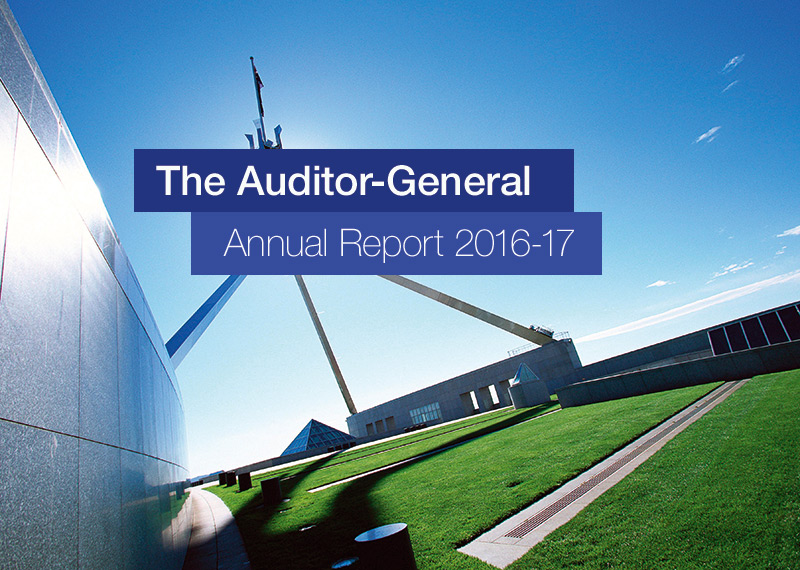
This annual report documents the performance of the Australian National Audit Office (ANAO) in the financial year ending on 30 June 2017. The report addresses all applicable obligations under the Public Governance, Performance and Accountability Act 2013 (PGPA Act); the Public Governance, Performance and Accountability Rule 2014 (PGPA Rule); the Auditor-General Act 1997; the performance measures set out in the outcome and programs framework in the ANAO’s 2016–17 Portfolio Budget Statements (PBS) and the ANAO 2016–20 Corporate Plan and annual reporting requirements set out in other relevant legislation.
Contact
Please direct enquiries relating to annual reports through our contact page.
Speeches and papers
Published: Thursday 18 October 2001
Published
Mr P.J. Barrett (AM) - Auditor-General for Australia, presented to the Senior Staff of the Board of Audit - Tokyo, Japan
Speeches and papers
Published: Tuesday 16 May 2000
Published
Mr P.J. Barrett (AM) - Auditor-General for Australia, presented at the Medibank Private Executive Seminar Breakfast, Perth
Speeches and papers
Published: Monday 13 September 1999
Published
Mr P.J. Barrett (AM) - Auditor-General for Australia, presented at the Defence and Strategic Studies Course, Australian Defence College, Canberra
Speeches and papers
Published: Thursday 13 February 1997
Published
Mr P.J. Barrett (AM) - Auditor-General for Australia, presented to the Central Agency Broker Seminar - Towards a Best Practice Australian Public Service - Hobart
Performance audit (Auditor-General Report No. 25 of 2007–08)
Published: Wednesday 27 February 2008
Published
The objective of the audit was to examine the effectiveness of the Department of Health and Ageing's administration of the Round the Clock Medicare: Investing in After Hours General Practice Services program.
Entity
Department of Health and Ageing
Performance audit (Auditor-General Report No. 2 of 2005–06)
Published: Friday 15 July 2005
Published
The objective of this follow-up audit was to assess the extent to which APRA has implemented recommendations regarding the supervisory framework and cross-border banking made in ANAO's 2001 audit of bank prudential supervision.
Entity
Australian Prudential Regulation Authority
Speeches and papers
Published: Thursday 22 May 2003
Published
Mr P.J. Barrett (AM) - Auditor-General for Australia, presented to the Queensland Commonwealth Regional Heads Forum 15th Annual Government Business Conference
Performance audit (Auditor-General Report No. 9 of 2002–03)
Published: Monday 30 September 2002
Published
The objective of the audit was to assess whether Centrelink's Balanced Scorecard (BSC) was based on key elements of better practice principles and its use assisted Centrelink to understand and communicate its performance against its strategic goals. The audit examined:
- the use of the BSC in setting Centrelink's vision and goals;
- the role of the BSC in planning;
- alignment of the BSC from the top down through the organisation and the interdependencies of scoreboards used by various support units, the definition and use of measures, including target setting and links to goals within the BSC framework; and
- its use in monitoring, reporting and feedback.
Entity
Centrelink
Speeches and papers
Published: Thursday 2 October 1997
Published
Mr P.J. Barrett (AM) - Auditor-General for Australia, presented at a Seminar on 'Financial Management and Electronic Government' Kuala Lumpur
Performance audit (Auditor-General Report No. 11 of 2013–14)
Published: Thursday 12 December 2013
Published
The objective of the audit was to assess the effectiveness of the delivery of the first and second funding rounds of the Filling the Research Gap program by the Department of Agriculture.
Entity
Department of Agriculture
Contact
Please direct enquiries relating to reports through our contact page.
Performance audit (Auditor-General Report No. 32 of 2002–03)
Published: Wednesday 5 March 2003
Published
This is the third audit report undertaken by the ANAO in response to a request made by the Senate in the Senate Order for Departmental and Agency Contracts, which requires all Financial Management and Accountability Act 1997 (FMA Act) agencies to place on the Internet, lists of contracts of $100 000 and more by the tenth day of the Spring and Autumn sittings of Parliament. It relates to the audit of the contract information to be listed on the Internet by the tenth day of the Autumn 2002 sitting. The audit involved a desktop review of all FMA Act agencies' Internet listings; and a detailed review in six selected agencies, of the process for making the Internet listings, and the policies and practices for determining and identifying whether contracts contained either confidential provisions and other requirements of confidentiality.
Entity
Across Agency
Speeches and papers
Published: Saturday 21 August 2004
Published
Mr P.J. Barrett (AM) - Auditor-General for Australia, Address to the Challenge of Change : Driving Governance and Accountability CPA Forum 2004
Speeches and papers
Published: Thursday 29 July 1999
Published
Mr P.J. Barrett (AM) - Auditor-General for Australia, presented at the 1999 Department of Employment, Training and Industrial Relations Biennial Risk Management Conference, Brisbane
Performance audit (Auditor-General Report No. 24 of 2021–22)

Published: Thursday 28 April 2022
Published
The objective of the audit was to assess the effectiveness of the Australian Taxation Office's activities in addressing Superannuation Guarantee non-compliance.
Entity
Australian Taxation Office
Contact
Please direct enquiries through our contact page.
Speeches and papers
Published: Monday 27 October 1997
Published
Mr P.J. Barrett (AM) - Auditor-General for Australia, presented to the National Public Sector Accountants Conference; Sydney
Performance audit (Auditor-General Report No. 9 of 2011–12)
Published: Thursday 20 October 2011
Published
The audit objective was to assess the extent to which DEEWR and FaHCSIA have effectively managed the planning and consultation phases for the IBF program and the IBHP program. The audit scope included consideration of the issues likely to affect the ongoing operation and sustainability of the facilities.
Entity
Department of Education, Employment and Workplace Relations; Department of Families, Housing, Community Services and Indigenous Affairs; Aboriginal Hostels Limited; Northern Territory Department of Education and Training
Speeches and papers
Published: Monday 13 September 1999
Published
Mr P.J. Barrett (AM) - Auditor-General for Australia, presented at the 'Ensuring Accountability and Ethics with Corporate Governance in the Public Sector' - IIR Conference, Canberra
Speeches and papers
Published: Friday 24 November 1995
Published
Mr P.J. Barrett (AM) - Auditor-General for Australia, presented to the ASCPA Annual Public Sector Accounting Convention, Canberra
Performance audit (Auditor-General Report No. 44 of 2023–24)

Published: Monday 24 June 2024
Published
The objective of the audit was to assess whether the Department of the Treasury (Treasury) had complied with gifts, benefits and hospitality requirements.
Entity
Department of the Treasury
Contact
Please direct enquiries through our contact page.
Speeches and papers
Published: Wednesday 18 April 2001
Published
Mr P.J. Barrett (AM) - Auditor-General for Australia, presented at the MinterEllison Seminar Series
Speeches and papers
Published: Thursday 25 May 2000
Published
Mr P.J. Barrett (AM) - Auditor-General for Australia, presented at the Government in Excellence Summit 2000 - Reinventing Government - A Manifesto for Achieving Excellence and Managing for Results; Singapore
Speeches and papers
Published: Monday 11 June 2001
Published
Mr P.J. Barrett (AM) - Auditor-General for Australia, presented at the INTOSAI Working Group
Performance audit (Auditor-General Report No. 42 of 1999–2000)
Published: Wednesday 10 May 2000
Published
The audit reviewed the effectiveness and probity of the policy development processes and implementation of improved access to Magnetic Resonance Imaging services. The objective of the audit was to examine and report on the effectiveness and probity of the processes involved in:
(a) the development and announcement of the proposal to improve access to Magnetic Resonance Imaging (MRI) services announced in the 1998 Budget, including negotiation with the diagnostic imaging profession; and
(b) the registration of 'eligible providers' and 'eligible equipment' to enable the payment of claims for MRI services on the Medicare Benefits Schedule
Entity
Across Agency
Speeches and papers
Published: Friday 1 August 1997
Published
Mr P.J. Barrett (AM) - Auditor-General for Australia, addressed the Senior Executive Leadership 20. Canberra.
Speeches and papers
Published: Thursday 20 November 1997
Published
Mr P.J. Barrett (AM) - Auditor-General for Australia, presented to the PA Congress 1997:'CPAs for Today and Tomorrow', Adelaide
Speeches and papers
Published: Friday 9 April 1999
Published
Mr P.J. Barrett (AM) - Auditor-General for Australia, presented at the National Public Sector Accountants Conference, Adelaide
Speeches and papers
Published: Tuesday 5 October 2004
Published
Mr P.J. Barrett (AO) - Auditor-General for Australia, presented at the UN Results Based Management Seminar
Speeches and papers
Published: Sunday 29 February 2004
Published
Mr P.J. Barrett (AM) - Auditor-General for Australia, presented at the MBA Governance Students at Macquarie University Graduate School of Management
Speeches and papers
Published: Tuesday 19 May 1998
Published
Mr P.J. Barrett (AM) - Auditor-General for Australia, presented at the Senior Executive Leadership Program - Preparatory day, Hill Station, Canberra
Speeches and papers
Published: Wednesday 27 November 1996
Published
Mr P.J. Barrett (AM) - Auditor-General for Australia, presented to COMNET - Canberra
Speeches and papers
Published: Friday 1 November 2013
Published
Mr Mr Ian McPhee - Auditor-General for Australia, presented to the Risk Management Institute of Australia and the Australasian Compliance Institute, at the 2nd Annual GRC Conference, Melbourne
Speeches and papers
Published: Friday 5 November 2004
Published
Mr P.J. Barrett (AM) - Auditor-General for Australia, presented at the 2nd Taipai Corporate Governance Forum
Performance audit (Auditor-General Report No. 8 of 2002–03)
Published: Wednesday 18 September 2002
Published
This is the second audit report under the Senate Order, which requires all Financial Management and Accountability Act 1997 (FMA Act) agencies to place on the Internet, lists of contracts of $100 000 and more by the tenth day of the Spring and Autumn sittings of Parliament. It relates to the audit of the contract information to be listed on the Internet by the tenth day of the Autumn 2002 sitting. The audit involved a desktop review of all FMA Act agencies' Internet listings; and a detailed review at six selected agencies, of the process for making the Internet listings, and the policies and practices for determining confidentiality provisions in contracts.
Entity
Across Agency
Performance audit (Auditor-General Report No. 25 of 1996–97)
Published: Friday 20 December 1996
Published
The purpose of this audit was to assess the Department of Social Security's approach to customer service against a recognised good practice methodology, and to identify opportunities for DSS to improve the quality of its customer service, its administrative effectiveness and its overall performance. The ANAO's intention was to identify opportunities to improve customer focus, particularly for those aspects of DSS's administration impacting on customer service. The audit criteria included: customer service environment; human resource management practices; communication with customers; customer-friendly approaches; and systematic approaches to continuous improvement.
Entity
Department of Social Security
Speeches and papers
Published: Wednesday 24 May 2000
Published
Mr P.J. Barrett (AM) - Auditor-General for Australia, presented at the Association of Risk and Insurance Managers of Australasia - South Australia Chapter
Speeches and papers
Published: Thursday 28 February 2002
Published
Mr P.J. Barrett (AM) - Auditor-General for Australia, Address to University of Canberra Students - Graduate Certificate in Performance Audit
Speeches and papers
Published: Wednesday 26 April 2000
Published
Mr P.J. Barrett (AM) - Auditor-General for Australia, presented an Occasional Paper
Speeches and papers
Published: Friday 31 May 2002
Published
Mr P.J. Barrett (AM) - Auditor-General for Australia, presented at the IPAA ACT Division, Half day seminar
Speeches and papers
Published: Tuesday 3 September 1996
Published
Mr P.J. Barrett (AM) - Auditor-General for Australia, presented at the Challenges and Opportunities Seminar, Conducted by the Department of Finance, Canberra
Speeches and papers
Published: Thursday 20 November 2003
Published
Mr P.J. Barrett (AM) - Auditor-General for Australia, presented at the CPA Australia National Public Sector Convention, Perth
Speeches and papers
Published: Monday 3 February 2003
Published
Mr P.J. Barrett (AM) - Auditor-General for Australia, presented to the Australasian Council of Public Accounts Committees (ACPAC)
Speeches and papers
Published: Tuesday 4 April 2006
Published
Mr Ian McPhee - Auditor-General for Australia, presented at the Australian Government Procurement Conference
Performance audit (Auditor-General Report No. 17 of 2002–03)
Published: Tuesday 5 November 2002
Published
The objective of the audit was to assess whether the controls employed by the Department of Family and Community Services (FACS) and Centrelink to ensure the correctness of payments made under the Age Pension program were effective and efficient. The ANAO focused on:
- business arrangements between FACS and Centrelink and the Business Assurance Framework;
- whether the source of error was correctly attributed in customer records assessed by FACS and Centrelink as containing an error in the 2000-01 Age Pension Random Sample Survey:
- the correctness of Centrelink's processing of reassessments, including Pensioner Entitlements Reviews, Customer Initiated Reassessments and automated reassessments: and
- progress in implementing the recommendations of previous ANAO audits concerning the preventive quality controls that underpin correct payments.
Entity
Department of Family and Community Services; Centrelink
Speeches and papers
Published: Friday 13 October 1995
Published
Mr P.J. Barrett (AM) - Auditor-General for Australia, presented to the International Consortium on Governmental Financial Management - Washington
Speeches and papers
Published: Friday 20 September 2002
Published
Mr P.J. Barrett (AM) - Auditor-General for Australia, presented at the CPA Australia's Government Business Symposium, Melbourne
Performance audit (Auditor-General Report No. 36 of 2003–04)
Published: Thursday 25 March 2004
Published
The audit assessed the Commonwealth's administration of the two major elements of the Dairy Industry Adjustment Package; the Dairy Structural Adjustment Program (DSAP) and the supplementary Dairy Assitance Program (SDA). The audit addressed the implementation and delivery of the programs, governance arrangements and the management of the Dairy Structural Adjustment Fund.
Entity
Department of Agriculture Fisheries and Forestry; Dairy Adjustment Package
Performance audit (Auditor-General Report No. 36 of 2004–05)
Published: Wednesday 9 March 2005
Published
Given the importance of customer feedback to Centrelink's business, the ANAO considered it timely to conduct a series of performance audits relating to Centrelink's customer feedback systems, particularly in relation to its delivery of the services then provided on behalf of FaCS. The overarching objective of this series of ANAO performance audits of Centrelink's customer feedback systems was to assess whether Centrelink has effective processes and systems for gathering, measuring, reporting and responding effectively to customer feedback, including in relation to customer satisfaction with Centrelink services and processes.
Entity
Centrelink
Performance audit (Auditor-General Report No. 10 of 1997–98)
Published: Tuesday 28 October 1997
Published
The objectives of the audit were to determine the administrative changes made by the Australian Tourist Commission (ATC) to implement the recommendations of recent administrative reviews and to identify how well the ATC is meeting its statutory objectives. The criteria used in conducting the audit included administrative improvements resulting from the ATC's response to recent reviews and the extent to which strategies and performance information address its statutory objectives.
Entity
Australian Tourist Commission
Performance audit (Auditor-General Report No. 7 of 2001–02)
Published: Thursday 9 August 2001
Published
The report summarises the audit and other related activities of the ANAO in the period January to June 2001. Key issues arising from performance audits tabled in this period are summarised against ANAO themes of:
- corporate governance including human resource management, financial management, and performance information;
- service delivery including the impact of e-government;
- procurement and contract management; and
- information technology.
Appendix 1 of the Activity Report provides a short summary of each of the performance audits tabled between 1 January 2001 and 30 June 2001.
Entity
NO-DEPTS-LISTED
Performance audit (Auditor-General Report No. 50 of 2002–03)
Published: Wednesday 18 June 2003
Published
This is the second year of what may be a three-year longitudinal study of the effectiveness and efficiency of all aspects of people management in 13 agencies, covering some 36% of APS employees. The study assessed each people management practice area against four criteria: quality, HR integration, effectiveness & efficiency and business contribution.
Entity
Across agency
Performance audit (Auditor-General Report No. 27 of 2000–01)
Published: Friday 22 December 2000
Published
The audit was undertaken in the Training and Youth Division TYD) of the Department of Education, Training and Youth Affairs. The objective of the audit was to determine whether the application of Business Processing Reengineering(BPR) principles would identify improvements to the business processes of the TYD. The TYD was used in this audit to illustrate the application of BPR as a tool for agencies to identify efficiencies and enhance program effectiveness.
Entity
Department of Education, Training and Youth Affairs
Performance audit (Auditor-General Report No. 46 of 2000–01)
Published: Wednesday 6 June 2001
Published
The objective of the audit was to report to Parliament on the ATO's management of its performance reporting within the outcomes and outputs framework and to identify potential areas for improvement in specifying, measuring, administering and reporting under that framework.
Entity
Australian Taxation Office
Speeches and papers
Published: Friday 16 November 2001
Published
Mr P.J. Barrett (AM) - Auditor-General for Australia, presented at the CPA South Australia Conference 2001
Performance audit (Auditor-General Report No. 47 of 1999–2000)
Published: Tuesday 20 June 2000
Published
The overall objective of the survey was to assess key aspects of fraud control arrangements in place across the APS against Commonwealth Law Enforcement Board (CLEB) guidelines. This assessment aimed to provide assurance to Parliament that agencies had a suitable framework in place to assist in effectively preventing and dealing with fraud and to indicate to APS agencies any areas for improvement identified in the survey.
Entity
Across Agency
Performance audit (Auditor-General Report No. 49 of 2014–15)

Published: Wednesday 10 June 2015
Published
The audit objective is to assess the effectiveness of the Department of Agriculture’s administration of the Imported Food Inspection Scheme.
Entity
Department of Agriculture
Contact
Please direct enquiries relating to reports through our contact page.
Performance audit (Auditor-General Report No. 61 of 2001–02)
Published: Tuesday 25 June 2002
Published
This benchmarking study across 14 agencies examined how line managers plan for and manage their staff and how the human resource (HR) function supports them to do that. People management was categorised into nine, practice areas, to enable comparisons between the participating agencies. The study also assessed each people management practice area against four criteria: quality, HR integration, effectiveness & efficiency and business contribution.
Entity
Across Agency
Speeches and papers
Published: Friday 11 March 2011
Published
Mr Ian McPhee, PSM - Auditor-General for Australia, presented at the CPA Australia, International Public Sector Convention, Melbourne
Performance audit (Auditor-General Report No. 21 of 2001–02)
Published: Tuesday 20 November 2001
Published
The audit reviewed the policy advising functions of the Departments of Education, Training and Youth Affairs, Employment, Workplace Relations and Small Business, and Family and Community Services. The objective of the audit was to determine whether departmental quality management systems for policy advising were appropriate and the advice provided met expected standards for policy outputs.
Entity
Department of Education Training and Youth Affairs; Department of Employment Workplace Relations and Small Business; Department of Family and Community Services
Speeches and papers
Published: Thursday 12 August 1999
Published
Mr P.J. Barrett (AM) - Auditor-General for Australia, presented at the Health Insurance Commission Senior Management Group
Speeches and papers
Published: Tuesday 16 September 1997
Published
Mr P.J. Barrett (AM) - Auditor-General for Australia - Speaking Notes used for presentation to the Australian Bureau of Statistics SES and Middle Management Group
Performance audit (Auditor-General Report No. 33 of 2001–02)
Published: Monday 25 February 2002
Published
The Senate Order of 20 June 2001, required all FMA agencies to list contracts over $100 000 on the Internet. FMA agencies were to indicate, amongst other things, whether the contracts contained provisions requiring the parties to maintain confidentiality of any of its provisions or whether any provisions of the contract were regarded by the parties as confidential. The Senate Order also requested the ANAO to conduct an examination of a number of such contracts, and indicate whether any inappropriate use of confidentiality provisions was detected in that examination. The Government agreed that agencies would comply with the spirit of the Order because it was committed to transparency of Commonwealth contracts. The Government also indicated that agencies' compliance with the Order would be progressive as agencies refine arrangements and processes to meet the requirements
Entity
Across Agency
Speeches and papers
Published: Saturday 26 June 2004
Published
Mr P.J. Barrett (AO) - Auditor-General for Australia, an Occasional Paper
Speeches and papers
Published: Wednesday 14 February 1996
Published
Mr P.J. Barrett (AM) - Auditor-General for Australia, presented at the FINEST User Network Annual Conference 1996, Leura, NSW
Performance audit (Auditor-General Report No. 40 of 2003–04)
Published: Tuesday 13 April 2004
Published
The objective of the audit was to assess the effectiveness of Health's management of the MPSP and the RHSP. To achieve the audit's objective, the ANAO examined whether Health; had an effective approach to planning the programs; had an effective approach to delivering the programs; effectively used performance information to manage the programs; and effectively managed its relationship with all stakeholders of the programs.
Entity
Department of Health and Ageing
Performance audit (Auditor-General Report No. 4 of 1998–99)
Published: Monday 10 August 1998
Published
The objective of the audit was to evaluate the efficiency and effectiveness of Austrade's management of customer services to Australian exporters, with particular reference to:
- performance as a customer-focused organisation;
- achievement of quality customer service through its client service initiatives; and
- measurement and evaluation of its customer service performance.
Entity
Australian Trade Commission
Speeches and papers
Published: Wednesday 26 June 2002
Published
Mr P.J. Barrett (AM) - Auditor-General for Australia, presented at the International Quality & Productivity Centre Seminar
Speeches and papers
Published: Friday 21 June 2002
Published
Mr P.J. Barrett (AM) - Auditor-General for Australia, presented at the Senate Occasional Lecture Series
Speeches and papers
Published: Monday 17 May 1999
Published
Mr P.J. Barrett (AM) - Auditor-General for Australia, presented at the Public Seminar Series, Graduate Program in Public Policy, 'Democratic Governance: Improving the Institutions of Accountability', The Australian National University
Speeches and papers
Published: Tuesday 3 June 1997
Published
Mr P.J. Barrett (AM) - Auditor-General for Australia, presented to the Australian Taxation Office Staff Conference, Canberra
Speeches and papers
Published: Wednesday 16 October 2002
Published
Mr Ian McPhee - Deputy Auditor-General, presented at the National Institute for Governance, Canberra
Speeches and papers
Published: Thursday 14 November 1996
Published
Mr P.J. Barrett (AM) - Auditor-General for Australia, presented t the Australian Society of Certified Practising Accountants Annual Research Lecture - Canberra
Speeches and papers
Published: Thursday 1 April 2004
Published
Mr P.J. Barrett (AM) - Auditor-General for Australia, Address to University of Canberra students participating in the Graduate Certificate in Performance Auditing
Speeches and papers
Published: Tuesday 3 December 2002
Published
Mr P.J. Barrett (AM) - Auditor-General for Australia, presented at the Department of Finance and Administration's Learning Centre Lecture Series
Performance audit (Auditor-General Report No. 13 of 1999–2000)
Published: Monday 11 October 1999
Published
The Department of Defence spends some $2.4 billion a year on major equipment acquisition projects. The audit objective was to assess Defence's arrangements for higher-level management of major equipment acquisition projects. The principal aim was to formulate practical recommendations that would both enhance Defence's management of major acquisition projects and provide a degree of assurance about its ongoing apparent capacity to do so efficiently and effectively.
Entity
Department of Defence
Performance audit (Auditor-General Report No. 23 of 2013–14)
Published: Thursday 13 March 2014
Published
The objective of the audit was to assess the Australian Federal Police's (AFP’s) management of policing services at Australian international airports. In order to form a conclusion against this audit objective, the Australian National Audit Office (ANAO) examined if:
- the transition to the 'All In' model of policing at airports (Project Macer) had been delivered effectively;
- appropriate processes are in place for managing risk and operational planning;
- effective stakeholder engagement, relationship management and information sharing arrangements are in place;
- facilities at the airports are adequate and appropriate; and
- appropriate mechanisms for measuring the effectiveness of policing at airports have been developed and implemented.
Entity
Australian Federal Police
Contact
Please direct enquiries relating to reports through our contact page.
Performance audit (Auditor-General Report No. 20 of 2016–17)

Published: Wednesday 19 October 2016
Published
The audit objective was to assess the departments of Health and Human Services’ administration, including oversight and monitoring arrangements, for the Indemnity Insurance Fund.
Entity
Department of Health; Department of Human Services
Contact
Please direct enquiries relating to reports through our contact page.
Speeches and papers
Published: Thursday 16 September 1999
Published
Mr P.J. Barrett (AM) - Auditor-General for Australia, presented at the Department of Employment, Workplace Relations and Small Business Leadership Development Program
Performance audit (Auditor-General Report No. 2 of 1998–99)
Published: Friday 10 July 1998
Published
The Audit reviewed the Commercial Support Program (CSP) within the Department of Defence. The CSP was introduced in 1991 following a review of the report, The Defence Force and the Community. Its objective is to achieve best value for money in the acquisition of support services for the Department of Defence and to give the private sector an opportunity to participate in the provision of those support services. The objective of this audit was to assess whether CSP was meeting its objectives and to identify any areas where it may be possible to improve the timeliness, and therefore cost-effectiveness, with which CSP is implemented and the quality of the process itself to produce better outcomes.
Entity
Department of Defence
Performance audit (Auditor-General Report No. 30 of 1998–99)
Published: Friday 15 January 1999
Published
The audit reviewed the use and operation of performance information in service level agreements between Centrelink and three agencies; the Department of Social Security, the Department of Education, Training and Youth Affairs and the Department of Employment, Workplace Relations and Small Business. The objective of the audit was to establish whether the performance assessment framework specified in the agreements enabled the adequate assessment of achievements under purchaser/provider arrangements entered into by DSS, DEETYA and Centrelink.
Entity
Department of Education Training and Youth Affairs; Centrelink; Department of Social Security
Performance audit (Auditor-General Report No. 35 of 2001–02)
Published: Monday 11 March 2002
Published
The Australian Taxation Office (ATO) established a task force in 1996 to develop a greater understanding of the factors involved and to devise a coordinated approach in dealing with the cash economy. The objective of the performance audit was to report to Parliament on the ATO's progress in addressing the cash economy, including its monitoring and reporting of outcomes. The audit focused on the ATO's implementation of its Cash Economy Task Force recommendations in the light of the tax reform that has taken place over the last two years.
Entity
Australian Taxation Office
Performance audit (Auditor-General Report No. 46 of 2002–03)
Published: Friday 6 June 2003
Published
Australian Industry Involvement Program. Department of Defence The audit examined the management by Defence of its Australian Industry Involvement (AII) Program. AII is the major program through which Defence gives effect to government policy on Australian industry. The objective of the audit was to assess the extent to which the AII Program has achieved its two policy objectives, which are to :
- develop and sustain strategically important capabilities in Australian industry to support Australian Defence Force operations and Defence capability development; and
- maximise Australian industry involvement in Defence's procurement of goods and services, consistent with the government procurement policy objective of achieving best value for money to the Commonwealth.
Entity
Department of Defence
Performance audit (Auditor-General Report No. 33 of 1997–98)
Published: Monday 23 February 1998
Published
The objective of this audit was to assess the efficiency and effectiveness of the Commonwealth's management of the Great Barrier Reef as implemented by the Authority. This audit was undertaken because of the environmental significance of the Great Barrier Reef Region; its growing economic importance; recent changes to the Authority's budget arrangements; and because the Authority had not been subject to a performance audit since its establishment approximately 20 years ago.
Entity
Great Barrier Reef Marine Park Authority
Speeches and papers
Published: Wednesday 6 August 2003
Published
Mr P.J. Barrett (AM) - Auditor-General for Australia, presented at the InfoHRM Conference, Gold Coast
Performance audit (Auditor-General Report No. 19 of 1997–98)
Published: Thursday 4 December 1997
Published
The objective of the audit was to report to Parliament on the economy, efficiency and administrative effectiveness of the risk management process in the Small Business Income business line. It follows Audit Report No.37 1996-97 and entitled Risk Management - Australian Taxation Office. That audit focused on broad strategic issues relevant to risk management in the Australian Taxation Office (ATO) as a whole. This audit follows the issues identified in that report into the day-to-day management of the Small Business Income as an example of how risk management operates in a significant element of the ATO.
Entity
Australian Taxation Office
Performance audit (Auditor-General Report No. 35 of 1999–2000)
Published: Monday 3 April 2000
Published
The audit reviewed the retention of military personnel that are managed by the Australian Defence Force which comprises the three Services. The objective of the audit was to review the management of personnel retention within the ADF with a view to evaluating the measures Defence has in place to monitor and control the flow of trained personnel from the Services
Entity
Department of Defence
Speeches and papers
Published: Wednesday 12 June 2002
Published
Mr P.J. Barrett (AM) - Auditor-General for Australia, presented at the Attorney-General's Luncheon
Speeches and papers
Published: Monday 18 May 1998
Published
Mr Ian McPhee - Deputy Auditor-General, presented at the Best Practice Financial Management Seminar, Canberra
Performance audit (Auditor-General Report No. 40 of 2001–02)
Published: Monday 8 April 2002
Published
The audit was undertaken following advice from the Joint Committee of Public Accounts and Audit (JCPAA) to the Auditor-General that assurance that ABC programming adequately reflects the ABC's Charter was an audit priority of Parliament. The objective of the audit is to provide Parliament with this assurance. The focus of the audit was on the governance arrangements of the ABC Board and management that enable the ABC to demonstrate the extent to which it is achieving its' Charter obligations, and other related statutory requirements, efficiently and effectively. The scope of the audit was as follows:
- Review the ABC's corporate governance framework against better practice models. The ANAO had regard to the ABC's unique role as a national public broadcaster established as a budget funded Commonwealth statutory authority subject to the Commonwealth Authorities and Companies Act 1997.
- Examine the ABC Board's approach to the interpretation of the Charter requirements of the ABC and the setting of strategic directions, and management's administrative arrangements for implementing the strategic directions established by the Board.
- Examine the ABC's performance information framework, the development, documentation and use of performance measures in relation to targets and/or objectives, the monitoring and reporting of performance and its' inter-relationship with the corporate planning and budgetary processes, particularly in relation to the strategic directions set by the Board.
The audit did not examine the overall management of the ABC. In keeping with the audit scope, the audit examined ways in which the ABC aligns its' strategic directions with its' Charter requirements for programs broadcast on radio, television and on-line and assures itself, and Parliament, about the achievement of its' Charter obligations. Further, the audit did not examine the operations of ABC Enterprises or symphony orchestras that operate as ABC-owned subsidiary companies.
Entity
Australian Broadcasting Corporation
Performance audit (Auditor-General Report No. 53 of 2013–14)
Published: Thursday 26 June 2014
Published
The audit objective was to assess the effectiveness of the Department of Health’s management of the National Medical Stockpile.
Entity
Department of Health
Contact
Please direct enquiries relating to reports through our contact page.
Performance audit (Auditor-General Report No. 29 of 2012–13)
Published: Tuesday 30 April 2013
Published
The audit objective was to assess the effectiveness of the Department of Veterans’ Affairs (DVA) administration of the veterans’ children education schemes.
Entity
Department of Veterans' Affairs
Performance audit (Auditor-General Report No. 44 of 1999–2000)
Published: Tuesday 16 May 2000
Published
The audit reviewed the management of the first round of Job Network contracts, which focused on Job Matching, Job Search Training and Intensive Assistance. The objective of the audit was to assess the efficiency and effectiveness of the Department of Employment, Workplace Relations and Small Business's management of the first round of employment services contracts. A key part of this examination was to assess the Department's level of confidence that the program was meeting government objectives based on performance and management information.
Entity
Department of Employment, Workplace Relations and Small Business
Speeches and papers
Published: Tuesday 30 September 2003
Published
Mr P.J. Barrett (AM) - Auditor-General for Australia, presented at the Committee for Economic Development of Australia, Sydney, 30 Sept
Speeches and papers
Published: Friday 12 March 2004
Published
Mr P.J. Barrett (AM) - Auditor-General for Australia, presented to the Institute of Chartered Accountants of India
Speeches and papers
Published: Wednesday 10 March 1999
Published
Mr P.J. Barrett (AM) - Auditor-General for Australia, presented at the IPAA Conference, Canberra
Performance audit (Auditor-General Report No. 24 of 2023–24)

Published: Tuesday 30 April 2024
Published
The objective of this audit was to assess the effectiveness of the Clean Energy Regulator’s (CER) issuing, compliance and contracting activities related to Australian Carbon Credit Units.
Entity
Clean Energy Regulator
Contact
Please direct enquiries through our contact page.
Performance audit (Auditor-General Report No. 13 of 2014–15)

Published: Tuesday 16 December 2014
Published
The objective of the audit was to assess the effectiveness of the Australian Customs and Border Protection Service's management of the Cape Class patrol boat program.
Entity
Australian Customs and Border Protection Service
Contact
Please direct enquiries relating to reports through our contact page.
Speeches and papers
Published: Wednesday 23 August 1995
Published
Mr P.J. Barrett (AM) - Auditor-General for Australia, presented to the Lunchtime Seminar Series for Senior Officers, Sydney, NSW
Performance audit (Auditor-General Report No. 27 of 1999–2000)
Published: Thursday 27 January 2000
Published
The objective of this performance audit was to assess the effectiveness and consistency of risk management processes undertaken by the Australian Taxation Office in administering individual taxpayer refunds.
Entity
Australian Taxation Office
Performance audit (Auditor-General Report No. 33 of 1996–97)
Published: Thursday 15 May 1997
Published
The objectives of the audit were to examine and evaluate the efficiency, economy and administrative effectiveness of the non-judicial activities of the Family Court of Australia. A major aim of the audit was to identify administrative better practices that could be promulgated throughout the Court. The criteria for the audit address the following issues: corporate planning; performance measurement; organisational structure; human resource management; human resource development; management information and reporting systems; and operational processes and procedures.
Entity
Across Agency
Performance audit (Auditor-General Report No. 16 of 1998–99)
Published: Monday 23 November 1998
Published
The primary objective of the audit was to assess the economy, efficiency and effectiveness of DoTRD's implementation of Annex 17 in the Australian aviation environment. The ANAO concluded that DoTRD has established a regulatory regime which ensures Australia's compliance with the standards embodied in Annex 17. However, there are areas where Australia's aviation security regime can be strengthened even further including; developing a more robust approach to risk management, developing a longer-term perspective to DoTRD's planning structure, development of proactive alliances with aviation regulators in neighbouring countries in the Asia-Pacific region, further improvement of the airport audit process, development and implementation of an evaluation strategy, development of a formal transparent approach to enforcement.
Entity
Department of Transport and Regional Services
Performance audit (Auditor-General Report No. 10 of 2010–11)
Published: Thursday 30 September 2010
Published
The objective of the audit was to examine the effectiveness of Centrelink's approach to investigating and responding to external fraud. The ANAO's assessment was based on four key criteria. In particular, the ANAO assessed whether Centrelink:
- had established a management framework, business systems and guidelines, that support the investigation, prosecution and reporting of fraud;
- had implemented appropriate case selection strategies and controls to ensure resources are targeted to the cases of highest priority;
- complied with relevant external and internal requirements when investigating fraud and referring cases for consideration of prosecution; and
- had implemented an effective training program that supports high quality investigations and prosecution referrals.
Entity
Centrelink