Browse our range of reports and publications including performance and financial statement audit reports, assurance review reports, information reports and annual reports.
Insights: Audit lessons

Published: Tuesday 9 January 2024
Published
The aim of Insights: Audit Lessons is to communicate lessons from our audit work and to make it easier for people working within the Australian public sector to apply those lessons.
This edition of Insights: Audit Lessons is targeted at risk practitioners and officials responsible for government operations, projects, programs, services and regulatory activities. It would also be useful for accountable authorities, their senior executives and audit and risk committees.
Contact
Please direct enquiries through our contact page.
Performance audit (Auditor-General Report No. 1 of 2005–06)
Published: Thursday 7 July 2005
Published
A performance audit of the management of the Detention Centre Contracts was listed in the 2003-04 Audit Work Program as a potential audit. The audit work program proposed that the audit would be conducted in two parts. The first part would focus on DIMIA's management of the detention centre contracts with the then detention service provider, GEO Australia. The second part would concentrate on how well any lessons learned from the first contract, were translated into improvements with the new contract. The original objective of this second ANAO audit was to assess DIMIA's management of detention services through the Contract, including the tender process, transition period and implementation of lessons learned from the previous contract.
Entity
Department of Immigration and Multicultural and Indigenous Affairs
Request for audit
Responded: Friday 5 July 2024
Response provided
The acting Auditor-General responded on 24 April 2024 to correspondence from Senator Janet Rice and Senator Penny Allman-Payne dated 27 March 2024, requesting the Auditor-General to conduct an audit of the contract between Miles Morgan Australia and the Department of Health and Aged Care to deliver the Future Fit program.
The acting Auditor-General made a follow-up response to Senator Penny Allman-Payne dated 5 July 2024, on conducting a performance audit into the Administration of the Future Fit Program.
Contact
Please direct enquiries through our contact page.
Performance audit (Auditor-General Report No. 21 of 2007–08)
Published: Thursday 7 February 2008
Published
The objective of this audit was to assess and report on the administration of the regional delivery of NHT 2 and the NAP.
The scope of the audit encompassed both Environment and DAFF, including the Joint Team of staff from both departments working together under a common management structure for the delivery of both programs. The audit focused on:
- the implementation of the regional delivery arrangements;
- governance and financial management for regional delivery; and
- monitoring, evaluation and reporting on the programs' performance.
Entity
Department of the Environment, Water, Heritage and the Arts; Department of Agriculture, Fisheries and Forestry
Performance audit (Auditor-General Report No. 30 of 2024–25)

Published: Monday 14 April 2025
Published
The objective of the audit was to assess the effectiveness of the Office of the Fair Work Ombudsman’s exercise of its regulatory functions.
Entity
Office of the Fair Work Ombudsman
Contact
Please direct enquiries through our contact page.
Performance audit (Auditor-General Report No. 48 of 2006–07)
Published: Friday 22 June 2007
Published
The objective of this audit was to determine the extent to which selected agencies have implemented the two recommendations of the previous audit; and the appropriateness of advice provided by Finance and the ATO. To address this audit objective, the audit assessed:
- the roles of Finance and the ATO in clarifying: the interaction of the PB and SG Act; the ongoing role of the PB Act; and mechanisms to monitor Australian Government organisations' compliance with the PB Act;
- the extent to which Finance and the ATO have provided guidance and other support to assist Australian Government organisations manage and meet statutory superannuation obligations for eligible contractors; and
- whether Australian Government organisations have managed and met statutory superannuation obligations for contractors in past and current contracts.
Entity
NO-DEPTS-LISTED
Performance audit (Auditor-General Report No. 28 of 2009–10)
Published: Wednesday 21 April 2010
Published
During the preparation of the ANAO's Planned Audit Work Program 2006–07, JSCEM suggested that the ANAO consider a possible performance audit into the efficiency and effectiveness of the AEC's management of elections. JSCEM's suggestion was considered in the planning and preparation for this performance audit, which focuses primarily on the AEC's administration of the CEA in the lead-up to and conduct of the 2007 general election.
Entity
Australian Electoral Commission
Request for audit
Responded: Thursday 14 November 2019
Response provided
The Auditor-General responded on 14 November 2019 to correspondence from the Minister for Finance, Senator the Hon Mathias Cormann, regarding annual performance statements audits. The Minister requested that the Auditor-General conduct a program of pilot assurance audits of annual performance statements of Commonwealth entities subject to the PGPA Act, in consultation with the Joint Committee of Public Accounts and Audit (JCPAA). The Auditor-General has agreed to the request and proposes to conduct a pilot to audit the 2019–20 performance statements of three entities.
Contact
Please direct enquiries through our contact page.
Request for audit
Responded: Wednesday 3 June 2026
Response provided
The Auditor-General responded on 3 June 2026 to correspondence from Dr Monique Ryan MP dated 18 May 2026, requesting that the Auditor-General include a performance audit on Commonwealth procurement in the 2026–27 Annual Audit Work Program, with a particular focus on the use of paragraph 2.6 exemptions under the Commonwealth Procurement Rules.
Contact
Please direct enquiries through our contact page.
Performance audit (Auditor-General Report No. 8 of 2010–11)
Published: Thursday 23 September 2010
Published
The audit examined the effectiveness of DEEWR's administrative arrangements supporting the delivery of Indigenous childcare services through MACS and crèches, including the approaches DEEWR uses to monitor the achievement of the BBF sub-program objective.
In conducting the audit, the Australian National Audit Office (ANAO) reviewed three key areas:
- program administration—DEEWR's administrative systems and processes supporting the delivery of Indigenous childcare services through MACS and crèches and the broader BBF sub-program;
- management of service provider funding agreements—DEEWR's systems and processes for managing MACS and crèche service providers' funding agreements; and
- monitoring and reporting performance—the effectiveness of DEEWR's processes for monitoring the performance of service providers, and the achievement of the outputs and outcomes of the BBF sub-program.
The ANAO sought not to duplicate the work of DEEWR's Internal Audit function, and in doing so referred to the findings of the recent internal audit review of the CCSSP, where these were relevant and appropriate.
Entity
Department of Education, Employment and Workplace Relations
Request for audit
Responded: Tuesday 2 July 2024
Response provided
The Auditor-General wrote to the Minister for Finance on 21 June 2024 to advise of the outcomes of the 2023–24 annual performance statements audit program, and a proposal for expanding the program of audits in 2024–25 and the following two financial years. The Minister for Finance responded on 2 July 2024 supporting the proposal. The Minister for Finance's full response is provided below.
Contact
Please direct enquiries through our contact page.
Request for audit
Responded: Monday 16 January 2023
Response provided
The Auditor-General wrote to the Minister for Finance on 25 October 2022 to advise of the outcomes of the 2021–22 annual performance statements audit program, and a proposal for expanding the program of audits in 2022–23 and the following two financial years. The Minister for Finance responded on 16 January 2023 supporting the proposal. The Minister for Finance's full response is provided below.
Contact
Please direct enquiries through our contact page.
Performance audit (Auditor-General Report No. 28 of 2015–16)
Published: Thursday 28 April 2016
Published
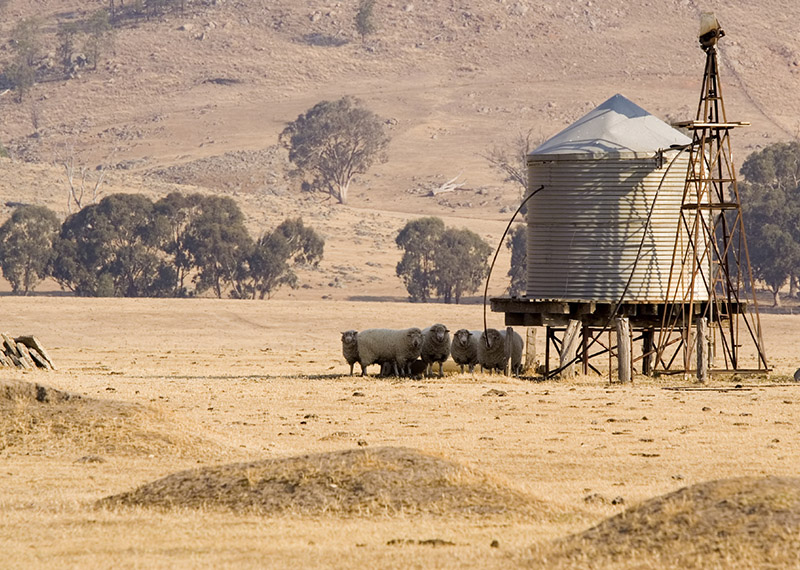
The objective of the audit was to assess the Department of Agriculture and Water Resources' establishment and administration of the Farm Finance and Drought Concessional Loans programs.
Entity
Department of Agriculture and Water Resources
Contact
Please direct enquiries relating to reports through our contact page.
Request for audit
Responded: Tuesday 18 July 2023
Response provided
The Auditor-General wrote to the Minister for Finance on 26 June 2023 to advise of the outcomes of the 2022–23 annual performance statements audit program, and a proposal for expanding the program of audits in 2023–24 and the following two financial years. The Minister for Finance responded on 18 July 2023 supporting the proposal. The Minister for Finance's full response is provided below.
Contact
Please direct enquiries through our contact page.
Performance audit (Auditor-General Report No. 29 of 2023–24)

Published: Tuesday 28 May 2024
Published
The objective of this audit was to assess the effectiveness of the National Indigenous Australians Agency’s (NIAA’s) processes to design and transition to a new remote employment program.
Entity
National Indigenous Australians Agency
Contact
Please direct enquiries through our contact page.
Speeches and papers
Published: Wednesday 8 November 1995
Published
Mr P.J. Barrett (AM) - Auditor-General for Australia, presented at a Seminar for ANAO staff on Working with Parliamentary Committees. Parliamentary Education Office. The Commonwealth Parliament. Canberra
Insights: Audit practice

Published: Wednesday 25 October 2017
Published
Effective, engaging and accessible communication remains an ongoing focus for the Australian National Audit Office (ANAO), given the important role that we play in providing assurance to the Parliament of Australia, and improving public sector administration.
In this edition of audit insights we discuss our external communication and engagement activities including website email subscriptions, our draft annual audit work program, contribute to an audit, our transparency and accountability initiatives, and social media.
Contact
Please direct enquiries relating to Audit insights through our contact page.
Performance audit (Auditor-General Report No. 26 of 2000–01)
Published: Friday 22 December 2000
Published
The Defence Estate comprises the land, buildings and other facilities that Defence uses across Australia. These facilities are vital to achieving the Defence mission - to prevent or defeat the use of armed force against Australia and its interests. The Estate has a gross replacement value of $14.8 billion. Defence Estate Organisation's (DEO's) Facilities Operations (FACOPS) Program delivers general maintenance and minor new works to Defence facilities on a regional basis across the country. DEO's Estate Operations and Planning Branch and its nine Regional Estate Centres are responsible for the FACOPS Program. Resources available for the Program have been reduced in recent years. The total DEO budget for 2000-01, which includes funds for capital works, facilities operations and property management, is $2.6 billion. Of this total, the FACOPS Program has a cash allocation of $213 million and an additional $15.6 million for employee expenses associated with the Program's 283 staff. The objective of the audit was to assess the efficiency and effectiveness of selected Defence facilities operations, including tendering and contracting, with a view to adding value with practical recommendations for enhancing operations.
Entity
Department of Defence
Performance audit (Auditor-General Report No. 27 of 2025–26)

Published: Tuesday 31 March 2026
Published
The audit objective was to assess the design and implementation of the Safer Local Roads and Infrastructure Program (SLRIP).
Entity
Department of Infrastructure, Transport, Regional Development, Communications, Sport and the Arts
Contact
Please direct enquiries through our contact page.
Corporate
Published: Thursday 6 July 2023
Published
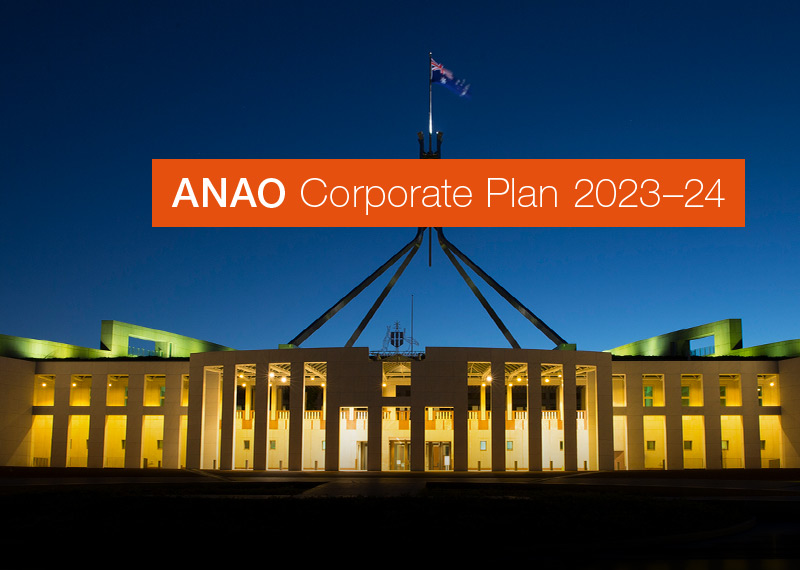
The ANAO Corporate Plan 2023–24 outlines how we intend to deliver against our purpose over the next four years (2023–24 to 2026–27). The corporate plan is the ANAO’s primary planning document – it outlines our purpose; the dynamic environment in which we operate; our commitment to building capability; and the priorities, activities and performance measures by which we will be held to account. The corporate plan is complemented by the annual audit work program, which reflects the ANAO’s audit strategy for the coming year.
This corporate plan was updated on 26 March 2024:
- organisational structure changes — ‘Professional Services and Relationships Group’ to ‘Professional Services Group’
- Measure 3 — change type from ‘Efficiency / Qualitative’ to ‘Efficiency / Quantitative’
- Measure 15, reporting mechanism 4 — replaced text to reflect updated JCPAA feedback process
- Measure 16, reporting mechanism 3 — replaced references to ‘insights’ with ‘lessons’
Contact
Please direct enquiries through our contact page.
Performance audit (Auditor-General Report No. 11 of 2020–21)

Published: Monday 28 September 2020
Published
The ANAO conducted separate audits of the Indigenous Advancement Strategy (IAS) Children and Schooling program and the Safety and Wellbeing program, the findings and conclusions of which are presented in this report. The objective of the audits was to assess the effectiveness of the Department of the Prime Minister and Cabinet’s and the National Indigenous Australians Agency’s administration of the IAS Children and Schooling and the Safety and Wellbeing programs.
Entity
National Indigenous Australians Agency
Contact
Please direct enquiries through our contact page.
Performance audit (Auditor-General Report No. 31 of 2023–24)

Published: Wednesday 29 May 2024
Published
The objective of this audit was to assess the effectiveness of the design of the Growing Regions Program.
Entity
Department of Infrastructure, Transport, Regional Development, Communication and the Arts; Department of Industry, Science and Resources
Contact
Please direct enquiries through our contact page.
Performance audit (Auditor-General Report No. 12 of 2010–11)
Published: Friday 15 October 2010
Published
The objective of this audit was to assess key aspects of the establishment and administration of HIP by DEWHA as well as the transition of the program to DCCEE. All phases of the program were examined with particular emphasis for Phase 2 being given to:
- program design and implementation;
- registration and training of installers;
- payment of rebates; and
- the compliance strategy underpinning the program.
Entity
Department of Climate Change and Energy Efficiency; Department of the Environment, Water, Heritage and the Arts; Medicare Australia
Performance audit (Auditor-General Report No. 15 of 2005–06)
Published: Tuesday 15 November 2005
Published
The objective of the audit was to assess the Commonwealth's administration of the grants component of the R&D Start program. Lessons for the new Commercial Ready program have been identified in the audit. Accordingly, recommendations arising from this audit are directed, when appropriate, to the Commercial Ready program. As most financial assistance is in the form of grants, the loans component of the program was excluded from the audit.
Entity
Department of Industry Tourism and Resources; Industry Research and Development Board
Performance audit (Auditor-General Report No. 2 of 2018–19)

Published: Tuesday 21 August 2018
Published
The audit objective was to assess the effectiveness of the Attorney-General’s Department’s design of the Data Retention Industry Grants program, including performance monitoring, reporting, evaluation and assurance arrangements.
Entity
Attorney-General's Department
Contact
Please direct enquiries through our contact page.
Other report (Auditor-General Report No. 8 of 2024–25)

Published: Thursday 24 October 2024
Published
The ANAO’s performance audit program is one of the main assurance functions of the Auditor-General. The purpose of this information report was to provide analysis of 2023–24 performance audits.
Entity
Across Entities
Contact
Please direct enquiries through our contact page.
Performance audit (Auditor-General Report No. 40 of 2003–04)
Published: Tuesday 13 April 2004
Published
The objective of the audit was to assess the effectiveness of Health's management of the MPSP and the RHSP. To achieve the audit's objective, the ANAO examined whether Health; had an effective approach to planning the programs; had an effective approach to delivering the programs; effectively used performance information to manage the programs; and effectively managed its relationship with all stakeholders of the programs.
Entity
Department of Health and Ageing
Performance audit (Auditor-General Report No. 26 of 2009–10)
Published: Tuesday 20 April 2010
Published
The objective of this audit was to assess the effectiveness of the administration of specific climate change programs by the departments of the Environment, Water, Heritage and the Arts and Resources, Energy and Tourism. In undertaking this audit, particular emphasis was given to the implementation of good administrative practice and the extent to which the program objectives were being met. The audit followed four lines of inquiry:
- development of program objectives and assessment of program risks;
- assessment and approval of competitive grant applications;
- assessment and approval of rebate applications; and
- measurement and reporting of program outcomes.
Entity
Department of the Environment, Water, Heritage and the Arts; Department of Climate Change and Energy Efficiency; Department of Resources, Energy and Tourism
Performance audit (Auditor-General Report No. 35 of 2015–16)
Published: Thursday 5 May 2016
Published
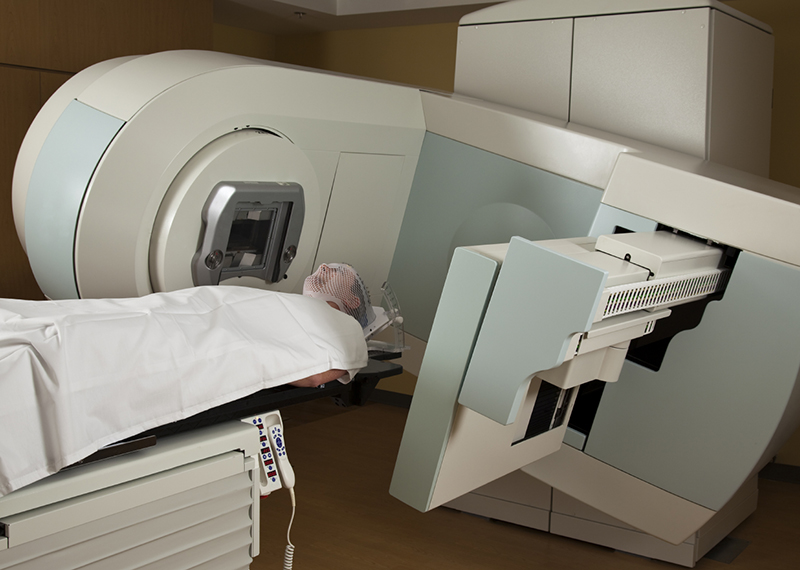
The audit objective was to assess the effectiveness of the Department of Health's and the Department of Human Services' administration of the Radiation Oncology Health Program Grants Scheme.
Entity
Department of Health; Department of Human Services
Contact
Please direct enquiries relating to reports through our contact page.
Performance audit (Auditor-General Report No. 31 of 2009–10)
Published: Thursday 22 April 2010
Published
The audit scope covered the management of the AusLink R2R Standard Program and the AusLink R2R Supplementary Program. The scope did not include management of the Nation Building Roads to Recovery Program, which has only recently commenced. The audit objectives were to:
- assess the effectiveness of the management of the AusLink Roads to Recovery Program;
- assess the delivery of the program and management of the funding, including the extent to which the program has provided additional (rather than substitute) funding for land transport infrastructure; and
- identify opportunities for improvements to the management of the program.
Entity
Department of Infrastructure, Transport, Regional Development and Local Government