Browse our range of reports and publications including performance and financial statement audit reports, assurance review reports, information reports and annual reports.
Performance audit (Auditor-General Report No. 53 of 2004–05)
Published: Tuesday 21 June 2005
Published
The objective of the audit was to express an opinion on the effectiveness of HOP management having regard to: compliance with applicable Australian Government policies; compliance with internal guidelines to assist loans officers to assess applications and manage loans; and programme performance reporting.
Entity
Indigenous Business Australia
Performance audit (Auditor-General Report No. 51 of 2010–11)
Published: Tuesday 21 June 2011
Published
To examine the effectiveness of the Department of Health and Ageing’s administration of the Access to Allied Psychological Services Program.
Entity
Department of Health and Ageing
Performance audit (Auditor-General Report No. 48 of 2002–03)
Published: Monday 16 June 2003
Published
In 2000, the ANAO tabled Audit Report No 49 1999-2000, Indigenous Land Corporation operations and performance. The 2000 audit made nine recommendations for improvement. This follow-up audit examined the Indigenous Land Corporation's implementation of the recommendations of the 2000 audit.
Entity
Department of Immigration and Multicultural and Indigenous Affairs
Performance audit (Auditor-General Report No. 49 of 2001–02)
Published: Monday 13 May 2002
Published
The audit reviewed Commonwealth National Parks involving total assets of $105 million with net operating costs of $41.77 million. Nineteen Commonwealth reserves are declared comprising six terrestrial national parks, one botanic garden and twelve marine parks and reserves totalling some 23 million hectares across Australia, its external territories and Commonwealth marine areas. The objective of the audit was to examine and report on the adequacy of the planning, management and reporting systems which support the Director of National Parks in the achievement of required functions under relevant legislation and agreed outputs and outcomes.
Entity
Department of the Environment and Heritage
Performance audit (Auditor-General Report No. 1 of 2010–11)
Published: Thursday 15 July 2010
Published
The objective of the audit was to assess the effectiveness of the selection, implementation, operation and monitoring of FRCs by AGD and FaHCSIA. The three main criteria for this audit assessed whether AGD and FaHCSIA had effectively:
- planned and implemented the FRC initiative, including the FRC selection and funding processes;
- undertaken administration activities to guide the operation and progress of the FRC initiative towards meeting its objectives; and
- monitored, evaluated and reported on the performance of FRCs.
Entity
Attorney-General's DepartmentDepartment of Families, Housing, Community Services and Indigenous Affairs
Performance audit (Auditor-General Report No. 29 of 2010–11)
Published: Wednesday 16 February 2011
Published
The objective of the audit was to examine the effectiveness of the AFP's approach to its management of the implementation of NPIs.
Entity
Australian Federal Police
Performance audit (Auditor-General Report No. 49 of 1999–2000)
Published: Thursday 29 June 2000
Published
The objective of the audit was to form an opinion on the adequacy of the Indigenous Land Corporation's (ILC's) operations and performance in: assisting Aboriginal persons and Torres Strait Islanders to acquire land; and assisting Aboriginal persons and Torres Strait Islanders to manage indigenous-held land; so as to provide economic, environmental, social or cultural benefits for Aboriginal persons and Torres Strait Islanders.
Entity
Across Agency
Speeches and papers
Published: Thursday 6 February 2003
Published
Mr P.J. Barrett (AM) - Auditor-General for Australia, presented to the Australasian Council of Auditors-General Conference, Melbourne
Performance audit (Auditor-General Report No. 43 of 2010–11)
Published: Wednesday 25 May 2011
Published
The objective of the audit was to examine whether the UP and CPP services provided by the Australian Federal Police Protection Service are being managed effectively. In particular, the audit examined:
- whether the Protection function has been effectively integrated into the AFP, and sound arrangements are in place to strategically plan Protection services and manage risks;
- whether Protection staff have access to appropriate training and guidance; and
- the management arrangements for UP and CPP services.
Entity
Australian Federal Police
Performance audit (Auditor-General Report No. 45 of 2011–12)
Published: Wednesday 20 June 2012
Published
The audit objective was to assess the effectiveness of DoHA’s administration in supporting the creation and development of health infrastructure from the HHF, including DoHA’s support for the Health Minister and the HHF Advisory Board.
Entity
Department of Health and Ageing
Performance audit (Auditor-General Report No. 32 of 2004–05)
Published: Wednesday 9 March 2005
Published
Given the importance of customer feedback to Centrelink's business, the ANAO considered it timely to conduct a series of performance audits relating to Centrelink's customer feedback systems, particularly in relation to its delivery of the services then provided on behalf of FaCS. The overarching objective of this series of ANAO performance audits of Centrelink's customer feedback systems was to assess whether Centrelink has effective processes and systems for gathering, measuring, reporting and responding effectively to customer feedback, including in relation to customer satisfaction with Centrelink services and processes.
Entity
Centrelink
Performance audit (Auditor-General Report No. 30 of 2011–12)
Published: Thursday 19 April 2012
Published
The objective of the audit was to assess the effectiveness of the AFP’s administration of the Fighting Terrorism at its Source (FTAS) initiative and related measures.
Entity
Australian Federal Police
Performance audit (Auditor-General Report No. 5 of 2010–11)
Published: Wednesday 15 September 2010
Published
The objective of the audit was to assess DoHA's effectiveness:
- in undertaking PIP program planning, program monitoring and review; and
- with Medicare Australia, in ensuring PIP program delivery to general practices and their medical practitioners.
In undertaking the audit, the ANAO considered the 12 incentives that comprised the PIP up to August 2009. The three most recently introduced incentives at the time of audit fieldwork, namely, Domestic Violence, GP Aged Care Access and eHealth incentives, were examined in greater detail and formed case studies to support audit analysis. The ANAO also sought views on the program administration from industry, including from general practices directly through an online survey.
With regard to accreditation of general practice, the audit scope did not include an assessment of the Standards nor the work of the bodies that undertake accreditation of general practices. The ANAO's focus on general practice accreditation related to DoHA's management of program entry criteria.
Entity
Department of Health and AgeingMedicare Australia
Performance audit (Auditor-General Report No. 28 of 2011–12)
Published: Thursday 29 March 2012
Published
The objective of the audit was to assess the effectiveness of Centrelink’s QOL control, which supports the integrity of payments administered by DHS on behalf of the Australian Government.
Entity
Department of Human Services
Performance audit (Auditor-General Report No. 2 of 2003–04)
Published: Wednesday 13 August 2003
Published
The Audit Activity Report: January to June 2003 summarises the activity and outputs of the Australian National Audit Office for the second half of the 2002-03 reporting year. The Report outlines the key findings of performance and financial control audits, and summarises audits tabled and better practice guides published during January to June 2003.
Entity
Australian National Audit Office; Parliament
Performance audit (Auditor-General Report No. 44 of 2003–04)
Published: Tuesday 27 April 2004
Published
The audit examined ATSIS' implementation of recommendations from Audit Report No.39, 1998-1999 National Aboriginal Health Strategy - Delivery of Housing and Infrastructure to Aboriginal and Torres Strait Islander Communities (the previous audit). In addition to assessing ATSIS' progress in implementing the recommendations of the previous audit, this follow-up audit examined ATSIS' performance reporting of the NAHS program, and concluded that the current level of aggregation of performance reporting makes it difficult to identify the particular contribution that the NAHS Program makes in improving services to Indigenous communities.
Entity
Aboriginal and Torres Strait Islander Services
Performance audit (Auditor-General Report No. 31 of 2012–13)
Published: Thursday 2 May 2013
Published
The objective of this audit was to examine the effectiveness of the Department of Families, Housing, Community Services and Indigenous Affairs’ administration of the National Partnership Agreement on Homelessness (NPAH), including monitoring and reporting of progress against the objective and outcomes of the agreement.
Entity
Department of Families, Housing, Community Services and Indigenous Affairs
Contact
Please direct enquiries relating to reports through our contact page.
Performance audit (Auditor-General Report No. 33 of 2004–05)
Published: Wednesday 9 March 2005
Published
Given the importance of customer feedback to Centrelink's business, the ANAO considered it timely to conduct a series of performance audits relating to Centrelink's customer feedback systems, particularly in relation to its delivery of the services then provided on behalf of FaCS. The overarching objective of this series of ANAO performance audits of Centrelink's customer feedback systems was to assess whether Centrelink has effective processes and systems for gathering, measuring, reporting and responding effectively to customer feedback, including in relation to customer satisfaction with Centrelink services and processes.
Entity
Centrelink
Annual report
Published: Thursday 30 September 2010
Published
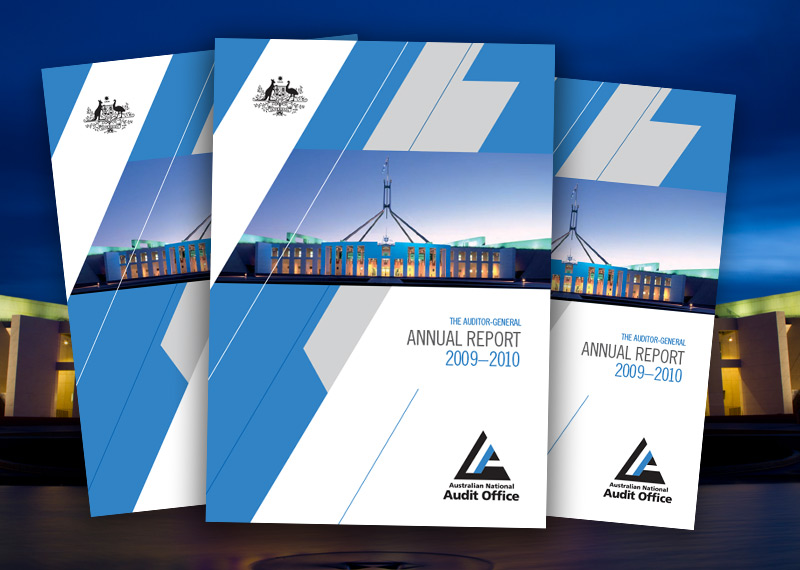
This annual report documents the performance of the Australian National Audit Office (ANAO) in the financial year ending on 30 June 2010. It includes a foreword by the Auditor-General, an overview including the role and responsibilities and vision of the Office, a report on performance, details about management and accountability, and the financial results.
Performance audit (Auditor-General Report No. 17 of 1999–2000)
Published: Monday 15 November 1999
Published
The audit reviewed the Commonwealth-State Housing Agreement (CSHA). CSHA is a joint arrangement between the Commonwealth and the States under which both the Commonwealth and the States contribute funding in the form of grants, which are used by State Housing Authorities to provide a variety of housing assistance programs to households on low incomes and those with special needs. The overall objective of the audit was to assess and report to Parliament on how effectively the Department of Family and Community Services (FaCS - formerly the Department of Social Security) administered the CSHA and to identify any areas where improvements could be made.
Entity
Department of Family and Community Services
Performance audit (Auditor-General Report No. 62 of 2002–03)
Published: Monday 30 June 2003
Published
The objectives of the audit was to examine the effectiveness and efficiency of DIMIA's decision-making processes and management systems for delivering the parent and partner aspects of the family stream of the Migration Program.
The family stream of Australia's Migration Program enables the reunion of immediate family members of Australian citizens, permanent residents or eligible New Zealand citizens. It consists of four main categories;
- Partner;
- Child;
- Parent; and
- Other family.
Entity
Department of Immigration and Multicultural and Indigenous Affairs
Performance audit (Auditor-General Report No. 30 of 2010–11)
Published: Thursday 17 February 2011
Published
The audit objective was to assess the effectiveness of the Department of Education, Employment and Workplace Relation's administration of the Digital Education Revolution program, focusing on the major component of the program, the National Secondary Schools Computer Fund.
Entity
Department of Education, Employment and Workplace Relations
Performance audit (Auditor-General Report No. 42 of 2011–12)
Published: Monday 18 June 2012
Published
The objective of the audit was to assess the effectiveness of the management of the MSS for the delivery of Centrelink services. The management of the MSS was assessed against the following criteria:
- there are effective planning arrangements to identify and address the evolving needs of DCALB customers;
- service delivery arrangements meet the current needs of DCALB customers; and
- there are effective performance monitoring and reporting arrangements which are used to improve service delivery.
Around 20 per cent of the people receiving Centrelink services are identified as being from a diverse cultural and linguistic background (DCALB). DHS’ Multicultural Servicing Strategy (MSS) sets out the approach for delivering Centrelink services to DCALB customers. The MSS has four main components — Language Services, the Multicultural Services Officer program, Stakeholder Engagement Strategies and Employee Support Tools and Strategies.
Entity
Department of Human Services
Performance audit (Auditor-General Report No. 48 of 2001–02)
Published: Friday 10 May 2002
Published
The audit examined the administrative processes that the department has in place to support the administration of RAP. The objective of the audit was to determine whether funding was being allocated in accordance with the RAP policy guidelines and whether the department was managing RAP contracts to ensure that desired outcomes are achieved
Entity
Department of Transport and Regional Services
Performance audit (Auditor-General Report No. 31 of 2004–05)
Published: Wednesday 9 March 2005
Published
Given the importance of customer feedback to Centrelink's business, the ANAO considered it timely to conduct a series of performance audits relating to Centrelink's customer feedback systems, particularly in relation to its delivery of the services then provided on behalf of FaCS. The overarching objective of this series of ANAO performance audits of Centrelink's customer feedback systems was to assess whether Centrelink has effective processes and systems for gathering, measuring, reporting and responding effectively to customer feedback, including in relation to customer satisfaction with Centrelink services and processes.
Entity
Centrelink
Performance audit (Auditor-General Report No. 10 of 2013–14)
Published: Wednesday 11 December 2013
Published
The objective of the audit was to assess the effectiveness of the Torres Strait Regional Authority’s administration of its program and service delivery functions.
Entity
Torres Strait Regional Authority
Contact
Please direct enquiries relating to reports through our contact page.
Performance audit (Auditor-General Report No. 49 of 2011–12)
Published: Monday 25 June 2012
Published
The objective of the audit was to assess the effectiveness of ASIO’s arrangements for providing timely and soundly based security assessments of individuals to client agencies.
Entity
Australian Security Intelligence Organisation
Performance audit (Auditor-General Report No. 36 of 2004–05)
Published: Wednesday 9 March 2005
Published
Given the importance of customer feedback to Centrelink's business, the ANAO considered it timely to conduct a series of performance audits relating to Centrelink's customer feedback systems, particularly in relation to its delivery of the services then provided on behalf of FaCS. The overarching objective of this series of ANAO performance audits of Centrelink's customer feedback systems was to assess whether Centrelink has effective processes and systems for gathering, measuring, reporting and responding effectively to customer feedback, including in relation to customer satisfaction with Centrelink services and processes.
Entity
Centrelink
Performance audit (Auditor-General Report No. 42 of 2007–08)
Published: Thursday 19 June 2008
Published
The objective of this follow-up audit was to examine Centrelink's progress in implementing the recommendations of the 2004–05 audit and the subsequent JCPAA inquiry.
Entity
Centrelink; Department of Employment, and Workplace Relations; Department of Families, Housing and Community Services and Indigenous Affairs
Performance audit (Auditor-General Report No. 46 of 2005–06)
Published: Wednesday 14 June 2006
Published
The objective of this follow-up audit was to review FaCSIA's progress in implementing the recommendations of Audit Report No.17 1999–2000. The focus was whether FaCSIA had maintained or improved its oversight, coordination and administration of the CSHA for both the 1999 CSHA and the 2003 CSHA, in line with the recommendations and findings identified in the previous ANAO audit.
Entity
Department of Families Community Services and Indigenous Affairs