Browse our range of reports and publications including performance and financial statement audit reports, assurance review reports, information reports and annual reports.
Performance audit (Auditor-General Report No. 42 of 2011–12)
Published: Monday 18 June 2012
Published
The objective of the audit was to assess the effectiveness of the management of the MSS for the delivery of Centrelink services. The management of the MSS was assessed against the following criteria:
- there are effective planning arrangements to identify and address the evolving needs of DCALB customers;
- service delivery arrangements meet the current needs of DCALB customers; and
- there are effective performance monitoring and reporting arrangements which are used to improve service delivery.
Around 20 per cent of the people receiving Centrelink services are identified as being from a diverse cultural and linguistic background (DCALB). DHS’ Multicultural Servicing Strategy (MSS) sets out the approach for delivering Centrelink services to DCALB customers. The MSS has four main components — Language Services, the Multicultural Services Officer program, Stakeholder Engagement Strategies and Employee Support Tools and Strategies.
Entity
Department of Human Services
Speeches and papers
Published: Tuesday 30 September 2003
Published
Mr P.J. Barrett (AM) - Auditor-General for Australia, presented at the Committee for Economic Development of Australia, Sydney, 30 Sept
Speeches and papers
Published: Thursday 21 August 1997
Published
Mr P.J. Barrett (AM) - Auditor-General for Australia, presented to the Conference on 'Surviving the Year 2000 Computer Crisis' Canberra
Performance audit (Auditor-General Report No. 1 of 2009–10)
Published: Tuesday 4 August 2009
Published
In two letters dated 19 and 22 June 2009, the Prime Minister requested a performance audit of a range of matters relating to representations to the Treasury regarding automotive finance arrangements for car dealers. In response to these requests, the Auditor-General decided that ANAO would undertake a performance audit under section 18 of the Auditor-General Act 1997 (Auditor-General Act). The audit objective, based on the matters raised in the Prime Minister's correspondence and in the Parliament, was to examine and report on:
- any representations to the Treasury since October 2008 from all sources regarding automotive finance arrangements for car dealers, including any made in relation to John Grant Motors;
- the nature of these representations;
- the manner in which the representations were responded to by officials, having regard to any relevant standards and procedures; and
- any related administrative matters that came to attention.
Entity
Department of the Treasury; Department of the Prime Minister and Cabinet
Speeches and papers
Published: Friday 5 November 2004
Published
Mr P.J. Barrett (AM) - Auditor-General for Australia, presented at the 2nd Taipai Corporate Governance Forum
Speeches and papers
Published: Tuesday 16 May 2000
Published
Mr P.J. Barrett (AM) - Auditor-General for Australia, presented at the Medibank Private Executive Seminar Breakfast, Perth
Performance audit (Auditor-General Report No. 10 of 2003–04)
Published: Monday 27 October 2003
Published
As part of its 2001 inquiry into the recruitment and retention of Australian Defence Force (ADF) personnel, the Senate Foreign Affairs, Defence and Trade References Committee reviewed Defence's contract with Manpower Services (Australia) Pty Ltd for trialling the outsourcing of recruiting services to the ADF. In its subsequent report, the Committee commented that the original contractual arrangements deserved further scrutiny by the ANAO. The objective of the audit was to examine Defence's management of the contractual arrangements for the provision of recruiting services to the ADF. In examining the management of the contract, the ANAO looked at the evaluations conducted at the end of each contractual phase, roles and responsibilities associated with ADF recruiting, and Defence's monitoring of contractual performance and management of risks associated with ADF recruiting.
Entity
Department of Defence
Insights: Audit lessons

Published: Friday 28 June 2024
Published
This edition of Audit Lessons is targeted at those responsible for administering or overseeing grants programs. The aim of Audit Lessons is to communicate lessons from our audit work and to make it easier for people working within the Australian public sector to apply those lessons.
Contact
Please direct enquiries through our contact page.
Performance audit (Auditor-General Report No. 51 of 2004–05)
Published: Wednesday 15 June 2005
Published
The objective of this audit was to assess whether DEWR's oversight of the Job Network ensures that job seekers are provided with high quality services. In particular, the ANAO examined whether DEWR had: an appropriate strategic approach to, and focus on, service quality across the Job Network; appropriate specification of the services to be provided to eligible job seekers, and of the quality of service provision; provided job seekers with a high quality of service at key Job Network service points; and appropriately monitored and reported the quality of service delivery, and appropriately managed service performance. As well, the ANAO examined whether the Job Network has appropriate mechanisms for identifying, assessing and implementing improvements to service delivery.
Entity
Department of Employment and Workplace Relations; Centrelink
Performance audit (Auditor-General Report No. 50 of 2006–07)
Published: Tuesday 26 June 2007
Published
The objective of the audit was to assess the effectiveness of procedures and processes used by DEST and the ATO to record HECS–HELP student loans. To achieve this, the ANAO assessed the performance of DEST and the ATO against three criteria as follows:
- DEST monitored student contributions set by higher education providers for consistency with Australian Government policy;
- DEST paid HECS–HELP advance payments to higher education providers based on sound estimates, and recorded, reconciled and reported these payments; and
- the ATO has established procedures and processes to correctly record HECS–HELP loans against student tax records.
Entity
NO-DEPTS-LISTED
Performance audit (Auditor-General Report No. 55 of 2016–17)

Published: Tuesday 20 June 2017
Published
The objective of the audit was to assess the effectiveness of the governance of the Northern Land Council in fulfilling its responsibilities and obligations under the Aboriginal Land Rights (Northern Territory) Act 1976, Native Title Act 1993 and Public Governance, Performance and Accountability Act 2013.
Entity
Department of the Prime Minister and Cabinet; Northern Land Council
Contact
Please direct enquiries relating to reports through our contact page.
Performance audit (Auditor-General Report No. 27 of 2011–12)
Published: Tuesday 20 March 2012
Published
The objective of this audit was to assess the efficiency1 and effectiveness of the establishment, implementation and administration of the bike paths component of the Local Jobs stream of the Jobs Fund. A particular focus was on the establishment of program objectives and the extent to which approved grants have demonstrably contributed to the cost-effective achievement of those objectives. The audit approach has been influenced by recent audits of grants administration which have emphasised the importance of transparent and accountable grant decision-making processes to the cost effective achievement of stated program objectives, and having regard for recent government decisions to enhance the framework applying to the administration of grants.
As an economic stimulus program, efficiency was assessed with particular attention to whether the application, assessment, decision-making and funding agreement processes were undertaken in a timely manner. This emphasis was consistent with the criterion adopted by the Government for the design of the stimulus packages established in response to the global financial crisis (see further at paragraph 4.20 of the audit report).
Entity
Department of Regional Australia, Local Government, Arts and Sport and Department of Infrastructure and Transport
Performance audit (Auditor-General Report No. 22 of 1999–2000)
Published: Wednesday 22 December 1999
Published
The audit reviewed the operations of the Bureau of Meteorology. The Bureau's functions include the taking and recording of meteorological observations and other observations required for the purposes of meteorology; the forecasting of weather and of the state of the atmosphere; the issue of warnings of weather conditions likely to endanger life or property; the supply, publication and promotion of meteorological information; and cooperation with international meteorological agencies in relation to the functions just listed. The objectives of the audit were to:
- use national and international benchmarks to evaluate the Bureau's performance in terms of timeliness, cost and quality of weather services to meet the needs of clients; and
- assess how well the Bureau is placed in measuring its outputs/outcomes within the context of the Accrual Budgeting Framework.
Entity
Department of the Environment and Heritage
Performance audit (Auditor-General Report No. 44 of 2006–07)
Published: Thursday 14 June 2007
Published
The objective of the audit was to assess the effectiveness of the Tribunals' management of their operations. To this end, the audit examined whether the MRT and the RRT:
- have achieved intended operational efficiencies from the introduction of common facilities, services and resourcing;
- have established appropriate arrangements for governance, business planning and guidance of Members and staff, and for performance monitoring and reporting of Tribunal operations;
- finalise cases within Tribunal time and productivity standards; and
- provide applicants with services in accordance with service standards.
The audit covered Tribunal operations for review of visa decisions. The correctness of individual decisions was not assessed as part of the audit.
The audit focused particularly on developments in the Tribunals' management performance in the four year period from 2001–02 to 2004–05.
Entity
Migration Review Tribunal; Refugee Review Tribunal
Performance audit (Auditor-General Report No. 23 of 2007–08)
Published: Thursday 21 February 2008
Published
The objective of the audit was to assess whether selected regulatory agencies have cost recovery procedures and practices which comply with the Government's guidelines. To address this objective, the audit assessed the management of cost recovery against the following criteria:
- regulatory agencies have clear and consistent cost recovery procedures to identify their activities and costs, and set fees and levies;
- regulatory agencies have effectively implemented their cost recovery procedures;
- regulatory agencies regularly monitor and review their cost recovery activities; and
- regulatory agencies regularly report on their cost recovery.
Entity
NO-DEPTS-LISTED
Performance audit (Auditor-General Report No. 24 of 2015–16)

Published: Tuesday 1 March 2016
Published
The audit objective was to assess the effectiveness of the Department of Social Services' administration of Early Intervention Services for Children with Disability.
Entity
Department of Social Services
Contact
Please direct enquiries relating to reports through our contact page.
Performance audit (Auditor-General Report No. 56 of 2002–03)
Published: Wednesday 25 June 2003
Published
The objective of the audit was to report to Parliament on the progress Defence has made since June 2001 in implementing appropriate strategies for recruiting, developing and retaining skilled IT personnel. The audit focused on management of specialist information system skills and did not examine skills needed by users of information systems, although the latter is of obvious importance for overall performance. In June 2001, the Joint Committee of Public Accounts and Audit (JCPAA), after reviewing the ANAO's Audit Report No. 11 Knowledge System Equipment Acquisition Projects in Defence, commented that its major concern about Defence's ability to develop a knowledge edge with adequate coherence, centred on Defence's ability to recruit, develop and retain skilled individuals needed in all parts of the DIE. The JCPAA recommended that the ANAO conduct an audit of Defence's strategies for recruiting, developing and retaining skilled IT personnel.
Entity
Department of Defence
Performance audit (Auditor-General Report No. 49 of 2017–18)

Published: Monday 25 June 2018
Published
The objective of this audit was to assess the appropriateness of the use and reporting of confidentiality provisions in a sample of Australian Government contracts.
Entity
Australian Electoral Commission (AEC); Great Barrier Reef Marine Park Authority (GBRMPA); Department of Home Affairs; Department of Infrastructure, Regional Development and Cities;
Contact
Please direct enquiries through our contact page.
Performance audit (Auditor-General Report No. 48 of 2002–03)
Published: Monday 16 June 2003
Published
In 2000, the ANAO tabled Audit Report No 49 1999-2000, Indigenous Land Corporation operations and performance. The 2000 audit made nine recommendations for improvement. This follow-up audit examined the Indigenous Land Corporation's implementation of the recommendations of the 2000 audit.
Entity
Department of Immigration and Multicultural and Indigenous Affairs
Assurance review (Auditor-General Report No. 17 of 2017–18)
Published: Tuesday 28 November 2017
Published
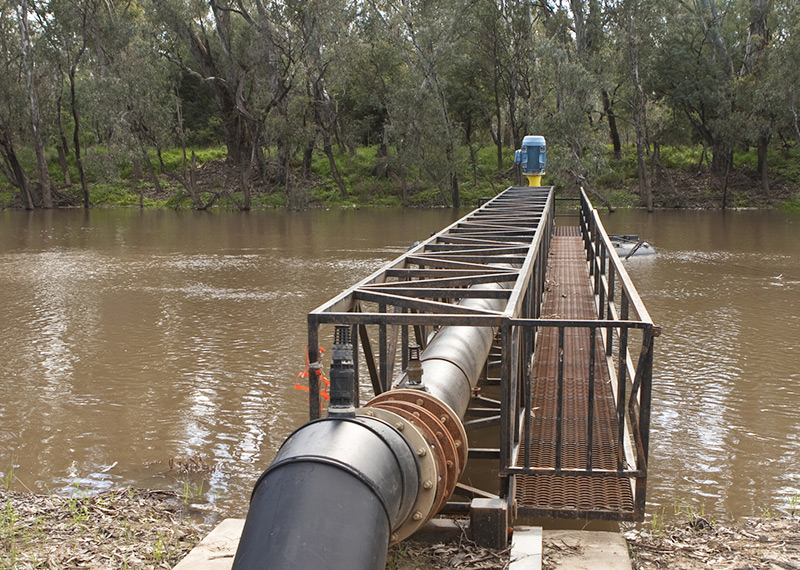
The Auditor-General undertook a limited assurance review of the Department of Agriculture and Water Resources’ assessment of the performance of New South Wales under the National Partnership Agreement on Implementing Water Reform in the Murray-Darling Basin relevant to the protection and use of environmental water for the 2014–15 and 2015–16 financial years.
Entity
Department of Agriculture and Water Resources
Contact
Please direct enquiries through our contact page.
Performance audit in-progress
Due to table: March 2027
Open for contribution
The objective of this audit is to assess the effectiveness of the Fraud Fusion Taskforce to improve collaboration and reduce fraud against Australian Government programs.
Entity
See page for details
Contact
Please direct enquiries through our contact page.
Performance audit (Auditor-General Report No. 18 of 2016–17)

Published: Tuesday 27 September 2016
Published
The objective of the audit was to assess the appropriateness of the use and reporting of confidentiality provisions in a sample of Australian Government contracts.
Entity
Department of Defence; Department of Foreign Affairs and Trade; Department of Agriculture and Water Resources; Department of Health
Contact
Please direct enquiries relating to reports through our contact page.
Performance audit (Auditor-General Report No. 34 of 2011–12)
Published: Thursday 24 May 2012
Published
The objective of the audit was to assess the progress of the M113 Upgrade Project (Defence Project: Land 106), including progress in the development of operational capability resulting from the introduction of the upgraded vehicles into service. The high-level audit criteria used to assess the project’s progress and Defence’s effectiveness in administering the M113 Upgrade Project were:
- the degree to which the schedule for the production and delivery of upgraded M113 vehicles to Defence had been recovered in accordance with Defence’s response to the 2008–09 audit report and contractual requirements, as negotiated over the life of the contract;
- Defence’s measurement and allocation of the total cost of the upgrade project; and
- the development of capability arising from the upgrade project.
Entity
Department of Defence, Defence Materiel Organisation
Performance audit (Auditor-General Report No. 18 of 1998–99)
Published: Monday 7 December 1998
Published
Consistent with the ANAO's practices, and in response to a request from AusAID, a follow-up audit was conducted in the period May to November 1998 to assess the extent of implementation of the recommendations of a 1996 audit into the Management of Funding to Non-Government Organisations (NGOs)and whether the implementation of recommendations has effectively improved the management of funding to NGOs. The ANAO examined AusAID's key funding accountability documentation, tested the revised accountability arrangements and consulted a number of key stakeholders, including NGO representatives.
Entity
Australian Agency for International Development (AusAID)
Performance audit (Auditor-General Report No. 25 of 2021–22)

Published: Tuesday 3 May 2022
Published
The audit examined whether the Department of Home Affairs implemented all agreed recommendations from parliamentary committee and Auditor-General reports within the scoped timeframe.
Entity
Department of Home Affairs
Contact
Please direct enquiries through our contact page.
Performance audit (Auditor-General Report No. 40 of 2024–25)

Published: Tuesday 3 June 2025
Published
The audit objective was to assess whether selected entities effectively implemented agreed recommendations from Auditor-General Report No. 25 2019–20 Aboriginal and Torres Strait Islander Participation Targets in Major Procurements.
Entity
Across Entities
Contact
Please direct enquiries through our contact page.
Performance audit (Auditor-General Report No. 22 of 2022–23)

Published: Tuesday 16 May 2023
Published
The objective of this audit was to examine whether the selected entities within the Attorney-General’s portfolio have implemented all agreed recommendations from parliamentary committee and Auditor-General reports within the scoped timeframe.
Entity
Australian Federal Police; Attorney-General’s Department; Commonwealth Director of Public Prosecutions
Contact
Please direct enquiries through our contact page.
Performance audit (Auditor-General Report No. 3 of 2001–02)
Published: Tuesday 17 July 2001
Published
Taxation rulings are a key mechanism used by the Australian Taxation Office (ATO) to disseminate the Commissioner of Taxation's interpretative advice on Australian taxation law. The objective of the audit was to:
report to Parliament on the operation of the ATO's administration of taxation rulings (public, private and oral rulings); and where appropriate, make recommendations for improvements, having regard to considerations of: efficiency and effectiveness of the ATO's administration of the rulings system, particularly in relation to the achievement of the objectives set by Parliament for the rulings system; the ATO's systems' capacity to deliver consistency and fairness for taxpayers; and good corporate governance, including the control framework.
Entity
Australian Taxation Office
Performance audit (Auditor-General Report No. 15 of 2002–03)
Published: Tuesday 29 October 2002
Published
The audit reviewed the extent to which the Department of Health and Ageing (Health) had implemented the recommendations of Audit Report No. 13 of 1998-1999, Aboriginal and Torres Strait Islander Health Program, taking account of any changed circumstances or new administrative issues identified as impacting the implementation of these recommendations.
Entity
Department of Health and Ageing; Aboriginal and Torres Strait Islander Commission
Performance audit (Auditor-General Report No. 3 of 2025–26)

Published: Wednesday 8 October 2025
Published
The objective of the audit was to assess the effectiveness of the implementation of procurement reforms by the DTA and Finance following on from Auditor-General Report No.5 2022–23 Digital Transformation Agency’s Procurement of ICT-related services.
Entity
Digital Transformation Agency; Department of Finance
Contact
Please direct enquiries through our contact page.