Browse our range of reports and publications including performance and financial statement audit reports, assurance review reports, information reports and annual reports.
Performance audit (Auditor-General Report No. 49 of 2001–02)
Published: Monday 13 May 2002
Published
The audit reviewed Commonwealth National Parks involving total assets of $105 million with net operating costs of $41.77 million. Nineteen Commonwealth reserves are declared comprising six terrestrial national parks, one botanic garden and twelve marine parks and reserves totalling some 23 million hectares across Australia, its external territories and Commonwealth marine areas. The objective of the audit was to examine and report on the adequacy of the planning, management and reporting systems which support the Director of National Parks in the achievement of required functions under relevant legislation and agreed outputs and outcomes.
Entity
Department of the Environment and Heritage
Performance audit (Auditor-General Report No. 37 of 1998–99)
Published: Wednesday 5 May 1999
Published
The purpose of the report was to report to the Parliament on how effectively and efficiently the Australian Taxation Office administers the Tax File Number System, and to identify opportunities for improvement of that system. The ANAO developed a methodological framework for the evaluation of the efficiency and effectiveness of the ATO's administration of the TFN system. The framework examined the TFN system; individuals and their TFNs; TFN withholding tax arrangements; and TFN information matching.
Entity
Australian Taxation Office
Performance audit (Auditor-General Report No. 3 of 2006–07)
Published: Thursday 7 September 2006
Published
The objective of the audit was to examine the effectiveness of Defence's management of the procurement of Minor capital equipment for Army capability. In particular, the audit focussed on the identification and approval of capability requirements; the management of Army Minors Program funding and expenditure; and DMO management of procurement processes for Army Minor projects. The audit focused on projects included in the Program as at 1 July 2005. As at that date, 85 projects were listed. Case studies illustrating particular issues in the management of the Program are profiled throughout the report in the relevant section.
Entity
Department of Defence; Defence Materiel Organisation
Performance audit (Auditor-General Report No. 43 of 2002–03)
Published: Thursday 8 May 2003
Published
The objectives of the audit were to:
- evaluate the extent to which the Government's sale objectives were achieved, with a focus on those objectives relating to the optimisation of sale proceeds and minimisation of risk to the Commonwealth;
- examine the effectiveness of the management of the sale process to ensure the Commonwealth received fair value; and
- within the context of broader Commonwealth debt management considerations, assess the application of the sale proceeds to repaying Commonwealth debt and the extent to which public debt interest payments may be reduced.
Entity
Across Agency
Performance audit (Auditor-General Report No. 14 of 1998–99)
Published: Thursday 12 November 1998
Published
The objective of the audit was to ascertain and report to the Parliament on the ATO's administration of PPS and to identify opportunities for improvement. Four key compliance issues were identified: reporting PPS income, claiming PPS credits, remitting PPS income, claiming PPS credits, remitting PPS deductions, and managing PPS exemptions and variations. In addition, the following key aspects were considered: PPS risk assessments, coordination of PPS administration between the Small Business Income and Withholding & Indirect Taxes business lines, and PPS compliance project performance information.
Entity
Australian Taxation Office
Performance audit (Auditor-General Report No. 5 of 2002–03)
Published: Friday 23 August 2002
Published
The audit examined the administrative effectiveness of arrangements between Health and HIC, in relation to the management and administration of the Medicare Benefits Scheme and the Pharmaceutical Benefits Scheme. Health predominantly exercises a policy and leadership role within the health portfolio - HIC delivers a range of health services directly to the public and members of the health industry. Both agencies have stated that they recognise the importance of working together, as partners in their respective roles, to maximise their performance in the achievement of health portfolio outcomes and to discharge their respective responsibilities. This joint commitment is embodied in a written agreement - called the Strategic Partnership Agreement (SPA).
Entity
Department of Health and Aged Care; Health Insurance Commission
Performance audit (Auditor-General Report No. 32 of 1999–2000)
Published: Thursday 17 February 2000
Published
Industry levies play a significant role in the provision of many public services and fund a range of activities undertaken by regulatory bodies such as the Australian Prudential Regulation Authority (APRA), through to financing reform of the Australian waterfront labour force. The objectives of this audit were to assess:
- the coverage, revenue and expenses of non-primary industry levies;
- the effectiveness of selected entities' financial management of non-primary industry levies; and
- areas of better administrative practice relating to the financial management of non-primary industry levies.
Entity
Across Agency
Performance audit (Auditor-General Report No. 45 of 2022–23)

Published: Thursday 29 June 2023
Published
The objective of this audit was to examine the effectiveness of the Department of Defence’s development and implementation of Australia’s approach to providing military assistance to the Government of Ukraine.
Entity
Department of Defence
Contact
Please direct enquiries through our contact page.
Performance audit (Auditor-General Report No. 29 of 1996–97)
Published: Wednesday 26 March 1997
Published
The overall objective of the preliminary study was to determine whether a performance audit of the management of corporate sponsorship was warranted. Specifically, the areas canvassed during the preliminary study were:
- policies and guidelines for the management of corporate sponsorship;
- integration of corporate sponsorship into agency planning;
- contractual arrangements;
- evaluation of corporate sponsorship within the agency;
- valuation and reporting of corporate sponsorship; and
- costs and benefits associated with corporate sponsorship.
The preliminary study findings did not warrant proceeding to a full performance audit. However, because corporate sponsorship is likely to be a growing area of importance for the Commonwealth, the ANAO concluded that there was value in producing a better practice guide in addition to the audit report.
Entity
Across Agency
Performance audit (Auditor-General Report No. 10 of 2023–24)

Published: Monday 15 January 2024
Published
The objective of this audit was to assess the effectiveness of the Department of Climate Change, Energy, the Environment and Water's governance arrangements supporting the implementation of the Australian Government’s climate change commitments.
Entity
Department of Climate Change, Energy, the Environment and Water
Contact
Please direct enquiries through our contact page.
Performance audit (Auditor-General Report No. 17 of 2022–23)

Published: Monday 3 April 2023
Published
The objective of this audit is to assess the effectiveness of the design and implementation of the Department of Agriculture, Water and the Environment’s cultural reform program prior to the July 2022 Machinery of Government changes.
Entity
Department of Agriculture, Fisheries and Forestry
Contact
Please direct enquiries through our contact page.
Performance audit (Auditor-General Report No. 32 of 2017–18)

Published: Monday 19 March 2018
Published
The audit objective was to assess the effectiveness of the Department of the Environment and Energy’s design of the Threatened Species Prospectus.
Entity
Department of the Environment and Energy
Contact
Please direct enquiries through our contact page.
Performance audit (Auditor-General Report No. 28 of 2015–16)
Published: Thursday 28 April 2016
Published
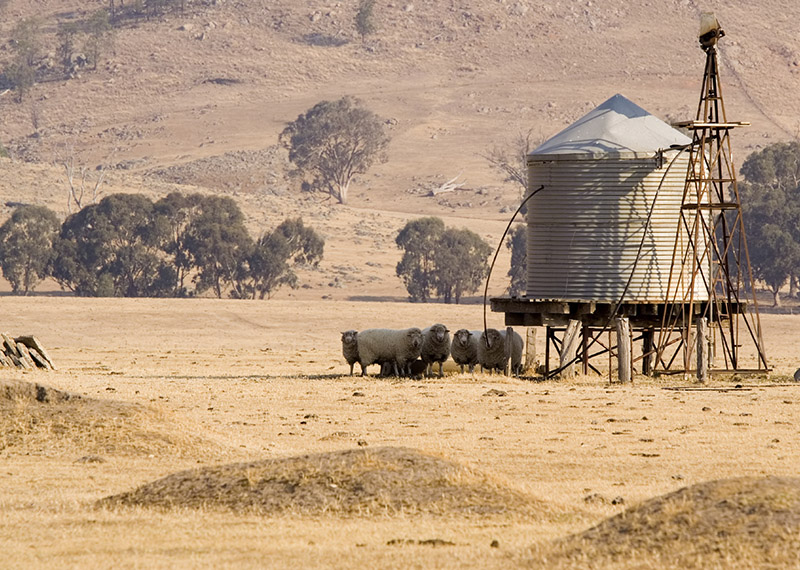
The objective of the audit was to assess the Department of Agriculture and Water Resources' establishment and administration of the Farm Finance and Drought Concessional Loans programs.
Entity
Department of Agriculture and Water Resources
Contact
Please direct enquiries relating to reports through our contact page.
Performance audit (Auditor-General Report No. 11 of 2002–03)
Published: Thursday 3 October 2002
Published
The audit reviewed the effectiveness of HIC's approach to customer service delivery to the Australian public as customers of Medicare. The primary issues examined were whether: . HIC manages its customer service delivery performance effectively;
- HIC's approach to people management adequately supports customer service delivery;
- HIC obtains adequate information from customers on their needs, expectations, and perceptions of HIC's service delivery; and
- HIC provides adequate information to customers on its services and on the service standards that customers should expect.
Entity
Health Insurance Commission
Performance audit (Auditor-General Report No. 2 of 2023–24)

Published: Wednesday 23 August 2023
Published
The objective of the audit was to assess the effectiveness of the department’s delivery of the Wildlife and Habitat Bushfire Recovery Program.
Entity
Department of Climate Change, Energy, the Environment and Water
Contact
Please direct enquiries through our contact page.
Performance audit (Auditor-General Report No. 43 of 2020–21)

Published: Tuesday 8 June 2021
Published
The objective of the audit was to assess the effectiveness of the Australian Federal Police’s framework to ensure the lawful exercise of powers in accordance with applicable legislation.
Entity
Australian Federal Police
Contact
Please direct enquiries through our contact page.
Performance audit (Auditor-General Report No. 19 of 2023–24)

Published: Tuesday 27 February 2024
Published
The objective of this audit was to assess the effectiveness of the Department of Health and Aged Care’s (DHAC) performance management of the Primary Health Network program.
Entity
Department of Health and Aged Care
Contact
Please direct enquiries through our contact page.
Performance audit (Auditor-General Report No. 46 of 1999–2000)
Published: Tuesday 13 June 2000
Published
The audit reviewed the High Wealth Individuals Taskforce, a comprehensive compliance program with the Australian Taxation Office. The objective of the audit was to examine and report on the management and operations of the taskforce. In doing so, the audit reviewed the Australian Taxation Office's own evaluation of the taskforce and assessed whether, and to what extent, the taskforce delivered the outcomes specified by the Government.
Entity
Australian Taxation Office
Performance audit (Auditor-General Report No. 51 of 2002–03)
Published: Thursday 19 June 2003
Published
Defence has long provided housing assistance for members of the Australian Defence Force (ADF) and their families. In 1988, this function passed to the Defence Housing Authority (DHA), which was established to provide suitable housing to meet Defence's operational needs. In 2000, Defence and DHA signed a Services Agreement valued at $3.5 billion over 10 years. The objective of the audit was to assess whether Defence's management of its housing and relocation services provided for ADF members meets specified requirements; and to make practical recommendations for more efficient, effective and economical use of public resources provided for this purpose.
Entity
Department of Defence
Performance audit (Auditor-General Report No. 30 of 2020–21)

Published: Tuesday 9 March 2021
Published
The objective of the audit was to examine the effectiveness of the Department of Veterans’ Affairs' (DVA's) planning and management of the Veteran Centric Reform (VCR) program.
Entity
Department of Veterans' Affairs
Contact
Please direct enquiries through our contact page.
Performance audit (Auditor-General Report No. 27 of 2017–18)

Published: Wednesday 14 February 2018
Published
The objective of the audit was to assess the effectiveness of the Department of the Prime Minister and Cabinet’s management of the Australian Government’s Register of Lobbyists.
Entity
Department of the Prime Minister and Cabinet
Contact
Please direct enquiries through our contact page.
Performance audit (Auditor-General Report No. 37 of 2019–20)

Published: Thursday 28 May 2020
Published
The audit objective was to assess whether the Department of Homes Affairs has appropriately managed the procurement of garrison support and welfare services for offshore processing centres in Nauru and PNG (Manus Island).
Entity
Department of Home Affairs
Contact
Please direct enquiries through our contact page.
Performance audit (Auditor-General Report No. 33 of 2021–22)

Published: Wednesday 15 June 2022
Published
The audit objective was to examine the effectiveness of Snowy Hydro Limited’s governance arrangements for early implementation of Snowy 2.0, the expansion to the Snowy Hydro Scheme.
Entity
Snowy Hydro Limited
Contact
Please direct enquiries through our contact page.
Performance audit (Auditor-General Report No. 31 of 2024–25)

Published: Tuesday 20 May 2025
Published
The objective of the audit was to examine the effectiveness of the Department of Defence’s administration of contractual obligations to maximise Australian industry participation.
Entity
Department of Defence
Contact
Please direct enquiries through our contact page.
Performance audit (Auditor-General Report No. 22 of 1999–2000)
Published: Wednesday 22 December 1999
Published
The audit reviewed the operations of the Bureau of Meteorology. The Bureau's functions include the taking and recording of meteorological observations and other observations required for the purposes of meteorology; the forecasting of weather and of the state of the atmosphere; the issue of warnings of weather conditions likely to endanger life or property; the supply, publication and promotion of meteorological information; and cooperation with international meteorological agencies in relation to the functions just listed. The objectives of the audit were to:
- use national and international benchmarks to evaluate the Bureau's performance in terms of timeliness, cost and quality of weather services to meet the needs of clients; and
- assess how well the Bureau is placed in measuring its outputs/outcomes within the context of the Accrual Budgeting Framework.
Entity
Department of the Environment and Heritage
Performance audit (Auditor-General Report No. 29 of 1998–99)
Published: Tuesday 22 December 1998
Published
The audit addressed administration of migrant settlement services by DIMA, in particular:
- strategic management, including corporate planning, performance measurement and reporting arrangements; and
- operational management of some of the individual schemes operated by DIMA (the Adult English Migrant Program and Translating Interpreting Services were not covered as part of this audit).
Entity
Department of Immigration and Multicultural Affairs
Performance audit (Auditor-General Report No. 30 of 1996–97)
Published: Wednesday 30 April 1997
Published
The objective of the audit was to examine the effectiveness of key elements of the management and control frameworks established by ANU to support administration and the achievement of the ANU's objectives. The audit focused on an analysis of the administrative framework and, in particular, aspects of corporate governance that were identified as being central to good management; such as effective controls, transparent planning, regular reporting, and performance assessment.
Entity
Across Agency
Performance audit (Auditor-General Report No. 1 of 2025–26)

Published: Monday 11 August 2025
Published
The objective of the audit was to examine the effectiveness of the implementation of frameworks to support ethical behaviours within the Department of Employment and Workplace Relations.
Entity
Department of Employment and Workplace Relations
Contact
Please direct enquiries through our contact page.
Performance audit (Auditor-General Report No. 39 of 2023–24)

Published: Monday 17 June 2024
Published
The objective of this audit was to assess the effectiveness of the evaluation of selected Australian Government pilot programs.
Entity
Department of Health and Aged Care; Department of Veterans’ Affairs; Department of Home Affairs
Contact
Please direct enquiries through our contact page.
Performance audit (Auditor-General Report No. 7 of 1999–2000)
Published: Wednesday 11 August 1999
Published
This audit was a follow-on to Audit Report No.21 1997-98 Protective Security, which reviewed, among other things, information security other than computer and communications security, against the policy and procedures outlined in the 1991 PSM. That audit found inconsistencies in the identification and marking of classified information and weaknesses in the handling and storage of classified information, as well as other breakdowns impacting on information security.
Entity
Across Agency