Browse our range of reports and publications including performance and financial statement audit reports, assurance review reports, information reports and annual reports.
Performance audit (Auditor-General Report No. 43 of 1997–98)
Published: Tuesday 12 May 1998
Published
The objective of the audit was to report on whether Defence applies Life-cycle Costing appropriately in support of decisions throughout the acquisition and management of its capital assets, and to make recommendations for any improvement. Criteria were established against each of the issues considered by the audit, namely LCC policy and coordination, use of LCC in investment decisions, use of LCC to support budgeting, data to support LCC and LCC training and education.
Entity
Department of Defence
Performance audit (Auditor-General Report No. 12 of 1996–97)
Published: Thursday 17 October 1996
Published
This is a follow-up audit to Audit Report No.7, 1993-94 titled Department of Social Security: Data-matching. It reports upon the effectiveness of the DSS actions in response to the recommendations of the original 1993-94 audit. In noting the considerable progress made by the Department against the original audit recommendations, the ANAO considers that several recommendations have yet to be fully addressed. These are covered in this report and include reducing the variability in review results across offices, enhancing the TFN registration process, and validating savings assumptions.
Entity
Department of Social Security
Performance audit (Auditor-General Report No. 25 of 2007–08)
Published: Wednesday 27 February 2008
Published
The objective of the audit was to examine the effectiveness of the Department of Health and Ageing's administration of the Round the Clock Medicare: Investing in After Hours General Practice Services program.
Entity
Department of Health and Ageing
Performance audit (Auditor-General Report No. 6 of 1998–99)
Published: Monday 31 August 1998
Published
This report summarises audit and other related activities of the Australian National Audit Office in the period January to June 1998.
Entity
Audit Activity Report
Performance audit (Auditor-General Report No. 29 of 2002–03)
Published: Friday 7 February 2003
Published
The Audit Activity Report: July-December 2002 summarises performance audit, financial audit and other related activities for the ANAO for the period. The key issues arising from the performance audits are summarised against the ANAO themes. The appendices in the report provide a short summary of each of the audits tabled for this period, the audits in progress as at 1 January 2003 and a list of the presentations and papers given by the Auditor-General and ANAO staff.
Entity
Audit Activity Report
Performance audit (Auditor-General Report No. 40 of 2003–04)
Published: Tuesday 13 April 2004
Published
The objective of the audit was to assess the effectiveness of Health's management of the MPSP and the RHSP. To achieve the audit's objective, the ANAO examined whether Health; had an effective approach to planning the programs; had an effective approach to delivering the programs; effectively used performance information to manage the programs; and effectively managed its relationship with all stakeholders of the programs.
Entity
Department of Health and Ageing
Performance audit (Auditor-General Report No. 39 of 1998–99)
Published: Monday 10 May 1999
Published
The audit reviewed the National Aboriginal Health Strategy (NAHS) component of the Aboriginal and Torres Strait Islander Commission's (ATSIC) Community Housing Infrastructure Program (CHIP). A major NAHS objective is to improve environmental health in indigenous communities through the construction and housing and the provision of water, sewerage and related systems. The objective of the performance audit was to form an opinion on ATSIC's management of the National Aboriginal Health Strategy program in providing housing and related infrastructure to Aboriginal and Torres Strait Islander communities, and to identify areas where program administration could be improved.
Entity
Aboriginal and Torres Strait Islander Commission
Performance audit (Auditor-General Report No. 4 of 2001–02)
Published: Wednesday 1 August 2001
Published
The audit focused on the sale of properties from that portion of the domestic property estate managed by the Department of Finance and Administration and identified for sale via a three year divestment strategy of the Commercial Office Estate by Government in April 1997. The audit sought to assess the effectiveness of the management of the sales process for selected property sales, including the extent to which the Government's sale objectives have been achieved; review the long-term sale and leaseback arrangements for selected divested properties and whether they adequately protect the Commonwealth's interests; and identify principles of sound administrative practice to facilitate improved administrative arrangements for future property sales.
Entity
Department of Finance and Administration
Performance audit (Auditor-General Report No. 31 of 2004–05)
Published: Wednesday 9 March 2005
Published
Given the importance of customer feedback to Centrelink's business, the ANAO considered it timely to conduct a series of performance audits relating to Centrelink's customer feedback systems, particularly in relation to its delivery of the services then provided on behalf of FaCS. The overarching objective of this series of ANAO performance audits of Centrelink's customer feedback systems was to assess whether Centrelink has effective processes and systems for gathering, measuring, reporting and responding effectively to customer feedback, including in relation to customer satisfaction with Centrelink services and processes.
Entity
Centrelink
Performance audit (Auditor-General Report No. 28 of 1998–99)
Published: Monday 21 December 1998
Published
The sale raised gross proceeds of $95.4 million, which was at the upper end of the Business Advisor's estimate for the mid-1997 sale. In addition, it should be noted that the principal financial effect for the Commonwealth was not in the proceeds of the sale but in the termination of ongoing revenue supplements and financial losses. The Commonwealth's direct costs of selling the businesses are estimated to be $9.3 million, or 9.7% of gross proceeds. In addition, the Australian National's financial liabilities totalling $1393 million have been or are being repaid or assumed by the Commonwealth.
Entity
Across Agency
Performance audit (Auditor-General Report No. 33 of 2004–05)
Published: Wednesday 9 March 2005
Published
Given the importance of customer feedback to Centrelink's business, the ANAO considered it timely to conduct a series of performance audits relating to Centrelink's customer feedback systems, particularly in relation to its delivery of the services then provided on behalf of FaCS. The overarching objective of this series of ANAO performance audits of Centrelink's customer feedback systems was to assess whether Centrelink has effective processes and systems for gathering, measuring, reporting and responding effectively to customer feedback, including in relation to customer satisfaction with Centrelink services and processes.
Entity
Centrelink
Speeches and papers
Published: Monday 19 May 2003
Published
Mr P.J. Barrett (AM) - Auditor-General for Australia, presented at the 2nd Annual New Directions in Australian Auditing Accounting Standards Conference
Annual report
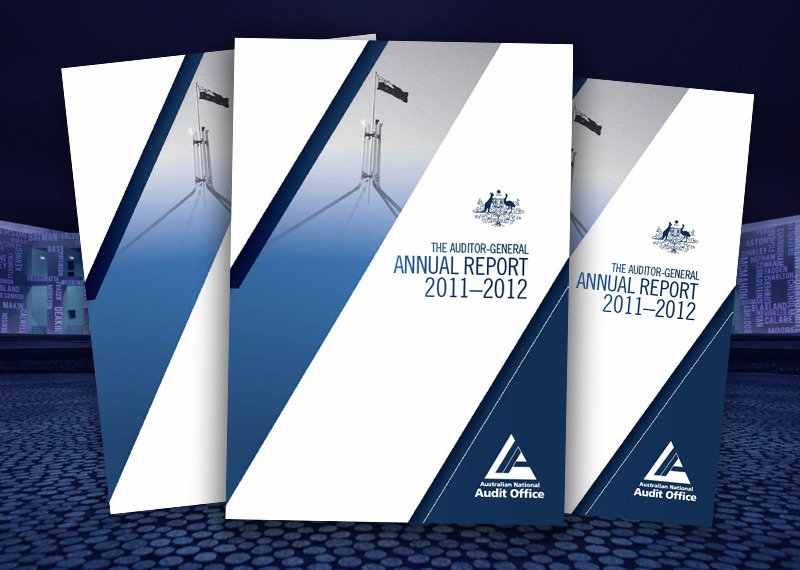
Published: Thursday 27 September 2012
Published
This annual report documents the performance of the Australian National Audit Office (ANAO) in the financial year ending on 30 June 2012. It presents an overview including the role and vision of the Office, a report on performance, details about management and accountability, and the financial results.
Performance audit (Auditor-General Report No. 4 of 1998–99)
Published: Monday 10 August 1998
Published
The objective of the audit was to evaluate the efficiency and effectiveness of Austrade's management of customer services to Australian exporters, with particular reference to:
- performance as a customer-focused organisation;
- achievement of quality customer service through its client service initiatives; and
- measurement and evaluation of its customer service performance.
Entity
Australian Trade Commission
Performance audit (Auditor-General Report No. 42 of 1998–99)
Published: Wednesday 26 May 1999
Published
The objective of the audit was to examine the effectiveness and efficiency of the administrative arrangements for the establishment and operation of the Green Corps program. Green Corps is a voluntary program for young Australians between 17 and 20 years old to receive accredited training in a range of skills such as bush regeneration and habitat protection. The program is delivered through a contractual arrangement. It was introduced in 1996 with a program allocation of $41.7 million over three years. The focus of the audit was on the Department of Education, Training and Youth Affair's administration of the program, including the management of the contract.
Entity
Department of Education, Training and Youth Affairs
Performance audit (Auditor-General Report No. 17 of 2004–05)
Published: Wednesday 15 December 2004
Published
The objective of the Australian National Audit Office (ANAO) was to examine and report on the planning and corporate governance for the new regional delivery model of the National Action Plan for Salinity and Water Quality (NAP) program, jointly administered by the Department of Agriculture, Fisheries and Forestry and the Department of the Environment and Heritage (the Agencies)
Entity
Department of Agriculture Fisheries and Forestry; Department of the Environment and Heritage
Performance audit (Auditor-General Report No. 17 of 1997–98)
Published: Tuesday 25 November 1997
Published
The objectives of the audit were to:
- assess the extent to which major program objectives were achieved;
- identify major strengths and weaknesses related to the economy, effectiveness and efficiency of the program administration; and
- identify areas of improvements and risks which should be addressed in arrangements with a private sector project manager.
Audit criteria were developed to address the areas of program planning and implementation, performance measurement and monitoring, responsiveness to emerging issues, dispute resolution mechanisms, risk management and program improvement measures.
Entity
Department of Transport and Regional Development
Performance audit (Auditor-General Report No. 21 of 2006–07)
Published: Wednesday 31 January 2007
Published
The objective of the audit was to:
- assess, in a selection of FMA Act and CAC Act agencies, how well the revised Commonwealth Procurement Guidelines had been implemented; and
- identify any better practice or common problem areas to assist other agencies in their future procurement activities.
The audit focused on procurement requirements that had changed as a result of the revised CPGs, rather than being a more general audit of compliance with all procurement requirements.
The audit was conducted in the following entities:
- Australian Federal Police;
- Bureau of Meteorology;
- Commonwealth Scientific and Industrial Research Organisation (CSIRO);
- Department of Defence;
- Department of Education, Science & Training;
- Family Court of Australia; and
- National Museum of Australia.
Entity
NO-DEPTS-LISTED
Performance audit (Auditor-General Report No. 19 of 1997–98)
Published: Thursday 4 December 1997
Published
The objective of the audit was to report to Parliament on the economy, efficiency and administrative effectiveness of the risk management process in the Small Business Income business line. It follows Audit Report No.37 1996-97 and entitled Risk Management - Australian Taxation Office. That audit focused on broad strategic issues relevant to risk management in the Australian Taxation Office (ATO) as a whole. This audit follows the issues identified in that report into the day-to-day management of the Small Business Income as an example of how risk management operates in a significant element of the ATO.
Entity
Australian Taxation Office
Performance audit (Auditor-General Report No. 33 of 1998–99)
Published: Tuesday 9 March 1999
Published
This report summarises audit and other related activities of the Australian National Audit Office in the period July to December 1998.
Entity
Audit Activity Report
Performance audit (Auditor-General Report No. 18 of 1998–99)
Published: Monday 7 December 1998
Published
Consistent with the ANAO's practices, and in response to a request from AusAID, a follow-up audit was conducted in the period May to November 1998 to assess the extent of implementation of the recommendations of a 1996 audit into the Management of Funding to Non-Government Organisations (NGOs)and whether the implementation of recommendations has effectively improved the management of funding to NGOs. The ANAO examined AusAID's key funding accountability documentation, tested the revised accountability arrangements and consulted a number of key stakeholders, including NGO representatives.
Entity
Australian Agency for International Development (AusAID)
Performance audit (Auditor-General Report No. 12 of 2004–05)
Published: Tuesday 19 October 2004
Published
The ANAO Audit Report No. 51 of 2001/02, Research Project Management, Commonwealth Scientific and Industrial Research Organisation, assessed the effectiveness of CSIRO in administering research projects to deliver required results. The audit made nine recommendations designed to improve project management in CSIRO. The purpose of this follow-up audit was to assess the extent to which CSIRO has implemented the recommendations of the previous audit and of the JCPAA.
Entity
Commonwealth Scientific and Industrial Research Organisation
Performance audit (Auditor-General Report No. 42 of 1997–98)
Published: Monday 11 May 1998
Published
In the light of the concerns raised by the Leader of the Opposition and some other Members of Parliament about the allocation of financial assistance approved under the NHT, it was decided to undertake preliminary inquiries. The inquiries focussed on the transparency and rigour of the decision-making process for projects approved for NHT funding.
Entity
Across Agency
Performance audit (Auditor-General Report No. 51 of 1999–2000)
Published: Thursday 29 June 2000
Published
The objective of the audit was to examine program management in the Training and Youth Division of the Department of Education, Training and Youth Affairs. In broad terms, the audit focused on the management frameworks at both Divisional and program level. Three of the Division's programs were selected for more detailed review as follows:
- Workplace English Language and Literacy;
- Literacy and Numeracy; and
- Support for New Apprentices.
Entity
Department of Education, Training and Youth Affairs
Performance audit (Auditor-General Report No. 28 of 2003–04)
Published: Thursday 12 February 2004
Published
The report summarises performance audit, financial statement audit and other related activities for the ANAO for the period July to December 2003. The key issues arising from performance audits tabled in this period are summarised against the ANAO themes. The report also summarises financial audits and other financial audit activities conducted by the ANAO during the period July to December 2003. It discusses significant issues such as the: consolidated financial statements and the final budget outcome; harmonisation of Australian Generally accepted accounting practices and Government Finance Statistics; adoption of International Financial Reporting Standards; timing for Financial Statements Preparation; and the audit of the CFS 2002-03.
Entity
ANAO
Performance audit (Auditor-General Report No. 28 of 1997–98)
Published: Tuesday 23 December 1997
Published
The objectives for the audit were to report on the efficiency and cost effectiveness of selected agencies' procurement of air travel services. Specifically the audit was to:
- identify the potential for more cost effective procurement in agencies' contracting for air travel services;
- produce estimates of potential savings in expenditure by improved contracting arrangements in agencies where possible; and
- outline any improvements to procurement management practices, including improvement in Commonwealth coordination activities.
Entity
Across Agency
Performance audit (Auditor-General Report No. 43 of 1998–99)
Published: Wednesday 2 June 1999
Published
Networking the Nation was established with effect from 1 July 1997 to support activities and projects designed to meet a range of telecommunications needs in regional, rural and remote Australia. Funding is provided by the Regional Telecommunications Infrastructure Fund. The program provides total support of $250 million, of which $50 million was to be allocated annually for the five year period from 1997-98. Funding decisions for grants are the responsibility of an independent Board appointed by the Minister for Communications, Information Technology and the Arts. The objectives of the audit were to examine the administration of the program with a view to ascertaining the scope for improving administration and to provide assurance on the equity, efficiency and effectiveness of the management and administrative processes applied in the administration of grants under the program.
Entity
Department of Communications, Information Technology and the Arts
Speeches and papers
Published: Thursday 1 April 2004
Published
Mr P.J. Barrett (AM) - Auditor-General for Australia, Address to University of Canberra students participating in the Graduate Certificate in Performance Auditing
Performance audit (Auditor-General Report No. 39 of 2005–06)
Published: Thursday 11 May 2006
Published
The objectives of the audit were to provide assurance that Artbank was effectively meeting its charter of: acquiring art by contemporary artists; expanding the number of public places that Artbank's collection is rented and displayed; and managing its collection and rental scheme. The audit also examined Artbank's governance arrangements, and its programmes for marketing, client development, performance management, budgeting, debt management and also sought client feedback on Artbank's operations via a survey.
Entity
Agriculture Fisheries and Forestry Australia; Department of Communications Information Technology and the Arts
Performance audit (Auditor-General Report No. 25 of 1998–99)
Published: Friday 18 December 1998
Published
The audit reviewed the sale of DASFLEET, a business unit of the Department of Administrative Services, which provided passenger and general commercial vehicle leasing, rental and fleet management and maintenance services. The objectives of the audit were to review the efficiency and effectiveness of the management of the sale.
Entity
Department of Finance; Office of Asset Sales and Information Technology Outsourcing