Browse our range of reports and publications including performance and financial statement audit reports, assurance review reports, information reports and annual reports.
Performance audit (Auditor-General Report No. 28 of 2022–23)

Published: Wednesday 31 May 2023
Published
The objective of this audit was to assess the effectiveness of Services Australia's management of social security and welfare debt.
Entity
Services Australia
Contact
Please direct enquiries through our contact page.
Performance audit (Auditor-General Report No. 41 of 2007–08)
Published: Wednesday 18 June 2008
Published
The objective of this audit was to assess the effectiveness of personnel security arrangements at selected Australian Government organisations, including whether they satisfied the requirements of the PSM.
To address this objective, the audit examined the extent to which the selected organisations implemented the 14 recommendations from the three previous reports.
Entity
NO-DEPTS-LISTED
Performance audit (Auditor-General Report No. 35 of 2010–11)
Published: Wednesday 30 March 2011
Published
The objective of the audit was to assess the effectiveness of DFAT's management of the overseas leased estate. In particular, the audit examined whether DFAT:
- has effective governance, reporting and funding arrangements in place to support the sound management and oversight of the overseas leased estate;
- effectively manages overseas leased chancery and residential property on a day-to-day basis; and
- manages relationships with landlords and attached agencies effectively and adequately consults with stakeholders.
Entity
Department of Foreign Affairs and Trade
Performance audit (Auditor-General Report No. 2 of 2006–07)
Published: Wednesday 6 September 2006
Published
The objective of this audit was to assess AQIS's management of export certification. In particular, it addressed the systems, procedures, processes and resources used to: register premises and license exporters; monitor compliance with arrangements; and manage non-compliance. The audit focussed on regulatory activities for assuring that Australian exports meet food safety and quarantine requirements. The methodology involved an examination of each of the seven AQIS export programmes.
Entity
Australian Quarantine and Inspection Service
Performance audit (Auditor-General Report No. 39 of 2007–08)
Published: Thursday 5 June 2008
Published
The objective of this follow-up audit is to examine DEEWR's implementation of the six recommendations made in the ANAO's 2003 report. This audit has had regard to the issues underlying the recommendations, and new administrative issues affecting their implementation.
Entity
Department of Education, Employment and Workplace Relations
Performance audit (Auditor-General Report No. 27 of 2009–10)
Published: Tuesday 20 April 2010
Published
The objective of this audit was to assess the coordination of Australian, State and Territory Government climate change programs and the integrity of measuring and reporting of Australia's greenhouse gas emissions and abatement. Particular emphasis was given to the:
- coordination of Australian Government and State/Territory climate change programs;
- integrity of the national inventory to measure Australia's greenhouse gas emissions; and
- integrity of measuring and reporting government abatement measures.
Entity
Department of Climate Change and Energy Efficiency; Department of Innovation, Industry, Science and Research
Performance audit (Auditor-General Report No. 45 of 2007–08)
Published: Thursday 26 June 2008
Published
The audit objective was to assess the effectiveness of the department's administration of general recurrent grants paid to the States and Territories for government schools. To achieve this, the ANAO assessed whether the department:
- paid the correct amount of general recurrent grants to the States and Territories;
- effectively managed the agreements with the States and Territories; and
- monitored progress towards achieving the National Goals for Schooling in the Twenty-First Century.
Entity
Department of Education, Employment and Workplace Relations
Financial statement audit (Auditor-General Report No. 9 of 2023–24)
Published: Thursday 14 December 2023
Published
This report complements the Interim Report on Key Financial Controls of Major Entities financial statement audit report published in May 2023. It provides a summary of the final results of the audits of the Consolidated Financial Statements for the Australian Government and the financial statements of 243 Australian Government entities for the period ended 30 June 2023.
Entity
Across Entities
Contact
Please direct enquiries through our contact page.
Performance audit (Auditor-General Report No. 30 of 2009–10)
Published: Thursday 22 April 2010
Published
Recent performance audit priority for the Australian National Audit Office (ANAO) in the Infrastructure, Transport, Regional Development and Local Government portfolio has been directed at the administration of funding for land transport. Accordingly, this audit is one of a series ANAO is undertaking of land transport funding programs. Four audits have already been completed, namely:
- ANAO Audit Report No. 31 2005–06, Roads to Recovery;
- ANAO Audit Report No. 45 2006–07, The National Black Spot Program;
- ANAO Audit Report No. 22 2007–08, Administration of Grants to the Australian Rail Track Corporation; and
- ANAO Audit Report No. 29 2008–09, Delivery of Projects on the AusLink National Network.
Entity
Department of Infrastructure, Transport, Regional Development and Local Government
Performance audit (Auditor-General Report No. 23 of 2010–11)
Published: Tuesday 21 December 2010
Published
The objective of the audit was to assess the administrative effectiveness of FaHCSIA's and IBA's management of the HOIL program. In particular, the audit examined the administrative design of the program, its implementation and progress in achieving the expected results.
Entity
Department of Families, Housing, Community Services & Indigenous Affairs; Indigenous Business Australia
Performance audit (Auditor-General Report No. 15 of 2008–09)
Published: Thursday 18 December 2008
Published
The objective of the audit was to assess the effectiveness of AIMS administration of its co investment research program.
Entity
Australian Institute of Marine Science
Performance audit (Auditor-General Report No. 35 of 2011–12)
Published: Tuesday 29 May 2012
Published
The objective of the audit was to examine the effectiveness of the Department of Health and Ageing’s administration of New Directions. In this respect the ANAO considered whether:
- planning processes were developed to support the program’s objectives and rationale;
- implementation arrangements were clearly defined and aligned to the objectives of the program; and
- robust performance management arrangements had been established and were in use by the department.
Entity
Department of Health and Ageing
Performance audit (Auditor-General Report No. 25 of 2018–19)
Published: Monday 11 February 2019
Published
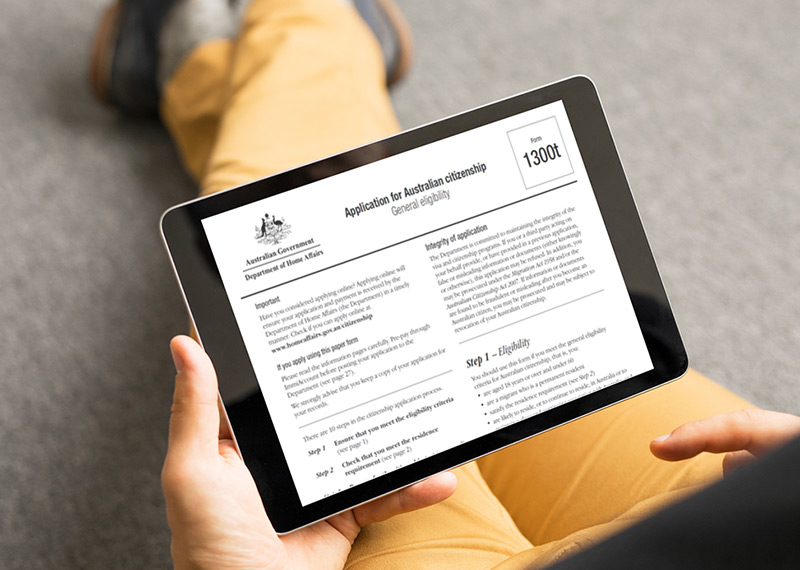
The objective of the audit was to examine the efficiency of the processing of applications for citizenship by conferral by the Department of Home Affairs.
Entity
Department of Home Affairs
Contact
Please direct enquiries through our contact page.
Performance audit (Auditor-General Report No. 9 of 2005–06)
Published: Tuesday 6 September 2005
Published
The objective of this audit was to assess the provision of export assistance and support to new and irregular exporters in rural and regional Australia through the TradeStart program. The focus on rural and regional Australia reflects the priority given by the Government to providing effective business and trade assistance to small businesses and rural and regional businesses. However, broader aspects of TradeStart management, such as contract and risk management, have been assessed across the program as a whole.
Entity
Australian Trade Commission (Austrade)
Performance audit (Auditor-General Report No. 16 of 2007–08)
Published: Friday 30 November 2007
Published
The objective of the audit was to examine the integrity of electronic records stored on the CSA's database—Cuba—and to report on the effectiveness of CSA's management of the data.
Entity
Department of Human Services; Child Support Agency
Performance audit (Auditor-General Report No. 47 of 2008–09)
Published: Thursday 25 June 2009
Published
The objective of the audit was to examine if AFMA is effectively undertaking its regulatory compliance responsibilities in respect of domestic fishing in Commonwealth fisheries. Particular emphasis was
given to:
- the licensing of fishers and related transaction processing;
- the management of fishing quota by concession holders and AFMA; AFMA's domestic compliance monitoring and
- enforcement activities; and the governance arrangement for domestic fishing compliance.
Entity
Australian Fisheries Management Authority
Performance audit (Auditor-General Report No. 31 of 2021–22)

Published: Wednesday 8 June 2022
Published
The objective of the audit was to assess the effectiveness of the Department of Education, Skills and Employment in managing the integrity of payments to employment service providers.
Entity
Department of Education, Skills and Employment
Contact
Please direct enquiries through our contact page.
Performance audit (Auditor-General Report No. 27 of 2013–14)
Published: Thursday 24 April 2014
Published
The objective of the audit was to examine the effectiveness of the Department of Human Services’ management of Medicare customer data and the integrity of this data.
Entity
Department of Human Services
Contact
Please direct enquiries relating to reports through our contact page.
Performance audit (Auditor-General Report No. 28 of 2013–14)
Published: Wednesday 30 April 2014
Published
The audit objective was to assess the effectiveness of the Department of Human Services’ administration of the child support objection review process.
Entity
Department of Human Services; Department of Social Services
Contact
Please direct enquiries relating to reports through our contact page.
Performance audit (Auditor-General Report No. 19 of 2009–10)
Published: Friday 18 December 2009
Published
The objective of the audit was to assess how effectively DHS (including CSA), FaHCSIA and Centrelink managed the implementation of stage one of the CSSR and the Improving Compliance program.
Entity
Department of Human Services; Department of Families, Housing, Community Services and Indigenous Affairs; Centrelink
Performance audit (Auditor-General Report No. 9 of 2013–14)
Published: Thursday 7 November 2013
Published
The objective of the audit was to assess the effectiveness of the administration of the Australian Prudential Regulation Authority (APRA) financial industry levies.
Entity
Australian Prudential Regulation Authority; Department of the Treasury
Contact
Please direct enquiries relating to reports through our contact page.
Performance audit (Auditor-General Report No. 7 of 2006–07)
Published: Tuesday 17 October 2006
Published
The objective of the audit was to assess whether the WHM programme is administered effectively and in accordance with relevant laws and policies. In particular, the ANAO focused on four key areas: the implementation of eWHM visa; authority for the WHM programme; decision-making for WHM visas; and programme performance information. A feature of the audit was the computer-aided scrutiny of over 300 000 visa application records to test DIMA's decision-making processes.
Entity
Department of Immigration and Multicultural Affairs
Performance audit (Auditor-General Report No. 16 of 2006–07)
Published: Wednesday 20 December 2006
Published
The objective of the audit was to assess the ATO's administration of CGT compliance in the individuals market segment. The focus of the audit was the ATO's administration of compliance by individuals with respect to the two most common CGT events: real property and share disposals. The Australian National Audit Office (ANAO) identified three key areas for review:
- governance – the corporate planning and reporting arrangements relevant to the administration of CGT compliance in the individuals market segment, including how these are integrated with the ATO's overall approach to managing CGT;
- identifying and assessing compliance risks – the mechanisms and strategies used to identify and assess CGT compliance risks in the individuals market segment; and
- compliance activities – the products and processes used to manage CGT compliance in the individuals market segment.
Entity
Australian Taxation Office
Performance audit (Auditor-General Report No. 5 of 2005–06)
Published: Thursday 11 August 2005
Published
The audit objective was to examine whether Health's financial management framework and processes adequately support Health's Secretary, Executive and managers to make informed decisions on the use of Commonwealth resources.
Entity
Department of Health and Ageing
Performance audit (Auditor-General Report No. 13 of 2007–08)
Published: Thursday 1 November 2007
Published
This second audit report relating to SMSFs examines the effectiveness of the Tax Office's approach to managing SMSF compliance risks. Specifically the ANAO examined the processes the Tax Office uses to:
- identify the risks relevant to SMSFs not complying with their obligations under the SISA, including members accessing their superannuation early;
- mitigate SMSF compliance risks; and
- administer fund wind-ups.
Entity
Australian Taxation Office
Performance audit (Auditor-General Report No. 12 of 2008–09)
Published: Wednesday 10 December 2008
Published
The audit objective was to assess the effectiveness of the implementation and administration of the AASC program by the ASC. The extent to which the ASC is able to determine that the program is achieving its objectives was also examined. Particular emphasis was given to the following areas:
- the implementation and the ongoing management of program; and
- the selection of sites and administration of grants funded under the program.
The elements of the Building a Healthy, Active Australia package undertaken by other agencies were not included in the scope of this audit.
Entity
Australian Sports Commission
Performance audit (Auditor-General Report No. 45 of 2009–10)
Published: Thursday 17 June 2010
Published
The objective of the audit was to assess whether Defence effectively managed the procurement process for services related to the recruitment of personnel to the ADF and the introduction of a new service provider.
Entity
Department of Defence
Performance audit (Auditor-General Report No. 28 of 2011–12)
Published: Thursday 29 March 2012
Published
The objective of the audit was to assess the effectiveness of Centrelink’s QOL control, which supports the integrity of payments administered by DHS on behalf of the Australian Government.
Entity
Department of Human Services
Performance audit (Auditor-General Report No. 6 of 2008–09)
Published: Tuesday 30 September 2008
Published
The objective of the audit was to assess whether Customs has implemented effective measures to control IUU fishing in the Southern Ocean. The audit examined Customs' management and coordination of enforcement operations in the Southern Ocean, with particular emphasis on:
- the approach to assessing and reporting SOMPR program performance, and whether outcomes are being met;
- coordination with other stakeholder agencies to meet program outcomes;
- the operational planning framework, management of human and physical resources and contract management; and
- the management of the deployment and operation of program maritime assets.
Entity
Australian Customs Service
Performance audit (Auditor-General Report No. 26 of 2012–13)
Published: Thursday 28 February 2013
Published
The objective of the current audit was to assess the effectiveness of remediation arrangements put in place by Defence and the Defence Materiel Organisation (DMO) to resolve issues impacting on the achievement of the desired lightweight torpedo capability. It focuses on project management and contractual arrangements, and the progress made with platform integration and test and evaluation.
Entity
Department of Defence; Defence Materiel Organisation (DMO)