Browse our range of reports and publications including performance and financial statement audit reports, assurance review reports, information reports and annual reports.
Performance audit (Auditor-General Report No. 44 of 2005–06)
Published: Thursday 1 June 2006
Published
The objective of the audit was to examine how effectively Health manages the risk of PBS drugs not being used according to PBS subsidy conditions. The audit examined two areas: during listing, how Health identified and implemented measures to decrease the risks of PBS drugs being used outside subsidy conditions; and following listing, how Health confirmed that usage and expenditure on PBS drugs was consistent with estimates. The report examines selected approaches used by Health, which have evolved in recent years, to manage the risk of PBS drugs being used outside subsidy conditions. The report also acknowledges and describes the role of the expert committees. The scope of the audit was limited to PBS drugs for which Health pays a subsidy. The audit did not examine Health's role in educating consumers, prescribers, and other health professionals, or the implications of the Australia–United States Free Trade Agreement for the PBS. Additionally, the ANAO did not form an opinion on the success of Medicare Australia's compliance role. To form an opinion against the audit objective, the ANAO interviewed Health personnel, committee members and stakeholders, examined relevant documents and files, analysed drug usage and expenditure data, and attended a number of committee meetings. To assist the audit process, the ANAO selected a sample of eight drugs. The drugs were selected due to their high cost to the PBS and/or high usage, or because the drug has had a particularly interesting PBS history. The sample is not representative of all drugs on the PBS. In 2004–05, 15.3 million prescriptions were written for these eight drugs, with the Government subsidy totalling $1.05 billion.
Entity
Department of Health and Ageing
Performance audit (Auditor-General Report No. 32 of 2003–04)
Published: Tuesday 2 March 2004
Published
The audit reviewed the Defence Materiel Organisation's management of the $3.43 billion Wedgetail Airborne Early Warning and Control (AEW&C) project. The Wedgetail project is to provide the Australian Defence Force with an AEW&C capability based on four Boeing 737 AEW&C aircraft and associated supplies and logistic support. At the time of the audit the AEW&C systems were still in their early development phase, and by November 2003, Defence had spent $1.107 billion on the project.
Entity
Department of Defence
Audit manual
Updated: Tuesday 9 September 2025
Updated
The Financial Statements Audit Services Group (FSASG) volume of the ANAO Audit Manual applies to the financial statement audit activity performed by FSASG in collaboration with the Systems Assurance and Data Analytics (SADA) group. Relevant policies and guidance from the FSASG volume are also applied to other assurance work performed by FSASG. Policies and guidance in the FSASG volume address the planning, execution and reporting stages of the financial statement audit process.
Contact
Please direct enquiries through our contact page.
Performance audit (Auditor-General Report No. 28 of 2003–04)
Published: Thursday 12 February 2004
Published
The report summarises performance audit, financial statement audit and other related activities for the ANAO for the period July to December 2003. The key issues arising from performance audits tabled in this period are summarised against the ANAO themes. The report also summarises financial audits and other financial audit activities conducted by the ANAO during the period July to December 2003. It discusses significant issues such as the: consolidated financial statements and the final budget outcome; harmonisation of Australian Generally accepted accounting practices and Government Finance Statistics; adoption of International Financial Reporting Standards; timing for Financial Statements Preparation; and the audit of the CFS 2002-03.
Entity
ANAO
Annual report
Published: Thursday 7 September 2006
Published
This annual report documents the performance of the Australian National Audit Office (ANAO) in the financial year ending on 30 June 2006. It includes highlights and areas of focus for the coming year; a forward by the Auditor-General; an overview of the report; a report on performance; details about management and accountability, and the financial statement for the year.
Performance audit (Auditor-General Report No. 23 of 2015–16)

Published: Thursday 25 February 2016
Published
The objective of the audit was to assess the effectiveness of the Australian Competition and Consumer Commission in managing compliance with fair trading obligations.
Entity
Australian Competition and Consumer Commission (ACCC)
Contact
Please direct enquiries relating to reports through our contact page.
Financial statement audit (Auditor-General Report No. 42 of 2023–24)
Published: Thursday 20 June 2024
Published
The ANAO prepares two reports annually that provide insights at a point in time to the financial statements risks, governance arrangements and internal control frameworks of Commonwealth entities, drawing on information collected during our audits.
This report is the first of the two reports and focuses on the results of the interim financial statements audits, including an assessment of entities’ key internal controls, supporting the 2023–24 financial statements audits. This report examines 27 entities, including all: departments of state; the Department of Parliamentary Services; and other Commonwealth entities that significantly contribute to the revenues, expenses, assets and liabilities within the 2022–23 Australian Government Consolidated Financial Statements (CFS). The National Indigenous Australians Agency is also included in this report given the role it plays working across government with indigenous communities and stakeholders.
Entity
Across Entities
Contact
Please direct enquiries through our contact page.
Performance audit (Auditor-General Report No. 15 of 2017–18)

Published: Wednesday 22 November 2017
Published
The audit objective was to assess the effectiveness of the Australian Taxation Office's processes for estimating and monitoring the costs, savings and benefits associated with the Reinventing the ATO program.
Entity
Australian Taxation Office (ATO)
Contact
Please direct enquiries relating to reports through our contact page.
Performance audit (Auditor-General Report No. 34 of 2005–06)
Published: Thursday 16 March 2006
Published
The objective of this performance audit was to assess whether DIMIA's information systems and business processes are effective in supporting APP to meet its border security and streamlined clearance objectives. In particular, the audit focused on the following: Mandatory APP - Stage 1 (MAPP1) project management; MAPP1 IT development and system performance; APP performance reporting; contract management; and financial management.
Entity
Department of Immigration and Multicultural Affairs
Performance audit (Auditor-General Report No. 37 of 2005–06)
Published: Wednesday 3 May 2006
Published
The objective of the audit was to assess whether selected Australian Government entities were effectively supporting their business requirements through planning for, and management of, the acquisition, disposal and use of their IPE assets. The audit reviewed each entity's policies and practices against a series of audit criteria across the following components of asset management: control environment; planning; acquisitions; operations; and disposals.
Entity
Across agencies
Performance audit (Auditor-General Report No. 47 of 2012–13)
Published: Tuesday 18 June 2013
Published
The objective of the audit was to assess the effectiveness of the Australian Transaction Reports and Analysis Centre's (AUSTRAC) arrangements for processing financial intelligence, to assist domestic partner agencies and international counterparts in their operations and investigations.
Entity
Australian Transaction Reports and Analysis Centre (AUSTRAC)
Contact
Please direct enquiries relating to reports through our contact page.
Financial statement audit (Auditor-General Report No. 60 of 2016–17)
Published: Wednesday 28 June 2017
Published
The Australian National Audit Office (ANAO) publishes two reports annually addressing the outcomes of the financial statement audits of Australian government entities and the Consolidated Financial Statements (CFS) of the Australian Government to provide Parliament an independent examination of the financial accounting and reporting of public sector entities. This report focuses on the results of the interim audit phase, including an assessment of entities’ key internal controls, of the 2016–17 financial statements audits of 25 entities including all departments of state and a number of major Australian government entities.
Entity
Across Entities
Contact
Please direct enquiries relating to reports through our contact page.
Annual report
Published: Thursday 30 September 2010
Published
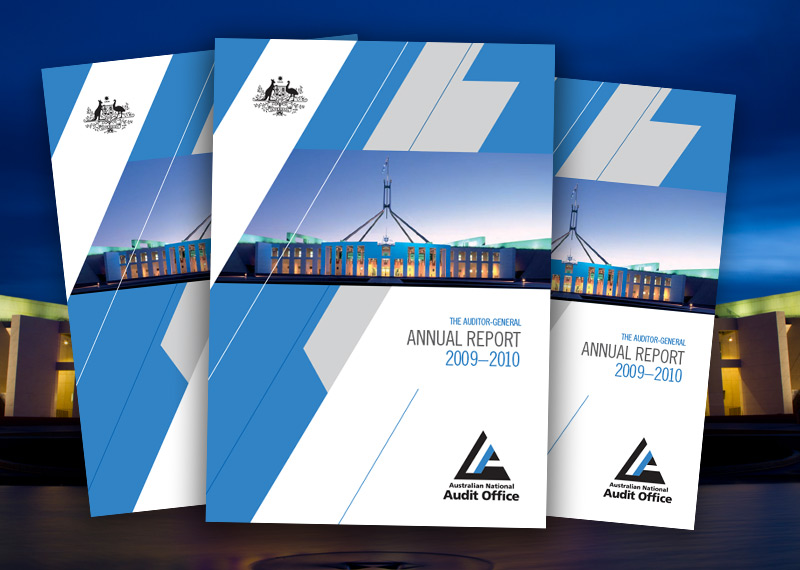
This annual report documents the performance of the Australian National Audit Office (ANAO) in the financial year ending on 30 June 2010. It includes a foreword by the Auditor-General, an overview including the role and responsibilities and vision of the Office, a report on performance, details about management and accountability, and the financial results.
Performance audit (Auditor-General Report No. 39 of 2022–23)

Published: Monday 19 June 2023
Published
The objective of this audit was to assess the effectiveness of the implementation of the government response to the Black Economy Taskforce report.
Entity
Australian Taxation Office; Department of Home Affairs; Department of the Treasury
Contact
Please direct enquiries through our contact page.
Financial statement audit (Auditor-General Report No. 32 of 2021–22)
Published: Thursday 9 June 2022
Published
This report is the first of the two reports and focuses on the results of the interim audits, including an assessment of entities’ key internal controls, supporting the 2021–22 financial statements audits. This report examines 25 entities, including all departments of state and a number of major Australian government entities. The majority of entities included in the report are selected on the basis of their contribution to the income, expenses, assets and liabilities of the 2020–21 Consolidated Financial Statements.
Contact
Please direct enquiries through our contact page.
Financial statement audit (Auditor-General Report No. 47 of 2017–18)
Published: Thursday 14 June 2018
Published
The Australian National Audit Office (ANAO) publishes two reports annually addressing the outcomes of the financial statement audits of Australian government entities and the Consolidated Financial Statements (CFS) of the Australian Government, to provide the Parliament of Australia with an independent examination of the financial accounting and reporting of public sector entities. This report focused on the results of the interim audit phase, including an assessment of entities’ key internal controls, of the 2017–18 financial statements audits of a range of entities including all departments of state and a number of major Australian government entities.
Entity
Across Entities
Contact
Please direct enquiries through our contact page.
Annual report
Published: Tuesday 28 September 2004
Published
This annual report documents the performance of the Australian National Audit Office (ANAO) in the financial year ending on 30 June 2004. It includes highlights and areas of focus for the year; an introduction by the Auditor-General; an overview of the report; a report on performance; details about management and accountability, and the financial statement for the year.
Performance audit (Auditor-General Report No. 42 of 2005–06)
Published: Thursday 25 May 2006
Published
The follow-up audit assessed the extent to which the Australian Taxation Office (ATO), Department of Health and Ageing (Health), and Medicare Australia had implemented the six recommendations from Audit Report No.47 2001–02, Administration of the 30 Per Cent Private Health Insurance Rebate. The audit also looked at: the implementation of some of the major suggestions for improvement in the original audit; and the current validity of some of the positive major findings from that audit. The audit found that the ATO, Health and Medicare Australia have acted upon the recommendations contained in Audit Report No.47 2001–02 and, overall, the administration of the Rebate is currently being undertaken effectively.
Entity
Australian Taxation Office; Department of Health and Ageing; Medicare Australia
Performance audit (Auditor-General Report No. 26 of 2006–07)
Published: Tuesday 20 February 2007
Published
The Age Pension is Australia's largest social security programme delivering approximately $22 billion to 1.9 million Australians in 2005-06. The Age Pension programme is administered by Centrelink on behalf of its client agency the Department of Families, Community Services and Indigenous Affairs.
The objective of the audit was to examine the effectiveness of Centrelink's administration of complex assessments of customer entitlements for the Age Pension programme, particularly through the use of Complex Assessment Officers.
Entity
Centrelink
Performance audit (Auditor-General Report No. 41 of 2019–20)

Published: Wednesday 17 June 2020
Published
The objective of this audit was to assess the effectiveness of the design and establishment of the Regional Investment Corporation.
Entity
Across Entities
Contact
Please direct enquiries through our contact page.
Performance audit (Auditor-General Report No. 21 of 2011–12)
Published: Tuesday 24 January 2012
Published
The objective of the audit was to assess the implementation and effectiveness of the enhanced grants administration requirements for:
- reporting to the Finance Minister on the awarding of grants within their own electorate by Ministers who are Members of the House of Representatives;
- reporting to the Finance Minister on instances where Ministers have decided to approve a particular grant which the relevant agency has recommended be rejected; and
- the website reporting of grants awarded.
Entity
Department of Climate Change and Energy Efficiency; Department of Families, Housing, Community Services and Indigenous Affairs; Department of Infrastructure and Transport; Department of Regional Australia, Regional Development and Local Government
Financial statement audit (Auditor-General Report No. 46 of 2018–19)
Published: Thursday 13 June 2019
Published
This report focuses on the results of the interim audits, including an assessment of entities’ key internal controls, supporting the 2018–19 financial statements audits. It examines 26 entities, including all departments of state and a number of major Australian government entities. The entities included in the report are selected on the basis of their contribution to the income, expenses, assets and liabilities of the 2017–18 Consolidated Financial Statements of the Australian Government (CFS). Significant and moderate findings arising from the interim audits are reported to the responsible Minister(s), and all findings are reported to those charged with governance of each entity.
Entity
Across Entities
Contact
Please direct enquiries through our contact page.
Performance audit (Auditor-General Report No. 34 of 2003–04)
Published: Friday 5 March 2004
Published
In 1997, and subsequently in 1999, the Australian Government introduced two major spending packages with a total value of almost $1 billion. These spending packages were designed to address the challenges posed by the issue of climate change and to meet Australia's domestic and international commitments. Since its inception in 1998, the Australian Greenhouse Office has been responsible for the implementation of greenhouse related programs from these two major spending packages. The objective of the audit was to examine and report on the administrative efficiency and effectiveness of seven major programs administered by the Australian Greenhouse Office.
Entity
Australian Greenhouse Office
Performance audit (Auditor-General Report No. 28 of 2005–06)
Published: Tuesday 31 January 2006
Published
The objective of this performance audit was to assess agencies' financial management of, and accountability for, the use of net appropriation agreements to increase available appropriations.
Entity
Across Agencies
Performance audit (Auditor-General Report No. 42 of 2003–04)
Published: Friday 16 April 2004
Published
The objectives of the audit were to: assess whether financial delegations associated with the expenditure of public monies were determined, applied and managed in accordance with applicable legislation, Government policy and applicable internal controls; and identify better practices and recommend improvements as necessary to current practices.
Entity
AusAID; Australian Competition and Consumer Commission; ComSuper; Department of the Treasury; Office of the Director of Public Prosecutions; Department of Finance and Administration
Financial statement audit (Auditor-General Report No. 7 of 2016–17)

Published: Wednesday 31 August 2016
Published
The Australian National Audit Office (ANAO) publishes two reports annually addressing the outcomes of the financial statement audits of Commonwealth entities, and the Consolidated Financial Statements of the Australian Government, to provide Parliament an independent examination of the financial accounting and reporting of public sector entities. This report focuses on the results of the interim audit phase, including an assessment of entities’ key internal controls, of the 2015–16 financial statements audits of 21 departments and other major General Government Sector (GGS) entities. These entities contribute 95 per cent of GGS revenues and expenses.
Entity
Across Entities
Contact
Please direct enquiries relating to reports through our contact page.
Performance audit (Auditor-General Report No. 51 of 2003–04)
Published: Friday 11 June 2004
Published
The objectives of this performance audit were to: - review the governance and accountability framework for the Scheme, and - assess the efficiency and effectiveness of Treasury's implementation and management of that framework.
Entity
Department of the Treasury
Performance audit (Auditor-General Report No. 11 of 2003–04)
Published: Tuesday 4 November 2003
Published
Annual Performance Reporting, No 11 2003-04 The audit reviewed the 2001-02 annual reports of the departments of : Communications, Technology and the Arts; Education, Science and Training; Employment and Workplace Relations; Immigration and Multicultural and Indigenous Affairs and the Australian Customs Service. The objectives of this audit were to determine whether agencies had: established a sound annual reporting performance information framework; developed arrangements to ensure performance information is accurate and coherent; and appropriately analysed performance information in their annual reports.
Entity
Across Agency
Performance audit (Auditor-General Report No. 4 of 2005–06)
Published: Thursday 4 August 2005
Published
The objectives of the audit were to assess the Commonwealth's management of contractual rights and obligations under the Sale Agreements. In particular the audit sought to: assess the Commonwealth's management of contractual warranties and indemnities; assess DoTARS' management of each purchaser's compliance with contractual commitments to capital expenditure; and examine the effectiveness of the development and management of contractual arrangements for concessional rail passenger travel provided by the Commonwealth.
Entity
Department of Transport and Regional Services; Department of Veterans’ Affairs; Department of Family and Community Services
Performance audit (Auditor-General Report No. 32 of 2005–06)
Published: Thursday 2 March 2006
Published
The objective of this audit was to assess DIMIA's management of the tender, evaluation and contract negotiation processes for the Detention Services Contract. Specifically, the audit considered DIMIA's processes for determining value for money based on the department's: evaluation of the request for tender, including the announcement of the preferred tenderer; negotiations with the successful and unsuccessful tenderers; and management of liability, indemnity and insurance.
Entity
Department of Immigration and Multicultural Affairs