Browse our range of reports and publications including performance and financial statement audit reports, assurance review reports, information reports and annual reports.
Performance audit (Auditor-General Report No. 24 of 2005–06)
Published: Monday 23 January 2006
Published
The audit objective was to assess the effectiveness of DMO's JORN and JFASmaintenance and support arrangements. The audit examined the maintenanceand operation of the JORN and JFAS radars, and their facilities.
Entity
Department of Defence
Performance audit (Auditor-General Report No. 47 of 2003–04)
Published: Tuesday 25 May 2004
Published
In the current audit, the objectives were to provide assurance to the Parliament on the adequacy of the measures and plans instituted by Defence to ensure that the combat aircrew workforce meets military preparedness requirements in the future, and to identify possible areas for improvement.
Entity
Department of Defence
Performance audit (Auditor-General Report No. 22 of 2004–05)
Published: Tuesday 18 January 2005
Published
The objective of the audit was to examine the investment of public funds by selected entities, including: compliance with relevant legislation, delegations and instructions; the value for money of investment strategies; and reporting of investment activities. Six entities were selected for audit, comprising three FMA Act agencies and three Commonwealth authorities. The six entities had aggregrate investments of $1.64 billion as at 30 June 2004 and realised investment earnings of some $80.4 million during 2003/04.
Entity
Across Entities
Performance audit (Auditor-General Report No. 9 of 2004–05)
Published: Wednesday 25 August 2004
Published
The audit examined the range of support made available to ADF personnel making the transition from military to civilian life, the extent to which the assistance is utilised, the cost to Defence of such assistance and the relevant responsibilities of those who deliver assistance.
Entity
Department of Defence; Department of Veterans' Affairs
Potential topic
Potential topic: 2027-29
Potential
The ANAO could assess Services Australia’s strategic planning for ICT systems. Services Australia administers a range of systems supporting the delivery of government services including: whole of government systems such as myGov and Digital ID; systems supporting the delivery of programs such as welfare payment systems; and ICT supporting corporate shared services. Whole of government and welfare payment systems are considered critical national infrastructure. A key enterprise risk identifies the need for Services Australia to maintain ICT service continuity, while developing and maintaining systems that are fit for purpose, resilient and secure. The Services Australia’s capability review observed that a number of critical systems delivering payments and services are ageing. These systems impede the ability to integrate new technologies, are costly to maintain and are preventing Services Australia implementing efficiencies and innovations to delivering programs and services. Many of these ageing systems rely on staff with specialist programming skills. To address these challenges Services Australia established a cross entity advisory board to develop a 10-year ICT Architecture Strategy and Plan by June 2025. The audit could examine oversight, development and/or implementation of strategic plan for ICT systems.
Entity
Services Australia
Contact
Please direct enquiries through our contact page.
Potential topic
Potential topic: 2026-27
Potential
The ANAO could assess the National Disability Insurance Agency’s (NDIA’s) framework and processes for setting, updating and communicating National Disability Insurance Scheme (NDIS) pricing arrangements and price limits, including the annual pricing review, advice from the Independent Pricing Committee, and incorporation of external data and stakeholder feedback to balance participant access, provider viability and scheme sustainability.
Through its annual pricing review, the NDIA examines NDIS support categories, collects and analyses market data, benchmarks prices against other schemes, and seeks feedback through public consultation papers, and considers expert advice from the Independent Pricing Committee (which was established in September 2024). The NDIA publishes an annual pricing arrangements and price limits document, which sets out regulated price controls for NDIS supports and services, and a NDIS Support Catalogue, which lists available supports providers can use when lodging a payment request. These NDIS pricing arrangements are updated regularly. On 22 April 2026 the Minister for the NDIS announced reforms to the NDIS including changes to pricing arrangements.
Entity
National Disability Insurance Agency
Contact
Please direct enquiries through our contact page.
Performance audit (Auditor-General Report No. 3 of 2006–07)
Published: Thursday 7 September 2006
Published
The objective of the audit was to examine the effectiveness of Defence's management of the procurement of Minor capital equipment for Army capability. In particular, the audit focussed on the identification and approval of capability requirements; the management of Army Minors Program funding and expenditure; and DMO management of procurement processes for Army Minor projects. The audit focused on projects included in the Program as at 1 July 2005. As at that date, 85 projects were listed. Case studies illustrating particular issues in the management of the Program are profiled throughout the report in the relevant section.
Entity
Department of Defence; Defence Materiel Organisation
Performance audit (Auditor-General Report No. 44 of 2005–06)
Published: Thursday 1 June 2006
Published
The objective of the audit was to examine how effectively Health manages the risk of PBS drugs not being used according to PBS subsidy conditions. The audit examined two areas: during listing, how Health identified and implemented measures to decrease the risks of PBS drugs being used outside subsidy conditions; and following listing, how Health confirmed that usage and expenditure on PBS drugs was consistent with estimates. The report examines selected approaches used by Health, which have evolved in recent years, to manage the risk of PBS drugs being used outside subsidy conditions. The report also acknowledges and describes the role of the expert committees. The scope of the audit was limited to PBS drugs for which Health pays a subsidy. The audit did not examine Health's role in educating consumers, prescribers, and other health professionals, or the implications of the Australia–United States Free Trade Agreement for the PBS. Additionally, the ANAO did not form an opinion on the success of Medicare Australia's compliance role. To form an opinion against the audit objective, the ANAO interviewed Health personnel, committee members and stakeholders, examined relevant documents and files, analysed drug usage and expenditure data, and attended a number of committee meetings. To assist the audit process, the ANAO selected a sample of eight drugs. The drugs were selected due to their high cost to the PBS and/or high usage, or because the drug has had a particularly interesting PBS history. The sample is not representative of all drugs on the PBS. In 2004–05, 15.3 million prescriptions were written for these eight drugs, with the Government subsidy totalling $1.05 billion.
Entity
Department of Health and Ageing
Performance audit (Auditor-General Report No. 29 of 2010–11)
Published: Wednesday 16 February 2011
Published
The objective of the audit was to examine the effectiveness of the AFP's approach to its management of the implementation of NPIs.
Entity
Australian Federal Police
Potential topic
Potential topic: 2026-27
Potential
The ANAO could assess the Department of Health, Disability and Ageing’s (DHDA) administration of grants for the headspace youth mental health program. Headspace is an Australian-Government funded program that provides supports for people aged 12 to 25 years who are experiencing, or at risk of, mild to moderate mental ill-health. Supports can be accessed in-person, online or by telephone. The first headspace service opened in 2007. Between July 2020 and December 2025, DHDA awarded over $980 million in grants related to headspace. In April 2025, the Prime Minister and the Minister for Health and Ageing committed over $200 million for 58 new, upgraded or expanded headspace services. In October 2025, the Australian Government announced $72.7 million for initiatives to reduce wait times and improve access across 85 headspace services. As at October 2025, there were 172 headspace services across Australia. DHDA is responsible for facilitating the delivery of national programs and services for mental health, including headspace. Australian Government funding for headspace is provided through grant agreements administered by DHDA, including to the National Youth Mental Health Foundation and Primary Health Networks.
Entity
Department of Health, Disability and Ageing
Contact
Please direct enquiries through our contact page.
Performance audit (Auditor-General Report No. 15 of 2003–04)
Published: Monday 1 December 2003
Published
On 2 November 2000, the Senate agreed to a resolution that the Auditor-General be requested to review all expenditures and entitlements accruing to Parliamentarians and Ministers in 1999-2000. The resolution requested that the Auditor-General consider a number of specific matters, and report by 30 June 2001. In the course of that audit, examination of issues relating to Parliamentarians' staff was deferred in order to give the Auditor-General a reasonable chance of reporting reasonably close to the Senate's requested reporting timeframe. ANAO Audit Report No.5 2001-02, Parliamentarians' Entitlements: 1999-2000, was tabled in the Parliament in August 2001. A proposed audit of the administration by Finance of the entitlements of staff engaged under the Members of Parliament (Staff) Act 1984 (MOP(S) Act was included in the ANAO Audit Work Program for 2001-02. The objectives of this performance audit were to: review the effectiveness of the internal control structures in the Department of Finance and Administration (Finance) concerning the administration of entitlements for MOP(S) Act staff; review the effectiveness and efficiency of the procurement and support services Finance provides in relation to MOP(S) Act staff: and identify principles of sound administrative practices to facilitate improved administrative arrangements for the future. The audit covered Finance's administration of payments and services to MOP(S) Act staff during the period 1998-99 to 2001-02. Sub-section 15(c) of the Auditor General Act 1997 precludes an audit of persons who are engaged under the MOP(S) Act. Accordingly, the audit scope did not include examination of the responsibilities of MOP(S) Act staff.
Entity
Department of Finance and Administration
Performance audit (Auditor-General Report No. 14 of 2016–17)

Published: Monday 12 September 2016
Published
The objective of the audit was to assess the effectiveness of the Clean Energy Regulator’s crediting and selection of carbon abatement to purchase under the Emissions Reduction Fund.
Entity
Clean Energy Regulator
Contact
Please direct enquiries relating to reports through our contact page.
Performance audit (Auditor-General Report No. 11 of 2014–15)

Published: Wednesday 10 December 2014
Published
The audit objective was to assess the effectiveness and equity of the award of funding under the Clean Technology Program in the context of the program objectives and the Commonwealth’s grants administration framework.
Entity
Department of Industry
Contact
Please direct enquiries relating to reports through our contact page.
Performance audit (Auditor-General Report No. 9 of 2022–23)

Published: Wednesday 14 December 2022
Published
The objective of this audit was to examine the effectiveness of selected non-corporate Commonwealth entities' arrangements for managing cyber security risks within their procurements and specific contracted providers under the Protective Security Policy Framework (PSPF).
Entity
Australian Federal Police; Australian Taxation Office; Department of Foreign Affairs and Trade
Contact
Please direct enquiries through our contact page.
Performance audit (Auditor-General Report No. 3 of 2018–19)

Published: Wednesday 22 August 2018
Published
The objective of this audit was to examine the design and conduct of the award of funding under the Community Development Grants Program (CDGP).
Entity
Department of Infrastructure, Regional Development and Cities
Contact
Please direct enquiries through our contact page.
Performance audit (Auditor-General Report No. 27 of 2022–23)

Published: Tuesday 30 May 2023
Published
The objective of this audit was to examine the effectiveness of the National Indigenous Australians Agency’s management of provider fraud and non-compliance risks.
Entity
National Indigenous Australians Agency
Contact
Please direct enquiries through our contact page.
Performance audit (Auditor-General Report No. 30 of 2017–18)
Published: Wednesday 28 February 2018
Published
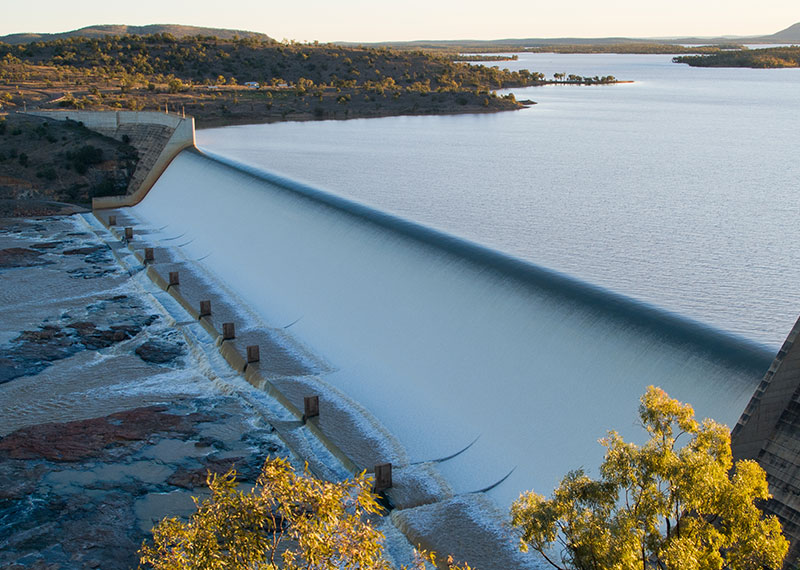
The objective of the audit was to examine the effectiveness of the design and governance of the National Water Infrastructure Development Fund.
Entity
Department of Agriculture and Water Resources; Department of Infrastructure, Regional Development and Cities; Department of the Prime Minister and Cabinet
Contact
Please direct enquiries relating to audits through our contact page.
Performance audit (Auditor-General Report No. 13 of 2018–19)

Published: Thursday 29 November 2018
Published
The objective of this audit was to examine if Social Services and Human Services drive improvements in the Disability Support Pension program using data and information from multiple sources, including agreed Auditor-General and parliamentary committee recommendations.
Entity
Department of Human Services; Department of Social Services
Contact
Please direct enquiries through our contact page.
Performance audit (Auditor-General Report No. 7 of 2017–18)

Published: Tuesday 22 August 2017
Published
The audit objective was to determine whether selected grant programs are being administered efficiently by the Australia Council in relation to suitable comparators. The selected grant programs are collectively known as the Australia Council Grants Program.
Entity
Australia Council; Department of Social Services; National Health and Medical Research Council
Contact
Please direct enquiries relating to reports through our contact page.
Performance audit (Auditor-General Report No. 21 of 2015–16)

Published: Wednesday 10 February 2016
Published
The audit objective was to assess the effectiveness of the administration of the Commonwealth Scientific and Industrial Research Organisation's (CSIRO's) Gift to the Science and Industry Endowment Fund.
Entity
Commonwealth Scientific and Industrial Research Organisation (CSIRO)
Contact
Please direct enquiries relating to reports through our contact page.
Performance audit (Auditor-General Report No. 5 of 2017–18)

Published: Tuesday 8 August 2017
Published
The audit objective is to examine the effectiveness of measures taken to strengthen the protection of Australia’s missions and staff overseas.
Entity
Department of Foreign Affairs and Trade
Contact
Please direct enquiries relating to reports through our contact page.
Performance audit (Auditor-General Report No. 4 of 2018–19)

Published: Tuesday 28 August 2018
Published
The objective of this audit was to examine the efficiency of the Australian Commission for Law Enforcement Integrity (ACLEI) in detecting, investigating and preventing corrupt conduct.
Entity
Australian Commission for Law Enforcement Integrity
Contact
Please direct enquiries through our contact page.
Performance audit (Auditor-General Report No. 31 of 2017–18)

Published: Wednesday 7 March 2018
Published
The objective of this audit was to examine the effectiveness of the Australian Federal Police in managing employee mental health.
Entity
Australian Federal Police (AFP)
Contact
Please direct enquiries relating to reports through our contact page.
Performance audit (Auditor-General Report No. 42 of 2021–22)

Published: Friday 24 June 2022
Published
The audit objective was to examine whether the design and conduct of the procurement process for delivery partners for the Entrepreneurs’ Programme complied with the Commonwealth Procurement Rules, and whether the signed contracts are being appropriately managed.
Entity
Department of Industry, Science, Energy and Resources
Contact
Please direct enquiries through our contact page.
Performance audit (Auditor-General Report No. 17 of 2018–19)

Published: Monday 17 December 2018
Published
The objective of the audit was to continue to examine the progress of the implementation of the annual performance statements requirements under the Public Governance, Performance and Accountability Act 2013 (PGPA Act) and the Public Governance, Performance and Accountability Rule 2014 (PGPA Rule) by selected entities.
Entity
Across Entities
Contact
Please direct enquiries through our contact page.
Performance audit (Auditor-General Report No. 9 of 2021–22)
Published: Wednesday 24 November 2021
Published
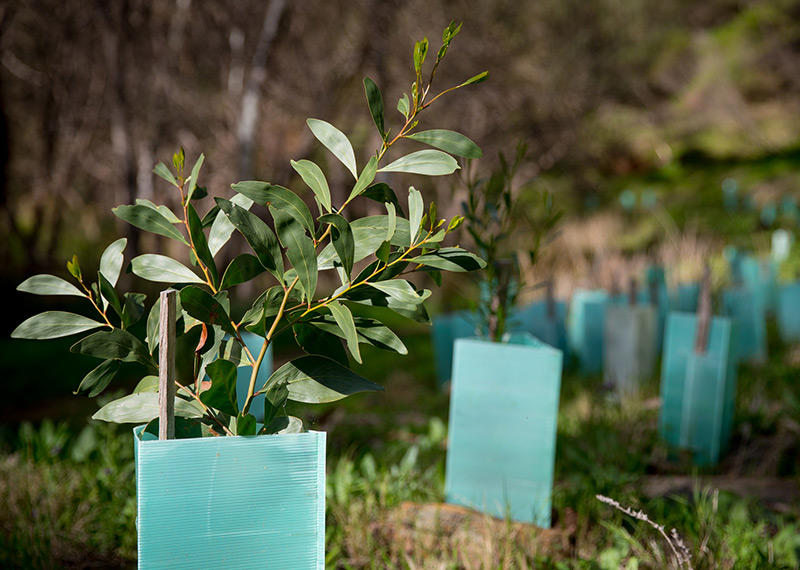
The objective of the audit was to examine the Department of Agriculture, Water and the Environment’s effectiveness in implementing the Regional Land Partnerships program.
Entity
Department of Agriculture, Water and the Environment
Contact
Please direct enquiries through our contact page.
Performance audit (Auditor-General Report No. 33 of 2018–19)

Published: Wednesday 10 April 2019
Published
The objective of the audit was to examine the effectiveness of governance and integrity arrangements for the Northern Australia Infrastructure Facility (NAIF).
Entity
Northern Australia Infrastructure Facility
Contact
Please direct enquiries through our contact page.
Performance audit (Auditor-General Report No. 11 of 2019–20)

Published: Thursday 31 October 2019
Published
The objective of this audit was to examine the extent to which Australian Government entities have implemented the Digital Continuity 2020 policy, and how effectively the National Archives of Australia is monitoring, assisting, and encouraging entities to meet the specified targets of the policy.
Entity
Across Entities
Contact
Please direct enquiries through our contact page.
Performance audit (Auditor-General Report No. 32 of 2019–20)

Published: Thursday 16 April 2020
Published
The objective of this audit was to examine the Department of Foreign Affairs and Trade’s (DFAT’s) achievement of value for money objectives in the delivery of Official Development Assistance (aid) through facility arrangements.
Entity
Department of Foreign Affairs and Trade (DFAT)
Contact
Please direct enquiries through our contact page.
Performance audit (Auditor-General Report No. 2 of 2014–15)

Published: Thursday 25 September 2014
Published
The objective of the audit is to assess the effectiveness of the Department of the Prime Minister and Cabinet’s implementation of food security initiatives for remote Indigenous communities.
Entity
Department of the Prime Minister and Cabinet
Contact
Please direct enquiries relating to reports through our contact page.