Browse our range of reports and publications including performance and financial statement audit reports, assurance review reports, information reports and annual reports.
Speeches and papers
Published: Wednesday 26 April 2000
Published
Mr P.J. Barrett (AM) - Auditor-General for Australia, presented an Occasional Paper
Performance audit (Auditor-General Report No. 29 of 2008–09)
Published: Thursday 23 April 2009
Published
The objective of this performance audit of construction projects on the AusLink National Network was to assess the effectiveness of the administration by DITRDLG in working with the States to deliver the outcomes expected by the Government and the broader community. To inform the audit assessment, the methodology included examination of both Australian Government and State Government records as well as site inspections in relation to 21 projects being delivered in three States (New South Wales (NSW), Queensland and Tasmania). DITRDLG and the respective State road transport authorities were consulted in the selection of projects to be examined in detail.
Entity
Department of Infrastructure, Transport, Regional Development and Local Government
Performance audit (Auditor-General Report No. 39 of 2013–14)
Published: Thursday 12 June 2014
Published
The objective of the audit was to examine the application of the Australian Taxation Office's Compliance Effectiveness Methodology in evaluating the effectiveness of key compliance activities and shaping the development of strategies to promote voluntary compliance.
Entity
Australian Taxation Office
Contact
Please direct enquiries relating to reports through our contact page.
Performance audit (Auditor-General Report No. 12 of 2010–11)
Published: Friday 15 October 2010
Published
The objective of this audit was to assess key aspects of the establishment and administration of HIP by DEWHA as well as the transition of the program to DCCEE. All phases of the program were examined with particular emphasis for Phase 2 being given to:
- program design and implementation;
- registration and training of installers;
- payment of rebates; and
- the compliance strategy underpinning the program.
Entity
Department of Climate Change and Energy Efficiency; Department of the Environment, Water, Heritage and the Arts; Medicare Australia
Performance audit (Auditor-General Report No. 14 of 2009–10)
Published: Wednesday 25 November 2009
Published
The audit objective was to assess the effectiveness of agencies' contract management by determining if they had sound practices and systematic approaches to this activity. Particular attention was given to each agency's:
- day-to-day management of individual contracts; and
- approach to managing its contract population.
Entity
Australian Federal Police; Austrade; Department of Foreign Affairs and Trade
Performance audit (Auditor-General Report No. 32 of 2005–06)
Published: Thursday 2 March 2006
Published
The objective of this audit was to assess DIMIA's management of the tender, evaluation and contract negotiation processes for the Detention Services Contract. Specifically, the audit considered DIMIA's processes for determining value for money based on the department's: evaluation of the request for tender, including the announcement of the preferred tenderer; negotiations with the successful and unsuccessful tenderers; and management of liability, indemnity and insurance.
Entity
Department of Immigration and Multicultural Affairs
Performance audit (Auditor-General Report No. 7 of 2009–10)
Published: Tuesday 20 October 2009
Published
The audit objective was to form an opinion on the effectiveness of the NHMRC's grant administration. To meet this objective the NHMRC was assessed against four criteria:
- the NHMRC's governance arrangements provide appropriate accountability that it is meeting its objectives and obligations to Government (Chapter 2);
- there are strategic and systematic processes for developing and implementing grant programs (Chapter 3);
- the NHMRC manages grants post-award effectively, and complies with legislative requirements and program directives (Chapters 4 and 5); and
- the NHMRC monitors and evaluates its business to demonstrate that outcomes are being met (Chapter 6).
Entity
National Health and Medical Research Council
Performance audit (Auditor-General Report No. 43 of 2010–11)
Published: Wednesday 25 May 2011
Published
The objective of the audit was to examine whether the UP and CPP services provided by the Australian Federal Police Protection Service are being managed effectively. In particular, the audit examined:
- whether the Protection function has been effectively integrated into the AFP, and sound arrangements are in place to strategically plan Protection services and manage risks;
- whether Protection staff have access to appropriate training and guidance; and
- the management arrangements for UP and CPP services.
Entity
Australian Federal Police
Speeches and papers
Published: Thursday 31 July 2014
Published
Mr Mr Ian McPhee - Auditor-General for Australia, participated in a panel discussion at the Australian Government Leadership Network Annual Conference (Queensland)
Performance audit (Auditor-General Report No. 57 of 2010–11)
Published: Tuesday 28 June 2011
Published
The objective of the audit was to report on the effectiveness of Defence’s approach to the acceptance into service of Navy capability, and to identify where better practice may be used by CDG, DMO and Navy.
Entity
Department of Defence; Defence Materiel Organisation
Performance audit (Auditor-General Report No. 39 of 2012–13)
Published: Tuesday 28 May 2013
Published
The audit objective was to assess the effectiveness of AusAID’s management of infrastructure aid to Indonesia, with a particular focus on the Eastern Indonesia National Roads Improvement Project and the Indonesia Infrastructure Initiative.
Entity
Australian Agency for International Development (AusAID)
Contact
Please direct enquiries relating to reports through our contact page.
Performance audit (Auditor-General Report No. 28 of 2008–09)
Published: Wednesday 22 April 2009
Published
The objective of the audit was to examine the quality and integrity of DVA's income support records and to report on the effectiveness of the department's management of the data and how it impacts on service delivery.
Entity
Department of Veterans' Affairs
Performance audit (Auditor-General Report No. 28 of 2012–13)
Published: Tuesday 23 April 2013
Published
The Australian National Audit Office has undertaken a pilot project to assess the status of the Australian Government performance measurement and reporting framework as a basis for implementation of a future program of audits of entities’ key performance indicators, and to develop a suitable audit methodology. This report presents a summary of the work completed to date.
Entity
Across Agencies
Performance audit (Auditor-General Report No. 8 of 2006–07)
Published: Wednesday 18 October 2006
Published
On 9 May 2006, the Auditor-General advised the then Minister for Transport and Regional Services that he would undertake a performance audit and that the specific audit objectives and approach would be established once officers of the Australian National Audit Office (ANAO) had the opportunity to undertake preliminary enquiries with senior staff in Airservices Australia and the Department of Transport and Regional Services (DOTARS). On 31 May 2006, the Auditor-General designated a performance audit under Section 18 of the Auditor-General Act 1997 (Auditor-General Act). The objectives of the performance audit were to: examine the development and administration by Airservices Australia of its contracts with the Solomon Islands Government for upper airspace management; assess the regularity of payments made under the contracts and steps taken by Airservices Australia in respect of any irregularities; and make recommendations for any improvements in the processes employed by Airservices Australia in developing and administering these and similar contractual arrangements.
Entity
Airservices Australia
Annual report
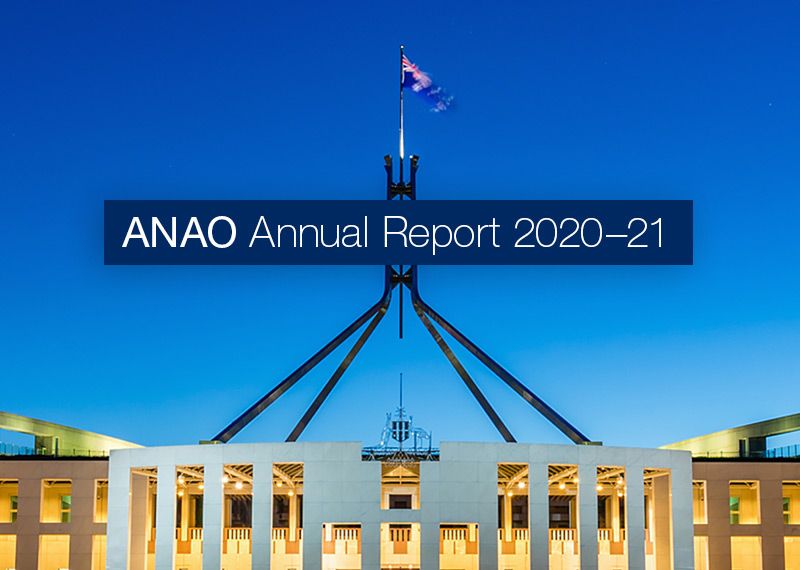
Published: Thursday 26 August 2021
Published
This annual report documents the performance of the Australian National Audit Office (ANAO) in the financial year ended 30 June 2021. The report addresses all applicable obligations under the Public Governance, Performance and Accountability Act 2013; the Public Governance, Performance and Accountability Rule 2014; the Auditor-General Act 1997; the performance measures set out in the outcome and programs framework in the ANAO’s Portfolio Budget Statements 2020–21 and the ANAO Corporate Plan 2020–21; and annual reporting requirements set out in other relevant legislation.
Contact
Please direct enquiries relating to annual reports through our contact page.
Performance audit (Auditor-General Report No. 15 of 2011–12)
Published: Wednesday 30 November 2011
Published
The objective of the audit was to assess Customs and Border Protection’s use of risk management to assist in the processing of sea and air cargo imports.
Entity
Australian Customs and Border Protection Service
Performance audit (Auditor-General Report No. 16 of 1997–98)
Published: Sunday 26 October 1997
Published
The objectives of the audit were to examine the benefits of diversity management in the APS and review the progress made towards equity in employment in the APS, including the EEO Program. It included:
- an assessment of the progress towards achieving equity across the APS and by individual agencies;
- an assessment of the quality of agency EEO programs;
- an assessment of the role of the PSMPC in approving agency EEO programs and monitoring trends across the service;
- a consideration of legal obligations and agencies compliance with these; and
- the possible risks to, and opportunities for, equity under the WRA.
The audit concentrated on evidence of overall progress, the relative performance of individual agencies, and the examination of observed and underlying trends.
Entity
Public Service and Merit Protection Commission and Other Agencies
Insights: Audit lessons

Published: Tuesday 29 October 2024
Published
This edition is targeted at those responsible for implementing internal policies and controls on the receipt of gifts, benefits and hospitality in Australian Government entities. The aim of Audit Lessons is to communicate lessons from our audit work and to make it easier for people working within the Australian public sector to apply those lessons.
Contact
Please direct enquiries through our contact page.
Performance audit (Auditor-General Report No. 33 of 2020–21)

Published: Monday 29 March 2021
Published
The objective of this audit was to assess the efficiency and effectiveness of the Independent Parliamentary Expenses Authority’s administration of parliamentary expenses.
Entity
Independent Parliamentary Expenses Authority
Contact
Please direct enquiries through our contact page.
Other report (Auditor-General Report No. 6 of 2024–25)

Published: Tuesday 22 October 2024
Published
The ANAO responded to the emerging sector-wide risks for public administration by developing a strategy for a program of audits examining the delivery of the Australian Government’s COVID-19 pandemic response (COVID-19 audit strategy). The purpose of this information report was to summarise and consolidate the learnings from the audits and reviews conducted by the ANAO under the COVID-19 audit strategy.
Entity
Across Entities
Contact
Please direct enquiries through our contact page.
Performance audit (Auditor-General Report No. 9 of 2011–12)
Published: Thursday 20 October 2011
Published
The audit objective was to assess the extent to which DEEWR and FaHCSIA have effectively managed the planning and consultation phases for the IBF program and the IBHP program. The audit scope included consideration of the issues likely to affect the ongoing operation and sustainability of the facilities.
Entity
Department of Education, Employment and Workplace Relations; Department of Families, Housing, Community Services and Indigenous Affairs; Aboriginal Hostels Limited; Northern Territory Department of Education and Training
Performance audit (Auditor-General Report No. 50 of 2003–04)
Published: Friday 4 June 2004
Published
The objectives of the audit were to assess whether DOTARS had developed and implemented an appropriate framework and procedures to administer lessee obligations entered into as part of the 1997 and 1998 leasehold sales of 17 Federal airports. In particular, the audit sought to: - review DOTARS' monitoring of lessee compliance with the Airport Leases and supporting sale documentation; - examine the effectiveness of the framework and procedures developed by DOTARS to administer lessee development commitments; and assess the impact of changes in the aviation environment on the management and monitoring of lessee obligations.
Entity
Department of Transport and Regional Services
Performance audit (Auditor-General Report No. 3 of 2017–18)

Published: Wednesday 12 July 2017
Published
The objective of the audit was to assess whether the Office of the Registrar of Indigenous Corporations (ORIC) supports good governance in Indigenous corporations consistent with the Corporations (Aboriginal and Torres Strait Islander) Act 2006 (CATSI).
Entity
Office of the Registrar of Indigenous Corporations; Department of the Prime Minister and Cabinet
Contact
Please direct enquiries relating to reports through our contact page.
Performance audit (Auditor-General Report No. 33 of 2008–09)
Published: Wednesday 20 May 2009
Published
The objective of the audit was to assess the effectiveness of the Tax Office's administration of the PRRT. The Australian National Audit Office (ANAO) identified four key areas for review: general administration; compliance; promoting certainty in administering the PRRT; and governance arrangements.
Entity
Australian Taxation Office
Performance audit (Auditor-General Report No. 49 of 2006–07)
Published: Monday 25 June 2007
Published
The objective of the audit was to assess the management practices undertaken by APS agencies to achieve value for money and transparency in dealing with contracts for non-APS workers. The focus of the audit was on circumstances where agencies had a significant reliance on a non-APS workforce to assist in achieving their core functions. Regular reporting by agencies of expenditure on non-APS workers was outside the scope of this audit.
Entity
NO-DEPTS-LISTED
Performance audit (Auditor-General Report No. 29 of 2006–07)
Published: Wednesday 7 March 2007
Published
The objective of the audit was to assess the implementation and administration of the movement limit and the Slot Management Scheme at Sydney Airport.
The scope of the audit included the development and administration of the SADM Act. The scope also included the development and administration of the relevant legislative instruments and determinations, particularly those which put in place the monitoring and compliance frameworks that support the legislation.
Entity
NO-DEPTS-LISTED
Performance audit (Auditor-General Report No. 41 of 2006–07)
Published: Thursday 31 May 2007
Published
The objective of the audit was to assess the efficiency and the effectiveness of DEWR's administrative oversight for the WfD programme. The components of administration examined included whether:
- the operation of the WfD programme was guided by sound business planning including risk assessment;
- DEWR effectively and efficiently managed, monitored and reported the performance of CWCs in meeting contractual obligations;
- adequate support was provided to DEWR contract managers and account managers to assist in the delivery of WfD outcomes;
- there was evaluation of the performance of CWCs in delivering WfD objectives on behalf of the department;
- DEWR measures the effectiveness of WfD against programme objectives; and
- DEWR had implemented agreed recommendations from the previous WfD audit, where current and relevant.
Entity
NO-DEPTS-LISTED
Performance audit (Auditor-General Report No. 21 of 2013–14)
Published: Thursday 27 February 2014
Published
In 2012–13, the ANAO pilot project to audit Key Performance Indicators(KPIs) was continued with the objective of conducting a review of framework developments, both in terms of the clarity of the policy and guidance issued by Finance and the performance of agencies in applying this policy and guidance, as a basis for implementing a future program of audits; and to further develop and test an audit methodology to address the practical challenges of assessing the appropriateness of KPIs, and their complete and accurate reporting.
Entity
Across Entities
Contact
Michael White, Executive Director, Phone (02) 6203 7393
Major projects report (Auditor-General Report No. 16 of 2015–16)

Published: Friday 15 January 2016
Published
The objective of this report is to provide the Auditor-General’s independent assurance over the status of the selected Major Projects, as reflected in the Statement by the Secretary of Defence, and the Project Data Summary Sheets (PDSSs) prepared by Defence, in accordance with the Guidelines endorsed by the Joint Committee of Public Accounts and Audit.
Entity
Department of Defence
Speeches and papers
Published: Thursday 25 May 2000
Published
Mr P.J. Barrett (AM) - Auditor-General for Australia, presented at the Government in Excellence Summit 2000 - Reinventing Government - A Manifesto for Achieving Excellence and Managing for Results; Singapore