Browse our range of reports and publications including performance and financial statement audit reports, assurance review reports, information reports and annual reports.
Speeches and papers
Published: Thursday 10 June 2004
Published
Mr P.J. Barrett (AM) - Auditor-General for Australia, presented at the Comcover Seminar
Performance audit (Auditor-General Report No. 4 of 2010–11)
Published: Wednesday 28 July 2010
Published
The objective of the audit was to assess whether:
a) the AGD effectively manages the operation of the NSH; and
b) the AFP and ASIO have effective procedures in place to deal with incoming referrals from the NSH.
Entity
Australian Security Intelligence Organisation; Attorney-General's Department; Australian Federal Police
Performance audit (Auditor-General Report No. 46 of 2002–03)
Published: Friday 6 June 2003
Published
Australian Industry Involvement Program. Department of Defence The audit examined the management by Defence of its Australian Industry Involvement (AII) Program. AII is the major program through which Defence gives effect to government policy on Australian industry. The objective of the audit was to assess the extent to which the AII Program has achieved its two policy objectives, which are to :
- develop and sustain strategically important capabilities in Australian industry to support Australian Defence Force operations and Defence capability development; and
- maximise Australian industry involvement in Defence's procurement of goods and services, consistent with the government procurement policy objective of achieving best value for money to the Commonwealth.
Entity
Department of Defence
Speeches and papers
Published: Monday 18 May 1998
Published
Mr Ian McPhee - Deputy Auditor-General, presented at the Best Practice Financial Management Seminar, Canberra
Performance audit (Auditor-General Report No. 32 of 1997–98)
Published: Tuesday 17 February 1998
Published
The objective of the audit was to assess the economy, efficiency and administrative effectiveness, including accountability, of the management of boat people by the Department and the providers of major related services to DIMA such as: the Coastwatch Service within the Australian Customs Service and the Australian Protective Service within the Attorney-General's portfolio. The audit examined key issues in the management of boat people largely from a risk management perspective. The audit conclusions are presented in terms of: the economy, efficiency and administrative effectiveness, including the accountability, of operations; and the administrative functions which support the management of boat people, such as detection, reception of boats and costs.
Entity
Department of Immigration and Multicultural Affairs; Australian Protective Service; Australian Customs Service
Annual report
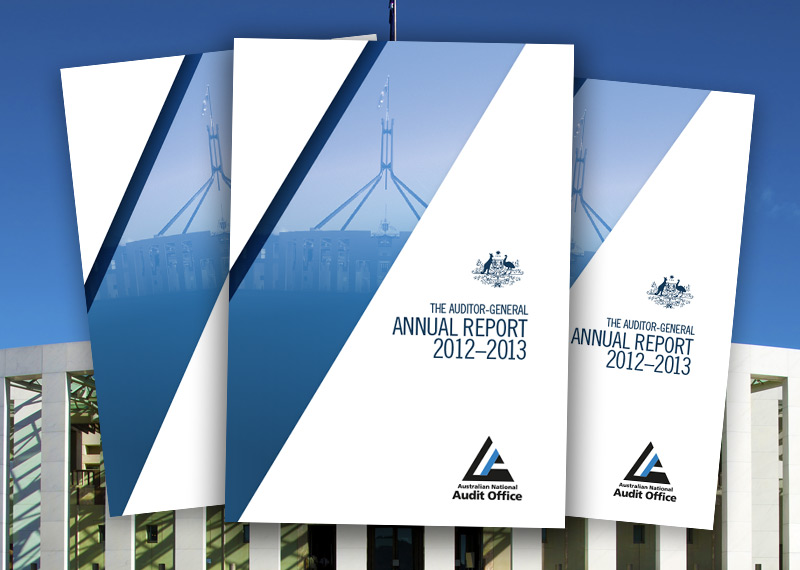
Published: Monday 30 September 2013
Published
This annual report documents the performance of the Australian National Audit Office (ANAO) in the financial year ending on 30 June 2013. It addresses the Requirements for Annual Reports for Departments, Executive Agencies and FMA Act Bodies approved by the Joint Committee of Public Accounts and Audit in June 2013; the performance measures set out in the outcomes and programs framework in the 2012–13 Portfolio Budget Statements; section 28 of the Auditor-General Act 1997; and other annual reporting requirements set out in legislation.
Performance audit (Auditor-General Report No. 13 of 1998–99)
Published: Thursday 12 November 1998
Published
The objective of the audit was to form an opinion on the administrative effectiveness, efficiency and accountability of the Department of Health and Aged Care's delivery of health services to the Aboriginal and Torres Strait Islander population.
Entity
Department of Health and Aged Care
Speeches and papers
Published: Thursday 20 November 1997
Published
Mr P.J. Barrett (AM) - Auditor-General for Australia, presented to the PA Congress 1997:'CPAs for Today and Tomorrow', Adelaide
Performance audit (Auditor-General Report No. 54 of 2003–04)
Published: Friday 18 June 2004
Published
The objective of the audit was to assess the effectiveness of DIMIA's management of its detention agreements with ACM to operate Australia's mainland immigration detention centres. In particular, the ANAO examined: DIMIA's strategic approach to the management and coordination of the contract; how DIMIA defined the services to be delivered by ACM; the systems in place to monitor and report against contract performance; the effectiveness of controls over contract payment arrangements; and DIMIA's management of infrastructure through the detention agreements.
Entity
Department of Immigration and Multicultural and Indigenous Affairs
Performance audit (Auditor-General Report No. 20 of 2002–03)
Published: Tuesday 10 December 2002
Published
The audit reviewed whether DEWR is efficiently and effectively managing the provision of entitlements to eligible former employees under the Employee Entitlements Support Scheme (EESS) and its replacement, the General Employee Entitlements and Redundancy Scheme (GEERS). The audit sought to determine whether DEWR had a mechanism to ensure that claims were properly assessed, taking into account the prevailing risks, whether performance information was adequate, whether relationships with claimants and insolvency practitioners were managed appropriately and whether a cost-effective recovery strategy was in place.
Entity
Department of Employment and Workplace Relations