Browse our range of reports and publications including performance and financial statement audit reports, assurance review reports, information reports and annual reports.
Performance audit (Auditor-General Report No. 46 of 2005–06)
Published: Wednesday 14 June 2006
Published
The objective of this follow-up audit was to review FaCSIA's progress in implementing the recommendations of Audit Report No.17 1999–2000. The focus was whether FaCSIA had maintained or improved its oversight, coordination and administration of the CSHA for both the 1999 CSHA and the 2003 CSHA, in line with the recommendations and findings identified in the previous ANAO audit.
Entity
Department of Families Community Services and Indigenous Affairs
Performance audit (Auditor-General Report No. 46 of 2019–20)

Published: Thursday 25 June 2020
Published
Implementation of ANAO and Parliamentary Committee Recommendations — Education and Health Portfolios
The audit objective was to examine whether selected entities in the Health and Education portfolios implemented the Joint Committee of Public Accounts and Audit and other parliamentary inquiry report recommendations and agreed ANAO performance audit recommendations.
Entity
Across Entities
Contact
Please direct enquiries through our contact page.
Performance audit (Auditor-General Report No. 10 of 2010–11)
Published: Thursday 30 September 2010
Published
The objective of the audit was to examine the effectiveness of Centrelink's approach to investigating and responding to external fraud. The ANAO's assessment was based on four key criteria. In particular, the ANAO assessed whether Centrelink:
- had established a management framework, business systems and guidelines, that support the investigation, prosecution and reporting of fraud;
- had implemented appropriate case selection strategies and controls to ensure resources are targeted to the cases of highest priority;
- complied with relevant external and internal requirements when investigating fraud and referring cases for consideration of prosecution; and
- had implemented an effective training program that supports high quality investigations and prosecution referrals.
Entity
Centrelink
Performance audit (Auditor-General Report No. 19 of 1997–98)
Published: Thursday 4 December 1997
Published
The objective of the audit was to report to Parliament on the economy, efficiency and administrative effectiveness of the risk management process in the Small Business Income business line. It follows Audit Report No.37 1996-97 and entitled Risk Management - Australian Taxation Office. That audit focused on broad strategic issues relevant to risk management in the Australian Taxation Office (ATO) as a whole. This audit follows the issues identified in that report into the day-to-day management of the Small Business Income as an example of how risk management operates in a significant element of the ATO.
Entity
Australian Taxation Office
Performance audit (Auditor-General Report No. 50 of 2005–06)
Published: Tuesday 27 June 2006
Published
The objective of the audit was to assess the framework being put in place to manage and account for aid funds provided under the AIPRD. In particular, the audit addressed: structures for oversighting the development and delivery of the AIPRD; planning and risk management (including those relating to fraud and corruption); financial management; and arrangements for ongoing monitoring and reporting. The audit focussed on the arrangements being established to monitor, evaluate and report on AIPRD implementation, rather than the management of activities and outcomes achieved. This reflects the fact that the long lead times associated with establishing such a large programme of assistance had meant that only limited activities were underway at the time of audit fieldwork. The ANAO anticipates undertaking an audit in the future of the management of activities and outcomes achieved, when more funds have been expended. It was not the purpose of this audit to examine Australia's immediate emergency and humanitarian response to the tsunami crisis.
Entity
Australian Agency for International Development; Department of Foreign Affairs and Trade
Performance audit (Auditor-General Report No. 15 of 2003–04)
Published: Monday 1 December 2003
Published
On 2 November 2000, the Senate agreed to a resolution that the Auditor-General be requested to review all expenditures and entitlements accruing to Parliamentarians and Ministers in 1999-2000. The resolution requested that the Auditor-General consider a number of specific matters, and report by 30 June 2001. In the course of that audit, examination of issues relating to Parliamentarians' staff was deferred in order to give the Auditor-General a reasonable chance of reporting reasonably close to the Senate's requested reporting timeframe. ANAO Audit Report No.5 2001-02, Parliamentarians' Entitlements: 1999-2000, was tabled in the Parliament in August 2001. A proposed audit of the administration by Finance of the entitlements of staff engaged under the Members of Parliament (Staff) Act 1984 (MOP(S) Act was included in the ANAO Audit Work Program for 2001-02. The objectives of this performance audit were to: review the effectiveness of the internal control structures in the Department of Finance and Administration (Finance) concerning the administration of entitlements for MOP(S) Act staff; review the effectiveness and efficiency of the procurement and support services Finance provides in relation to MOP(S) Act staff: and identify principles of sound administrative practices to facilitate improved administrative arrangements for the future. The audit covered Finance's administration of payments and services to MOP(S) Act staff during the period 1998-99 to 2001-02. Sub-section 15(c) of the Auditor General Act 1997 precludes an audit of persons who are engaged under the MOP(S) Act. Accordingly, the audit scope did not include examination of the responsibilities of MOP(S) Act staff.
Entity
Department of Finance and Administration
Performance audit (Auditor-General Report No. 25 of 2021–22)

Published: Tuesday 3 May 2022
Published
The audit examined whether the Department of Home Affairs implemented all agreed recommendations from parliamentary committee and Auditor-General reports within the scoped timeframe.
Entity
Department of Home Affairs
Contact
Please direct enquiries through our contact page.
Audit manual
Updated: Tuesday 9 September 2025
Updated
The shared content volume of the ANAO Audit Manual applies to all assurance activity performed by the ANAO, including financial statements and performance auditing. The shared volume addresses key matters affecting compliance with the Auditor-General Act 1997 and other aspects of the ANAO’s legislative framework. It sets out the main requirements of the ANAO’s overall system of quality control in accordance with ASQC1 Quality Control for Firms that Perform Audits and Reviews of Financial Reports and Other Financial Information, Other Assurance Engagements and Related Services Engagements.
Contact
Please direct enquiries through our contact page.
Performance audit (Auditor-General Report No. 7 of 2004–05)
Published: Monday 9 August 2004
Published
The objective of the follow-up audit was to assess how well the ATO has implemented the recommendations of Audit Report No.3 of 2001-2002, The Australian Taxation Ofiice's Administration of Taxation Rulings. As part of the audit we also considered the ATO's progress in addressing the JCPAA's suggestions resulting from its review of Report No.3 of 2001-2002.
Entity
Australian Taxation Office
Insights: Audit lessons
Published: Wednesday 22 August 2018
Published
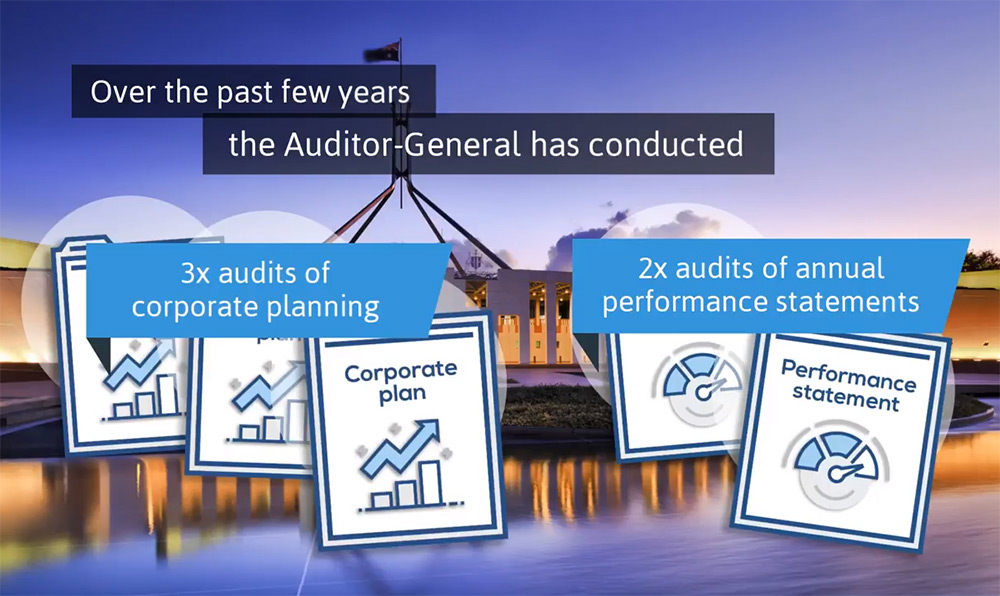
Over the past few years, the Auditor-General has conducted three audits of corporate planning and two audits of annual performance statements. This edition of audit insights examines the findings from these reports and discusses key learnings that are relevant for all Commonwealth entities.
Contact
Please direct enquiries through our contact page.