Browse our range of reports and publications including performance and financial statement audit reports, assurance review reports, information reports and annual reports.
Performance audit (Auditor-General Report No. 14 of 2006–07)
Published: Thursday 7 December 2006
Published
The objective of the audit was to assess whether the APVMA is performing its key regulatory functions effectively. In particular, the audit examined the APVMA's arrangements for:
- planning and overseeing the delivery of regulatory functions;
- registering pesticides and veterinary medicines in a timely manner;
- obtaining external scientific advice to support the registration function;
- monitoring the quality of pesticides and veterinary medicines approved for sale in Australia; and
- administering its cost recovery framework.
Entity
Australian Pesticides and Veterinary Medicines Authority
Financial statement audit (Auditor-General Report No. 14 of 2021–22)
Published: Tuesday 14 December 2021
Published
This report complements the Interim Report on Key Financial Controls of Major Entities financial statement audit report published in June 2021. It provides a summary of the final results of the audits of the Consolidated Financial Statements for the Australian Government and the financial statements of Australian Government entities for the period ended 30 June 2021.
Entity
Across Entities
Contact
Please direct enquiries through our contact page.
Financial statement audit (Auditor-General Report No. 25 of 2020–21)
Published: Thursday 17 December 2020
Published
This report complements the Interim Report on Key Financial Controls of Major Entities financial statement audit report published in May 2020. It provides a summary of the final results of the audits of the Consolidated Financial Statements for the Australian Government and the financial statements of Australian Government entities for the period ended 30 June 2020.
Entity
Across Entities
Contact
Please direct enquiries through our contact page.
Performance audit (Auditor-General Report No. 11 of 2006–07)
Published: Thursday 9 November 2006
Published
The objective of this audit was to assess DAFF's management of the contractual arrangements in place to deliver the National Food Industry Strategy. The audit assessed: implementation of the Strategy; financial management;assessment and selection of grants and projects; management of grants and projects; monitoring and verification of contract services; and performance management. The Australian National Audit Office (ANAO) examined a number of FIG applications and projects, one food centre of excellence and a major project under the Food Market Development programme. The audit did not examine the Food Chain programme or DAFF's administration of the Strategy's government-to-government activities.
Entity
NO-DEPTS-LISTED
Performance audit (Auditor-General Report No. 38 of 2001–02)
Published: Tuesday 19 March 2002
Published
The audit reviewed the planning and management of the Australian Defence Force deployments to East Timor, including the support of those deployments. The audit focused on planning for the deployments and the role of Australia as the lead nation in the International Force in East Timor (INTERFET); and financial, personnel, logistic and other systems used to deploy and sustain Australia's military presence in East Timor.
Entity
Department of Defence
Annual report
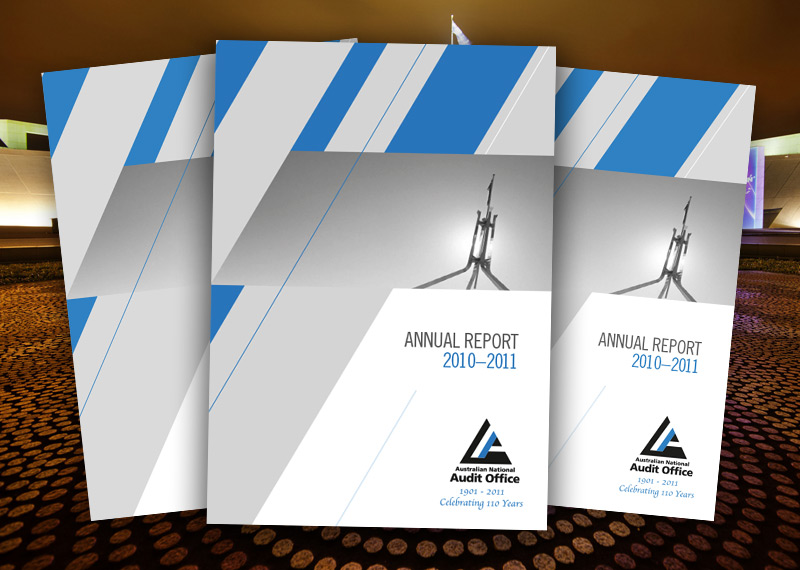
Published: Friday 30 September 2011
Published
This annual report documents the performance of the Australian National Audit Office (ANAO) in the financial year ending on 30 June 2011. It includes a foreword by the Auditor-General, an overview including the role and vision of the Office, a report on performance, details about management and accountability, and the financial results.
Performance audit (Auditor-General Report No. 19 of 2005–06)
Published: Thursday 1 December 2005
Published
The objective of this audit was to assess the effectiveness of the actions taken by AQIS and BA to strengthen the administration of quarantine. The audit focussed on progress in implementing the recommendations from the previous ANAO audit, and recommendations made in the JCPAA's inquiry. (The audit did not address four JCPAA recommendations that were either not supported by the Government, or were policy matters for the Government to consider. See Appendix 1.)
Entity
Department of Agriculture Fisheries and Forestry; Biosecurity Australia
Performance audit (Auditor-General Report No. 34 of 2002–03)
Published: Monday 24 March 2003
Published
This audit followed up the ANAO's 1999 performance audit report on the Commonwealth's planning and response mechanisms to deal with exotic and new endemic pest and emergencies in the animal and plant sectors (Audit Report No 9 1999-2000 Managing Pest and Disease Emergencies). The previous audit made nine recommendations to improve planning and response strategies for emergencies; better coordination; diagnostic support; and appropriate monitoring and surveillance. The objective of the follow-up audit was to assess AFFA's implementation of the recommendations, and whether implementation of these recommendations, or appropriate alternative measures, has improved the Commonwealth's planning and response strategies for pest and disease emergencies. The ANAO also observed and assessed relevant parts of the September 2002 foot and mouth disease simulation, Exercise Minotaur.
Entity
Agriculture Fisheries and Forestry - Australia Department of Agriculture
Performance audit (Auditor-General Report No. 49 of 2004–05)
Published: Thursday 2 June 2005
Published
The objectives of the audit were to:determine whether entities had established effective internal control frameworks and processes to mitigate the risks associated with FBT obligations and transactions;assess whether the internal control frameworks and processes supported the payment of FBT and the reporting of reportable fringe benefit amounts (RFBAs) on employee payment summaries in accordance with the legislation;identify sound and better practices in the administration, management and operation of systems for collecting, collating, calculating, reporting and remitting FBT; and as necessary, recommend improvements in the controls and practices relating to the administration of FBT in the audited entities.
Entity
Commonwealth Scientific and Industrial Research Organisation; Department of Defence; Australian Taxation Office
Financial statement audit (Auditor-General Report No. 7 of 2016–17)

Published: Wednesday 31 August 2016
Published
The Australian National Audit Office (ANAO) publishes two reports annually addressing the outcomes of the financial statement audits of Commonwealth entities, and the Consolidated Financial Statements of the Australian Government, to provide Parliament an independent examination of the financial accounting and reporting of public sector entities. This report focuses on the results of the interim audit phase, including an assessment of entities’ key internal controls, of the 2015–16 financial statements audits of 21 departments and other major General Government Sector (GGS) entities. These entities contribute 95 per cent of GGS revenues and expenses.
Entity
Across Entities
Contact
Please direct enquiries relating to reports through our contact page.