Browse our range of reports and publications including performance and financial statement audit reports, assurance review reports, information reports and annual reports.
Performance audit (Auditor-General Report No. 49 of 2002–03)
Published: Tuesday 17 June 2003
Published
The audit reviewed the Australian Maritime Safety Authority's management of the navigation aids network, which is an important factor in shipping safety. The objectives of the audit were to determine whether AMSA's management of the network provides for the strategic needs of marine navigation in Australian waters, and whether AMSA's management was efficient and effective. The audit focused on AMSA's strategic planning, the management of revenue and expenditure to support the network, its contract management practices, and its accountability and performance reporting arrangements.
Entity
Australian Maritime Safety Authority
Performance audit (Auditor-General Report No. 31 of 1998–99)
Published: Thursday 18 February 1999
Published
While recognising the diversity of administrative requirements for different special payments, the audit provides a basis for comparison of performance across 14 different agencies in 1997-98 and progress made since the then Joint Committee of Public Accounts report 342 The administration of specific purpose payments. The objectives of the audit were to:
- identify and benchmark current practices in the management of performance information within SPP agreements;
- document the lessons learned including better practice from different agencies;
- provide a longitudinal analysis of progress since 1995; and
- provide practical guidance for the development and implementation of appropriate performance information systems and accountability.
Entity
Across Agency
Performance audit (Auditor-General Report No. 19 of 2015–16)

Published: Tuesday 2 February 2016
Published
The objective of this audit was to assess how effectively the Defence Science and Technology Group (DSTG) administers the science and technology work it undertakes for the Australian Defence Organisation.
Entity
Department of Defence
Contact
Please direct enquiries relating to reports through our contact page.
Performance audit (Auditor-General Report No. 2 of 1999–2000)
Published: Thursday 15 July 1999
Published
The effective use of financial information is a critical component of an organisation's performance management framework. The appropriate combination of financial and non-financial data reflects overall organisational performance, and performance at program and work unit levels. The objective of this audit was to assess what financial information is currently used, who uses it and how well it is used. The audit also assessed whether the current processes for defining, accumulating and producing financial information were appropriate for the new accrual based performance management framework, which is to be in place for 1999/2000.
Entity
Across Agency
Performance audit (Auditor-General Report No. 10 of 2009–10)
Published: Monday 16 November 2009
Published
The objective of this audit is to assess Customs and Border Protection's processing of incoming international air passengers in the primary line, in particular the extent to which: (a) systems and controls effectively support the referral of incoming air passengers who pose a risk and those carrying prohibited items; (b) air passengers presenting an immigration risk are processed appropriately; and (c) Customs and Border Protection has arrangements in place to effectively promote co-operation and information sharing between Customs and Border Protection and DIAC.
Entity
Australian Customs and Border Protection Service
Major projects report (Auditor-General Report No. 19 of 2020–21)
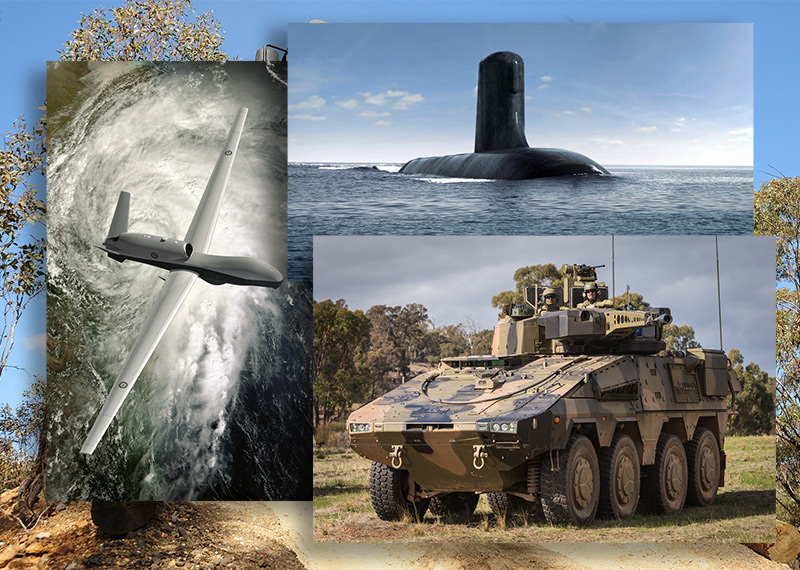
Published: Monday 30 November 2020
Published
The objective of this report was to provide the Auditor-General’s independent assurance over the status of the selected major projects. The status of the selected major projects is reported in the Statement by the Secretary of Defence and the Project Data Summary Sheets (PDSSs) prepared by Defence. Assurance from the ANAO’s review is conveyed in the Independent Assurance Report by the Auditor-General.
Entity
Department of Defence
Contact
Please direct enquiries through our contact page.
Performance audit (Auditor-General Report No. 56 of 2001–02)
Published: Thursday 13 June 2002
Published
The objective of the audit was to determine whether DIMIA's workforce planning systems are effectively supporting human resource management practices, which contribute to the efficient and effective achievement of project outcomes.
Entity
Department of Immigration and Multicultural And Indigenous Affairs
Performance audit (Auditor-General Report No. 51 of 2003–04)
Published: Friday 11 June 2004
Published
The objectives of this performance audit were to: - review the governance and accountability framework for the Scheme, and - assess the efficiency and effectiveness of Treasury's implementation and management of that framework.
Entity
Department of the Treasury
Performance audit (Auditor-General Report No. 33 of 1999–2000)
Published: Monday 13 March 2000
Published
The objective of the performance audit was to assess the administrative effectiveness of DIMA's business entry program against the background of the Business and Temporary Entry program objective, with particular regard to whether:
- the existing performance management mechanisms and compliance monitoring strategies support the achievement of program outcomes and outputs;
- the quality of decision-making;
- business processes facilitate prompt visa decision-making consistent with program objectives; and
- decision-making support mechanisms promote robust and timely decision-making.
Entity
Department of Immigration and Multicultural Affairs
Performance audit (Auditor-General Report No. 27 of 1996–97)
Published: Wednesday 5 March 1997
Published
The objective of the audit was to assess the effectiveness and efficiency of Army's management of the move of 1st Brigade to Darwin. The audit criteria directly related to implementation of the project. These criteria addressed planning as well as identification and management of longer-term risks to the success of the project.
Entity
Department of Defence