Browse our range of reports and publications including performance and financial statement audit reports, assurance review reports, information reports and annual reports.
Major projects report (Auditor-General Report No. 20 of 2024–25)

Published: Wednesday 18 December 2024
Published
Increased transparency and accountability on progress with major Defence equipment acquisitions has been a focus of parliamentary interest for some time. Beginning in 2007–08, an annual program has been established in conjunction with the Department of Defence to enable the ANAO to review and report to the Parliament on the status of major Defence acquisition projects, as set out in the major projects report. The review includes information relating to the cost, schedule and progress towards delivery of required capability of individual projects as at 30 June each year, and is undertaken at the request of the Joint Committee of Public Accounts and Audit.
Entity
Department of Defence
Contact
Please direct enquiries through our contact page.
Performance audit (Auditor-General Report No. 12 of 2021–22)

Published: Wednesday 8 December 2021
Published
The audit objective was to assess the effectiveness of the management of international travel restrictions during the COVID-19 pandemic.
Entity
Across Entities
Contact
Please direct enquiries through our contact page.
Performance audit (Auditor-General Report No. 2 of 2024–25)

Published: Wednesday 11 September 2024
Published
The audit objective was to assess the effectiveness of the Department of Defence’s arrangements to manage the security authorisation of its ICT systems.
Entity
Department of Defence
Contact
Please direct enquiries through our contact page.
Performance audit (Auditor-General Report No. 41 of 2021–22)

Published: Thursday 23 June 2022
Published
The audit objective was to assess the Office of the Commonwealth Ombudsman's effectiveness in managing complaints.
Entity
Office of the Commonwealth Ombudsman
Contact
Please direct enquiries through our contact page.
Performance audit (Auditor-General Report No. 32 of 1998–99)
Published: Monday 8 March 1999
Published
The purpose of the audit was to assess whether management of parliamentary workflow by the agencies reviewed was efficient and effective and to identify elements of good practice. In assessing agency effectiveness and efficiency, the audit focussed on issues of client service such as timeliness, quality and cost. It considered also the governance framework and accountability arrangements relevant to parliamentary workflow, as well as more operational considerations including the use of information technology, development of relevant management information and suitable benchmarking processes.
Entity
Centrelink; Department of Defence; Department of Family and Community Services; Department of Health and Aged Care
Performance audit (Auditor-General Report No. 7 of 2022–23)

Published: Tuesday 29 November 2022
Published
The audit objective was to examine the effectiveness of the Department of Defence’s administration of the Integrated Investment Program since 2016.
Entity
Department of Defence, Department of Finance
Contact
Please direct enquiries through our contact page.
Performance audit (Auditor-General Report No. 31 of 2025–26)

Published: Thursday 14 May 2026
Published
The audit objective was to examine the effectiveness of the Commonwealth Home Support Program.
Entity
Department of Health, Disability and Ageing
Contact
Please direct enquiries through our contact page.
Performance audit (Auditor-General Report No. 53 of 2011–12)
Published: Wednesday 27 June 2012
Published
To assess the extent to which agencies create, manage and dispose of records in accordance with key business, legal and policy requirements.
The agencies included in the audit were the: Australian Customs and Border Protection Service (Customs); Department of Immigration and Citizenship (DIAC); and the Department of the Treasury (Treasury). The audit also considered the Archives' response to Recommendation No. 1 from ANAO Audit Report No.6 2006, 07 Recordkeeping including the Management of Electronic Records, including whether they had clarified Australian Government records management requirements for agencies.
Entity
Across agencies
Performance audit (Auditor-General Report No. 54 of 2001–02)
Published: Thursday 6 June 2002
Published
The objective of the audit was to assess the administrative effectiveness of Australian Customs Services (Customs) drug detection strategies for air and containerised sea cargo and small craft activity. Within the scope of the audit, the following areas were examined :
- intelligence and law enforcement cooperation;
- air and containerised sea cargo;
- cargo examinations and technology;
- small craft activities;
- Customs funding arrangements (including funding for NIDS initiatives): and
- governance, including performance reporting.
Entity
Australian Customs Service
Performance audit (Auditor-General Report No. 23 of 2020–21)
Published: Thursday 10 December 2020
Published
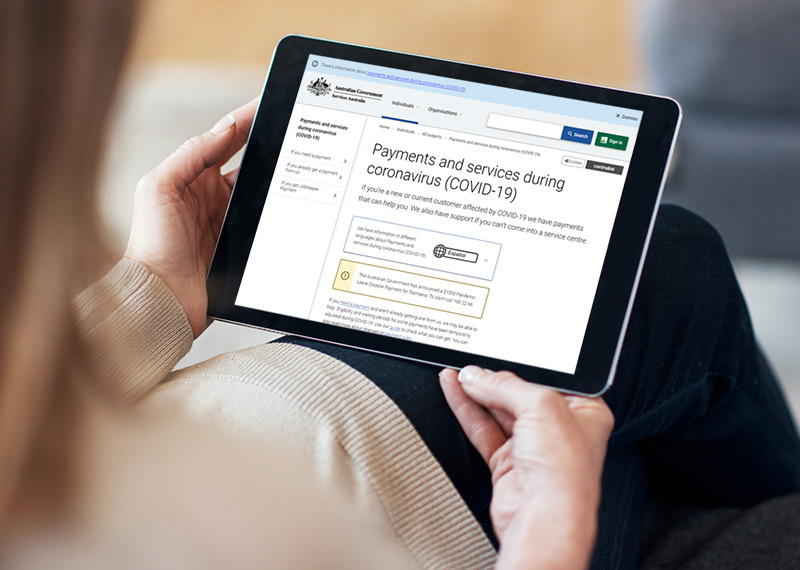
The objective of the audit was to assess whether Services Australia had effectively managed risks related to the rapid preparation for and delivery of COVID-19 economic response measures.
Entity
Services Australia
Contact
Please direct enquiries through our contact page.