Browse our range of reports and publications including performance and financial statement audit reports, assurance review reports, information reports and annual reports.
Government advertising review
Published: Thursday 7 January 2010
Published
This campaign aims to attract the appropriate people to sustain and enhance Defence capability by generating enough enquiries to successfully meet Australian Defence Force's (ADF) recruitment target. The campaign is designed to create a greater level of awareness, among Australia's Indian and Arabic populations, of the Australian Defence Force (ADF) as an employer of culturally diverse Australians.
Government advertising review
Published: Tuesday 22 December 2009
Published
The Digital Switchover campaign aims to provide all Australians with a smooth transition from analogue to digital television. Phase Two is a two-pronged approach of multi-regional communications targeting the broader Australian population, combined with further targeted communications in each switchover area prior to the analogue signals being switched off. The first region to switch over is the Mildura/Sunraysia region on the 30 June 2010.Tailored local communications including NESB materials will be targeted to this region from January 2010 untiltwo weeks past the switchover date.
Performance audit (Auditor-General Report No. 19 of 2009–10)
Published: Friday 18 December 2009
Published
The objective of the audit was to assess how effectively DHS (including CSA), FaHCSIA and Centrelink managed the implementation of stage one of the CSSR and the Improving Compliance program.
Entity
Department of Human Services; Department of Families, Housing, Community Services and Indigenous Affairs; Centrelink
Performance audit (Auditor-General Report No. 18 of 2009–10)
Published: Friday 18 December 2009
Published
The audit objective was to assess whether the administration of the LPG Vehicle Scheme is effective. To address this objective, the audit considered whether:
- there is a sound framework for the operation of the Scheme;
- grants are promoted, assessed and approved in accordance with relevant guidance and regulations; and
- the Scheme's performance is monitored and reported.
Entity
Department of Innovation, Industry, Science and Research; Medicare Australia; Centrelink
Financial statement audit (Auditor-General Report No. 17 of 2009–10)

Published: Thursday 17 December 2009
Published
Financial statement audits are an independent examination of the financial accounting and reporting of public sector entities. The results of the examination are presented in an audit report, which expresses the auditor's opinion on whether the financial statements as a whole and the information contained therein fairly present each entity's financial position and the results of its operations and cash flows. The accounting treatments and disclosures reflected in the financial statements by the entity are assessed against relevant accounting standards and legislative reporting requirements.
Entity
NO-DEPTS-LISTED
Government advertising review
Published: Thursday 17 December 2009
Published
This campaign aims to attract the right people to sustain and enhance Defence capability by generating enough enquiries to successfully meet Australian Defence Force's (ADF) recruitment target. The campaign has been developed to position the ADF as a preferred employer among the target audience by establishing the brand positions of each of the services and by advertising a range of positions offered in the ADF.
Performance audit (Auditor-General Report No. 16 of 2009–10)
Published: Wednesday 16 December 2009
Published
The objective of the audit was to assess the ACMA's effectiveness in operating, managing and monitoring the Register, including compliance with legislative requirements.
Entity
The Australian Communications and Media Authority
Government advertising review
Published: Tuesday 8 December 2009
Published
The Digital Switchover campaign aims to provide all Australians with a smooth transition from analogue to digital television. Phase Two is a two pronged approach of multi-regional communications targeting the broader Australian population, combined with further targeted communications in each switchover area prior to the analogue signals being switched off. The first region to switchover is the Mildura/Sunraysia region on the 30 June 2010. Tailored local communications will be targeted to this region from January 2010 until 2 weeks past the switchover date.
Performance audit (Auditor-General Report No. 15 of 2009–10)
Published: Thursday 26 November 2009
Published
The objective of this audit is to assess whether AusAID's management of the expanding aid program supports delivery of effective aid. The audit focuses on progress of AusAID's internal reforms to achieve this objective.
Entity
AusAID
Performance audit (Auditor-General Report No. 14 of 2009–10)
Published: Wednesday 25 November 2009
Published
The audit objective was to assess the effectiveness of agencies' contract management by determining if they had sound practices and systematic approaches to this activity. Particular attention was given to each agency's:
- day-to-day management of individual contracts; and
- approach to managing its contract population.
Entity
Australian Federal Police; Austrade; Department of Foreign Affairs and Trade
Major projects report (Auditor-General Report No. 13 of 2009–10)

Published: Tuesday 24 November 2009
Published
The objective of this report is to provide information, prepared by both the ANAO and DMO, on the performance of major projects as well as providing the Auditor-General’s formal conclusion on the review of the Project Data Summary Sheets (PDSSs) prepared by DMO and contained in this report.
Entity
Defence Materiel Organisation
Performance audit (Auditor-General Report No. 12 of 2009–10)
Published: Thursday 19 November 2009
Published
The audit objective was to assess the effectiveness of administrative arrangements for YA, including service delivery. The ANAO assessed DEEWR's and Centrelink's performance against three main criteria:
- objectives and strategies for the ongoing management and performance measures for YA provide a firm basis for measurement against outcomes (Chapters 2 and 3);
- YA services delivered are consistent with legislative and policy requirements, (Chapter 4); and
- monitoring arrangements provide appropriate information for assessing service delivery performance (Chapter 5).
Entity
Department of Education, Employment and Workplace Relations; Centrelink
Performance audit (Auditor-General Report No. 11 of 2009–10)
Published: Tuesday 17 November 2009
Published
The objective of the audit was to assess the effectiveness of Defence's procurement and contract management for the provision of Garrison Support Services.
Entity
Department of Defence
Government advertising review
Published: Tuesday 17 November 2009
Published
The Digital Switchover Campaign aim is to provide all Australians with a smooth transition from analogue to digital television by 31 December 2013. The second phase of the campaign aims to maintain awareness levels and drive conversion, especially in areas where the switchover is imminent, while also ensuring that that those households who have not yet converted to digital are aware of what will happen if they don't.
Performance audit (Auditor-General Report No. 10 of 2009–10)
Published: Monday 16 November 2009
Published
The objective of this audit is to assess Customs and Border Protection's processing of incoming international air passengers in the primary line, in particular the extent to which: (a) systems and controls effectively support the referral of incoming air passengers who pose a risk and those carrying prohibited items; (b) air passengers presenting an immigration risk are processed appropriately; and (c) Customs and Border Protection has arrangements in place to effectively promote co-operation and information sharing between Customs and Border Protection and DIAC.
Entity
Australian Customs and Border Protection Service
Performance audit (Auditor-General Report No. 9 of 2009–10)
Published: Thursday 5 November 2009
Published
The objective of the follow-up audit was to assess the extent to which Airservices Australia, and where relevant, the Department of Infrastructure, Transport, Regional Development and Local Government (DITRDLG), have implemented the four ANAO recommendations contained in the previous audit report.
Entity
Airservices Australia; Department of Infrastructure, Transport, Regional Development and Local Government
Performance audit (Auditor-General Report No. 8 of 2009–10)
Published: Thursday 29 October 2009
Published
The objective of this audit was to provide a strategic review on the progress of the Tax Office's implementation of the Change Program.
To achieve this, the ANAO examined:
- the planning for, and governance of, the Change Program, particularly in relation to the management of risk and the assurance framework established by the Tax Office, and its management of contractual arrangements for the project;
- implementation issues associated with Releases 1 and 2 of the Change Program, and more specifically in relation to Release 3, the first use of the new ICP system to process FBT returns; and
- the funding of the Change Program, including measurement and attribution of the costs of the project and consideration of any benefits realisation to date.
Entity
Australian Taxation Office
Government advertising review
Published: Wednesday 28 October 2009
Published
The Summer 2009-10 National Skin Cancer Awareness Campaign's aim is to educate young Australians about the seriousness of, and their susceptibility to, skin cancer and to increase their adoption of the five key sun protection behaviours (Wearing a hat, staying in the shade, applying sunscreen, wearing sunglasses and sun protective clothing).
Government advertising review
Published: Tuesday 27 October 2009
Published
The National Binge Drinking Campaign's objectives are to raise awareness of the harms and costs to young people, their families, communities and society associated with drinking to intoxication, to encourage young people and their parents to question the acceptability and impact of intoxicated behaviour, to highlight the influence that parental attitudes to alcohol misuse and adult behaviour and drinking to intoxication can have on others and provide referral and support information for those who recognise a need to seek help.
Performance audit (Auditor-General Report No. 7 of 2009–10)
Published: Tuesday 20 October 2009
Published
The audit objective was to form an opinion on the effectiveness of the NHMRC's grant administration. To meet this objective the NHMRC was assessed against four criteria:
- the NHMRC's governance arrangements provide appropriate accountability that it is meeting its objectives and obligations to Government (Chapter 2);
- there are strategic and systematic processes for developing and implementing grant programs (Chapter 3);
- the NHMRC manages grants post-award effectively, and complies with legislative requirements and program directives (Chapters 4 and 5); and
- the NHMRC monitors and evaluates its business to demonstrate that outcomes are being met (Chapter 6).
Entity
National Health and Medical Research Council
Government advertising review
Published: Thursday 8 October 2009
Published
This campaign forms part of the main Defence Force Recruitment (July-December 2009) Campaign and is intended to raise awareness of a diverse range of jobs available in the Air Force.
Performance audit (Auditor-General Report No. 6 of 2009–10)
Published: Monday 28 September 2009
Published
The Senate Order for Departmental and Agency Contracts (the Senate Order/the Order) was introduced in June 2001. The Order is one of several measures that the Senate introduced in recent years, to improve public knowledge of information on procurement and the expenditure of public funds. The main principle that underpins the Senate Order is that the Parliament's and public's access to this information should not be restricted by the inclusion of confidential information in contracts unless there is a sound basis for doing so. Public knowledge of information on contracted goods and services delivered to the government, can lead to better results for the Australian Government and the public. The Senate Order requirements have been amended over time to improve agency reporting, for example, on grants.
Entity
Across Agencies
Performance audit (Auditor-General Report No. 5 of 2009–10)
Published: Thursday 17 September 2009
Published
The audit objective was to assess DoHA's administration of prudential arrangements for the protection of residential aged care accommodation bonds.
Entity
Department of Health and Ageing
Annual report
Published: Wednesday 16 September 2009
Published
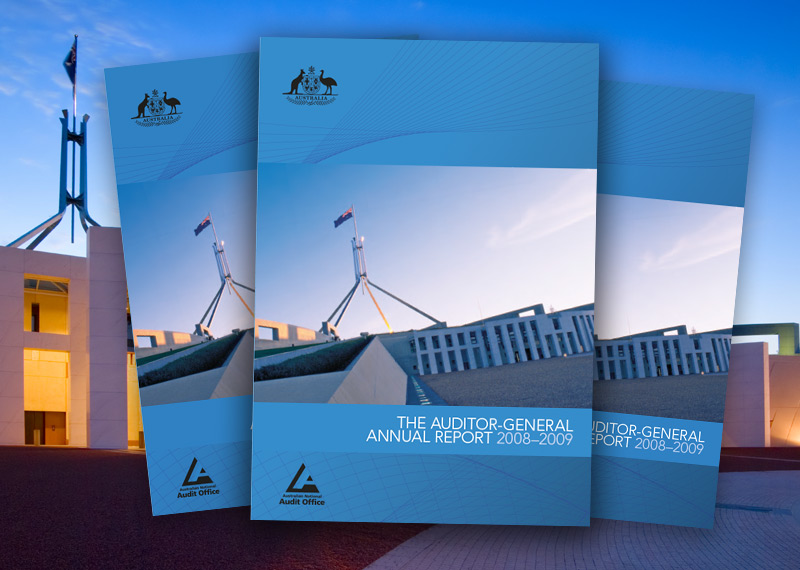
This annual report documents the performance of the Australian National Audit Office (ANAO) in the financial year ending on 30 June 2009. It includes a foreword by the Auditor-General, an overview of the Office, a report on performance, details about management and accountability, and the financial results.
Performance audit (Auditor-General Report No. 4 of 2009–10)
Published: Tuesday 15 September 2009
Published
The objective of this audit was to determine whether selected Australian Government organisations had effective processes for managing the annual leave entitlements of their staff, and whether systems and controls over the processing of annual leave were working as intended. In addressing this objective, the audit also assessed progress being made by the audited organisations in implementing the recommendations in ANAO Audit Report No.16 2005-06.
Entity
Australian Bureau of Statistics; Australian Taxation Office; Department of Broadband, Communications and the Digital Economy
Government advertising review
Published: Friday 11 September 2009
Published
The Smartraveller public information campaign aims to reinforce the message that every traveller has a responsibility to ensure their own safety, and informs Australians of the consular assistance and travel advisory services provided by the Department of Foreign Affairs and Trade (DFAT).
Performance audit (Auditor-General Report No. 3 of 2009–10)
Published: Tuesday 8 September 2009
Published
The focus of this audit was on those entitlements administered by Finance. Similar to the 2001-02 Audit Report, the audit scope did not include entitlements provided to persons employed under the Members of Parliament (Staff) Act 1984 (MOP(S) Act). It also did not examine the administration of entitlements provided through other agencies (such as Parliamentarians' salary and electorate allowance, which are paid by the Chamber Departments, and entitlements provided to Ministers by their home department).
Entity
Department of Finance and Deregulation
Government advertising review
Published: Tuesday 8 September 2009
Published
The campaign's objective is to raise awareness and understanding of the Secure and Sustainable Pension reforms announced in the 2009-10 Budget measures, and in particular how they relate to the individual circumstances of current pension recipients for whom English is not a convenient language.
Performance audit (Auditor-General Report No. 2 of 2009–10)
Published: Monday 7 September 2009
Published
As an element of the arrangements implemented to support the role of the ANAO in reviewing campaigns' compliance with the Guidelines announced on 2 July 2008, the ANAO advised the chair of the JCPAA that the ANAO will provide regular summary reports to Parliament. Section 25 of the Auditor-General's Act 1997 provides for the tabling of such reports.
Entity
Across Agencies
Government advertising review
Published: Thursday 3 September 2009
Published
The campaign's objective is to raise awareness and understanding of the Secure and Sustainable Pension reforms announced in the 2009-10 Budget measures, and in particular how they relate to the individual circumstances of current pension recipients.
Government advertising review
Published: Thursday 3 September 2009
Published
The campaign's objective is to inform job seekers and employers of the change from the Job Network system to Job Services Australia.
Government advertising review
Published: Monday 31 August 2009
Published
The ABHI campaign is an information campaign, largely in cooperation with other states (excl Victoria) which promotes improved public health and reduced incidence of chronic disease. The campaign aims to update public perceptions on lifestyle choices and risk factors leading to obesity and resultant disease. It is anticipated that people will take positive action to be more active and modify their diet, leading to a reduction in instances of diseases. This is the second phase of advertising for the campaign.
Government advertising review
Published: Friday 7 August 2009
Published
The campaign is intended to inform employers and members of the Reserves of their rights and obligations, and raise awareness and understanding of the benefits associated with the employment of Reserves.
Government advertising review
Published: Friday 7 August 2009
Published
The campaign objectives are to raise awareness of undergraduate and graduate health positions in the ADF and to communicate that the roles provide the opportunity for intelligent, everyday people to do extraordinary and worthwhile jobs
Performance audit (Auditor-General Report No. 1 of 2009–10)
Published: Tuesday 4 August 2009
Published
In two letters dated 19 and 22 June 2009, the Prime Minister requested a performance audit of a range of matters relating to representations to the Treasury regarding automotive finance arrangements for car dealers. In response to these requests, the Auditor-General decided that ANAO would undertake a performance audit under section 18 of the Auditor-General Act 1997 (Auditor-General Act). The audit objective, based on the matters raised in the Prime Minister's correspondence and in the Parliament, was to examine and report on:
- any representations to the Treasury since October 2008 from all sources regarding automotive finance arrangements for car dealers, including any made in relation to John Grant Motors;
- the nature of these representations;
- the manner in which the representations were responded to by officials, having regard to any relevant standards and procedures; and
- any related administrative matters that came to attention.
Entity
Department of the Treasury; Department of the Prime Minister and Cabinet
Government advertising review
Published: Tuesday 4 August 2009
Published
The campaign aims to educate the public that people living with Alzheimer's and/or Dementia are at risk of becoming a missing person, and the public can help by 'keeping an eye out' for these people who may affected by memory loss and while in a state of confusion, may not be able to find their way home or remember who they are. The campaign also aims to drive people to seek further information, via the website and call centre.
Government advertising review
Published: Friday 31 July 2009
Published
The campaign's objective is to inform job seekers and employers, for whom English is not a convenient language, of the change from the Job Network system to Job Services Australia.
Government advertising review
Published: Wednesday 22 July 2009
Published
The campaign is designed to raise awareness and prompt call to action in Micro and SME businesses eligible for the Small and General Business Tax Break (BTB).
Government advertising review
Published: Friday 17 July 2009
Published
The campaign is designed to raise awareness and prompt call to action in Micro and SME businesses eligible for the Small and General Business Tax Break (BTB).
Government advertising review
Published: Monday 13 July 2009
Published
To inform jobseekers of the change from the Job Network system to Job Services.
Government advertising review
Published: Monday 6 July 2009
Published
The campaign's objective is to inform jobseekers of the change from the Job Network system to Job Services Australia.
Government advertising review
Published: Monday 6 July 2009
Published
This campaign aims to attract the right people to sustain and enhance Defence capability by generating enough enquiries to successfully meet Australian Defence Force's (ADF) recruitment target. The campaign has been developed to position the ADF as a preferred employer among the target audience by establishing the brand positions of each of the services and by advertising a range of positions offered in the ADF.
Performance audit (Auditor-General Report No. 48 of 2008–09)
Published: Tuesday 30 June 2009
Published
The objective of this audit was to assess whether the strengthened two–pass approval process for major capital equipment projects is being implemented effectively.
Entity
Department of Defence
Performance audit (Auditor-General Report No. 47 of 2008–09)
Published: Thursday 25 June 2009
Published
The objective of the audit was to examine if AFMA is effectively undertaking its regulatory compliance responsibilities in respect of domestic fishing in Commonwealth fisheries. Particular emphasis was
given to:
- the licensing of fishers and related transaction processing;
- the management of fishing quota by concession holders and AFMA; AFMA's domestic compliance monitoring and
- enforcement activities; and the governance arrangement for domestic fishing compliance.
Entity
Australian Fisheries Management Authority
Performance audit (Auditor-General Report No. 46 of 2008–09)
Published: Thursday 25 June 2009
Published
The objectives of this audit were to:
- assess the current status of BCM and EM arrangements in Centrelink and identify opportunities for improvement; and
- review Centrelink's response to the recommendations.
Entity
Centrelink
Government advertising review
Published: Thursday 25 June 2009
Published
The campaign's objective is to inform jobseekers of the change from the Job Network system to Job Services Australia.
Performance audit (Auditor-General Report No. 45 of 2008–09)
Published: Wednesday 24 June 2009
Published
The audit objective was to assess the effectiveness of the department's administration of general recurrent grants for non-government schools. The audit examined key processes in the department's administration ofgeneral recurrent grants for non-government schools for 2005–08 in accordance with the Schools Assistance (Learning Together—Achievement Through Choice and Opportunity) Act 2004.
Entity
Department of Education, Employment and Workplace Relations
Government advertising review
Published: Wednesday 24 June 2009
Published
To inform jobseekers of the change from the Job Network system to Job Services Australia.
Performance audit (Auditor-General Report No. 44 of 2008–09)
Published: Tuesday 23 June 2009
Published
The objective of this audit was to assess whether selected organisations had effective security risk management programs, including whether a selection of protective security risk treatment controls was working as designed.
Entity
Across Agencies
Performance audit (Auditor-General Report No. 43 of 2008–09)
Published: Tuesday 23 June 2009
Published
The objective of the audit, in examining the construction of the CIIDC, was to assess:
- the adequacy of the planning and delivery processes for the project;
- the value-for-money achieved in the delivery of the project, including with regard to the suitability of the centre for its intended purpose; and
- the extent to which the Public Works Committee Act.
Entity
Department of Finance and Deregulation
Government advertising review
Published: Tuesday 23 June 2009
Published
The campaign's objective is to inform jobseekers of the change from the Job Network system to Job Services Australia.
Financial statement audit (Auditor-General Report No. 42 of 2008–09)

Published: Monday 22 June 2009
Published
Under section 57 of the Financial Management and Accountability Act 1997 (FMA Act) the Auditor-General is required to report each year to the relevant Minister, on whether the financial statements of agencies have been prepared in accordance with the Finance Minister's Orders (FMOs) and whether they give a true and fair view of the matters required by those Orders.
Our interim audits of agencies encompass a review of governance arrangements related to agencies' financial reporting responsibilities, and an examination of relevant internal controls, including information technology system controls. An examination of such issues is designed to assess the reliance that can be placed on internal controls to produce complete and accurate information for financial reporting purposes.
Entity
Across Agencies
Performance audit (Auditor-General Report No. 41 of 2008–09)
Published: Wednesday 17 June 2009
Published
Given the significant expenditure associated with the Super Seasprites, and the problems that the Project had encountered over some time, the ANAO had commenced this performance audit prior to the Government's decision to cancel the Project. The focus of the audit was on Defence's and DMO's administration of the Project. In light of the Government's decision to cancel the Project, the objective of the audit was revised to place greater emphasis on those issues that resulted in the failure of the Project to provide the required capability, and highlighting project management lessons for major Defence acquisitions going forward.Accordingly the audit objective was to:
- identify those factors that contributed to the on-going poor performance of the Project;
- outline measures taken by Defence and DMO in seeking to overcome issues encountered by the Project, and key lessons arising from this project for the benefit of major acquisitions projects generally; and
- determine the capability and cost implications of a project that failed to deliver to expectations.
Entity
Department of Defence
Government advertising review
Published: Saturday 13 June 2009
Published
The communications campaign is to encourage people to lodge at an 07/08 tax return and to update their address and direct deposit details with the ATO and to manage expectations about the arrival date for the funds, and what to do if the monies are not received.
Government advertising review
Published: Thursday 11 June 2009
Published
This campaign aims to attract the right people to sustain and enhance Defence capability by generating enough enquiries to successfully meet Australian Defence Force's recruitment target. The commercials advertise a variety of specific Army positions and have been developed to enhance and support the current suite of Army commercials.
Performance audit (Auditor-General Report No. 40 of 2008–09)
Published: Tuesday 2 June 2009
Published
The objective of the audit was to assess the effectiveness of DoHA's management of the planning and allocation of aged care places and capital grants, in accordance with the Aged Care Act 1997.
Entity
Department of Health and Ageing
Government advertising review
Published: Friday 29 May 2009
Published
The campaign's objective is to promote the National Security Hotline (NSH) and remind Australians to be vigilant and report possible signs of terrorism to the NSH.
Government advertising review
Published: Thursday 28 May 2009
Published
The campaign for the National STI Prevention Program is designed to inform young Australians aged 15-29 years about the transmission, symptoms, treatment and prevention of STIs, and encourage safe sexual behaviour, to contribute to a reduction in the prevalence of sexually transmissible infections among this age group.
Performance audit (Auditor-General Report No. 39 of 2008–09)
Published: Wednesday 27 May 2009
Published
The objective of the audit was to examine the effectiveness of DAFF's implementation and administration of the Securing our Fishing Future structural adjustment package industry and community assistance programs.
Entity
Department of Agriculture, Fisheries and Forestry
Performance audit (Auditor-General Report No. 38 of 2008–09)
Published: Wednesday 27 May 2009
Published
The objective of the ANAO's audit was to examine the effectiveness of DAFF's implementation and administration of the buyback of fishing concessions under the Securing our Fishing Future structural adjustment package.
Entity
Department of Agriculture, Fisheries and Forestry
Government advertising review
Published: Wednesday 27 May 2009
Published
The campaign's objectives are to encourage people, for whom English is not a convenient language, to lodge an 07/08 tax return and to update their address and direct deposit details with the ATO, to manage expectations about the arrival date for the payments and provide information about what to do if the payments are not received.
Government advertising review
Published: Wednesday 27 May 2009
Published
The campaign's objectives are to encourage people, for whom English is not a convenient language, to lodge an 07/08 tax return and to update their address and direct deposit details with the ATO, to manage expectations about the arrival date for the payments and provide information about what to do if the payments are not received.
Performance audit (Auditor-General Report No. 37 of 2008–09)
Published: Monday 25 May 2009
Published
The objectives of the audit were to:
- determine the extent to which government entities complied with the requirement to publish and maintain documents online that were presented to the Parliament;
- evaluate selected government entities' policies and practices regarding online publishing; and
- assess AGIMO's policy and guidance in support of online publishing.
To address this objective the audit was conducted in three parts. Firstly, we reviewed a sample of papers tabled between 2000 and 2008 in order to assess their availability online. Next, we examined the online publishing practices of five government entities. These were the: Australian Federal Police (AFP); Department of the House of Representatives (DHR); Department of Infrastructure, Transport, Regional Development and Local Government (Infrastructure); Department of the Treasury (Treasury); and National Archives of Australia (NAA). Finally, we reviewed AGIMO's role in supporting government entities in their online publishing practices.
Entity
Across Agencies
Government advertising review
Published: Friday 22 May 2009
Published
The campaign aims to encourage nurses and midwives who are currently outside the nursing workforce to return to nursing by providing cash bonuses of up to $6,000 to eligible nurses and $1,000 to the employers as retraining contribution.
Government advertising review
Published: Friday 22 May 2009
Published
Electronic Medicare claiming allows patients to claim their Medicare rebate electronically at the doctor's surgery. The purpose of the campaign is to increase public awareness and use of this scheme and to encourage medical service providers such as doctor's surgeries to take up the scheme.
Performance audit (Auditor-General Report No. 36 of 2008–09)
Published: Thursday 21 May 2009
Published
The objective of the audit was to assess the effectiveness of the Department of Immigration and Citizenship's management of the Settlement Grants Program. The ANAO assessed DIAC's performance in terms of how effectively it planned for funding rounds, assessed and allocated grants, monitored and evaluated the program, and managed relationships with its stakeholders. In doing so, the ANAO focused on SGP projects that received funding in the 2007–08.
Entity
Department of Immigration and Citizenship
Performance audit (Auditor-General Report No. 35 of 2008–09)
Published: Thursday 21 May 2009
Published
The objective of the audit was to assess the effectiveness of DIAC's management of MAL. The scope was confined to DIAC's management and use of the system: it did not examine the work of others with an interest in the system, such as security agencies.
Entity
Department of Immigration and Citizenship
Performance audit (Auditor-General Report No. 34 of 2008–09)
Published: Wednesday 20 May 2009
Published
The objective of the audit was to assess the administrative effectiveness of the Tax Office's strategies to address serious non-compliance. In conducting the audit, the ANAO examined the Tax Office's management framework and arrangements to deter, detect and deal with fraud and serious evasion.
Entity
Australian Taxation Office
Performance audit (Auditor-General Report No. 33 of 2008–09)
Published: Wednesday 20 May 2009
Published
The objective of the audit was to assess the effectiveness of the Tax Office's administration of the PRRT. The Australian National Audit Office (ANAO) identified four key areas for review: general administration; compliance; promoting certainty in administering the PRRT; and governance arrangements.
Entity
Australian Taxation Office
Performance audit (Auditor-General Report No. 32 of 2008–09)
Published: Tuesday 19 May 2009
Published
The objective of the audit was to review Defence's management of the HQJOC Project's tender process, including probity management, for the construction of the joint operation headquarters in order to provide assurance that the policy principles for the use of private financing had been followed.
Entity
Department of Defence
Government advertising review
Published: Friday 15 May 2009
Published
The objectives of the campaign are to increase knowledge and awareness of the Education Tax Refund, the need to keep receipts, eligibility requirements, and how to claim the refund, with the overall objective of encouraging eligible Australians to make a claim for a rebate.
Government advertising review
Published: Friday 15 May 2009
Published
The campaign for the National STI Prevention Program is designed to inform young Australians aged 15-29 years about the transmission, symptoms, treatment and prevention of STIs, and encourage safe sexual behaviour to contribute to a reduction in the prevalence of sexually transmissible infections among this age group.
Government advertising review
Published: Monday 11 May 2009
Published
This campaign aims to attract the right people to sustain and enhance Defence capability by generating enough enquiries to successfully meet Australian Defence Force's recruitment target. The radio commercials advertise the Navy's technical trade positions and have been developed to enhance and support the current suite of Navy commercials.
Government advertising review
Published: Monday 11 May 2009
Published
As part of its recruitment activities, the Army has a sponsorship arrangement with the AFL to capitalise on the AFL's strong following amongst the 17-24 age groups, which is the Defence Force Recruiting target market. The sponsorship saw the development of the AFL Army Award, which recognises and rewards the common values of the Army and the AFL. The advertising campaign is designed to promote the sponsorship and encourage AFL supporters to vote for nominated players for the AFL Army Award, with the overall objective of attracting members of the target audience to consider a career in the Australian Defence Force.
Performance audit (Auditor-General Report No. 31 of 2008–09)
Published: Friday 8 May 2009
Published
The objective of this audit was to assess Army's progress in addressing the issues previously identified in Defence reviews and ANAO audits as affecting the Army Reserve's capability; and Identify the extent that the Army Reserve is capable of contributing to contemporary Australian Defence Force capability requirements through fulfilling its assigned roles and tasks.
Entity
Department of Defence
Government advertising review
Published: Thursday 7 May 2009
Published
The campaign's objectives are to encourage people to lodge an 07/08 tax return and to update their address and direct deposit details with the ATO, to manage expectations about the arrival date for the payments and provide information about what to do if the payments are not received.
Performance audit (Auditor-General Report No. 30 of 2008–09)
Published: Wednesday 29 April 2009
Published
The objective of the audit was to assess the arrangements for oversighting the Action Plan and whether the Plan's new measures have been administered effectively to deliver the intended results.
Entity
Attorney-General's Department; Department of Immigration and Citizenship; Australian Federal Police; Department of Families, Housing, Community Services and Indigenous Affairs
Government advertising review
Published: Wednesday 29 April 2009
Published
This campaign was designed to educate Australians about the importance of protecting themselves against avoidable blindness and vision loss.
Performance audit (Auditor-General Report No. 29 of 2008–09)
Published: Thursday 23 April 2009
Published
The objective of this performance audit of construction projects on the AusLink National Network was to assess the effectiveness of the administration by DITRDLG in working with the States to deliver the outcomes expected by the Government and the broader community. To inform the audit assessment, the methodology included examination of both Australian Government and State Government records as well as site inspections in relation to 21 projects being delivered in three States (New South Wales (NSW), Queensland and Tasmania). DITRDLG and the respective State road transport authorities were consulted in the selection of projects to be examined in detail.
Entity
Department of Infrastructure, Transport, Regional Development and Local Government
Government advertising review
Published: Thursday 23 April 2009
Published
Electronic Medicare claiming allows patients to claim their Medicare rebate electronically at the doctor's surgery. The purpose of the campaign is to increase public awareness and use of this scheme and to encourage medical service providers such as doctor's surgeries to take up the scheme.
Performance audit (Auditor-General Report No. 28 of 2008–09)
Published: Wednesday 22 April 2009
Published
The objective of the audit was to examine the quality and integrity of DVA's income support records and to report on the effectiveness of the department's management of the data and how it impacts on service delivery.
Entity
Department of Veterans' Affairs
Government advertising review
Published: Thursday 16 April 2009
Published
The aim of the campaign is to contribute to a reduction in the uptake of methamphetamines and other illicit drugs among young Australians, by raising awareness of the harms associated with drug use and by encouraging and supporting decisions not to use. It is also intended to encourage young people using methamphetamines to reconsider their use and direct them to relevant support, counselling and treatment services.
Government advertising review
Published: Tuesday 14 April 2009
Published
The campaign's objectives are to encourage people, for whom English is not a convenient language, to lodge an 07/08 tax return and to update their address and direct deposit details with the ATO, to manage expectations about the arrival date for the payments and provide information about what to do if the payments are not received.
Government advertising review
Published: Tuesday 14 April 2009
Published
The campaign's objectives are to raise awareness of the harms and costs to young people, their families, communities and society associated with drinking to intoxication, to encourage young people and their parents to question the acceptability and impact of intoxicated behaviour, to highlight the influence that parental attitudes to alcohol misuse and adult behaviour and drinking to intoxication can have on others and provide referral and support information for those who recognise a need to seek help.
Government advertising review
Published: Wednesday 8 April 2009
Published
The Digital Switchover campaign aims to provide all Australians with a smooth transition from analogue to digital television by 31 December 2013. The first phase of this campaign aims to raise awareness and provide general information to people about the Digital Switchover. This phase includes the introduction of a labelling scheme, to identify whether TVs are digital ready or require a set top box.
Government advertising review
Published: Thursday 2 April 2009
Published
The campaign's objectives are to encourage people to lodge an 07/08 tax return and to update their address and direct deposit details with the ATO, to manage expectations about the arrival date for the payments and provide information about what to do if the payments are not received.
Performance audit (Auditor-General Report No. 27 of 2008–09)
Published: Friday 27 March 2009
Published
The objectives of this audit were to assess the progress of the M113 Armoured Personnel Carrier Upgrade Project against stated schedule, cost and technical performance objectives; and Defence Materiel Organisation's (DMO's) progress in implementing the recommendations and addressing the findings of ANAO Audit Report No. 3 2005–06, Management of the M113 Armoured Personnel Carrier Upgrade Project.
Entity
Department of Defence
Government advertising review
Published: Friday 27 March 2009
Published
The campaign's objectives are to encourage people, for whom English is not a convenient language, to lodge an 07/08 tax return and to update their address and direct deposit details with the ATO, to manage expectations about the arrival date for the payments and provide information about what to do if the payments are not received.
Performance audit (Auditor-General Report No. 26 of 2008–09)
Published: Thursday 19 March 2009
Published
The audit objective was to assess the effectiveness of the Department of Health and Ageing's administration of health workforce initiatives in rural and remote Australia.
Entity
Deparment of Health and Ageing
Government advertising review
Published: Thursday 19 March 2009
Published
The campaign's objectives are to encourage people to lodge an 07/08 tax return and to update their address and direct deposit details with the ATO, to manage expectations about the arrival date for the payments and provide information about what to do if the payments are not received.
Government advertising review
Published: Friday 13 March 2009
Published
The campaign is a community awareness campaign designed to raise awareness of Australia's quarantine laws and of the particular risks of bringing foreign items into Australia.
Government advertising review
Published: Friday 13 March 2009
Published
This campaign aims to attract the right people to sustain and enhance Defence capability by generating enough enquiries to successfully meet Australian Defence Force's recruitment target. The radio commercials have been developed to position ADFA as a preferred study option among the target audience.
Government advertising review
Published: Thursday 12 March 2009
Published
The Digital Switchover campaign aims to provide all Australians with a smooth transition from analogue to digital television by 31 December 2013. The first phase of this campaign aims to raise awareness and provide general information to people about the Digital Switchover. This phase includes the introduction of a labelling scheme, to identify whether TVs are digital ready or require a set top box.
Performance audit (Auditor-General Report No. 25 of 2008–09)
Published: Wednesday 11 March 2009
Published
The objective of this audit was to assess and report on the progress being made by Government agencies in achieving better practice in green office procurement and sustainable office management. The scope of the audit included agencies incorporated under the Financial Management and Accountability Act 1997 as well as a sample of bodies incorporated under the Commonwealth Authorities and Companies Act 1997. Sixty-three agencies were included in an audit survey. Detailed validation was carried out in nine of these agencies.
Entity
Across Entities
Government advertising review
Published: Friday 6 March 2009
Published
The campaign's objectives are to encourage people, for whom English is not a convenient language, to lodge an 07/08 tax return and to update their address and direct deposit details with the ATO, to manage expectations about the arrival date for the payments and provide information about what to do if the payments are not received.
Performance audit (Auditor-General Report No. 24 of 2008–09)
Published: Thursday 5 March 2009
Published
The objective of the audit was to assess the effectiveness of the procurement and contracting associated with:
- the design, development and delivery of government advertising campaigns by Commonwealth departments; and
- the operation of the Central Advertising System (CAS).
Entity
Department of the Prime Minister and Cabinet; Department of Finance and Deregulation; Department of Education, Employment and Workplace Relations; Department of Health and Ageing; Attorney-General's Department
Government advertising review
Published: Wednesday 4 March 2009
Published
The campaign's objective is to inform Centrelink customers who are in or commence a same sex relationship about changes to their entitlements and obligations as a result of the Same Sex Relationships (Equal Treatment in Commonwealth Laws - General Law Reform) Act 2008.
Government advertising review
Published: Friday 27 February 2009
Published
The campaign's objectives are to encourage people to lodge an 07/08 tax return and to update their address and direct deposit details with the ATO, to manage expectations about the arrival date for the payments and provide information about what to do if the payments are not received.
Performance audit (Auditor-General Report No. 23 of 2008–09)
Published: Wednesday 25 February 2009
Published
The audit focussed on performance information reporting by the submarine System Program Offices on reliability, safety systems and logistic support services. In the context of the sustainability arrangements, the audit considered combat system upgrades and personnel escape and rescue systems. Any arrangements that the Commonwealth may be considering regarding the potential sale of ASC were not within the scope of this audit.
Entity
Department of Defence
Government advertising review
Published: Thursday 19 February 2009
Published
The objectives of the campaign are to increase knowledge and awareness, among people for whom English is not a convenient language, of the Education Tax Refund, the need to keep receipts, eligibility requirements, and how to claim the refund, with the overall objective of encouraging eligible Australians to make a claim for a rebate.
Performance audit (Auditor-General Report No. 22 of 2008–09)
Published: Tuesday 17 February 2009
Published
The objective of the audit was to review the effectiveness and efficiency of Centrelink's customer feedback system and the progress Centrelink had made in implementing the recommendations of the 2004–05 audit and the subsequent JCPAA inquiry.
Entity
Centrelink
Performance audit (Auditor-General Report No. 21 of 2008–09)
Published: Tuesday 10 February 2009
Published
This audit focused on the approval of business system projects -projects aiming to achieve a business objective such as reduced costs or to implement a new program, in contrast with projects with a narrower technology focus such as replacing an agencyʹs desktop computers.
Entity
Department of Education, Employment and Workplace Relations; Department of Health and Ageing; Department of Veterans' Affairs
Performance audit (Auditor-General Report No. 20 of 2008–09)
Published: Thursday 5 February 2009
Published
The second audit, which is the subject of this report, is a broader and more in-depth cross-portfolio audit. Its objective was to assess:
- the planning and delivery of capital works projects by proponent agencies;
- the extent to which projects have delivered on what was intended; and
- the extent to which proponent agencies have complied with the requirements of the Public Works Committee Act 1969 and approved procedures.
Entity
Across Agencies
Performance audit (Auditor-General Report No. 19 of 2008–09)
Published: Wednesday 4 February 2009
Published
The objectives of this audit were to:
- examine whether the appointment of CMAX Communications Pty Ltd as a provider of communications support and advice for the 2020 Summit was consistent with the Commonwealth procurement framework and sound principles of public administration; and
- assess the effectiveness of the administration of the CMAX Communications contract by PM&C.
Entity
Department of the Prime Minister and Cabinet
Performance audit (Auditor-General Report No. 18 of 2008–09)
Published: Tuesday 3 February 2009
Published
The Australian Political Parties for Democracy Programme is administered by Finance. The programme aims to strengthen democracy internationally by providing support for the international activities of Australia's major political parties. Funding of up to $1 million is provided annually under the programme to each of the Australian Labor Party and to the Liberal Party of Australia. Guidelines for the programme provide for the parties to re-apply for funding each year and set out the criteria against which applications for funding are assessed. The proposed audit would examine the administration of the program by Finance, including the adequacy of assessment of acquittal documentation and requests to roll over funding.
Entity
Department of Finance and Deregulation
Government advertising review
Published: Thursday 29 January 2009
Published
This phase of the campaign (phase two) is designed to communicate information and raise awareness about the First Home Owners Boost amongst potential first home buyers for whom English is not a convenient language.
Performance audit (Auditor-General Report No. 17 of 2008–09)
Published: Wednesday 28 January 2009
Published
The objective of this audit was to assess the effectiveness of DEEWR's administration of Job Network outcome payments.
Entity
Department of Education, Employment and Workplace Relations
Government advertising review
Published: Friday 23 January 2009
Published
The campaign's objective is to promote the National Security Hotline (NSH) and remind Australians to be vigilant and report possible signs of terrorism to the NSH.
Government advertising review
Published: Friday 23 January 2009
Published
The objectives of the campaign are to increase knowledge and awareness of the Education Tax Refund, the need to keep receipts, eligibility requirements, and how to claim the refund, with the overall objective of encouraging eligible Australians to make a claim for a rebate.
Government advertising review
Published: Tuesday 20 January 2009
Published
The objectives of the campaign are to increase knowledge and awareness of the Education Tax Refund, the need to keep receipts, eligibility requirements, and how to claim the refund, with the overall objective of encouraging eligible Australians to make a claim for a rebate.
Government advertising review
Published: Friday 16 January 2009
Published
This phase of the campaign (phase two) is designed to communicate information and raise awareness about the First Home Owners Boost amongst potential first home buyers, through limited media (print/ radio/ digital/ outdoor advertisement) supported by marketing collateral.
Government advertising review
Published: Wednesday 7 January 2009
Published
The Anti-Money Laundering and Counter-Terrorism Financing Act 2006 (AML/CTF Act) forms part of a legislative package that implements reforms to Australia's anti-money laundering and counter-terrorism financing regulatory regime. There are elements of the Act that did not commence until December 2008. This campaign is focused on targeted public awareness regarding the new elements of the Act.
Government advertising review
Published: Wednesday 24 December 2008
Published
This campaign aims To attract the right people to sustain and enhance Defence capability by generating enough enquiries to successfully meet Australian Defence Force's (ADF) recruitment target. The Navy TVC has been developed to enhance and support the current suite of Navy commercials.
Performance audit (Auditor-General Report No. 16 of 2008–09)
Published: Monday 22 December 2008
Published
The objective of the audit was to assess the adequacy and effectiveness of the BCM practices and procedures within the Tax Office in preparing for, or responding to, disruptions to ‘business as usual' operations.
Entity
Australian Taxation Office
Performance audit (Auditor-General Report No. 15 of 2008–09)
Published: Thursday 18 December 2008
Published
The objective of the audit was to assess the effectiveness of AIMS administration of its co investment research program.
Entity
Australian Institute of Marine Science
Financial statement audit (Auditor-General Report No. 14 of 2008–09)

Published: Wednesday 17 December 2008
Published
The Auditor-General Act 1997 establishes the mandate for the Auditor General to undertake financial statement audits of all Commonwealth entities including those of government agencies, statutory authorities and government business enterprises.
Financial statement audits are an independent examination of the financial accounting and reporting of public sector entities. The results of the examination are presented in an audit report, which expresses the auditor's opinion on whether the financial statements as a whole and the information contained therein fairly present each entity's financial position and the results of its operations and cash flows. The accounting treatments and disclosures reflected in the financial statements by the entity are assessed against relevant accounting standards and legislative reporting requirements.
Entity
Across Agencies
Performance audit (Auditor-General Report No. 13 of 2008–09)
Published: Tuesday 16 December 2008
Published
The audit objective was to assess how well agencies manage their websites. Particular attention was given to the audited agencies' website purposes, risk management and planning, policies, content management procedures, and performance monitoring and reporting. These elements provide the framework for the design, implementation and operation of websites.
Entity
Australian Bureau of Statistics; Department of Agriculture, Fisheries and Forestry; Department of Foriegn Affairs and Trade
Performance audit (Auditor-General Report No. 12 of 2008–09)
Published: Wednesday 10 December 2008
Published
The audit objective was to assess the effectiveness of the implementation and administration of the AASC program by the ASC. The extent to which the ASC is able to determine that the program is achieving its objectives was also examined. Particular emphasis was given to the following areas:
- the implementation and the ongoing management of program; and
- the selection of sites and administration of grants funded under the program.
The elements of the Building a Healthy, Active Australia package undertaken by other agencies were not included in the scope of this audit.
Entity
Australian Sports Commission
Performance audit (Auditor-General Report No. 11 of 2008–09)
Published: Thursday 4 December 2008
Published
The objective of this audit was to assess how effectively FaHCSIA and DEEWR have undertaken their roles and responsibilities for specialist disability employment services under the current (third) CSTDA.
Entity
Department of Education, Employment and Workplace Relations; Department of Families, Housing, Community Services and Indigenous Affairs
Performance audit (Auditor-General Report No. 10 of 2008–09)
Published: Tuesday 2 December 2008
Published
The objective of this audit was to assess whether the Scheme is being administered effectively by the department. The ANAO focussed on Program Year 1 of the Scheme, 2005–06, and examined DIISR's arrangements for:
- assessing the eligibility of entities to receive grants;
- assessing entities' claims for eligible expenditure;
- adhering to the funding limits for the Scheme when calculating and paying claims, and managing any debts that arise;
- and evaluating and reporting on whether the statutory objective of the Scheme is being met.
The audit did not examine the other components of the 2005–2015 industry assistance package; nor did it examine any of the programs delivered under the previous assistance package (2000–2005).
Entity
Department of Innovation, Industry, Science and Research