Browse our range of reports and publications including performance and financial statement audit reports, assurance review reports, information reports and annual reports.
Performance audit (Auditor-General Report No. 50 of 2004–05)
Published: Thursday 2 June 2005
Published
The objective of this audit was to assess the administration and implementation of the drought assistance measures. The audit focussed on EC, including prima facie EC, and key aspects of the additional drought assistance measures.
Entity
Department of Agriculture, Fisheries and Forestry; Centrelink; The Department of the Prime Minister and Cabinet
Performance audit (Auditor-General Report No. 37 of 1998–99)
Published: Wednesday 5 May 1999
Published
The purpose of the report was to report to the Parliament on how effectively and efficiently the Australian Taxation Office administers the Tax File Number System, and to identify opportunities for improvement of that system. The ANAO developed a methodological framework for the evaluation of the efficiency and effectiveness of the ATO's administration of the TFN system. The framework examined the TFN system; individuals and their TFNs; TFN withholding tax arrangements; and TFN information matching.
Entity
Australian Taxation Office
Performance audit (Auditor-General Report No. 6 of 1996–97)
Published: Thursday 12 September 1996
Published
The objectives for the audit were to examine Commonwealth guarantees, indemnities and letters of comfort in relation to:
- the potential size of the Commonwealth's exposure to these instruments;
- the extent to which the overall exposures of the Commonwealth are managed and monitored;
- the adequacy of administrative reporting arrangements;
- areas of better administrative practice relating to their management; and
- to raise agencies' awareness of appropriate risk management and accountability practices in relation to these instruments.
The audit set out to quantify the Commonwealth's exposure to guarantees, indemnities and letters of comfort.
Entity
Across Agency
Performance audit (Auditor-General Report No. 16 of 2001–02)
Published: Friday 5 October 2001
Published
The Government introduced the Defence Reform Program (DRP) in 1997 to enable Defence's resources to be focused more efficiently and effectively on its core functions. The objective of the audit was to assess Defence's management and implementation of DRP and the extent to which it achieved savings for reinvestment in the operational capabilities of the ADF.
Entity
Department of Defence
Performance audit (Auditor-General Report No. 1 of 2007–08)
Published: Tuesday 17 July 2007
Published
The objective of the audit was to assess the effectiveness of management of the procurement of a major, replacement capability for the Australian Defence Force (ADF) by the DMO, and Defence. The audit reviewed the initial capability requirements and approval process; analysed the acquisition agreements for elements of the project; and examined the interim through-life support arrangements being put in place to support the capability.
Entity
Department of Defence; Defence Materiel Organisation
Performance audit (Auditor-General Report No. 35 of 2010–11)
Published: Wednesday 30 March 2011
Published
The objective of the audit was to assess the effectiveness of DFAT's management of the overseas leased estate. In particular, the audit examined whether DFAT:
- has effective governance, reporting and funding arrangements in place to support the sound management and oversight of the overseas leased estate;
- effectively manages overseas leased chancery and residential property on a day-to-day basis; and
- manages relationships with landlords and attached agencies effectively and adequately consults with stakeholders.
Entity
Department of Foreign Affairs and Trade
Performance audit (Auditor-General Report No. 32 of 2010–11)
Published: Tuesday 1 March 2011
Published
The objective of the audit was to assess the administrative effectiveness of AGD's management of the Northern Territory Night Patrols Program.
Entity
Attorney-General's Department
Performance audit (Auditor-General Report No. 40 of 1999–2000)
Published: Wednesday 26 April 2000
Published
Tactical fighter operations (TFOs) form the basis of Australia's current military capability to ensure air superiority. Air superiority over the Australian territory and maritime approaches is an essential element in Australia's defence strategy. The audit objectives were to:
- assess whether the resources used to provide the F/A-18 tactical fighter force operational capability are managed cost-effectively; and
- identify areas for improvement in the coordination, planning and practices employed in administration of tactical fighter operations.
Entity
Department of Defence
Speeches and papers
Published: Friday 28 August 2009
Published
Mr Ian McPhee - Auditor-General for Australia, presented at the 2009 Brookes Oration Deakin Business School, Deakin University
Performance audit (Auditor-General Report No. 19 of 2012–13)
Published: Thursday 31 January 2013
Published
The audit objective was to assess the effectiveness of FaHCSIA and DHS’ administration of New Income Management in the Northern Territory.
Entity
Department of Families, Housing, Community Services and Indigenous Affairs; Department of Human Services
Performance audit (Auditor-General Report No. 12 of 2008–09)
Published: Wednesday 10 December 2008
Published
The audit objective was to assess the effectiveness of the implementation and administration of the AASC program by the ASC. The extent to which the ASC is able to determine that the program is achieving its objectives was also examined. Particular emphasis was given to the following areas:
- the implementation and the ongoing management of program; and
- the selection of sites and administration of grants funded under the program.
The elements of the Building a Healthy, Active Australia package undertaken by other agencies were not included in the scope of this audit.
Entity
Australian Sports Commission
Annual report
Published: Thursday 16 October 2008
Published
This annual report documents the performance of the Australian National Audit Office (ANAO) in the financial year ending on 30 June 2008. It includes highlights and areas of focus for the coming year; a forward by the Auditor-General; an overview of the report; a report on performance; details about management and accountability, and the financial statement for the year.
Performance audit (Auditor-General Report No. 7 of 2012–13)
Published: Wednesday 3 October 2012
Published
The objective of the audit was to assess the effectiveness of the Department of Education, Employment and Workplace Relations' administration of the Community Support Program. The program aims to improve access to child care, especially in areas where the market would otherwise fail to provide services.
Entity
Department of Education, Employment and Workplace Relations
Performance audit (Auditor-General Report No. 1 of 1997–98)
Published: Tuesday 26 August 1997
Published
This report is an information document summarising the audit activities of the ANAO in the period January to June 1997.
Entity
Audit Activity Report
Performance audit (Auditor-General Report No. 21 of 2001–02)
Published: Tuesday 20 November 2001
Published
The audit reviewed the policy advising functions of the Departments of Education, Training and Youth Affairs, Employment, Workplace Relations and Small Business, and Family and Community Services. The objective of the audit was to determine whether departmental quality management systems for policy advising were appropriate and the advice provided met expected standards for policy outputs.
Entity
Department of Education Training and Youth Affairs; Department of Employment Workplace Relations and Small Business; Department of Family and Community Services
Performance audit (Auditor-General Report No. 47 of 1997–98)
Published: Tuesday 23 June 1998
Published
The objectives of this audit were to assess, with respect to guarantees, indemnities and letters of comfort:
- changes in the size and nature of the Commonwealth's reported exposure since 30 June 1995;
- the extent of improvement in agencies' management and monitoring of the Commonwealth's exposure to these instruments;
- the approach of agencies to effective risk management and control of Commonwealth exposures to these instruments; and
- whether current reporting practices provide a sufficiently comprehensive coverage for public accountability purposes, at both the agency and whole of government levels.
Entity
Across Agency
Performance audit (Auditor-General Report No. 28 of 2009–10)
Published: Wednesday 21 April 2010
Published
During the preparation of the ANAO's Planned Audit Work Program 2006–07, JSCEM suggested that the ANAO consider a possible performance audit into the efficiency and effectiveness of the AEC's management of elections. JSCEM's suggestion was considered in the planning and preparation for this performance audit, which focuses primarily on the AEC's administration of the CEA in the lead-up to and conduct of the 2007 general election.
Entity
Australian Electoral Commission
Performance audit (Auditor-General Report No. 52 of 2002–03)
Published: Friday 20 June 2003
Published
The audit reviewed the management of unscheduled absence in 74 APS agencies. The objective of the audit was to assess the extent and cost of unscheduled absence in the APS; to examine whether unscheduled absence in the APS was being managed efficiently and effectively; and to identify opportunities for improvement.
Entity
Across agency
Performance audit (Auditor-General Report No. 5 of 1996–97)
Published: Thursday 29 August 1996
Published
The objective of the audit was to review AusAID's management of funding to Non-Government Organisations, to assess whether:
- the objectives of overseas development programs to be delivered by NGOs were clearly established;
- funding mechanisms for the delivery of aid programs by NGOs were clearly defined, consistently applied, and in compliance with the law; and
- whether AusAID could provide assurances that NGOs delivering development projects using Commonwealth monies are accountable for: proper expenditure of Commonwealth monies; the achievement of stated objectives; and the achievement of value for money.
The ANAO examined AusAID documentation on overseas development programs delivered by NGOs, looking particularly for clear objectives, performance measures, and evaluation mechanisms. Three levels of documentation were examined:
- government programs;
- grants schemes; and
- individual projects.
Entity
Australian Agency for International Development (AusAID)
Performance audit (Auditor-General Report No. 9 of 2012–13)
Published: Thursday 1 November 2012
Published
The objective of the audit was to assess the management and effectiveness of DCO’s delivery and coordination of support services to ADF families, in particular support services provided when an ADF member is seriously injured or ill, or dies in service.
Entity
Department of Defence, Department of Veterans' Affairs
Performance audit (Auditor-General Report No. 3 of 2010–11)
Published: Tuesday 27 July 2010
Published
The objective of the audit was to assess whether the Strategic Projects component of the Regional and Local Community Infrastructure Program has been effectively designed and administered.
Entity
Department of Infrastructure, Transport, Regional Development and Local Government
Performance audit (Auditor-General Report No. 42 of 2010–11)
Published: Wednesday 18 May 2011
Published
The objective of the audit was to assess whether the Council Allocation component of the RLCIP has been effectively designed, implemented and administered. The audit examined each of the three funding rounds, albeit with a focus on the first round (as it was due to be completed by 30 September 2009), with the second round not due to be completed until late in the audit timetable (31 December 2010) and third round funding agreements being signed and payments being made at the time audit work was completed.
Entity
Department of Regional Australia, Regional Development and Local Government
Performance audit (Auditor-General Report No. 27 of 2007–08)
Published: Wednesday 16 April 2008
Published
The objective of the audit was to assess how well EMA is meeting its objective of providing national leadership in the development of measures to reduce risk to communities and manage the consequences of disasters.
Entity
Attorney-General's Department
Performance audit (Auditor-General Report No. 27 of 1996–97)
Published: Wednesday 5 March 1997
Published
The objective of the audit was to assess the effectiveness and efficiency of Army's management of the move of 1st Brigade to Darwin. The audit criteria directly related to implementation of the project. These criteria addressed planning as well as identification and management of longer-term risks to the success of the project.
Entity
Department of Defence
Speeches and papers
Published: Tuesday 19 May 1998
Published
Mr P.J. Barrett (AM) - Auditor-General for Australia, presented at the Senior Executive Leadership Program - Preparatory day, Hill Station, Canberra
Performance audit (Auditor-General Report No. 55 of 2012–13)
Published: Wednesday 26 June 2013
Published
The objective of the audit was to assess the effectiveness of the Department of Education, Employment and Workplace Relations’ management of the Australian Government’s contribution to the Covenant. The scope of the audit is the Australian Government’s role in the initial establishment of the Covenant and its ongoing contribution through other employment programs.
Entity
Department of Education, Employment and Workplace Relations
Contact
Please direct enquiries relating to reports through our contact page.
Performance audit (Auditor-General Report No. 33 of 2013–14)
Published: Thursday 29 May 2014
Published
The objective of this audit was to determine whether Australian Government entities were implementing effective strategies to support increased Indigenous employment.
Entity
Across Agencies
Contact
Please direct enquiries relating to reports through our contact page.
Performance audit (Auditor-General Report No. 41 of 2010–11)
Published: Tuesday 17 May 2011
Published
The objective of the audit was to examine the effectiveness of the management of maintenance of the Defence estate, taking particular account of planning and delivery aspects.
The audit examined: Defence’s policies, procedures, processes and supporting tools related to the planning and delivery of the maintenance of the estate; and services provided to Defence by private sector firms in relation to maintenance activities. The audit did not focus on contract management matters, nor on the systems used by Defence to maintain information related to estate maintenance.
Entity
Department of Defence
Performance audit (Auditor-General Report No. 45 of 2010–11)
Published: Tuesday 31 May 2011
Published
The objective of the audit was to assess the effectiveness of the Tax Office’s administration of the LCT, including aspects of the tax administered by Customs on behalf of the Tax Office.
Entity
Australian Taxation Office
Performance audit (Auditor-General Report No. 10 of 2007–08)
Published: Wednesday 17 October 2007
Published
The audit objective was to assess how four key departments: Education, Science and Training (DEST); Employment and Workplace Relations (DEWR); Families, Community Services and Indigenous Affairs (FaCSIA); and Health and Ageing (DoHA) are implementing the Government's policy objective for Indigenous service delivery.
Entity
NO-DEPTS-LISTED
Performance audit (Auditor-General Report No. 54 of 2003–04)
Published: Friday 18 June 2004
Published
The objective of the audit was to assess the effectiveness of DIMIA's management of its detention agreements with ACM to operate Australia's mainland immigration detention centres. In particular, the ANAO examined: DIMIA's strategic approach to the management and coordination of the contract; how DIMIA defined the services to be delivered by ACM; the systems in place to monitor and report against contract performance; the effectiveness of controls over contract payment arrangements; and DIMIA's management of infrastructure through the detention agreements.
Entity
Department of Immigration and Multicultural and Indigenous Affairs
Performance audit (Auditor-General Report No. 42 of 2012–13)
Published: Thursday 6 June 2013
Published
The objective of the audit was to assess the effectiveness of the Department of Human Services' (DHS) administration of the shopfront co-location of DHS services.
Entity
Department of Human Services
Contact
Please direct enquiries relating to reports through our contact page.
Performance audit (Auditor-General Report No. 59 of 2004–05)
Published: Thursday 30 June 2005
Published
The objectives of this performance audit were to provide assurance that there were effective measures in place to safeguard the national collections and that institutions had processes in place to provide access to them. The ANAO also examined the extent to which the national cultural institutions have implemented the eleven recommendations from the previous report, Safeguarding Our National Collections (Audit Report No.8 1998-99).
Entity
Department of Communications, Technology and the Arts
Performance audit (Auditor-General Report No. 31 of 2013–14)
Published: Thursday 8 May 2014
Published
The objective of the audit was to assess the adequacy and effectiveness of the AEC’s implementation of the recommendation made in ANAO Audit Report No. 28 2009–10 relating to the transport and storage of completed ballot papers.
Entity
Australian Electoral Commission
Contact
Please direct enquiries relating to reports through our contact page.
Performance audit (Auditor-General Report No. 42 of 2001–02)
Published: Thursday 18 April 2002
Published
The Commonwealth electoral roll is managed by the Australian Electoral Commission (AEC) and lists the names and addresses of people entitled to vote in federal elections. The objectives of the audit were twofold. The first objective was to provide an opinion on the integrity of the electoral roll, for the purpose of the audit, integrity was defined as accuracy, completeness, validity and security. The second objective was to examine the effectiveness of the AEC's management of the electoral roll in ensuring the roll's integrity.
Entity
Australian Electoral Commission
Contact
Please direct enquiries relating to reports through our contact page.
Performance audit (Auditor-General Report No. 45 of 2011–12)
Published: Wednesday 20 June 2012
Published
The audit objective was to assess the effectiveness of DoHA’s administration in supporting the creation and development of health infrastructure from the HHF, including DoHA’s support for the Health Minister and the HHF Advisory Board.
Entity
Department of Health and Ageing
Performance audit (Auditor-General Report No. 39 of 2011–12)
Published: Thursday 7 June 2012
Published
The objective of the audit was to assess the effectiveness of the design and management of the National Solar Schools Program (NSSP), including demonstrated progress towards achieving the program's objectives.
Entity
NO-DEPTS-LISTED
Annual report
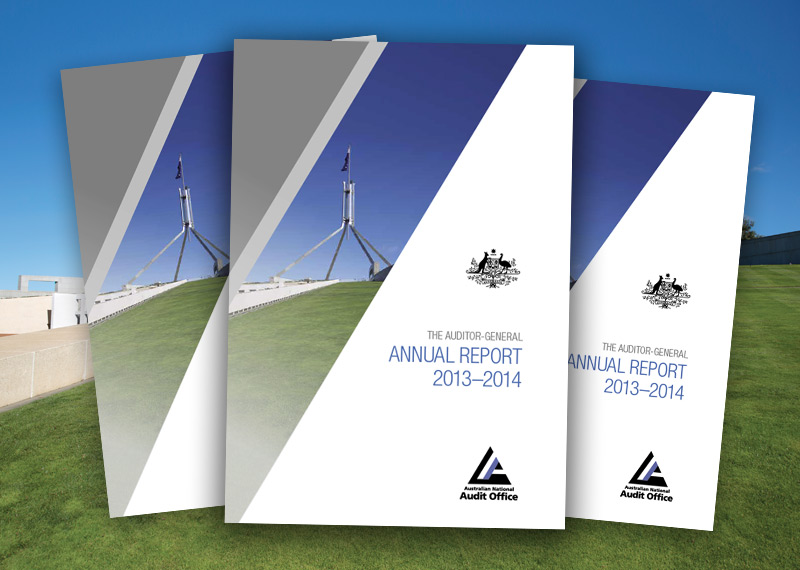
Published: Tuesday 30 September 2014
Published
This annual report documents the performance of the Australian National Audit Office (ANAO) in the financial year ending on 30 June 2014. It addresses the Requirements for Annual Reports for Departments, Executive Agencies and FMA Act Bodies approved by the Joint Committee of Public Accounts and Audit in May 2014; the performance measures set out in the outcome and programs framework in the 2013–14 Portfolio Budget Statements; section 28 of the Auditor-General Act 1997; and other annual reporting requirements provided for in legislation.
Performance audit (Auditor-General Report No. 36 of 2004–05)
Published: Wednesday 9 March 2005
Published
Given the importance of customer feedback to Centrelink's business, the ANAO considered it timely to conduct a series of performance audits relating to Centrelink's customer feedback systems, particularly in relation to its delivery of the services then provided on behalf of FaCS. The overarching objective of this series of ANAO performance audits of Centrelink's customer feedback systems was to assess whether Centrelink has effective processes and systems for gathering, measuring, reporting and responding effectively to customer feedback, including in relation to customer satisfaction with Centrelink services and processes.
Entity
Centrelink
Performance audit (Auditor-General Report No. 40 of 2000–01)
Published: Monday 28 May 2001
Published
The Department of Immigration and Multicultural Affairs (DIMA), administers the Commonwealth's settlement programs, which seek to assist migrants and refugees to participate in Australian society. Provision of English language training to newly arrived migrants and refugees has been a long standing and significant part of this settlement support, with some 1.5 million new arrivals assisted in this way since 1948. The objective of the audit was to examine DIMA's management of the Adult Migrant English Program Contracts, focusing on performance outcomes; strategic contract management and coordination; program expenditure, with emphasis on contract funding arrangements; and whether contract monitoring and performance information adequately support effective program management. The ANAO made six audit recommendations aimed at improving program performance management and reporting; strategic management and coordination; management of financial risks; and monitoring of contractor performance, which were all accepted by DIMA.
Entity
Department of Immigration and Multicultural Affairs
Performance audit (Auditor-General Report No. 37 of 2005–06)
Published: Wednesday 3 May 2006
Published
The objective of the audit was to assess whether selected Australian Government entities were effectively supporting their business requirements through planning for, and management of, the acquisition, disposal and use of their IPE assets. The audit reviewed each entity's policies and practices against a series of audit criteria across the following components of asset management: control environment; planning; acquisitions; operations; and disposals.
Entity
Across agencies
Performance audit (Auditor-General Report No. 43 of 1998–99)
Published: Wednesday 2 June 1999
Published
Networking the Nation was established with effect from 1 July 1997 to support activities and projects designed to meet a range of telecommunications needs in regional, rural and remote Australia. Funding is provided by the Regional Telecommunications Infrastructure Fund. The program provides total support of $250 million, of which $50 million was to be allocated annually for the five year period from 1997-98. Funding decisions for grants are the responsibility of an independent Board appointed by the Minister for Communications, Information Technology and the Arts. The objectives of the audit were to examine the administration of the program with a view to ascertaining the scope for improving administration and to provide assurance on the equity, efficiency and effectiveness of the management and administrative processes applied in the administration of grants under the program.
Entity
Department of Communications, Information Technology and the Arts
Performance audit (Auditor-General Report No. 51 of 2013–14)
Published: Wednesday 25 June 2014
Published
The objective of the audit was to assess the effectiveness of the administration of the Improving School Enrolment and Attendance through Welfare Reform Measure.
Entity
Department of the Prime Minister and Cabinet, Department of Human Services
Contact
Please direct enquiries relating to reports through our contact page.
Performance audit (Auditor-General Report No. 26 of 2008–09)
Published: Thursday 19 March 2009
Published
The audit objective was to assess the effectiveness of the Department of Health and Ageing's administration of health workforce initiatives in rural and remote Australia.
Entity
Deparment of Health and Ageing
Performance audit (Auditor-General Report No. 43 of 2010–11)
Published: Wednesday 25 May 2011
Published
The objective of the audit was to examine whether the UP and CPP services provided by the Australian Federal Police Protection Service are being managed effectively. In particular, the audit examined:
- whether the Protection function has been effectively integrated into the AFP, and sound arrangements are in place to strategically plan Protection services and manage risks;
- whether Protection staff have access to appropriate training and guidance; and
- the management arrangements for UP and CPP services.
Entity
Australian Federal Police
Performance audit (Auditor-General Report No. 6 of 2007–08)
Published: Tuesday 11 September 2007
Published
The objective of this audit was to examine Australia's preparedness to respond to a human influenza pandemic and an outbreak of avian influenza in domestic poultry. The audit assessed:
- the whole of government arrangements for an influenza pandemic;
- action taken by DAFF to implement the recommendations from Exercise Eleusis, which tested the response arrangements for avian influenza;
- DoHA's planning for, and execution of, Exercise Cumpston, which tested the preparedness and response to an influenza pandemic; and
- the establishment, management and deployment arrangements of the National Medical Stockpile.
Entity
Department of Health and Ageing; Department of Agriculture, Fisheries and Forestry
Performance audit (Auditor-General Report No. 15 of 2009–10)
Published: Thursday 26 November 2009
Published
The objective of this audit is to assess whether AusAID's management of the expanding aid program supports delivery of effective aid. The audit focuses on progress of AusAID's internal reforms to achieve this objective.
Entity
AusAID
Performance audit (Auditor-General Report No. 31 of 2012–13)
Published: Thursday 2 May 2013
Published
The objective of this audit was to examine the effectiveness of the Department of Families, Housing, Community Services and Indigenous Affairs’ administration of the National Partnership Agreement on Homelessness (NPAH), including monitoring and reporting of progress against the objective and outcomes of the agreement.
Entity
Department of Families, Housing, Community Services and Indigenous Affairs
Contact
Please direct enquiries relating to reports through our contact page.
Performance audit (Auditor-General Report No. 12 of 2012–13)
Published: Wednesday 5 December 2012
Published
The audit objective was to assess the effectiveness of the Department of Health and Ageing and the Australian National Preventive Health Agency in fulfilling the Commonwealth’s role in implementing the Council of Australian Government’s National Partnership Agreement on Preventive Health, to achieve the Agreement’s objectives, outcomes and outputs, including supporting all Australians to reduce their risk of chronic disease.
Entity
Australian National Preventive Health Agency; Department of Health and Ageing
Performance audit (Auditor-General Report No. 53 of 2006–07)
Published: Friday 29 June 2007
Published
The objective of the audit is to examine and report on the efficiency and effectiveness of AFP's administration and management of its overseas deployments. The audit specifically examines two deployments and focuses on strategic and operational planning and logistics. The audit examines a planned, long-term overseas deployment (as part of the Participating Police Force (PPF) within the Regional Assistance Mission to Solomon Islands (RAMSI)) and a crisis-driven deployment in response to a specific event (Disaster Victim Identification (DVI) assistance to Thailand following the Indian Ocean Tsunamis of 26 December 2004).
Entity
Australian Federal Police
Performance audit (Auditor-General Report No. 26 of 1999–2000)
Published: Friday 14 January 2000
Published
In a military context, individual readiness refers to the ability of an individual member to be deployed, within a specified notice period, on operations, potentially in a combat environment, to perform the specific skills in which he or she has been trained. Individual readiness is the foundation on which military preparedness is built. Maintenance of a specified level of individual readiness in peacetime (along with other factors such as equipment readiness and collective training) influences the speed with which personnel can deploy on operations. The objective of this audit is to ensure that members can be deployed on operations, potentially in a combat environment, to perform their specific skills within a notice period of 30 days.
Entity
Department of Defence
Performance audit (Auditor-General Report No. 9 of 2002–03)
Published: Monday 30 September 2002
Published
The objective of the audit was to assess whether Centrelink's Balanced Scorecard (BSC) was based on key elements of better practice principles and its use assisted Centrelink to understand and communicate its performance against its strategic goals. The audit examined:
- the use of the BSC in setting Centrelink's vision and goals;
- the role of the BSC in planning;
- alignment of the BSC from the top down through the organisation and the interdependencies of scoreboards used by various support units, the definition and use of measures, including target setting and links to goals within the BSC framework; and
- its use in monitoring, reporting and feedback.
Entity
Centrelink
Performance audit (Auditor-General Report No. 35 of 2011–12)
Published: Tuesday 29 May 2012
Published
The objective of the audit was to examine the effectiveness of the Department of Health and Ageing’s administration of New Directions. In this respect the ANAO considered whether:
- planning processes were developed to support the program’s objectives and rationale;
- implementation arrangements were clearly defined and aligned to the objectives of the program; and
- robust performance management arrangements had been established and were in use by the department.
Entity
Department of Health and Ageing
Performance audit (Auditor-General Report No. 34 of 2010–11)
Published: Thursday 24 March 2011
Published
The Objective of the audit was to assess the administrative effectiveness of GPET's management of the general practice training programs, AGPT and PGPPP, the latter being a responsibility that GPET assumed in 2010.
Entity
General Practice Education and Training Limited
Performance audit (Auditor-General Report No. 9 of 2006–07)
Published: Thursday 26 October 2006
Published
The objective of the audit was to provide an independent assurance on the effectiveness of Defence and DMO's management of the acquisition of the ASLAV capability to Army. The audit examined the initial capability requirements and approval process, the contract negotiation process, and the management of the Project and Contracts by DMO.
Entity
Department of Defence; Defence Materiel Organisation
Speeches and papers
Published: Thursday 21 August 2003
Published
Mr P.J. Barrett (AO) - Auditor-General for Australia, presented at the National Institute for Governance Seminar, Canberra
Speeches and papers
Published: Tuesday 11 February 2003
Published
Mr P.J. Barrett (AM) - Auditor-General for Australia, presented to the Australian Communications Authority's Business Planning Workshop
Performance audit (Auditor-General Report No. 34 of 2002–03)
Published: Monday 24 March 2003
Published
This audit followed up the ANAO's 1999 performance audit report on the Commonwealth's planning and response mechanisms to deal with exotic and new endemic pest and emergencies in the animal and plant sectors (Audit Report No 9 1999-2000 Managing Pest and Disease Emergencies). The previous audit made nine recommendations to improve planning and response strategies for emergencies; better coordination; diagnostic support; and appropriate monitoring and surveillance. The objective of the follow-up audit was to assess AFFA's implementation of the recommendations, and whether implementation of these recommendations, or appropriate alternative measures, has improved the Commonwealth's planning and response strategies for pest and disease emergencies. The ANAO also observed and assessed relevant parts of the September 2002 foot and mouth disease simulation, Exercise Minotaur.
Entity
Agriculture Fisheries and Forestry - Australia Department of Agriculture
Performance audit (Auditor-General Report No. 45 of 2013–14)
Published: Thursday 19 June 2014
Published
The audit objective was to assess the effectiveness of DHS’ implementation of initiatives to support the delivery of services to Indigenous Australians.
Entity
Department of Human Services
Contact
Please direct enquiries relating to reports through our contact page.
Performance audit (Auditor-General Report No. 51 of 2010–11)
Published: Tuesday 21 June 2011
Published
To examine the effectiveness of the Department of Health and Ageing’s administration of the Access to Allied Psychological Services Program.
Entity
Department of Health and Ageing
Performance audit (Auditor-General Report No. 37 of 2010–11)
Published: Tuesday 19 April 2011
Published
The objective of this audit was to examine the effectiveness of Defence’s management of explosive ordnance by the end users of this materiel in Air Force, Army and Navy (the Services). In particular, the focus was on the effectiveness of arrangements for the oversight and physical control of explosive ordnance once it is issued to Service units.
The audit reviewed Defence’s policies, procedures, processes and inventory management systems for explosive ordnance at the unit level in the ADF, from receipt and storage through to the use or return of explosive ordnance.The audit also examined the relationship between the management of explosive ordnance at the unit level and the Explosive Ordnance Services Contract and, where relevant, the regional Garrison Support Services (GSS) Contracts.
Entity
Department of Defence
Performance audit (Auditor-General Report No. 36 of 2008–09)
Published: Thursday 21 May 2009
Published
The objective of the audit was to assess the effectiveness of the Department of Immigration and Citizenship's management of the Settlement Grants Program. The ANAO assessed DIAC's performance in terms of how effectively it planned for funding rounds, assessed and allocated grants, monitored and evaluated the program, and managed relationships with its stakeholders. In doing so, the ANAO focused on SGP projects that received funding in the 2007–08.
Entity
Department of Immigration and Citizenship
Performance audit (Auditor-General Report No. 1 of 1998–99)
Published: Friday 3 July 1998
Published
The audit reviewed the corporate governance framework of the Australian Electoral Commisson (AEC). The objective of the audit was to review whether the AEC's corporate governance framework was sound.
Entity
Australian Electoral Commission
Speeches and papers
Published: Tuesday 5 October 2004
Published
Mr P.J. Barrett (AO) - Auditor-General for Australia, presented at the UN Results Based Management Seminar
Performance audit (Auditor-General Report No. 36 of 2010–11)
Published: Thursday 14 April 2011
Published
The audit objective was to assess the effectiveness of CRS Australia’s delivery of Disability Management Services. In assessing CRS Australia’s performance, the ANAO examined whether:
- services are delivered in accordance with CRS Australia’s operating procedures, which incorporate the Disability Services Standards and the requirements of the DEEWR MOU;
- CRS Australia has an effective client feedback (including complaints) system, which is used to identify and address business risks and areas for improving service delivery; and
- sound governance arrangements (including performance monitoring and reporting) are in place to monitor service delivery.
The audit did not specifically examine issues and information relating to the commercial nature of the business, such as profitability levels and competitive neutrality arrangements.
Entity
Department of Human Services
Speeches and papers
Published: Monday 19 May 2003
Published
Mr P.J. Barrett (AM) - Auditor-General for Australia, presented at the 2nd Annual New Directions in Australian Auditing Accounting Standards Conference
Performance audit (Auditor-General Report No. 11 of 2003–04)
Published: Tuesday 4 November 2003
Published
Annual Performance Reporting, No 11 2003-04 The audit reviewed the 2001-02 annual reports of the departments of : Communications, Technology and the Arts; Education, Science and Training; Employment and Workplace Relations; Immigration and Multicultural and Indigenous Affairs and the Australian Customs Service. The objectives of this audit were to determine whether agencies had: established a sound annual reporting performance information framework; developed arrangements to ensure performance information is accurate and coherent; and appropriately analysed performance information in their annual reports.
Entity
Across Agency
Performance audit (Auditor-General Report No. 47 of 2005–06)
Published: Wednesday 21 June 2006
Published
The objective of the audit was to assess whether FaCSIA administers grants effectively, according to better practice guidelines, and consistently across geographic areas and the range of programmes included in the scope of the audit. The scope of the audit included grants administered by FaCSIA between 1 July 2002 and 30 June 2005, relating to programmes falling within four of the five groups of programmes providing funding for families and communities namely: Community Support; Family Assistance; Childcare Support; and Youth and Student Support. In total, these groups involved total expenditure of some $533 million in 2004–05.
Entity
Department of Families Community Services and Indigenous Affairs
Performance audit (Auditor-General Report No. 29 of 1998–99)
Published: Tuesday 22 December 1998
Published
The audit addressed administration of migrant settlement services by DIMA, in particular:
- strategic management, including corporate planning, performance measurement and reporting arrangements; and
- operational management of some of the individual schemes operated by DIMA (the Adult English Migrant Program and Translating Interpreting Services were not covered as part of this audit).
Entity
Department of Immigration and Multicultural Affairs
Performance audit (Auditor-General Report No. 37 of 2012–13)
Published: Wednesday 22 May 2013
Published
The audit objective was to assess the effectiveness of the Department of Industry, Innovation, Science, Research and Tertiary Education’s (DIISRTE’s) administration of the Education Investment Fund grants program.
(DIISRTE was the department that had responsibility for the administration of the EIF grants program during the course of the audit. The recommendations and suggestions for improvement are, however, directed to the Department of Industry, Innovation, Climate Change, Science, Research and Tertiary Education because this department now has responsibility for the administration of the program).
Entity
Department of Industry, Innovation, Climate Change, Science, Research and Tertiary Education; Department of Education, Employment and Workplace Relations
Contact
Please direct enquiries relating to reports through our contact page.
Speeches and papers
Published: Friday 1 August 1997
Published
Mr P.J. Barrett (AM) - Auditor-General for Australia, addressed the Senior Executive Leadership 20. Canberra.
Speeches and papers
Published: Friday 24 November 1995
Published
Mr P.J. Barrett (AM) - Auditor-General for Australia, presented to the ASCPA Annual Public Sector Accounting Convention, Canberra
Performance audit (Auditor-General Report No. 55 of 2010–11)
Published: Thursday 23 June 2011
Published
The objective of this audit was to assess the effectiveness of the Department of Immigration and Citizenship's (DIAC) administration of the character requirements of the Migration Act.
Entity
Department of Immigration and Citizenship
Performance audit (Auditor-General Report No. 16 of 1997–98)
Published: Sunday 26 October 1997
Published
The objectives of the audit were to examine the benefits of diversity management in the APS and review the progress made towards equity in employment in the APS, including the EEO Program. It included:
- an assessment of the progress towards achieving equity across the APS and by individual agencies;
- an assessment of the quality of agency EEO programs;
- an assessment of the role of the PSMPC in approving agency EEO programs and monitoring trends across the service;
- a consideration of legal obligations and agencies compliance with these; and
- the possible risks to, and opportunities for, equity under the WRA.
The audit concentrated on evidence of overall progress, the relative performance of individual agencies, and the examination of observed and underlying trends.
Entity
Public Service and Merit Protection Commission and Other Agencies
Performance audit (Auditor-General Report No. 49 of 2010–11)
Published: Tuesday 21 June 2011
Published
The objective of the audit was to assess the effectiveness of the ATO’s administration of the Fuel Tax Credits Scheme. Particular emphasis was given to the Fuel Scheme’s governance and reporting arrangements, risk management strategies and compliance management program.
Entity
Australian Taxation Office
Performance audit (Auditor-General Report No. 56 of 2010–11)
Published: Thursday 23 June 2011
Published
The objective of this audit was to assess the effectiveness of DIAC’s administration of the character requirements of the Citizenship Act.
Entity
Department of Immigration and Citizenship
Speeches and papers
Published: Thursday 2 October 1997
Published
Mr P.J. Barrett (AM) - Auditor-General for Australia, presented at a Seminar on 'Financial Management and Electronic Government' Kuala Lumpur
Performance audit (Auditor-General Report No. 51 of 2012–13)
Published: Monday 24 June 2013
Published
The objective of the audit was to assess the effectiveness of the Australian Taxation Office’s management of its property portfolio.
Entity
Australian Taxation Office
Contact
Please direct enquiries relating to reports through our contact page.
Performance audit (Auditor-General Report No. 46 of 2008–09)
Published: Thursday 25 June 2009
Published
The objectives of this audit were to:
- assess the current status of BCM and EM arrangements in Centrelink and identify opportunities for improvement; and
- review Centrelink's response to the recommendations.
Entity
Centrelink
Performance audit (Auditor-General Report No. 38 of 2000–01)
Published: Thursday 24 May 2001
Published
The audit's main objectives were to:
- examine the guidance on the use of confidentiality clauses in contracts and agencies' use of such clauses;
- develop criteria to assist agencies in determining what information in a contract is confidential; and
- assess the effectiveness of the existing accountability and disclosure arrangements for Commonwealth contracts.
Entity
Across Agency
Performance audit (Auditor-General Report No. 36 of 2011–12)
Published: Wednesday 30 May 2012
Published
The objective of the audit was to assess the implementation and effectiveness of the enhanced grants administration requirements relating to the development and approval of new grant guidelines and revision of existing grant guidelines.
Entity
Department of Finance and Deregulation
Performance audit (Auditor-General Report No. 48 of 2000–01)
Published: Thursday 7 June 2001
Published
Aviation traffic data plays an important role in informing decisions about the safety of the airways system, including such matters as the need for navigation facilities, communication links, air traffic control towers and rescue/fire fighting services. The objective of the limited scope audit was to examine the accuracy of the data on air traffic movements collected by Airservices Australia.
Entity
Airservices Australia
Speeches and papers
Published: Wednesday 26 July 2000
Published
Mr P.J. Barrett (AM) - Auditor-General for Australia, presented at the Australian Corporate Lawyers Association and the Australian Institute of Administrative Law Conference on Outsourcing
Performance audit (Auditor-General Report No. 14 of 2007–08)
Published: Thursday 15 November 2007
Published
The audit objective was to assess whether the Regional Partnerships Programme has been effectively managed by DOTARS, including the processes by which:
- applications are sought, received and assessed;
- Funding Agreements with grant recipients are developed and managed; and
- the achievement of project and programme outcomes is monitored and assessed.
Entity
Department of Transport and Regional Services
Performance audit (Auditor-General Report No. 52 of 2005–06)
Published: Thursday 29 June 2006
Published
The audit objectives were to examine the extent to which selected TSB2 and TSI Response programs: are achieving or had achieved their objectives; and had been administered effectively by DCITA according to better practice principles. To evaluate this aspect, the audit assessed DCITA's compliance with the better practice principles outlined in the Administration of Grants Better Practice Guide (May 2002) produced by the Australian National Audit Office (ANAO). There are 19 separate principles covered under the broad areas of: Planning for effective grant programs; Selecting projects; Managing and monitoring funding deeds; and Evaluating and reporting grant program performance.
Entity
Department of Communications, Information Technology and the Arts
Performance audit (Auditor-General Report No. 45 of 2004–05)
Published: Friday 27 May 2005
Published
The audit focuses on DMO's equipment acquisition and support, at the system program management level. The objective of the audit was to assess the adequacy of Defence's capital equipment project definition, approval, acquisition and logistics support management. The SPOs subject to audit are:Aerospace Systems Division's Tactical Fighter Systems Program Office (TFSPO), which is responsible for acquisition and logistics support management of the Air Force's F/A-18 and Hawk 127 fleets and associated equipment. TFSPO is located at Williamtown, NSW; Land Systems Division's Track Manoeuvre Systems Program Office (TMSPO), which is responsible for the acquisition and logistics support management of Army's Leopard Tanks and M113 Armed Personnel Carrier fleets. TMSPO is located in Melbourne;Electronic and Weapon Systems Division's Over-the-Horizon Radar Systems Program Office (OTHRSPO), which is responsible for acquisition and logistics support management of the Jindalee Operational Radar Network (JORN) and Jindalee OTHR systems. OTHRSPO is located within the Defence Science and Technology Organisation (DSTO) precinct at Edinburgh, South Australia; and Maritime Systems Division's Fast Frigate Guided System Program Office (FFGSPO), which is responsible for the support and upgrade of the Navy's FFG fleet. FFGSPO is located at Garden Island, Sydney.In view of the significant role that DMO's SPOs play in managing major capital equipment acquisition projects, the audit includes a case study of the $1.448 billion Fast Frigate Guided (FFG) Upgrade Project. A high level of audit assurance is not able to be provided on the FFG Upgrade Project given deficiencies in the FFGSPO information management systems and deficiencies in the level of design and development disclosure provided to SPO personnel by the FFG Upgrade Prime Contractor. The ANAO was unable to access appropriate audit evidence on the financial expenditure associated with the FFG Upgrade Project, and the Project's approved Equipment Acquisition Strategy.
Entity
Department of Defence
Performance audit (Auditor-General Report No. 53 of 2012–13)
Published: Tuesday 25 June 2013
Published
The objective of the audit was to assess the effectiveness of agencies’ arrangements for monitoring and implementing ANAO performance audit recommendations.
Entity
Department of Education, Employment and Workplace Relations (DEEWR); Department of Families, Housing, Community Services and Indigenous Affairs (FaHCSIA); Department of Finance and Deregulation (DoFD); Department of Infrastructure and Transport (DIT)
Contact
Please direct enquiries relating to reports through our contact page.
Performance audit (Auditor-General Report No. 37 of 2000–01)
Published: Wednesday 23 May 2001
Published
The audit reviewed the Australian Taxation Office's use of audit of individual taxpayers as part of its approach to encouraging taxpayer compliance. The objective of the audit was to examine the use of audit as an element of the compliance management function within the Individuals Non-Business line of the ATO.
Entity
Australian Taxation Office
Performance audit (Auditor-General Report No. 33 of 2000–01)
Published: Monday 7 May 2001
Published
The objective of the ANAO audit was to identify possible areas for improvement in the Australian Defence Force's management of its Reserve forces. The audit focused on major aspects of the Reserves including roles and tasks, force structure, capability, training, individual readiness, equipment, facilities, recruitment, retention, conditions of service and administration. The audit covered the Australian Naval Reserve, the Australian Army Reserve and the Royal Australian Air Force Reserve. However, due to its size and cost, the Army Reserve was a major focus of the audit activity.
Entity
Department of Defence
Performance audit (Auditor-General Report No. 6 of 2001–02)
Published: Thursday 9 August 2001
Published
This follow-up audit reviewed the operations of the Australian Fisheries Management Authority (AFMA) which is responsible for ensuring the sustainable use and efficient management of Commonwealth fisheries resources. The objective of this follow-up audit was to assess the extent to which AFMA addressed the issues that gave rise to the recommendations of ANAO Report No.32 1995-96, and the related recommendations of the House of Representatives Standing Committee Report 1997, that were supported by the Government.
The follow-up audit focussed on the key issues identified in the recommendations and grouped these in the themes of:
- strategic and performance management;
- management of the advisory process;
- implementation of fisheries management methods;
- managing AFMA's environmental responsibilities as they relate to Commonwealth fisheries
management; - compliance, monitoring and enforcement responsibilities; and
- management of information and research.
Entity
Australian Fisheries and Management Authority
Performance audit (Auditor-General Report No. 40 of 2003–04)
Published: Tuesday 13 April 2004
Published
The objective of the audit was to assess the effectiveness of Health's management of the MPSP and the RHSP. To achieve the audit's objective, the ANAO examined whether Health; had an effective approach to planning the programs; had an effective approach to delivering the programs; effectively used performance information to manage the programs; and effectively managed its relationship with all stakeholders of the programs.
Entity
Department of Health and Ageing
Performance audit (Auditor-General Report No. 48 of 2012–13)
Published: Wednesday 19 June 2013
Published
The objective of the audit was to assess the effectiveness of the Department of Families, Housing, Community Services and Indigenous Affairs' (FaHCSIA) administration and management of the Targeted Community Care (Mental Health) Program.
Entity
Department of Families, Housing, Community Services and Indigenous Affairs
Contact
Please direct enquiries relating to reports through our contact page.
Performance audit (Auditor-General Report No. 48 of 2004–05)
Published: Thursday 2 June 2005
Published
The objective of the audit was to assess the administrative effectiveness of DEST's support for the Australian education and training export industry, including its regulatory and associated roles, and how it monitors and reports on its performance in undertaking these roles.
Entity
Department of Education Science and Training
Performance audit (Auditor-General Report No. 40 of 2010–11)
Published: Tuesday 17 May 2011
Published
The objective of the audit was to assess whether Defence is effectively managing the EO Services Contract.
The audit focused mainly on Defence's contract management framework, including the arrangements to monitor the contractor’s performance in delivering services under the contract. The audit also examined the processes used by Defence to develop the current version of the contract and the extent to which the revised contract, as negotiated in 2006, provides an assurance of better value for money when compared to the original contract signed in 2001.
Entity
Department of Defence
Performance audit (Auditor-General Report No. 48 of 2001–02)
Published: Friday 10 May 2002
Published
The audit examined the administrative processes that the department has in place to support the administration of RAP. The objective of the audit was to determine whether funding was being allocated in accordance with the RAP policy guidelines and whether the department was managing RAP contracts to ensure that desired outcomes are achieved
Entity
Department of Transport and Regional Services
Performance audit (Auditor-General Report No. 23 of 2004–05)
Published: Friday 21 January 2005
Published
The Audit Activity Report: July to December 2004 summarises the activity and outputs of the Australian National Audit Office for the first half of the 2004-05 reporting year. The Report outlines the key findings of performance and financial control audits, and summarises audits tabled and better practice guides during July to December 2004.
Entity
Audit Activity Report
Performance audit (Auditor-General Report No. 19 of 2003–04)
Published: Wednesday 17 December 2003
Published
The objective of the audit was to assess whether the property management function, including the management of leases, was being performed efficiently and was providing an effective level of support for the delivery of the organisation's services (outputs). The audit evaluated property management policies and practices across the following dimensions:
- planning and control;
- business processes and practices; and
- information and performance management.
Within each of these areas, a series of desirable proceses and controls (described as the evaluation criteria) were developed to assist in the assessment of each organisation's performance.
Entity
Australian Communications Authority; Australian Film, Television and Radio School; Civil Aviation Safety Authority; Department of Employment and Workplace Relations; National Library of Australia; Department of Finance and Administration
Performance audit (Auditor-General Report No. 9 of 2004–05)
Published: Wednesday 25 August 2004
Published
The audit examined the range of support made available to ADF personnel making the transition from military to civilian life, the extent to which the assistance is utilised, the cost to Defence of such assistance and the relevant responsibilities of those who deliver assistance.
Entity
Department of Defence; Department of Veterans' Affairs
Performance audit (Auditor-General Report No. 50 of 2011–12)
Published: Monday 25 June 2012
Published
The objective of the audit was to assess the effectiveness of Customs and Border Protection's risk-based management of end-to-end processing of incoming international air passengers in achieving border security and passenger facilitation outcomes.
Entity
Australian Customs and Border Protection Service
Performance audit (Auditor-General Report No. 36 of 2007–08)
Published: Thursday 29 May 2008
Published
The objective of the audit was to assess the Tax Office's strategies to address tax haven compliance risks. Particular emphasis was given to the Tax Office's:
- management arrangements relating to the administration of tax haven compliance risks;
- risk management framework for the identification and evaluation of compliance risks, specifically the activities of the Offshore Compliance Program (OCP); and
- risk mitigation strategies.
The audit did not include an examination of cases related to the promoters of tax haven related schemes nor the criminal use of tax havens.
Entity
Australian Taxation Office
Performance audit (Auditor-General Report No. 53 of 2010–11)
Published: Wednesday 22 June 2011
Published
The objective of the audit was to assess the effectiveness of the Department of Agriculture, Fisheries and Forestry’s administration of EC measures and the implementation of the pilot of new drought reform measures.
Entity
Department of Agriculture, Fisheries and Forestry
Performance audit (Auditor-General Report No. 40 of 2001–02)
Published: Monday 8 April 2002
Published
The audit was undertaken following advice from the Joint Committee of Public Accounts and Audit (JCPAA) to the Auditor-General that assurance that ABC programming adequately reflects the ABC's Charter was an audit priority of Parliament. The objective of the audit is to provide Parliament with this assurance. The focus of the audit was on the governance arrangements of the ABC Board and management that enable the ABC to demonstrate the extent to which it is achieving its' Charter obligations, and other related statutory requirements, efficiently and effectively. The scope of the audit was as follows:
- Review the ABC's corporate governance framework against better practice models. The ANAO had regard to the ABC's unique role as a national public broadcaster established as a budget funded Commonwealth statutory authority subject to the Commonwealth Authorities and Companies Act 1997.
- Examine the ABC Board's approach to the interpretation of the Charter requirements of the ABC and the setting of strategic directions, and management's administrative arrangements for implementing the strategic directions established by the Board.
- Examine the ABC's performance information framework, the development, documentation and use of performance measures in relation to targets and/or objectives, the monitoring and reporting of performance and its' inter-relationship with the corporate planning and budgetary processes, particularly in relation to the strategic directions set by the Board.
The audit did not examine the overall management of the ABC. In keeping with the audit scope, the audit examined ways in which the ABC aligns its' strategic directions with its' Charter requirements for programs broadcast on radio, television and on-line and assures itself, and Parliament, about the achievement of its' Charter obligations. Further, the audit did not examine the operations of ABC Enterprises or symphony orchestras that operate as ABC-owned subsidiary companies.
Entity
Australian Broadcasting Corporation
Performance audit (Auditor-General Report No. 22 of 2005–06)
Published: Thursday 22 December 2005
Published
The objective of the audit was to assess and report on the progress being made by agencies subject to the Financial Management & Accountability Act 1997 and entities subject to the Commonwealth Authorities & Companies Act 1997: in realising value for money from the procurement process, with a specific focus on buildings, services and products using whole of life cycle assessments; and in the consideration and management of environmental impacts in specifications and contracts. The emphasis of the audit was on green office procurement and sustainable business practices and the value for money within this context. As such, the audit report provides a status report on the implementation of ESD within the office environment of the Australian Government. The audit used a survey approach in conjunction with selected audit investigations to obtain information across 71 agencies and entities selected on the basis of materiality in procurement and coverage across large, medium and small organisations. The agencies selected represented approximately 35 per cent of all government bodies and over 95 per cent of all procurement spending noted on the Department of Finance and Administration (Finance) database on contracts.
Entity
across agency
Performance audit (Auditor-General Report No. 42 of 2011–12)
Published: Monday 18 June 2012
Published
The objective of the audit was to assess the effectiveness of the management of the MSS for the delivery of Centrelink services. The management of the MSS was assessed against the following criteria:
- there are effective planning arrangements to identify and address the evolving needs of DCALB customers;
- service delivery arrangements meet the current needs of DCALB customers; and
- there are effective performance monitoring and reporting arrangements which are used to improve service delivery.
Around 20 per cent of the people receiving Centrelink services are identified as being from a diverse cultural and linguistic background (DCALB). DHS’ Multicultural Servicing Strategy (MSS) sets out the approach for delivering Centrelink services to DCALB customers. The MSS has four main components — Language Services, the Multicultural Services Officer program, Stakeholder Engagement Strategies and Employee Support Tools and Strategies.
Entity
Department of Human Services
Performance audit (Auditor-General Report No. 39 of 1999–2000)
Published: Thursday 13 April 2000
Published
The audit reviewed the coordination of export development and promotion activities across Commonwealth agencies. The objective of the audit was to assess the extent to which export development and promotion activities are managed in a coordinated manner to maximise their effectiveness and transparency, and to minimise duplication. Particular attention was given to:
- Austrade's role in coordinating and advising on the development of export programs across Commonwealth agencies; and
- the design, delivery and evaluation of programs consistent with the Mortimer review design criteria agreed by Government.
Entity
Across Agency
Performance audit (Auditor-General Report No. 38 of 2010–11)
Published: Wednesday 20 April 2011
Published
The objective of the audit was to assess the effectiveness of annual Certificate of Compliance processes for FMA Act agencies. To form a conclusion against the audit objective, the audit considered: Finance’s administration of the Certificate process at a whole-of-government level; selected agencies’ annual Certificate processes; and, the design and impact of the Certificate.
Entity
Across Agencies
Performance audit (Auditor-General Report No. 18 of 2012–13)
Published: Wednesday 30 January 2013
Published
The objective of the audit was to assess the effectiveness of FaHCSIA’s administration of Communities for Children under the Family Support Program.
Entity
Department of Families, Housing, Community Services and Indigenous Affairs
Performance audit (Auditor-General Report No. 36 of 2009–10)
Published: Wednesday 19 May 2010
Published
The scope of the audit covered Centrelink's emergency management framework and community recovery assistance operations in general, with a specific focus on the 2009 North Queensland floods and Victorian bushfires. FaHCSIA's role during those disaster events was also considered as it played a key role in establishing the policy parameters of the services Centrelink delivered and addressing issues arising from policy implementation.
Entity
Centrelink; Department of Families, Housing, Community Services and Indigenous Affairs
Performance audit (Auditor-General Report No. 43 of 2009–10)
Published: Wednesday 16 June 2010
Published
The objective of this audit was to examine whether Army effectively administers the Army Individual Readiness Notice to support the achievement of its purpose.
Entity
Department of Defence
Performance audit (Auditor-General Report No. 47 of 2008–09)
Published: Thursday 25 June 2009
Published
The objective of the audit was to examine if AFMA is effectively undertaking its regulatory compliance responsibilities in respect of domestic fishing in Commonwealth fisheries. Particular emphasis was
given to:
- the licensing of fishers and related transaction processing;
- the management of fishing quota by concession holders and AFMA; AFMA's domestic compliance monitoring and
- enforcement activities; and the governance arrangement for domestic fishing compliance.
Entity
Australian Fisheries Management Authority
Performance audit (Auditor-General Report No. 33 of 2004–05)
Published: Wednesday 9 March 2005
Published
Given the importance of customer feedback to Centrelink's business, the ANAO considered it timely to conduct a series of performance audits relating to Centrelink's customer feedback systems, particularly in relation to its delivery of the services then provided on behalf of FaCS. The overarching objective of this series of ANAO performance audits of Centrelink's customer feedback systems was to assess whether Centrelink has effective processes and systems for gathering, measuring, reporting and responding effectively to customer feedback, including in relation to customer satisfaction with Centrelink services and processes.
Entity
Centrelink
Performance audit (Auditor-General Report No. 11 of 1997–98)
Published: Thursday 30 October 1997
Published
The objectives of the audit were to:
- review the implementation arrangements in relation to the transfer of the delivery of AUSTUDY to Centrelink and its subsequent inclusion as part of the Youth Allowance; and
- to form an opinion on the efficiency and effectiveness of the front-end processing aspects of AUSTUDY applications.
Entity
Department of Employment, Education, Training and Youth Affairs
Performance audit (Auditor-General Report No. 33 of 2010–11)
Published: Wednesday 23 March 2011
Published
The objective of the audit was to assess the effectiveness of Australian Government agencies' management and implementation of measures to protect and secure their electronic information, in accordance with Australian Government protective security requirements.
Entity
Across agencies
Performance audit (Auditor-General Report No. 58 of 2002–03)
Published: Thursday 26 June 2003
Published
This was a follow-up of Audit Report No. 29 2000-01, Review of Veterans' Appeals Against Disability Compensation Entitlement Decisions. That audit examined the Department of Veterans' Affairs (DVA's) and the Veterans' Review Board's (VRB's) management of the review of decisions for disability compensation. The objective of this audit was to assess the extent to which DVA and the VRB had implemented the four recommendations of Report No.29 2000-01, taking into account any changed circumstances, or new administrative issues, affecting implementation of these recommendations.
Entity
Department of Veterans' Affairs; Veterans' Review Board
Performance audit (Auditor-General Report No. 24 of 2004–05)
Published: Thursday 27 January 2005
Published
Medicare is Australia's universal health insurance scheme. Underpinning Medicare is one of Australia's largest and more complex computer databases the Medicare enrolment database. At the end of 2004 the Medicare enrolment database contained information on over 24 million individuals. This audit examines the quality of data stored on that database and how the Health Insurance Commission (HIC) manages the data.
Entity
Health Insurance Commission; Medicare Australia; Human Services
Performance audit (Auditor-General Report No. 4 of 2000–01)
Published: Monday 14 August 2000
Published
This report summarises audit and other related activities of the Australian National Audit Office in the period January to June 2000.
Entity
Audit Activity Report
Performance audit (Auditor-General Report No. 13 of 2008–09)
Published: Tuesday 16 December 2008
Published
The audit objective was to assess how well agencies manage their websites. Particular attention was given to the audited agencies' website purposes, risk management and planning, policies, content management procedures, and performance monitoring and reporting. These elements provide the framework for the design, implementation and operation of websites.
Entity
Australian Bureau of Statistics; Department of Agriculture, Fisheries and Forestry; Department of Foriegn Affairs and Trade
Performance audit (Auditor-General Report No. 28 of 2001–02)
Published: Friday 21 December 2001
Published
This benchmarking study surveyed the roles and functions of CFOs from 15 Commonwealth organisations in 2000-2001. It also involved the CFOs providing self-assessments in response to questions about their role, responsibilities, priorities and challenges. In particular the study sought to identify: ·
- the skills, qualifications and experience of Commonwealth CFOs; ·
- the CFOs perceptions of their roles, responsibilities and priorities, and how these may have changed in relation to previous studies and available Andersen Global Best Practices (from the Andersen Global Best Practices® knowledge base); and ·
- how Commonwealth CFOs viewed and used information technology to achieve their financial management objectives.
Entity
Across Agency
Performance audit (Auditor-General Report No. 47 of 2010–11)
Published: Wednesday 8 June 2011
Published
The objective of the audit was to assess the effectiveness of CSIRO’s development and administration of selected National Research Flagships. In assessing CSIRO’s performance, the ANAO examined whether:
- mechanisms were in place to develop and implement the Flagships, within the context of the broader CSIRO change program;
- governance arrangements for Flagships incorporated sound oversight, planning and reporting arrangements; and
- periodic review activities were used to assess and improve the operation of the Flagships.
Entity
Commonwealth Scientific and Industrial Research Organisation
Performance audit (Auditor-General Report No. 31 of 2008–09)
Published: Friday 8 May 2009
Published
The objective of this audit was to assess Army's progress in addressing the issues previously identified in Defence reviews and ANAO audits as affecting the Army Reserve's capability; and Identify the extent that the Army Reserve is capable of contributing to contemporary Australian Defence Force capability requirements through fulfilling its assigned roles and tasks.
Entity
Department of Defence