Browse our range of reports and publications including performance and financial statement audit reports, assurance review reports, information reports and annual reports.
Performance audit (Auditor-General Report No. 8 of 2008–09)
Published: Tuesday 11 November 2008
Published
The objective of the follow up audit was to assess the extent to which Customs has implemented seven of the previous audit's recommendations; the two recommendations relating to strategic and tactical taskings and dissemination of intelligence will be considered in the context of the planned performance audit of Illegal Foreign Fishing in Australia's Northern Waters.
Entity
Australian Customs Service
Performance audit (Auditor-General Report No. 42 of 2002–03)
Published: Wednesday 7 May 2003
Published
The audit examined the Aged Care Standards and Accreditation Agency Ltd's management of the residential aged care accreditation process. The audit focused on the Agency's implementation of a process to meet its legislative responsibilities, its business operations, people management, budgeting practices, use of information, and its quality assurance processes.
Entity
Aged Care Standards and Accreditation Agency Ltd
Performance audit (Auditor-General Report No. 9 of 2012–13)
Published: Thursday 1 November 2012
Published
The objective of the audit was to assess the management and effectiveness of DCO’s delivery and coordination of support services to ADF families, in particular support services provided when an ADF member is seriously injured or ill, or dies in service.
Entity
Department of Defence, Department of Veterans' Affairs
Performance audit (Auditor-General Report No. 33 of 2012–13)
Published: Wednesday 8 May 2013
Published
The objective of the audit was to assess the effectiveness of the Tax Practitioners Board's implementation and administration of the regulatory arrangements for tax practitioners under the Tax Agent Services Act 2009.
Entity
Australian Taxation Office; Tax Practitioners Board
Contact
Please direct enquiries relating to reports through our contact page.
Performance audit (Auditor-General Report No. 26 of 2011–12)
Published: Thursday 9 February 2012
Published
The objective of the audit was to assess the extent to which FaHCSIA, DEEWR and DoHA seek to reduce service delivery risks posed by capacity constraints in Indigenous organisations.
Entity
Department of Families, Housing, Community Services and Indigenous Affairs, Department of Education, Employment and Workplace Relations and Department of Health and Ageing
Performance audit (Auditor-General Report No. 14 of 2002–03)
Published: Tuesday 29 October 2002
Published
Pursuant to a request from the Senate Finance and Public Administration References Committee and the Auditor - General's response to the Committee, the objective of this performance audit was to examine and report on the selection of the preferred tenderer in the Health Group IT outsourcing process. In particular, the audit examined the circumstances surrounding OASITO's administration of the: - disclosure to a tenderer of information provided by other tenderers; - subsequent acceptance of a late re-pricing offer from a tenderer: and - advice to the decision- maker leading to the selection of the preferred tenderer. The audit focused particularly on assessing the administrative processes undertaken in the selection of the preferred tenderer for the Health Group. Audit emphasis was placed on the management of the probity aspects of the tender process, particularly in regard to events that occurred between June 1999, when the tenderers provided their penultimate pricing, and the selection of the preferred tenderer in September 1999.
Entity
Department of Finance and Administration
Performance audit (Auditor-General Report No. 57 of 2001–02)
Published: Friday 14 June 2002
Published
The objective of the audit was to assess DIMIA's management of offshore measures to prevent and detect unlawful entry, and to identify opportunities for improvement. The audit did not cover the processing arrangements, referred to as the Pacific Strategy, introduced as part of the legislative changes in September 2001. Nor did it cover the range of measures use for prevention and detection at the border and on shore. As DIMIA is the lead agency responsible for the development of immigration policy, the audit focussed in the administrative effectiveness of the governance framework used by the department to implement and to support the achievement of Government strategies to prevent unlawful entry to Australian Territory.
Entity
Department of Immigration and Multicultural and Indigenous Affairs
Performance audit (Auditor-General Report No. 35 of 2003–04)
Published: Wednesday 24 March 2004
Published
This report covers a number of the discretionary compensation and debt relief mechanisms that are available to Commonwealth agencies, where individuals or entities have been disadvantaged by legislation, or actions by agencies or staff, or some other negative circumstances. It deals mainly with two legislative mechanisms, namely, act of grace payments and waivers of debt, and one administrative mechanism, the Compensation for Detriment caused by Defective Administration (CDDA) scheme. This report also briefly covers two other mechanisms, namely ex gratia payments and payments in special circumstances relating to Australian Public Service (APS) employment. The main objective of the audit was to assess whether the management of claims for compensation and debt relief in special circumstances was in accordance with relevant legislative requirements and Commonwealth guidelines, and whether the current administrative policies and procedures were adequate.
Entity
Across Agency
Performance audit (Auditor-General Report No. 9 of 2010–11)
Published: Wednesday 29 September 2010
Published
On 3 February 2010, Senator Christine Milne wrote to the Auditor General raising concerns about DEWHA's administration of the Green Loans program and requesting a performance audit of the program. Issues raised included: uncapped assessor numbers; problems with the delivery of the program; the quality of assessor training and assessments provided to households; the lack of an audit facility within the program; and equitable access to work under the program.
In light of Senator Milne's request and other concerns in relation to the administration of the program, the Auditor-General agreed on 25 February 2010 to conduct a performance audit of the program. The objective of the audit was to examine key aspects of the establishment and administration of the Green Loans program by DEWHA and the program's transition to DCCEE. Particular emphasis was given to the program's three main elements:
- training, registration and contracting of assessors;
- scheduling, conduct, and reporting of home sustainability assessments, and the associated payments to assessors; and
- provision of green loans to householders, and the associated payments to participating financial institutions.
The audit also examined the extent to which steps had been taken by DEWHA and DCCEE to assess whether the Green Loans program was achieving its objectives.
Entity
Department of the Environment, Water, Heritage and the Arts; Department of Climate Change and Energy Efficiency
Performance audit (Auditor-General Report No. 18 of 2012–13)
Published: Wednesday 30 January 2013
Published
The objective of the audit was to assess the effectiveness of FaHCSIA’s administration of Communities for Children under the Family Support Program.
Entity
Department of Families, Housing, Community Services and Indigenous Affairs
Performance audit (Auditor-General Report No. 54 of 2012–13)
Published: Wednesday 26 June 2013
Published
The audit objectives were to assess the effectiveness of:
- selected agencies’ administration in developing advertising campaigns and implementing key processes against the requirements of the Australian Government’s campaign advertising framework, and other key legal and administrative requirements; and
- the ongoing administration of the campaign advertising framework.
Entity
Across Entities
Contact
Please direct enquiries relating to reports through our contact page.
Performance audit (Auditor-General Report No. 53 of 2010–11)
Published: Wednesday 22 June 2011
Published
The objective of the audit was to assess the effectiveness of the Department of Agriculture, Fisheries and Forestry’s administration of EC measures and the implementation of the pilot of new drought reform measures.
Entity
Department of Agriculture, Fisheries and Forestry
Performance audit (Auditor-General Report No. 36 of 2007–08)
Published: Thursday 29 May 2008
Published
The objective of the audit was to assess the Tax Office's strategies to address tax haven compliance risks. Particular emphasis was given to the Tax Office's:
- management arrangements relating to the administration of tax haven compliance risks;
- risk management framework for the identification and evaluation of compliance risks, specifically the activities of the Offshore Compliance Program (OCP); and
- risk mitigation strategies.
The audit did not include an examination of cases related to the promoters of tax haven related schemes nor the criminal use of tax havens.
Entity
Australian Taxation Office
Performance audit (Auditor-General Report No. 33 of 2006–07)
Published: Wednesday 18 April 2007
Published
The objective of this follow-up audit was to review Centrelink's progress in implementing the findings and recommendation relating to Centrelink's Customer Charter from Audit Report No.32
2004–05, Centrelink's Customer Charter and Community Consultation Program. This audit covers Centrelink's Customer Charter only and does not follow-up on the findings and recommendation on the Community Consultation Program aspect of the 2004–05 audit report.
Entity
Centrelink
Performance audit (Auditor-General Report No. 31 of 2010–11)
Published: Thursday 24 February 2011
Published
The objective of the audit was to examine the Tax Office's administration of the Lost Members Register. In particular, the audit examined the Tax Office's governance arrangements for the LMR; its strategies for managing data quality; and its provision of access to LMR data. The audit also considered how the Tax Office's administration of the LMR has responded to recommendations made in the ANAO's earlier review (Audit Report No.17, 2005–06 Administration of the Superannuation Lost Members Register), relevant changes in funding and legislation supporting the LMR, as well as the Change Program.
Entity
Australian Taxation Office
Performance audit (Auditor-General Report No. 11 of 2010–11)
Published: Thursday 30 September 2010
Published
The objective of the audit was to assess how well agencies had implemented the CPGs and relevant FMA legislation when undertaking Direct Source procurement.
The audit examined whether selected agencies had developed a sound procurement framework; appropriately classified procurement methods when meeting external reporting requirements; implemented the CPGs and relevant legislation when Direct Sourcing; and established effective procurement monitoring and review arrangements.
The ANAO selected four FMA Act agencies to provide a cross-section of the 104 agencies that reported procurement activity in AusTender in
2008–09. The agencies selected for audit were:
- the Department of Families, Housing, Community Services and Indigenous Affairs (FaHCSIA);
- the Department of Innovation, Industry, Science and Research (Innovation);
- the Department of Veterans' Affairs (DVA); and
- the Australian Crime Commission (ACC).
The ANAO examined a stratified random sample of 645 procurements valued at $10 000 and over, across the four agencies. More detailed testing was undertaken for the 285 Direct Source procurements in the sample.
Entity
Across Agencies
Performance audit (Auditor-General Report No. 50 of 2002–03)
Published: Wednesday 18 June 2003
Published
This is the second year of what may be a three-year longitudinal study of the effectiveness and efficiency of all aspects of people management in 13 agencies, covering some 36% of APS employees. The study assessed each people management practice area against four criteria: quality, HR integration, effectiveness & efficiency and business contribution.
Entity
Across agency
Performance audit (Auditor-General Report No. 22 of 2011–12)
Published: Tuesday 7 February 2012
Published
The objective of the audit was to examine the effectiveness of the administration of the Gateway review process by Finance and FMA Act agencies. The audit also examined the extent to which those Gateway reviews that have been conducted have contributed to improvements in the delivery of major projects undertaken by FMA Act agencies.
Entity
Department of Finance and Deregulation
Performance audit (Auditor-General Report No. 42 of 2014–15)

Published: Thursday 4 June 2015
Published
The objective of this audit was to assess the effectiveness of Finance’s administration of travel entitlements provided to Parliamentarians.
Entity
Department of Finance
Contact
Please direct enquiries relating to reports through our contact page.
Performance audit (Auditor-General Report No. 51 of 2010–11)
Published: Tuesday 21 June 2011
Published
To examine the effectiveness of the Department of Health and Ageing’s administration of the Access to Allied Psychological Services Program.
Entity
Department of Health and Ageing
Performance audit (Auditor-General Report No. 23 of 2022–23)

Published: Thursday 18 May 2023
Published
The objective of this audit was to assess the effectiveness of the National Recovery and Resilience Agency's administration of the Disaster Recovery Funding Arrangements (DRFA).
Entity
National Emergency Management Agency
Contact
Please direct enquiries through our contact page.
Performance audit (Auditor-General Report No. 6 of 2013–14)
Published: Wednesday 30 October 2013
Published
The objective of the audit was to examine the effectiveness of Defence’s implementation of reforms to capability development since the introduction of the two-pass process for government approval of capability projects and government’s acceptance of the reforms recommended by the Mortimer Review. The scope of this audit included the requirements phase and, to a limited extent, the acquisition phase of major capability development projects, focusing upon changes flowing from the major reforms.
Entity
Department of Defence
Contact
Please direct enquiries relating to reports through our contact page.
Performance audit (Auditor-General Report No. 21 of 2011–12)
Published: Tuesday 24 January 2012
Published
The objective of the audit was to assess the implementation and effectiveness of the enhanced grants administration requirements for:
- reporting to the Finance Minister on the awarding of grants within their own electorate by Ministers who are Members of the House of Representatives;
- reporting to the Finance Minister on instances where Ministers have decided to approve a particular grant which the relevant agency has recommended be rejected; and
- the website reporting of grants awarded.
Entity
Department of Climate Change and Energy Efficiency; Department of Families, Housing, Community Services and Indigenous Affairs; Department of Infrastructure and Transport; Department of Regional Australia, Regional Development and Local Government
Performance audit (Auditor-General Report No. 46 of 2003–04)
Published: Thursday 20 May 2004
Published
The objective of the audit was to examine and report on the economy, efficiency and effectiveness of the courts' client service arrangements for family law clients. The audit also assessed the effectiveness of the coordination between the two courts, and of their administration of Primary Dispute Resolution (PDR) services.
Entity
Family Court of Australia; Federal Magistrates Court
Performance audit (Auditor-General Report No. 38 of 2011–12)
Published: Tuesday 5 June 2012
Published
The objective of the audit was to assess the effectiveness of DSEWPaC's administration of PIIOP, including the acquisition of water access entitlements and progress towards achieving the program's objectives.
Entity
Department of Sustainability, Environment, Water, Population and Communities
Performance audit (Auditor-General Report No. 46 of 2012–13)
Published: Tuesday 18 June 2013
Published
The objective of the audit was to assess the effectiveness of the Department of Veterans’ Affairs’ and the Department of Defence’s administration of the Australian Government’s $55 million support package announced in the May 2010 Budget for former F-111 fuel tank maintenance workers and their families. The audit examined the implementation of the 14 agreed recommendations in the Government Response to the 2009 Parliamentary Inquiry into the F-111 deseal/reseal issues, which formed the basis of the May 2010, F-111 support package.
Entity
Department of Veterans' Affairs; Department of Defence
Contact
Please direct enquiries relating to reports through our contact page.
Performance audit (Auditor-General Report No. 18 of 2006–07)
Published: Wednesday 24 January 2007
Published
The objectives of this audit were to:
- examine the effectiveness of ASIC's processes for receiving reports of suspected breaches of the Corporations Act; and
- assess the efficiency with which statutory reports are referred and investigated by ASIC.
The audit commenced in February 2006. ANAO undertook an assessment of ASIC's processes for receiving and referring for investigation statutory reports. ANAO also undertook a detailed examination of a random sample of 416 statutory reports received by ASIC in the period 2002–03 to 2004–05.
The audit scope did not extend to the role of the Commonwealth Director of Public Prosecutions in prosecuting offences referred to it by ASIC.
Entity
Australian Securities and Investments Commission
Performance audit (Auditor-General Report No. 22 of 2012–13)
Published: Thursday 21 February 2013
Published
The objective of the audit was to examine the effectiveness of the Department of Agriculture, Fisheries and Forestry’s administration of the Tasmanian Forests Intergovernmental Agreement Contractors Voluntary Exit Grants Program.
Entity
Department of Agriculture, Fisheries and Forestry
Performance audit (Auditor-General Report No. 50 of 2004–05)
Published: Thursday 2 June 2005
Published
The objective of this audit was to assess the administration and implementation of the drought assistance measures. The audit focussed on EC, including prima facie EC, and key aspects of the additional drought assistance measures.
Entity
Department of Agriculture, Fisheries and Forestry; Centrelink; The Department of the Prime Minister and Cabinet
Performance audit (Auditor-General Report No. 60 of 2001–02)
Published: Thursday 20 June 2002
Published
In 1999-2000, the ANAO conducted an audit in Centrelink to determine whether its planning, monitoring and costing arrangements provided a sound basis to underpin its delivery of quality, cost effective customer services. The report of that audit, Audit Report No. 43 1999-2000 Planning and Monitoring for Cost Effective Service Delivery, Staffing and Funding Arrangements, was tabled in Parliament in May 2000. The objective of this follow-up audit was to assess whether Centrelink had implemented a comprehensive costing system as a basis for planning productivity improvements and accounting for its expenditure of purchaser funds. The ANAO examined Centrelink's current costing system to determine if it reflected the design and implementation characteristics that were outlined in Audit Report No. 43.
Entity
Centrelink
Performance audit (Auditor-General Report No. 18 of 1997–98)
Published: Thursday 4 December 1997
Published
The objective of the audit was to determine the extent to which the new Commonwealth services delivery arrangements were implemented efficiently and effectively. The audit focussed on the establishment of Centrelink to deliver services on behalf of purchaser departments and the development of associated purchaser/provider arrangements.
Entity
Centrelink
Performance audit (Auditor-General Report No. 2 of 2000–01)
Published: Tuesday 25 July 2000
Published
The follow-up audit, Drug Evaluation by the Therapeutic Goods Administration [TGA], reviewed the extent to which TGA had implemented recommendations made by the ANAO in 1996 on the efficiency, effectiveness and accountability of TGA's evaluation and approval of prescription drugs for public use. This follow-up audit was conducted because of the importance of effective drug evaluation processes to public health.
Entity
Department of Health and Aged Care; Therapeutic Goods Administration
Performance audit (Auditor-General Report No. 7 of 2002–03)
Published: Monday 16 September 2002
Published
In 1997-98, the ANAO audited the Child Support Agency (CSA), making 12 recommendations to improve its operational performance. A related report by the Joint Committee of Public Accounts and Audit supported the general findings of the ANAO audit and reinforced three ANAO recommendations in its own report. The audit examined client service in the CSA by following-up the CSA's implementation of the recommendations contained in these two previous reports and more broadly assessing whether the CSA had improved the management and delivery of its client service sine the previous ANAO audit.
Entity
Department of Family and Community Services
Performance audit (Auditor-General Report No. 31 of 2013–14)
Published: Thursday 8 May 2014
Published
The objective of the audit was to assess the adequacy and effectiveness of the AEC’s implementation of the recommendation made in ANAO Audit Report No. 28 2009–10 relating to the transport and storage of completed ballot papers.
Entity
Australian Electoral Commission
Contact
Please direct enquiries relating to reports through our contact page.
Performance audit (Auditor-General Report No. 46 of 2013–14)
Published: Thursday 19 June 2014
Published
The objective of the audit was to assess the effectiveness of the Department of Veterans’ Affairs’ administration of residential care payments.
Entity
Department of Veterans' Affairs
Contact
Please direct enquiries relating to reports through our contact page.
Financial statement audit (Auditor-General Report No. 9 of 2023–24)
Published: Thursday 14 December 2023
Published
This report complements the Interim Report on Key Financial Controls of Major Entities financial statement audit report published in May 2023. It provides a summary of the final results of the audits of the Consolidated Financial Statements for the Australian Government and the financial statements of 243 Australian Government entities for the period ended 30 June 2023.
Entity
Across Entities
Contact
Please direct enquiries through our contact page.
Performance audit (Auditor-General Report No. 20 of 2012–13)
Published: Tuesday 5 February 2013
Published
The objective of the audit was to assess the effectiveness of the Australian Fisheries Management Authority’s administration of its Domestic Fishing Compliance Program.
Entity
Australian Fisheries Management Authority
Performance audit (Auditor-General Report No. 48 of 1997–98)
Published: Monday 22 June 1998
Published
The objective of the audit was to assess the efficiency, effectiveness and accountability of data management by government agencies. The audit focused mainly on data collected by departments and agencies from non-departmental organisations and institutions.
Entity
Across Agency
Performance audit (Auditor-General Report No. 31 of 2011–12)
Published: Tuesday 1 May 2012
Published
The objective of the audit was to assess the extent to which FMA Act agencies’ establishment and use of procurement panels supported value for money, efficiency and effectiveness in procurement. The objective of the audit was to assess the extent to which FMA Act agencies’ establishment and use of procurement panels supported value for money, efficiency and effectiveness in procurement.
Entity
Australian Securities and Investments Commission, Department of Broadband, Communications and the Digital Economy and the Department of Foreign Affairs and Trade
Performance audit (Auditor-General Report No. 10 of 2011–12)
Published: Thursday 3 November 2011
Published
The audit objective was to assess the effectiveness of DEEWR‘s administration of the initial phases of the NP ECE. The high-level criteria used to make this assessment were the appropriateness of DEEWR‘s:
- establishment of a sound foundation for implementation, including implementation plans, monitoring arrangements and an Indigenous strategy for universal access; and
- ongoing monitoring and support activities, including assessing progress reports, making payments, maintaining relationships, improving data quality and public reporting.
Entity
Department of Education, Employment and Workplace Relations
Performance audit (Auditor-General Report No. 36 of 2013–14)
Published: Thursday 5 June 2014
Published
The audit objective was to assess the effectiveness of the Parliamentary Budget Office in conducting its role since being established in July 2012.
Entity
Parliamentary Budget Office
Contact
Please direct enquiries relating to reports through our contact page.
Performance audit (Auditor-General Report No. 7 of 1998–99)
Published: Monday 7 September 1998
Published
The objective of the audit was to determine the extent to which the new employment services market had been implemented effectively and efficiently in accordance with announced Government policy and timeframe.
Entity
Department of Education, Training and Youth Affairs
Performance audit (Auditor-General Report No. 49 of 2011–12)
Published: Monday 25 June 2012
Published
The objective of the audit was to assess the effectiveness of ASIO’s arrangements for providing timely and soundly based security assessments of individuals to client agencies.
Entity
Australian Security Intelligence Organisation
Performance audit (Auditor-General Report No. 30 of 2011–12)
Published: Thursday 19 April 2012
Published
The objective of the audit was to assess the effectiveness of the AFP’s administration of the Fighting Terrorism at its Source (FTAS) initiative and related measures.
Entity
Australian Federal Police
Performance audit (Auditor-General Report No. 30 of 2010–11)
Published: Thursday 17 February 2011
Published
The audit objective was to assess the effectiveness of the Department of Education, Employment and Workplace Relation's administration of the Digital Education Revolution program, focusing on the major component of the program, the National Secondary Schools Computer Fund.
Entity
Department of Education, Employment and Workplace Relations
Performance audit (Auditor-General Report No. 48 of 2013–14)
Published: Monday 23 June 2014
Published
The objective of the audit was to assess the effectiveness of the administration of the Australian Business Register.
Entity
Australian Taxation Office, Australian Securities and Investments Commission, Department of Industry
Contact
Please direct enquiries relating to reports through our contact page.
Speeches and papers
Published: Tuesday 1 May 2001
Published
Mr P.J. Barrett (AM) - Auditor-General for Australia, presented at the IIR Conference 'Risks in Outsourcing in the Public Sector'
Performance audit (Auditor-General Report No. 51 of 2005–06)
Published: Wednesday 28 June 2006
Published
The audit objectives were to report on the implementation status of the parliamentary resolutions and other actions arising out of the six recommendations made in the final PSC Report, Review by the Parliamentary Service Commissioner of Aspects of the Administration of the Parliament. The audit also broadly examined the impact of implementation of the parliamentary resolutions on aspects of: the level of services provided to the Parliament generally following amalgamation of the three former parliamentary departments into the Department of Parliamentary Services; and accommodation space within Parliament House. The designated audit agency was the Department of Parliamentary Services (DPS).
Entity
Department of Parliamentary Services
Performance audit (Auditor-General Report No. 28 of 2009–10)
Published: Wednesday 21 April 2010
Published
During the preparation of the ANAO's Planned Audit Work Program 2006–07, JSCEM suggested that the ANAO consider a possible performance audit into the efficiency and effectiveness of the AEC's management of elections. JSCEM's suggestion was considered in the planning and preparation for this performance audit, which focuses primarily on the AEC's administration of the CEA in the lead-up to and conduct of the 2007 general election.
Entity
Australian Electoral Commission
Performance audit (Auditor-General Report No. 52 of 2011–12)
Published: Tuesday 26 June 2012
Published
The objective of this audit was to examine the effectiveness of DMO’s implementation of its Gate Review process for major Defence capital acquisition projects.
Entity
Department of Defence
Performance audit (Auditor-General Report No. 42 of 2013–14)
Published: Wednesday 18 June 2014
Published
The objective of the audit was to assess the effectiveness of Agriculture’s and Customs’ arrangements for the targeting and screening of incoming international mail to identify prohibited and restricted goods.
Entity
Department of Agriculture, Australian Customs and Border Protection Service
Contact
Please direct enquiries relating to reports through our contact page.
Major projects report (Auditor-General Report No. 15 of 2012–13)

Published: Wednesday 19 December 2012
Published
The objective of this report is to provide comprehensive information on the status of selected Major Projects, as reflected in the Project Data Summary Sheets prepared by the DMO, and the Statement by the Chief Executive Officer (CEO) of the DMO, and including the ANAO’s review of the preparation of the PDSSs by the DMO.
Entity
Defence Materiel Organisation
Performance audit (Auditor-General Report No. 2 of 1998–99)
Published: Friday 10 July 1998
Published
The Audit reviewed the Commercial Support Program (CSP) within the Department of Defence. The CSP was introduced in 1991 following a review of the report, The Defence Force and the Community. Its objective is to achieve best value for money in the acquisition of support services for the Department of Defence and to give the private sector an opportunity to participate in the provision of those support services. The objective of this audit was to assess whether CSP was meeting its objectives and to identify any areas where it may be possible to improve the timeliness, and therefore cost-effectiveness, with which CSP is implemented and the quality of the process itself to produce better outcomes.
Entity
Department of Defence
Performance audit (Auditor-General Report No. 8 of 1999–2000)
Published: Monday 23 August 1999
Published
The objective of this audit was to assess the systems put in place by Centrelink to protect data privacy. The audit reviewed the adequacy of the policies, procedures and the administrative framework associated with data privacy, and the computer systems that are used to store and disseminate data. The ANAO also examined compliance with legislative requirements.
Entity
Centrelink
Performance audit (Auditor-General Report No. 23 of 2009–10)
Published: Tuesday 23 February 2010
Published
The objective of the audit was to assess the effectiveness of Customs and Border Protection's performance in managing and coordinating enforcement operations against illegal foreign fishing in Australia's northern waters. The audit focused on Customs and Border Protection's role within the whole of government policy coordination framework; the effectiveness of its intelligence support for operational planning and policy and strategy development; its performance in planning, prioritising and administering effective enforcement operations; and its performance in measuring and reporting on the effectiveness of the program.
Entity
Australian Customs and Border Protection Service
Performance audit (Auditor-General Report No. 28 of 2008–09)
Published: Wednesday 22 April 2009
Published
The objective of the audit was to examine the quality and integrity of DVA's income support records and to report on the effectiveness of the department's management of the data and how it impacts on service delivery.
Entity
Department of Veterans' Affairs
Financial statement audit (Auditor-General Report No. 14 of 2021–22)
Published: Tuesday 14 December 2021
Published
This report complements the Interim Report on Key Financial Controls of Major Entities financial statement audit report published in June 2021. It provides a summary of the final results of the audits of the Consolidated Financial Statements for the Australian Government and the financial statements of Australian Government entities for the period ended 30 June 2021.
Entity
Across Entities
Contact
Please direct enquiries through our contact page.
Performance audit (Auditor-General Report No. 4 of 2014–15)

Published: Wednesday 5 November 2014
Published
The objective of the audit was to assess the adequacy and effectiveness of the Australian Electoral Commission’s implementation of those recommendations made in Report No. 28 2009–10 relating to:
- a more strategic approach to election workforce planning;
- the suitability and accessibility of polling booths and fresh scrutiny premises; and
- the transport and storage of completed ballot papers, in respect to matters not fully addressed in ANAO Audit Report No.31 2013–14.
Entity
Australian Electoral Commission
Contact
Please direct enquiries relating to reports through our contact page.
Performance audit (Auditor-General Report No. 27 of 2009–10)
Published: Tuesday 20 April 2010
Published
The objective of this audit was to assess the coordination of Australian, State and Territory Government climate change programs and the integrity of measuring and reporting of Australia's greenhouse gas emissions and abatement. Particular emphasis was given to the:
- coordination of Australian Government and State/Territory climate change programs;
- integrity of the national inventory to measure Australia's greenhouse gas emissions; and
- integrity of measuring and reporting government abatement measures.
Entity
Department of Climate Change and Energy Efficiency; Department of Innovation, Industry, Science and Research
Performance audit (Auditor-General Report No. 26 of 2012–13)
Published: Thursday 28 February 2013
Published
The objective of the current audit was to assess the effectiveness of remediation arrangements put in place by Defence and the Defence Materiel Organisation (DMO) to resolve issues impacting on the achievement of the desired lightweight torpedo capability. It focuses on project management and contractual arrangements, and the progress made with platform integration and test and evaluation.
Entity
Department of Defence; Defence Materiel Organisation (DMO)
Performance audit (Auditor-General Report No. 26 of 2004–05)
Published: Thursday 10 February 2005
Published
This audit was designed to identify the methods used by selected agencies to measure the efficiency and effectiveness of their delivery of services through the Internet, and to evaluate the adequacy of these methods. ANAO also identified better practices, lessons learned and opportunities for improvements.
Entity
Austrade; Centrelink; Child Support Agency; Department of Veteran's Affairs; Health and Ageing; National Archives; Finance
Speeches and papers
Published: Friday 24 March 2006
Published
Mr Ian McPhee - Auditor-General for Australia, presented to the Insititue of Public Administration (ACT Division)
Performance audit (Auditor-General Report No. 11 of 2008–09)
Published: Thursday 4 December 2008
Published
The objective of this audit was to assess how effectively FaHCSIA and DEEWR have undertaken their roles and responsibilities for specialist disability employment services under the current (third) CSTDA.
Entity
Department of Education, Employment and Workplace Relations; Department of Families, Housing, Community Services and Indigenous Affairs
Performance audit (Auditor-General Report No. 14 of 2007–08)
Published: Thursday 15 November 2007
Published
The audit objective was to assess whether the Regional Partnerships Programme has been effectively managed by DOTARS, including the processes by which:
- applications are sought, received and assessed;
- Funding Agreements with grant recipients are developed and managed; and
- the achievement of project and programme outcomes is monitored and assessed.
Entity
Department of Transport and Regional Services
Performance audit (Auditor-General Report No. 20 of 2001–02)
Published: Friday 16 November 2001
Published
The ANAO reviewed arrangements for the development of the department's fraud policy, fraud risk assessment and fraud control plan within the core functional areas of the department that are responsible for these activities. The audit also examined the operational procedures and guidelines that were in place to implement the department's fraud policy. The objective of the audit was to assess whether AFFA has implemented appropriate fraud control arrangements in line with the Fraud Control Policy of the Commonwealth and whether these arrangements operate effectively in practice.
Entity
Agriculture Fisheries and Forestry - Australia
Performance audit (Auditor-General Report No. 65 of 2001–02)
Published: Friday 28 June 2002
Published
The audit reviewed the administrative effectiveness of ComSuper in providing benefits to members of the CSS and PSS. The objectives of the audit were to assess the effectiveness of ComSuper's performance in regard to the establishment of new purchaser/provider arrangements; the integrity of the ComSuper databases for the payment of CSS and PSS benefits; and the accuracy and effectiveness of benefit processing and payment for resignation, retirement and retrenchment.
Entity
ComSuper
Performance audit (Auditor-General Report No. 46 of 2007–08)
Published: Friday 27 June 2008
Published
The audit objective was to examine if ACMA is, in respect of commercial broadcasting services, effectively discharging its regulatory responsibilities under the BSA. The audit examined ACMA's:
- monitoring of commercial broadcasters' compliance with the BSA;
- addressing non compliance with, and enforcement of, the BSA;
- collection of broadcast licence fees; and
- monitoring and reporting of its regulatory performance in respect of commercial broadcasting.
Entity
Australian Communications and Media Authority
Performance audit (Auditor-General Report No. 49 of 2010–11)
Published: Tuesday 21 June 2011
Published
The objective of the audit was to assess the effectiveness of the ATO’s administration of the Fuel Tax Credits Scheme. Particular emphasis was given to the Fuel Scheme’s governance and reporting arrangements, risk management strategies and compliance management program.
Entity
Australian Taxation Office
Performance audit (Auditor-General Report No. 6 of 2002–03)
Published: Thursday 29 August 2002
Published
The ANAO reviewed arrangements for the development of the department's fraud policy, fraud risk assessment and fraud control plan within the core functional areas of the department that are responsible for these activities. The audit also examined the operational procedures and guidelines that were in place to implement the departments' fraud policy. The objective of the audit was to assess whether DVA has implemented appropriate fraud control arrangements in line with the Fraud Control Policy of the Commonwealth and whether these arrangements operate effectively in practice.
Entity
Department of Veterans' Affairs
Speeches and papers
Published: Friday 30 November 2001
Published
Mr P.J. Barrett (AM) - Auditor-General for Australia, presented to the Institute of Public Administration Australia
Performance audit (Auditor-General Report No. 4 of 2010–11)
Published: Wednesday 28 July 2010
Published
The objective of the audit was to assess whether:
a) the AGD effectively manages the operation of the NSH; and
b) the AFP and ASIO have effective procedures in place to deal with incoming referrals from the NSH.
Entity
Australian Security Intelligence Organisation; Attorney-General's Department; Australian Federal Police
Performance audit (Auditor-General Report No. 28 of 2003–04)
Published: Thursday 12 February 2004
Published
The report summarises performance audit, financial statement audit and other related activities for the ANAO for the period July to December 2003. The key issues arising from performance audits tabled in this period are summarised against the ANAO themes. The report also summarises financial audits and other financial audit activities conducted by the ANAO during the period July to December 2003. It discusses significant issues such as the: consolidated financial statements and the final budget outcome; harmonisation of Australian Generally accepted accounting practices and Government Finance Statistics; adoption of International Financial Reporting Standards; timing for Financial Statements Preparation; and the audit of the CFS 2002-03.
Entity
ANAO
Performance audit (Auditor-General Report No. 15 of 2013–14)
Published: Thursday 19 December 2013
Published
The objective of the audit was to assess the effectiveness of the Indigenous Land Corporation’s administration of the Land Acquisition Program.
Entity
Indigenous Land Corporation
Contact
Please direct enquiries relating to reports through our contact page.
Performance audit (Auditor-General Report No. 16 of 2013–14)
Published: Wednesday 29 January 2014
Published
The objective of the audit was to assess the effectiveness of the administration of the Smart Grid, Smart City Program, including the establishment, implementation and ongoing management of the program.
Entity
Department of the Environment; Department of Industry
Contact
Please direct enquiries relating to reports through our contact page.
Performance audit (Auditor-General Report No. 56 of 2010–11)
Published: Thursday 23 June 2011
Published
The objective of this audit was to assess the effectiveness of DIAC’s administration of the character requirements of the Citizenship Act.
Entity
Department of Immigration and Citizenship
Performance audit (Auditor-General Report No. 25 of 2011–12)
Published: Thursday 9 February 2012
Published
The objective of the audit was to assess the effectiveness of the Project Wickenby taskforce in making Australia unattractive for international tax fraud and evasion by detecting, deterring and dealing with the abusive use of secrecy havens by Australian taxpayers.
Entity
Australian Taxation Office, Australian Crime Commission and Australian Federal Police
Performance audit (Auditor-General Report No. 14 of 2013–14)
Published: Wednesday 18 December 2013
Published
The audit objective was to assess the effectiveness of the Department of Defence’s arrangements for monitoring and reporting explosive ordnance and weapons security incidents.
Entity
Department of Defence
Contact
Please direct enquiries relating to reports through our contact page.
Performance audit (Auditor-General Report No. 2 of 2009–10)
Published: Monday 7 September 2009
Published
As an element of the arrangements implemented to support the role of the ANAO in reviewing campaigns' compliance with the Guidelines announced on 2 July 2008, the ANAO advised the chair of the JCPAA that the ANAO will provide regular summary reports to Parliament. Section 25 of the Auditor-General's Act 1997 provides for the tabling of such reports.
Entity
Across Agencies
Performance audit (Auditor-General Report No. 3 of 2009–10)
Published: Tuesday 8 September 2009
Published
The focus of this audit was on those entitlements administered by Finance. Similar to the 2001-02 Audit Report, the audit scope did not include entitlements provided to persons employed under the Members of Parliament (Staff) Act 1984 (MOP(S) Act). It also did not examine the administration of entitlements provided through other agencies (such as Parliamentarians' salary and electorate allowance, which are paid by the Chamber Departments, and entitlements provided to Ministers by their home department).
Entity
Department of Finance and Deregulation
Performance audit (Auditor-General Report No. 1 of 2013–14)
Published: Thursday 8 August 2013
Published
The objective of the audit was to assess the effectiveness of the design and implementation of the Liveable Cities Program, including the assessment and approval of applications.
Entity
Department of Infrastructure and Transport
Contact
Please direct enquiries relating to reports through our contact page.
Performance audit (Auditor-General Report No. 41 of 2013–14)
Published: Tuesday 17 June 2014
Published
The audit objective was to assess the effectiveness of the Department of Industry's administration of the Commercialisation Australia Program.
Entity
Department of Industry
Contact
Please direct enquiries relating to reports through our contact page.
Performance audit (Auditor-General Report No. 54 of 2011–12)
Published: Wednesday 27 June 2012
Published
The objective of the audit was to assess the effectiveness of the ATO’s administration of external debt collection arrangements.
Entity
Australian Taxation Office
Speeches and papers
Published: Friday 7 November 2003
Published
Mr P.J. Barrett (AM) - Auditor-General for Australia, Occasional Paper
Speeches and papers
Published: Friday 16 November 2001
Published
Mr P.J. Barrett (AM) - Auditor-General for Australia, presented at the CPA South Australia Annual Congress 2001, 'Riding the Next Wave'
Performance audit (Auditor-General Report No. 43 of 2002–03)
Published: Thursday 8 May 2003
Published
The objectives of the audit were to:
- evaluate the extent to which the Government's sale objectives were achieved, with a focus on those objectives relating to the optimisation of sale proceeds and minimisation of risk to the Commonwealth;
- examine the effectiveness of the management of the sale process to ensure the Commonwealth received fair value; and
- within the context of broader Commonwealth debt management considerations, assess the application of the sale proceeds to repaying Commonwealth debt and the extent to which public debt interest payments may be reduced.
Entity
Across Agency
Performance audit (Auditor-General Report No. 18 of 1999–2000)
Published: Monday 15 November 1999
Published
Government service delivery through the Internet presents both significant opportunities and challenges in the delivery of on-line services. Depending on the level of sophistication of the application, the Internet allows Commonwealth agencies to publish information, interact with clients in the exchange of information, and/or transact business electronically. The over-all objective of this audit was to determine Commonwealth agencies' preparedness to achieve the Government's goal of all appropriate services being Internet-deliverable by 2001. The audit sought to assess:
- the extent to which agencies considered that they would be able to achieve that goal;
- what type of services agencies were delivering or planning to deliver on the Internet; and
- whether agencies had identified barriers and possible solutions to that delivery.
Entity
Across Agency
Performance audit (Auditor-General Report No. 5 of 2002–03)
Published: Friday 23 August 2002
Published
The audit examined the administrative effectiveness of arrangements between Health and HIC, in relation to the management and administration of the Medicare Benefits Scheme and the Pharmaceutical Benefits Scheme. Health predominantly exercises a policy and leadership role within the health portfolio - HIC delivers a range of health services directly to the public and members of the health industry. Both agencies have stated that they recognise the importance of working together, as partners in their respective roles, to maximise their performance in the achievement of health portfolio outcomes and to discharge their respective responsibilities. This joint commitment is embodied in a written agreement - called the Strategic Partnership Agreement (SPA).
Entity
Department of Health and Aged Care; Health Insurance Commission
Performance audit (Auditor-General Report No. 45 of 2006–07)
Published: Tuesday 19 June 2007
Published
The objective of this performance audit was to assess the administration of the National Black Spot Programme. It was undertaken in a manner similar to the audit of the Roads to Recovery Programme. Specifically, the audit approach involved:
- examination of DOTARS records and discussions with officers in DOTARS and four of the State road transport authorities responsible for administering the Programme;
- analysis of project monitoring, reporting and payment arrangements; and
- selecting a sample of 45 LGA areas across four States so that ANAO could examine projects delivered with Commonwealth funding.
Entity
NO-DEPTS-LISTED
Speeches and papers
Published: Tuesday 27 March 2001
Published
Mr P.J. Barrett (AM) - Auditor-General for Australia, presented at the Security in Government 2001 SES Seminar
Performance audit (Auditor-General Report No. 26 of 2001–02)
Published: Friday 14 December 2001
Published
This audit is one of a series of fraud control audits undertaken by the ANAO. The audit focussed on Centrelink's arrangements for the prevention, detection and treatment of incorrect payments to its customers. The objective of the audit was to assess whether Centrelink had implemented appropriate fraud control arrangements in line with the Fraud Control Policy of the Commonwealth.
Entity
Centrelink
Performance audit (Auditor-General Report No. 7 of 2003–04)
Published: Wednesday 24 September 2003
Published
The audit reviewed the recordkeeping frameworks of four large Commonwealth organisations. The objective of the audit was to assess whether recordkeeping policies, systems and procedures were in accordance with relevant Government policies, legislation, accepted standards and recordkeeping principles, and applicable organisational controls.
Entity
Centrelink; Department of Agriculture, Fisheries and Forestry; Department of Family and Community Services; Department of Health and Ageing
Performance audit (Auditor-General Report No. 14 of 2005–06)
Published: Wednesday 19 October 2005
Published
The audit assessed whether FaCS effectively undertakes its coordination, monitoring and other roles according to the CSTDA. The audit examined all disability services provided for under the CSTDA, except for disability employment services. The ANAO met relevant officers from FaCS' national office and State and Territory offices, and with 22 stakeholder organisations including: advocacy groups; peak national and State bodies representing the interests of disability service providers and people with disabilities; members of national and State Disability Advisory Bodies funded by FaCS; State and Territory governments; relevant Australian Government agencies; In particular, the Department of Health and Ageing and the Australian Institute of Health and Welfare. and local government bodies. Fieldwork for the audit was primarily undertaken during the period September 2004 to February 2005.
Entity
Department of Family and Community Services
Performance audit (Auditor-General Report No. 41 of 2012–13)
Published: Friday 31 May 2013
Published
The objective of the audit was to assess the awarding of funding under the Supported Accommodation Innovation Fund against the requirements of the Commonwealth’s grants administration framework.
Entity
Department of Families, Housing, Community Services and Indigenous Affairs
Contact
Please direct enquiries relating to reports through our contact page.
Performance audit (Auditor-General Report No. 25 of 2005–06)
Published: Tuesday 24 January 2006
Published
The audit objective was to examine the effectiveness and efficiency of ASIC's implementation of Australian financial services licences. In particular, the audit examined ASIC's planning for the introduction of financial services licences; the roles of the Department of the Treasury (Treasury) and ASIC in defining the effective scope of licensing; ASIC's assessment and processing of licence applications; and ASIC's supervision of licensees.
Entity
Australian Securities and Investment Commission
Performance audit (Auditor-General Report No. 42 of 2009–10)
Published: Thursday 27 May 2010
Published
The objective of this audit was to assess key aspects of Australian Government agencies' fraud control arrangements to effectively prevent, detect and respond to fraud, as outlined in the Guidelines. The scope of the audit included 173 agencies subject to the FMA Act or the CAC Act.
Entity
Attorney-General's Department; Australian Institute of Criminology
Speeches and papers
Published: Wednesday 27 August 1997
Published
Mr P.J. Barrett (AM) - Auditor-General for Australia, presented at a Joint Seminar by IPAA and ASCPAs as part of a Panel Discussion on 'Governance and the Role of the Senior Public Executive', Canberra
Performance audit (Auditor-General Report No. 52 of 2014–15)

Published: Thursday 25 June 2015
Published
The audit objective was to assess the effectiveness of Defence’s management of the acquisition of medium and heavy vehicles, associated modules and trailers for the Australian Defence Force.
Entity
Department of Defence; Defence Materiel Organisation
Contact
Please direct enquiries relating to reports through our contact page.
Performance audit (Auditor-General Report No. 38 of 2012–13)
Published: Thursday 23 May 2013
Published
The objective of the audit was to assess the effectiveness of the Department of Education, Employment and Workplace Relations’ (DEEWR) role in the delivery of the Children and Family Centre (CFC) component of the National Partnership Agreement on Indigenous Early Childhood Development (IECD NP).
Entity
Department of Education, Employment and Workplace Relations
Contact
Please direct enquiries relating to reports through our contact page.
Performance audit (Auditor-General Report No. 32 of 2013–14)
Published: Wednesday 28 May 2014
Published
The objective of the audit was to assess the effectiveness of the Department of Health’s and Australian Hearing’s administration of the Community Service Obligations program for hearing services.
Entity
Department of Health, Department of Human Services, Australian Hearing Services
Contact
Please direct enquiries relating to reports through our contact page.
Speeches and papers
Published: Thursday 21 August 1997
Published
Mr P.J. Barrett (AM) - Auditor-General for Australia, presented to the Conference on 'Surviving the Year 2000 Computer Crisis' Canberra
Performance audit (Auditor-General Report No. 53 of 2006–07)
Published: Friday 29 June 2007
Published
The objective of the audit is to examine and report on the efficiency and effectiveness of AFP's administration and management of its overseas deployments. The audit specifically examines two deployments and focuses on strategic and operational planning and logistics. The audit examines a planned, long-term overseas deployment (as part of the Participating Police Force (PPF) within the Regional Assistance Mission to Solomon Islands (RAMSI)) and a crisis-driven deployment in response to a specific event (Disaster Victim Identification (DVI) assistance to Thailand following the Indian Ocean Tsunamis of 26 December 2004).
Entity
Australian Federal Police
Performance audit (Auditor-General Report No. 38 of 2006–07)
Published: Wednesday 23 May 2007
Published
The audit objective was to assess the effectiveness of DoHA's management of CACPs in fulfilling the legislated objectives of the program.
Entity
NO-DEPTS-LISTED
Performance audit (Auditor-General Report No. 35 of 1997–98)
Published: Monday 2 March 1998
Published
The objective of the audit was to examine the operations of DEETYA International Services with a view to identifying the administrative issues and difficulties experienced by DEETYA in establishing a commercial entity and its subsequent operation within the framework of the Australian Public Service.
Entity
Department of Employment, Education, Training and Youth Affairs
Performance audit (Auditor-General Report No. 55 of 2010–11)
Published: Thursday 23 June 2011
Published
The objective of this audit was to assess the effectiveness of the Department of Immigration and Citizenship's (DIAC) administration of the character requirements of the Migration Act.
Entity
Department of Immigration and Citizenship
Performance audit (Auditor-General Report No. 10 of 2013–14)
Published: Wednesday 11 December 2013
Published
The objective of the audit was to assess the effectiveness of the Torres Strait Regional Authority’s administration of its program and service delivery functions.
Entity
Torres Strait Regional Authority
Contact
Please direct enquiries relating to reports through our contact page.
Performance audit (Auditor-General Report No. 42 of 2010–11)
Published: Wednesday 18 May 2011
Published
The objective of the audit was to assess whether the Council Allocation component of the RLCIP has been effectively designed, implemented and administered. The audit examined each of the three funding rounds, albeit with a focus on the first round (as it was due to be completed by 30 September 2009), with the second round not due to be completed until late in the audit timetable (31 December 2010) and third round funding agreements being signed and payments being made at the time audit work was completed.
Entity
Department of Regional Australia, Regional Development and Local Government
Speeches and papers
Published: Thursday 20 November 1997
Published
Mr P.J. Barrett (AM) - Auditor-General for Australia, presented to the PA Congress 1997:'CPAs for Today and Tomorrow', Adelaide
Performance audit (Auditor-General Report No. 25 of 2009–10)
Published: Thursday 15 April 2010
Published
The objective of the audit was to assess the effectiveness of security awareness and training arrangements at selected Australian Government organisations, including whether they addressed selected security issues from the PSM.
Entity
Attorney-General's Department; CrimTrac; Department of Finance and Deregulation; Department of Health and Ageing; National Archives of Australia; National Gallery of Australia
Performance audit (Auditor-General Report No. 31 of 2006–07)
Published: Thursday 29 March 2007
Published
The objective of the audit was to assess and report on the administration of the Act by the department in terms of protecting and conserving threatened species and threatened ecological communities in Australia.
Entity
Department of the Environment and Water Resources
Performance audit (Auditor-General Report No. 9 of 2011–12)
Published: Thursday 20 October 2011
Published
The audit objective was to assess the extent to which DEEWR and FaHCSIA have effectively managed the planning and consultation phases for the IBF program and the IBHP program. The audit scope included consideration of the issues likely to affect the ongoing operation and sustainability of the facilities.
Entity
Department of Education, Employment and Workplace Relations; Department of Families, Housing, Community Services and Indigenous Affairs; Aboriginal Hostels Limited; Northern Territory Department of Education and Training
Performance audit (Auditor-General Report No. 13 of 2012–13)
Published: Tuesday 18 December 2012
Published
The objective of the audit was to assess the Australian Federal Police’s management of the delivery of policing services to the Australian Capital Territory.
Entity
Australian Federal Police
Performance audit (Auditor-General Report No. 34 of 2000–01)
Published: Thursday 17 May 2001
Published
The Age Pension is a social security income support payment available to Australian residents and eligible Australians residing overseas who have reached Age Pension age and whose income and assets are under certain limits. In 1999-2000, approximately $14 billion was paid to approximately 1.7 million Age Pension recipients. Payment of Age Pension is made under the Social Security Law and in accordance with the Guide to the Social Security Law prepared by the Department of Family and Community Services (FaCS). FaCS has contracted Centrelink under a Business Partnership Agreement (BPA) to administer the payment of Age Pension to eligible customers. The objective of the audit was to assess the extent to which new claims for Age Pension had been assessed in compliance with the legislation and other relevant guidelines developed by Centrelink, and whether Centrelink employed appropriate mechanisms to help ensure such compliance. In particular, the ANAO sought evidence with respect to: payment at the right rate, from the right date, to the right person with the right product, for new claims assessed during the audit sample period (that is, in accordance with the working definition of accuracy within Centrelink); the accuracy of Centrelink?s own reporting on compliance, as reported to FaCS under the BPA; and the application of appropriate mechanisms to help ensure such compliance.
Entity
Centrelink
Performance audit (Auditor-General Report No. 50 of 2006–07)
Published: Tuesday 26 June 2007
Published
The objective of the audit was to assess the effectiveness of procedures and processes used by DEST and the ATO to record HECS–HELP student loans. To achieve this, the ANAO assessed the performance of DEST and the ATO against three criteria as follows:
- DEST monitored student contributions set by higher education providers for consistency with Australian Government policy;
- DEST paid HECS–HELP advance payments to higher education providers based on sound estimates, and recorded, reconciled and reported these payments; and
- the ATO has established procedures and processes to correctly record HECS–HELP loans against student tax records.
Entity
NO-DEPTS-LISTED
Performance audit (Auditor-General Report No. 1 of 2007–08)
Published: Tuesday 17 July 2007
Published
The objective of the audit was to assess the effectiveness of management of the procurement of a major, replacement capability for the Australian Defence Force (ADF) by the DMO, and Defence. The audit reviewed the initial capability requirements and approval process; analysed the acquisition agreements for elements of the project; and examined the interim through-life support arrangements being put in place to support the capability.
Entity
Department of Defence; Defence Materiel Organisation
Performance audit (Auditor-General Report No. 11 of 2013–14)
Published: Thursday 12 December 2013
Published
The objective of the audit was to assess the effectiveness of the delivery of the first and second funding rounds of the Filling the Research Gap program by the Department of Agriculture.
Entity
Department of Agriculture
Contact
Please direct enquiries relating to reports through our contact page.
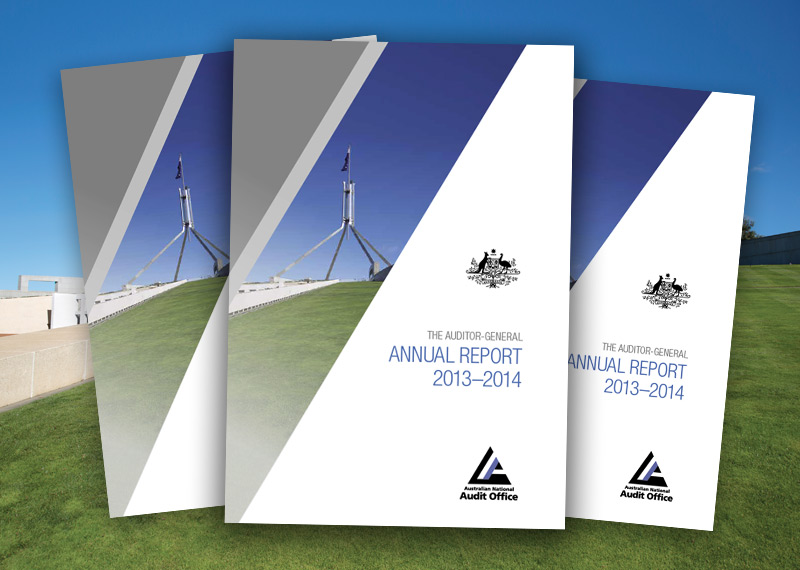
Annual report
Published: Tuesday 30 September 2014
Published
This annual report documents the performance of the Australian National Audit Office (ANAO) in the financial year ending on 30 June 2014. It addresses the Requirements for Annual Reports for Departments, Executive Agencies and FMA Act Bodies approved by the Joint Committee of Public Accounts and Audit in May 2014; the performance measures set out in the outcome and programs framework in the 2013–14 Portfolio Budget Statements; section 28 of the Auditor-General Act 1997; and other annual reporting requirements provided for in legislation.
Performance audit (Auditor-General Report No. 34 of 2019–20)

Published: Thursday 23 April 2020
Published
The audit objective was to assess the effectiveness of the administration of Aboriginal and Torres Strait Islander participation targets in intergovernmental funding agreements in achieving policy objectives.
Entity
Department of Infrastructure, Transport, Regional Development and Communications; National Indigenous Australians Agency
Contact
Please direct enquiries through our contact page.
Performance audit (Auditor-General Report No. 12 of 2011–12)
Published: Thursday 10 November 2011
Published
The objective of the audit was to assess the effectiveness of the implementation of the NPARIH in the Northern Territory from the perspective of the Australian Government.
Entity
Department of Families, Housing, Community Services and Indigenous Affairs
Performance audit (Auditor-General Report No. 32 of 2010–11)
Published: Tuesday 1 March 2011
Published
The objective of the audit was to assess the administrative effectiveness of AGD's management of the Northern Territory Night Patrols Program.
Entity
Attorney-General's Department
Performance audit (Auditor-General Report No. 4 of 1997–98)
Published: Friday 17 October 1997
Published
The objective of the audit was to review AUSTEL and the Spectrum Management Agency's approaches to service delivery against recognised good practice and to identify opportunities for the new Australian Communications Authority to adopt the relevant features of these approaches in its service delivery.
Entity
Australian Telecommunications Authority (AUSTEL); Spectrum Management Agency