Browse our range of reports and publications including performance and financial statement audit reports, assurance review reports, information reports and annual reports.
Performance audit (Auditor-General Report No. 34 of 2017–18)

Published: Tuesday 17 April 2018
Published
The objective of the audit was to assess the effectiveness of Defence’s implementation of the First Principles Review.
Entity
Department of Defence
Contact
Please direct enquiries through our contact page.
Performance audit (Auditor-General Report No. 39 of 2013–14)
Published: Thursday 12 June 2014
Published
The objective of the audit was to examine the application of the Australian Taxation Office's Compliance Effectiveness Methodology in evaluating the effectiveness of key compliance activities and shaping the development of strategies to promote voluntary compliance.
Entity
Australian Taxation Office
Contact
Please direct enquiries relating to reports through our contact page.
Request for audit
Responded: Friday 24 July 2020
Response provided
The Auditor-General responded on 25 May 2020 to correspondence from Senator Katy Gallagher dated 4 May 2020, requesting that the Auditor-General conduct an investigation to examine the effectiveness of the Commonwealth Government’s debt management given the significant and rapidly increasing Commonwealth government debt levels as a result of the COVID-19 pandemic. The Auditor-General provided a follow-up response to Senator Gallagher on 24 July 2020.
Contact
Please direct enquiries relating to requests for audit through our contact page.
Financial statement audit (Auditor-General Report No. 21 of 2005–06)

Published: Wednesday 21 December 2005
Published
The focus of this report is on the year end results of the financial statement audits of all general purpose reporting entities for the 2004–05 financial year. Financial management issues (where relevant) arising out of the audits and their relationship to internal control structures are also included in this report.
Entity
across agency
Performance audit (Auditor-General Report No. 46 of 2017–18)

Published: Wednesday 13 June 2018
Published
The objective of this audit was to assess whether the National Gallery of Australia (NGA) and the Australian War Memorial (the Memorial) have implemented effective collections management practices.
Entity
Australian War Memorial; National Gallery of Australia
Contact
Please direct enquiries through our contact page.
Financial statement audit (Auditor-General Report No. 21 of 2004–05)

Published: Wednesday 12 January 2005
Published
This report provides a summary of the final audit results of the audits of the financial statements of all Australian government reporting entities, including the Consolidated Financial Statements for the Australian Government.
Entity
Across Entities
Request for audit
Responded: Wednesday 13 April 2022
Response provided
The Auditor-General responded on 13 April 2022 to correspondence from Mr Adam Bandt MP dated 24 March 2022, requesting that the Auditor-General conduct an investigation to examine the integrity of carbon credit methodology determinations made under the Carbon Credits (Carbon Farming Initiative) Act 2011, and the administration of the Act by the Clean Energy Regulator.
Contact
Please direct enquiries relating to requests for audit through our contact page.
Performance audit (Auditor-General Report No. 40 of 2012–13)
Published: Thursday 30 May 2013
Published
The objective of the audit was to assess the effectiveness of the Department of Human Services' arrangements for engaging and managing External Collection Agencies to recover debts arising from Centrelink payments.
Entity
Department of Human Services
Contact
Please direct enquiries relating to reports through our contact page.
Performance audit (Auditor-General Report No. 20 of 1999–2000)
Published: Monday 22 November 1999
Published
Special Benefit is a social security income support payment for people who are unable to support themselves or their dependents, and who are not otherwise entitled to any other income support payment. Its objective is to ensure that such people have adequate levels of income. The objective of the audit was to assess the extent to which new claims for Special Benefit had been determined in compliance with the Social Security Act, the Guide to the Act and other relevant guidelines, and whether Centrelink and FaCS had appropriate procedures to help ensure such compliance.
Entity
Centrelink; Department of Family and Community Services
Performance audit (Auditor-General Report No. 33 of 2024–25)

Published: Wednesday 21 May 2025
Published
The audit objective was to assess the effectiveness of the Department of the Prime Minister and Cabinet’s administration of the IA framework to enable well-informed and transparent Australian Government decision-making.
Entity
Department of the Prime Minister and Cabinet
Contact
Please direct enquiries through our contact page.
Performance audit (Auditor-General Report No. 18 of 2014–15)
Published: Wednesday 28 January 2015
Published
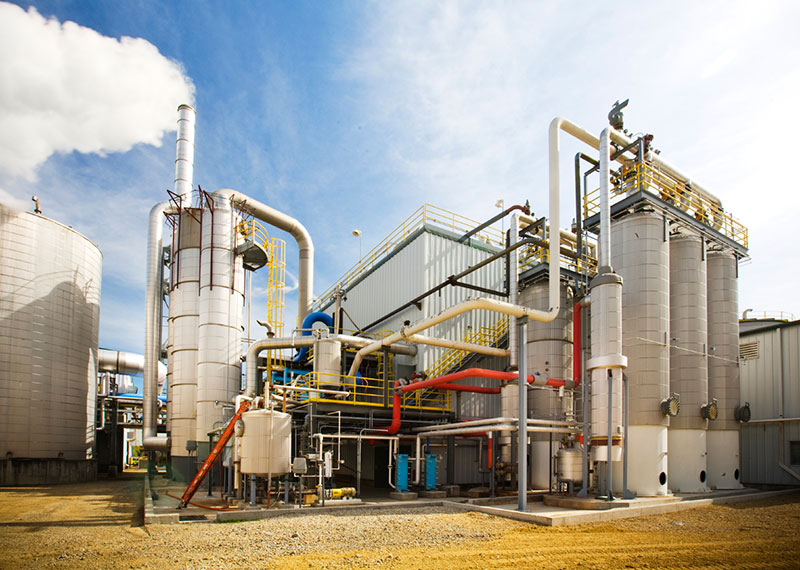
The objective of the audit was to examine the effectiveness of Industry’s administration of the Ethanol Production Grants Program, including relevant advice on policy development.
Entity
Department of Industry and Science
Performance audit (Auditor-General Report No. 14 of 2002–03)
Published: Tuesday 29 October 2002
Published
Pursuant to a request from the Senate Finance and Public Administration References Committee and the Auditor - General's response to the Committee, the objective of this performance audit was to examine and report on the selection of the preferred tenderer in the Health Group IT outsourcing process. In particular, the audit examined the circumstances surrounding OASITO's administration of the: - disclosure to a tenderer of information provided by other tenderers; - subsequent acceptance of a late re-pricing offer from a tenderer: and - advice to the decision- maker leading to the selection of the preferred tenderer. The audit focused particularly on assessing the administrative processes undertaken in the selection of the preferred tenderer for the Health Group. Audit emphasis was placed on the management of the probity aspects of the tender process, particularly in regard to events that occurred between June 1999, when the tenderers provided their penultimate pricing, and the selection of the preferred tenderer in September 1999.
Entity
Department of Finance and Administration
Performance audit (Auditor-General Report No. 16 of 2008–09)
Published: Monday 22 December 2008
Published
The objective of the audit was to assess the adequacy and effectiveness of the BCM practices and procedures within the Tax Office in preparing for, or responding to, disruptions to ‘business as usual' operations.
Entity
Australian Taxation Office
Performance audit (Auditor-General Report No. 24 of 2009–10)
Published: Wednesday 10 March 2010
Published
The objective of this audit was to examine the effectiveness of Defence and the DMO's management of procurement and through life support arrangements to meet the explosive ordnance requirements of the ADF, particularly the non-guided munitions requirements of Army. This included a review of the progress of Defence and the DMO in implementing the recommendations of ANAO Audit Report No.40 2005–06.
Entity
Department of Defence; Defence Materiel Organisation
Performance audit (Auditor-General Report No. 30 of 2014–15)

Published: Tuesday 21 April 2015
Published
The audit objective was to examine Defence’s administration of Materiel Sustainment Agreements (MSAs) and the contribution made by MSAs to the effective sustainment of specialist military equipment.
Entity
Department of Defence; Defence Materiel Organisation
Contact
Please direct enquiries relating to reports through our contact page.
Performance audit (Auditor-General Report No. 41 of 2002–03)
Published: Wednesday 7 May 2003
Published
Since 2000, there has been a requirement under the Environment Protection and Biodiversity Conservation Act 1999 (EPBC Act) for Commonwealth agencies to report annually on their environmental performance as well as their contribution to Ecologically Sustainable Development (ESD). The audit objective was to examine and report on the quality of Commonwealth agencies' annual reports on ESD and environment performance. The audit reviewed current practice in light of legal requirements, and provided examples of better practice.
Entity
Across Agency
Performance audit (Auditor-General Report No. 22 of 2007–08)
Published: Thursday 14 February 2008
Published
The objective of this performance audit was to assess the effectiveness of the administration of grants made to the ARTC. The audit involved an examination of DOTARS' administration of the grant funding approved for, and paid to, the ARTC (in respect of both the grants paid for projects approved under legislation and the three special grants). It also involved consideration of the role of Finance and the Department of the Prime Minister and Cabinet (PM&C) in advising on the special grant funding and (in respect of Finance) the payment and reporting arrangements for the grants. The audit was conducted under Section 18 of the Auditor-General Act 1997.
Entity
Department of Infrastructure, Transport, Regional Development and Local Government
Performance audit (Auditor-General Report No. 17 of 2013–14)
Published: Thursday 30 January 2014
Published
The objective of the audit was to assess the effectiveness of the Department of the Environment’s administration of the Strengthening Basin Communities Program.
Entity
Department of the Environment
Performance audit (Auditor-General Report No. 40 of 2006–07)
Published: Wednesday 30 May 2007
Published
The previous audit made ten recommendations to improve Centrelink's review and appeals system. Centrelink agreed to all recommendations. The objective of this follow-up audit was to review Centrelink's progress in implementing the recommendations of Audit Report No.35, Centrelink's Review and Appeals System 2004-05.
Entity
Centrelink
Performance audit (Auditor-General Report No. 17 of 1997–98)
Published: Tuesday 25 November 1997
Published
The objectives of the audit were to:
- assess the extent to which major program objectives were achieved;
- identify major strengths and weaknesses related to the economy, effectiveness and efficiency of the program administration; and
- identify areas of improvements and risks which should be addressed in arrangements with a private sector project manager.
Audit criteria were developed to address the areas of program planning and implementation, performance measurement and monitoring, responsiveness to emerging issues, dispute resolution mechanisms, risk management and program improvement measures.
Entity
Department of Transport and Regional Development
Performance audit (Auditor-General Report No. 18 of 2006–07)
Published: Wednesday 24 January 2007
Published
The objectives of this audit were to:
- examine the effectiveness of ASIC's processes for receiving reports of suspected breaches of the Corporations Act; and
- assess the efficiency with which statutory reports are referred and investigated by ASIC.
The audit commenced in February 2006. ANAO undertook an assessment of ASIC's processes for receiving and referring for investigation statutory reports. ANAO also undertook a detailed examination of a random sample of 416 statutory reports received by ASIC in the period 2002–03 to 2004–05.
The audit scope did not extend to the role of the Commonwealth Director of Public Prosecutions in prosecuting offences referred to it by ASIC.
Entity
Australian Securities and Investments Commission
Performance audit (Auditor-General Report No. 43 of 2000–01)
Published: Friday 1 June 2001
Published
The audit examined the design, management and reporting of performance information for the Natural Heritage Trust (NHT) which is administered by the Commonwealth Departments of Environment and Heritage, and Agriculture, Fisheries and Forestry. The objective of the audit was to examine and report on the performance information used to support the administration of $1.5 billion in Commonwealth financial assistance; and compliance with legislative requirements for performance monitoring and reporting.
Entity
Agriculture Fisheries and Forestry - Australia; Department of the Environment and Heritage; Department of Agriculture
Performance audit (Auditor-General Report No. 45 of 1999–2000)
Published: Wednesday 31 May 2000
Published
The Commonwealth has significant foreign exchange risk exposures including $A8.4 billion of foreign currency transactions with the Reserve Bank of Australia in 1998-99. Under the Financial Management and Accountability Act and its associated Regulations, all agencies are required to assess and, where possible, manage, foreign exchange risk. The audit reviewed four agencies that have substantial foreign currency payment exposures namely:
- the Department of Defence;
- the Australian Agency for International Development;
- the Department of Foreign Affairs and Trade; and
- the Department of Finance and Administration.
The objective of the audit was to identify and assess the efficiency and cost effectiveness of the management of foreign exchange risk across the selected agencies, also to identify opportunities to improve the management of foreign exchange risk, including any associated potential financial savings that could accrue to the Commonwealth.
Entity
Department of Defence; Australian Agency for International Development; Department of Foreign Affairs and Trade; Department of Finance and Administration
Performance audit (Auditor-General Report No. 15 of 2023–24)

Published: Monday 12 February 2024
Published
The objective of this audit was to assess the effectiveness of the Australian Taxation Office’s management and oversight of fraud control arrangements for the administration of the Goods and Services Tax (GST).
Entity
Australian Taxation Office
Contact
Please direct enquiries through our contact page.
Performance audit (Auditor-General Report No. 23 of 2017–18)

Published: Tuesday 19 December 2017
Published
The objective of the audit was to assess whether the contractual arrangements that have been put in place for the delivery of the Moorebank Intermodal Terminal (MIT) will provide value for money and achieve the Australian Government’s policy objectives for the project.
Entity
Moorebank Intermodal Company Limited; Department of Infrastructure and Regional Development; Department of Finance
Contact
Please direct enquiries relating to reports through our contact page.
Performance audit (Auditor-General Report No. 26 of 2000–01)
Published: Friday 22 December 2000
Published
The Defence Estate comprises the land, buildings and other facilities that Defence uses across Australia. These facilities are vital to achieving the Defence mission - to prevent or defeat the use of armed force against Australia and its interests. The Estate has a gross replacement value of $14.8 billion. Defence Estate Organisation's (DEO's) Facilities Operations (FACOPS) Program delivers general maintenance and minor new works to Defence facilities on a regional basis across the country. DEO's Estate Operations and Planning Branch and its nine Regional Estate Centres are responsible for the FACOPS Program. Resources available for the Program have been reduced in recent years. The total DEO budget for 2000-01, which includes funds for capital works, facilities operations and property management, is $2.6 billion. Of this total, the FACOPS Program has a cash allocation of $213 million and an additional $15.6 million for employee expenses associated with the Program's 283 staff. The objective of the audit was to assess the efficiency and effectiveness of selected Defence facilities operations, including tendering and contracting, with a view to adding value with practical recommendations for enhancing operations.
Entity
Department of Defence
Performance audit (Auditor-General Report No. 8 of 2023–24)

Published: Monday 11 December 2023
Published
The objective of the audit was to assess whether the design and early implementation of the Australian Government’s response to Recommendation 86 of the Royal Commission into Aged Care Quality and Safety has been effective.
Entity
Department of Health and Aged Care; Aged Care Quality and Safety Commission
Contact
Please direct enquiries through our contact page.
Performance audit (Auditor-General Report No. 30 of 2000–01)
Published: Wednesday 7 March 2001
Published
The audit examined the efficiency and effectiveness of DEWRSBs administrative arrangements for the Work for the Dole Programme. The audit focused on the Community Work Coordinator tender assessment process, selection of projects, contract management arrangements and the mechanisms used for measuring the performance of the Programme against its objectives.
Entity
Department of Employment Workplace Relations and Small Business
Performance audit (Auditor-General Report No. 52 of 2012–13)
Published: Tuesday 25 June 2013
Published
The objective of the audit was to assess the effectiveness of the Australian Taxation Office’s administration of debt relief arrangements.
Entity
Australian Taxation Office
Contact
Please direct enquiries relating to reports through our contact page.
Performance audit (Auditor-General Report No. 9 of 1997–98)
Published: Thursday 23 October 1997
Published
The audit objectives were to report on the efficiency and effectiveness of selected agencies' management of telecommunications services. The specific purpose was to:
- identify the potential for more effective management of telecommunications services;
- consider the appropriateness of Commonwealth agencies' management of telecommunications services to take advantage of technological opportunities; and
- identify the elements of sound administration in the management of telecommunications services.
The audit criteria addressed agencies' performance against benchmarks of sound administrative practice in relation to procurement; planning; business process re-engineering; financial management; and performance management. The audit focussed primarily on telecommunications services, as distinct from capital items and equipment.
Entity
Across Agency