Browse our range of reports and publications including performance and financial statement audit reports, assurance review reports, information reports and annual reports.
Performance audit (Auditor-General Report No. 8 of 2025–26)

Published: Monday 24 November 2025
Published
The objective of the audit was to assess whether the Department of Agriculture, Fisheries and Forestry has effective arrangements to comply with domestic and international travel requirements.
Entity
Department of Agriculture, Fisheries and Forestry
Contact
Please direct enquiries through our contact page.
Insights: Audit lessons

Published: Friday 20 June 2025
Published
Records Management is targeted at all Australian Government officials. It also benefits those in information management roles.
Contact
Please direct enquiries through our contact page.
Insights: Audit lessons

Published: Monday 30 June 2025
Published
Governance of Data is targeted at Australian Government officials in information governance roles and those who use data to achieve organisational objectives.
Contact
Please direct enquiries through our contact page.
Performance audit (Auditor-General Report No. 8 of 2019–20)

Published: Monday 9 September 2019
Published
The objective of this audit was to examine whether the Tourist Refund Scheme (TRS) is being effectively administered, with the appropriate management of risks.
Entity
Department of Home Affairs; Department of the Treasury; Australian Taxation Office (ATO)
Contact
Please direct enquiries through our contact page.
Performance audit (Auditor-General Report No. 31 of 2014–15)

Published: Thursday 23 April 2015
Published
The audit objective was to assess the effectiveness of the (former) Department of Industry’s administration of the Australian Apprenticeships Incentives Program.
Entity
Department of Education and Training
Contact
Please direct enquiries relating to reports through our contact page.
Performance audit (Auditor-General Report No. 18 of 2017–18)

Published: Wednesday 6 December 2017
Published
The objective of the audit was to assess the arrangements established by the Department of Education and Training to monitor the impact of Australian Government school funding.
Entity
Department of Education and Training
Contact
Please direct enquiries relating to reports through our contact page.
Information report (Auditor-General Report No. 27 of 2019–20)

Published: Wednesday 11 March 2020
Published
This information report seeks to provide greater transparency on procurement activity in the Australian public sector. This information report is neither an audit nor an assurance review and presents no conclusions or opinions. The report is presented in a variety of ways, including tables and figures, publicly available data from public sector procurement activity recorded in AusTender.
Entity
Across Entities
Contact
Please direct enquiries through our contact page.
Performance audit (Auditor-General Report No. 40 of 2024–25)

Published: Tuesday 3 June 2025
Published
The audit objective was to assess whether selected entities effectively implemented agreed recommendations from Auditor-General Report No. 25 2019–20 Aboriginal and Torres Strait Islander Participation Targets in Major Procurements.
Entity
Across Entities
Contact
Please direct enquiries through our contact page.
Performance audit (Auditor-General Report No. 5 of 2007–08)
Published: Thursday 16 August 2007
Published
The objective of this audit was to assess the progress made by DoHA and Medicare Australia (recommendation 3) in addressing the four recommendations from ANAO Audit Report No.50, 2000–01 designed to improve the administration and performance of NCSP.
Entity
Department of Health and Ageing
Performance audit (Auditor-General Report No. 2 of 2007–08)
Published: Wednesday 18 July 2007
Published
The objective of this audit is to examine DIAC's implementation of the nine recommendations made in the earlier audit. The audit has also taken into account changed circumstances since the original audit. These include a heightened security environment after 11 September 2001 and the results of other relevant ANAO performance audit and financial statement work. The audit also examined ETA decision-making processes to gain assurance about its robustness in a changing risk environment. This issue came to attention in recent audits of visa management processes.
Entity
Department of Immigration and Citizenship
Performance audit (Auditor-General Report No. 34 of 2006–07)
Published: Tuesday 1 May 2007
Published
The objective of the audit was to assess the effectiveness of the management by Defence and the DMO of the procurement of the modernised High Frequency communication capability for the ADF. The audit focussed on Phase 3A of the Project which commenced in the mid 1990's and involved the selection of the Prime Contractor; negotiation of the Prime Contract and the Network Operation and Support Contract; and the development and implementation of the Communication System.
Entity
Defence Materiel Organisation
Performance audit (Auditor-General Report No. 8 of 2005–06)
Published: Friday 26 August 2005
Published
The objective of the audit was to assess the Personnel Management Key Solution Project's planning and approval processes and its contract and project management. The audit addresses the scope of the delivered system, the expectations of end-users, and the system's ability to meet their capability requirements.
Entity
Department of Defence
Performance audit (Auditor-General Report No. 38 of 2003–04)
Published: Wednesday 31 March 2004
Published
In April 2002, the ANAO tabled Audit Report No.40 2001-02 Corporate Governance in the Australian Broadcasting Corporation ( the 2002 audit). In August 2003, the ABC submitted a report to the Joint Committee of Public Accounts and Audit (JCPAA) on its progress in implementing the recommendations from the 2002 audit and the JCPAA report. This follow-up audit examined the ABC's implementation of recommendations from both reports, using the ABC's progress report as its base.
Entity
Australian Broadcasting Corporation
Performance audit (Auditor-General Report No. 9 of 2002–03)
Published: Monday 30 September 2002
Published
The objective of the audit was to assess whether Centrelink's Balanced Scorecard (BSC) was based on key elements of better practice principles and its use assisted Centrelink to understand and communicate its performance against its strategic goals. The audit examined:
- the use of the BSC in setting Centrelink's vision and goals;
- the role of the BSC in planning;
- alignment of the BSC from the top down through the organisation and the interdependencies of scoreboards used by various support units, the definition and use of measures, including target setting and links to goals within the BSC framework; and
- its use in monitoring, reporting and feedback.
Entity
Centrelink
Performance audit (Auditor-General Report No. 53 of 2000–01)
Published: Wednesday 27 June 2001
Published
This performance audit is the first property management audit that the ANAO has conducted since the FMA Act came into effect in 1997, with the associated devolution of responsibility to agency heads. The audit included coverage of office accommodation currently leased in Australia from the private sector. This office accommodation was housing the functions and activities of clerical, technical or professional staff, including conference and meeting rooms and ministerial suites but excluding basements, car parks, theatrettes, and cafeterias.
Entity
Across Agency
Annual report
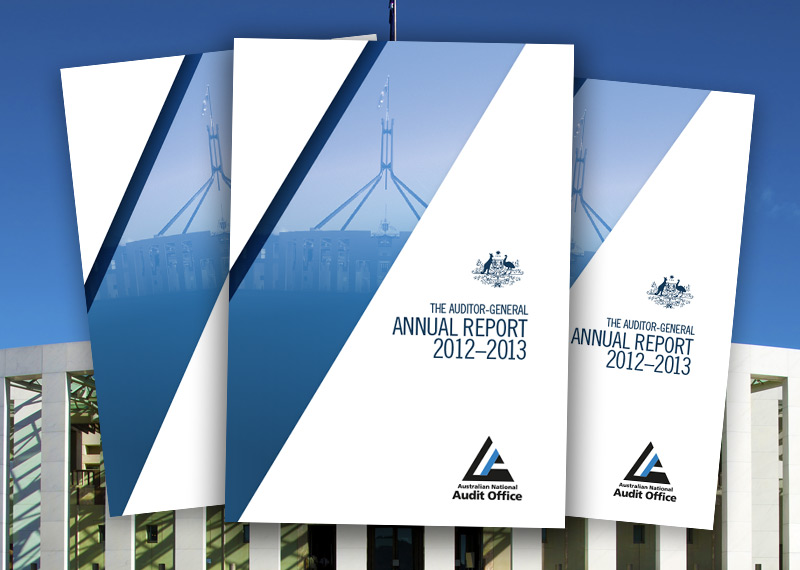
Published: Monday 30 September 2013
Published
This annual report documents the performance of the Australian National Audit Office (ANAO) in the financial year ending on 30 June 2013. It addresses the Requirements for Annual Reports for Departments, Executive Agencies and FMA Act Bodies approved by the Joint Committee of Public Accounts and Audit in June 2013; the performance measures set out in the outcomes and programs framework in the 2012–13 Portfolio Budget Statements; section 28 of the Auditor-General Act 1997; and other annual reporting requirements set out in legislation.
Performance audit (Auditor-General Report No. 35 of 2008–09)
Published: Thursday 21 May 2009
Published
The objective of the audit was to assess the effectiveness of DIAC's management of MAL. The scope was confined to DIAC's management and use of the system: it did not examine the work of others with an interest in the system, such as security agencies.
Entity
Department of Immigration and Citizenship
Performance audit (Auditor-General Report No. 26 of 2010–11)
Published: Wednesday 9 February 2011
Published
The objective of the audit was to assess the effectiveness of DHS' management of the tender process for a replacement BasicsCard to support the delivery of the income management scheme.
In conducting the audit, the Australian National Audit Office (ANAO) assessed the following five key areas of the replacement BasicsCard procurement process, which are described in the Department of Finance and Deregulation's (Finance) Guidance on the Mandatory Procurement Procedures :
• planning for the procurement;
• preparing to approach the market;
• approaching the market;
• evaluating tender submissions; and
• concluding the procurement, including contract negotiation.
Entity
Department of Human Services
Performance audit (Auditor-General Report No. 43 of 2004–05)
Published: Tuesday 17 May 2005
Published
The objective of the audit was to form an opinion about DVA's management of the current and future demand for VHC services. To form an opinion, the Australian National Audit Office (ANAO) examined whether DVA:effectively planned the distribution of VHC resources; distributed VHC resources according to its planning; and monitored and evaluated how effectively it managed the demand for VHC services. To form an opinion against the audit objective, the ANAO interviewed DVA personnel, examined DVA documents, interviewed personnel at a selection of Agencies, Service Providers and stakeholders, and reviewed relevant literature.
Entity
Department of Veterans' Affairs
Speeches and papers
Published: Monday 19 May 2003
Published
Mr P.J. Barrett (AM) - Auditor-General for Australia, presented at the 2nd Annual New Directions in Australian Auditing Accounting Standards Conference
Performance audit (Auditor-General Report No. 58 of 2001–02)
Published: Monday 17 June 2002
Published
The audit sought to assess the efficiency of Defence property management; provide assurance that probity and compliance requirements are being met; and make practical recommendations for enhancing property operations. It focused on Infrastructure Division's property management, with recognition that other areas manage certain property service contracts, such as those for electricity supply and cleaning.
Entity
Department of Defence
Performance audit (Auditor-General Report No. 11 of 2000–01)
Published: Friday 15 September 2000
Published
The audit reviewed Defence's higher-level management of its knowledge system equipment acquisition projects. These amount to $8.5b. The focus of the audit was on the opportunities for Defence to adopt a much more coherent and integrated approach to knowledge systems management prospectively rather than on emphasising current system compatibility issues.
Entity
Department of Defence
Performance audit (Auditor-General Report No. 10 of 1997–98)
Published: Tuesday 28 October 1997
Published
The objectives of the audit were to determine the administrative changes made by the Australian Tourist Commission (ATC) to implement the recommendations of recent administrative reviews and to identify how well the ATC is meeting its statutory objectives. The criteria used in conducting the audit included administrative improvements resulting from the ATC's response to recent reviews and the extent to which strategies and performance information address its statutory objectives.
Entity
Australian Tourist Commission
Performance audit (Auditor-General Report No. 34 of 2014–15)

Published: Thursday 30 April 2015
Published
The objective of the audit was to assess the effectiveness of the Attorney-General’s Department’s administration of the terms of the Natural Disaster Relief and Recovery Arrangements Ministerial determination.
Entity
Attorney-General's Department; Emergency Management Australia
Contact
Please direct enquiries relating to reports through our contact page.
Performance audit (Auditor-General Report No. 40 of 2014–15)

Published: Wednesday 3 June 2015
Published
The audit objective was to assess the effectiveness of the Department of Veterans’ Affairs administration of the Repatriation Transport Scheme.
Entity
Department of Veterans' Affairs
Contact
Please direct enquiries relating to reports through our contact page.
Performance audit (Auditor-General Report No. 22 of 2016–17)

Published: Wednesday 19 October 2016
Published
The objectives of the audit were to:
- assess the effectiveness of the ongoing administration of the Australian Government’s campaign advertising framework; and
- assess the effectiveness of the selected entities’ administration in developing advertising campaigns and implementing key processes against the requirements of the campaign advertising framework applying at the time, and relevant legal and government policy requirements.
Entity
Department of Finance; Department of the Treasury; Department of Education and Training; Department of Immigration and Border Protection
Contact
Please direct enquiries relating to reports through our contact page.
Performance audit (Auditor-General Report No. 44 of 2017–18)

Published: Tuesday 29 May 2018
Published
The audit objective was to review the effectiveness of the Department of Defence’s (Defence) arrangements for delivering selected non-platform sustainment.
Entity
Department of Defence
Contact
Please direct enquiries relating to reports through our contact page.
Performance audit (Auditor-General Report No. 22 of 2017–18)

Published: Tuesday 19 December 2017
Published
The objective of the audit was to assess the effectiveness of Medicare electronic claiming arrangements, including an assessment of the extent to which claiming and processing efficiencies for the Government, health professionals and Medicare customers have been achieved.
Entity
Department of Human Services
Contact
Please direct enquiries relating to reports through our contact page.
Performance audit (Auditor-General Report No. 13 of 2005–06)
Published: Tuesday 18 October 2005
Published
The objective of the audit was to assess the administrative effectiveness of the ATO's management of GST compliance in the large business market segment. In conducting the audit the ANAO examined three key areas: governance - ILEC's corporate planning and reporting arrangements relevant to the management of GST compliance in the large business market segment; assessing and identifying compliance risks- how ILEC collects information relating to the large business market segment and how it uses this information to support risk identification and assessment; and managing compliance- compliance planning and the products and processes used by ILEC to manage GST compliance in the large business market segment and evaluating compliance outcomes to support future compliance planning and the targeting of GST compliance risks. In undertaking the audit, the ANAO took account of the findings of previous reviews, in particular the LCCP Review.
Entity
Australian Taxation Office
Performance audit (Auditor-General Report No. 39 of 1999–2000)
Published: Thursday 13 April 2000
Published
The audit reviewed the coordination of export development and promotion activities across Commonwealth agencies. The objective of the audit was to assess the extent to which export development and promotion activities are managed in a coordinated manner to maximise their effectiveness and transparency, and to minimise duplication. Particular attention was given to:
- Austrade's role in coordinating and advising on the development of export programs across Commonwealth agencies; and
- the design, delivery and evaluation of programs consistent with the Mortimer review design criteria agreed by Government.
Entity
Across Agency