Browse our range of reports and publications including performance and financial statement audit reports, assurance review reports, information reports and annual reports.
Performance audit (Auditor-General Report No. 21 of 2017–18)

Published: Wednesday 13 December 2017
Published
The objective of the audit was to examine the effectiveness of the Australian Taxation Office’s use of settlements to resolve taxpayer disputes.
Entity
Australian Taxation Office
Contact
Please direct enquiries relating to reports through our contact page.
Annual report
Published: Wednesday 30 September 2015
Published
This annual report documents the performance of the Australian National Audit Office (ANAO) in the financial year ending on 30 June 2015. It addresses the Requirements for Annual Reports for Departments, Executive Agencies and Other Non‑corporate Commonwealth Entities approved by the Joint Committee of Public Accounts and Audit in June 2015; the performance measures set out in the outcome and programs framework in the 2014–15 Portfolio Budget Statements; section 28 of the Auditor‑General Act 1997; and other annual reporting requirements set out in legislation.
Speeches and papers
Published: Monday 15 April 2013
Published
Mr Mr Ian McPhee - Auditor-General for Australia, presentation to the Global Working Group of Auditors-General
Performance audit (Auditor-General Report No. 58 of 2002–03)
Published: Thursday 26 June 2003
Published
This was a follow-up of Audit Report No. 29 2000-01, Review of Veterans' Appeals Against Disability Compensation Entitlement Decisions. That audit examined the Department of Veterans' Affairs (DVA's) and the Veterans' Review Board's (VRB's) management of the review of decisions for disability compensation. The objective of this audit was to assess the extent to which DVA and the VRB had implemented the four recommendations of Report No.29 2000-01, taking into account any changed circumstances, or new administrative issues, affecting implementation of these recommendations.
Entity
Department of Veterans' Affairs; Veterans' Review Board
Speeches and papers
Published: Friday 27 June 2008
Published
Mr Ian McPhee - Auditor-General for Australia, presented for a video-conference of the International Federation of Accountants
Speeches and papers
Published: Thursday 11 January 2001
Published
Mr P.J. Barrett (AM) - Auditor-General for Australia, presented at the Global Working Group Meeting, Washington
Corporate
Published: Thursday 24 October 2019
Published
This is the second e-newsletter of the Commonwealth Auditors General Group. These e-newsletters are a genuine effort to share experiences, challenges and engage in thought-provoking discussions on topics which are common to the fifty-three member countries of the Commonwealth.
Contact
If you have any thoughts on future technical content which you would like to propose, please contact international@nao.gsi.gov.uk
Performance audit (Auditor-General Report No. 22 of 2014–15)

Published: Tuesday 17 February 2015
Published
The objective of the audit was to assess the effectiveness of the Attorney-General’s Department’s administration of the Indigenous Legal Assistance Programme.
Entity
Attorney-General's Department
Contact
Please direct enquiries relating to reports through our contact page.
Speeches and papers
Published: Thursday 14 February 2002
Published
Mr P.J. Barrett (AM) - Auditor-General for Australia, presented at the Global Working Group Meeting, Wellington, New Zealand
Speeches and papers
Published: Friday 10 July 2009
Published
Mr Ian McPhee - Auditor-General for Australia, presented to the Global Working Group 10th Annual Meeting, Norway
Request for audit
Responded: Wednesday 23 January 2019
Response provided
The Auditor-General responded on 20 April 2018 to correspondence from the Hon. Dr Mike Kelly MP dated 6 April 2018, requesting an audit of the administration of the Regional Jobs and Investment Packages (RJIP) program, specifically as it relates to the allocation of grant funding between electorates. The Acting Auditor-General followed-up on 23 January 2019 to advise Dr Kelly that an audit of the Regional Jobs and Investment Packages has now commenced.
Contact
Please direct enquiries through our contact page.
Speeches and papers
Published: Monday 4 September 1995
Published
Mr P.J. Barrett (AM) - Auditor-General for Australia, presented to the Australian Society of CPAs, Canberra
Performance audit (Auditor-General Report No. 9 of 2015–16)
Published: Tuesday 24 November 2015
Published
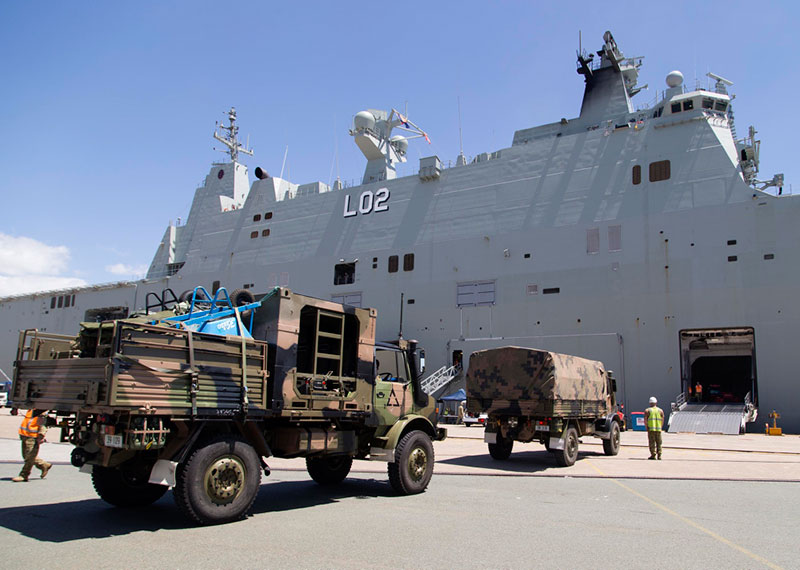
The audit objectives were to examine the effectiveness of Defence’s management of the test and evaluation (T&E) aspects of its major capital equipment acquisition program; and to report on Defence’s progress in implementing T&E recommendations made in the Senate Foreign Affairs, Defence and Trade References Committee’s August 2012 report, Procurement procedures for Defence capital projects.
Entity
Department of Defence
Contact
Please direct enquiries relating to reports through our contact page.
Performance audit (Auditor-General Report No. 35 of 2007–08)
Published: Thursday 22 May 2008
Published
The objective of the audit was to assess DoHA's administration of building certification of residential aged care homes. The ANAO examined DoHA's arrangements to: plan for, and report on, the certification program; manage the delivery of certification services; and manage stakeholder relations.
The audit did not seek to validate assessments made under the program by DoHA's contracted assessor and, therefore, does not form an opinion on whether residential aged care homes should or should not have been certified.
Entity
Department of Health and Ageing
Performance audit (Auditor-General Report No. 6 of 1999–2000)
Published: Monday 9 August 1999
Published
This report summarises audit and other related activities of the Australian National Audit Office in the period January to June 1999.
Entity
Audit Activity Report
Performance audit (Auditor-General Report No. 6 of 1998–99)
Published: Monday 31 August 1998
Published
This report summarises audit and other related activities of the Australian National Audit Office in the period January to June 1998.
Entity
Audit Activity Report
Performance audit (Auditor-General Report No. 1 of 1997–98)
Published: Tuesday 26 August 1997
Published
This report is an information document summarising the audit activities of the ANAO in the period January to June 1997.
Entity
Audit Activity Report
Performance audit (Auditor-General Report No. 48 of 2002–03)
Published: Monday 16 June 2003
Published
In 2000, the ANAO tabled Audit Report No 49 1999-2000, Indigenous Land Corporation operations and performance. The 2000 audit made nine recommendations for improvement. This follow-up audit examined the Indigenous Land Corporation's implementation of the recommendations of the 2000 audit.
Entity
Department of Immigration and Multicultural and Indigenous Affairs
Performance audit (Auditor-General Report No. 31 of 2017–18)

Published: Wednesday 7 March 2018
Published
The objective of this audit was to examine the effectiveness of the Australian Federal Police in managing employee mental health.
Entity
Australian Federal Police (AFP)
Contact
Please direct enquiries relating to reports through our contact page.
Performance audit (Auditor-General Report No. 41 of 2022–23)

Published: Monday 26 June 2023
Published
The objective of this audit was to assess the effectiveness of the administration of grants for the Try, Test and Learn Fund transition projects.
Entity
Department of Social Services
Contact
Please direct enquiries through our contact page.
Speeches and papers
Published: Monday 2 August 2004
Published
Mr P.J. Barrett (AM) - Auditor-General for Australia, address presented at the Australian National University
Performance audit (Auditor-General Report No. 20 of 2023–24)

Published: Wednesday 27 March 2024
Published
The objective of this audit was to assess whether the design and implementation of the Australian Apprenticeships Incentive System by the Department of Employment and Workplace Relations is effective.
Entity
Department of Employment and Workplace Relations
Contact
Please direct enquiries through our contact page.
Other report (Auditor-General Report No. 11 of 2022–23)

Published: Thursday 2 February 2023
Published
The purpose of this information report is to provide transparency of, and insights on, Commonwealth entities’ self-reporting of procurement contracts on AusTender. This information report is neither an audit or assurance review and presents no conclusions or opinions. The report is presented in a variety of ways, including tables, figures, and publicly available data from public sector procurement activity recorded in AusTender.
Entity
Across Entities
Contact
Please direct enquiries through our contact page.
Insights: Audit lessons

Published: Tuesday 23 June 2026
Published
Audit Lessons — Official Travel is aimed at officials who undertake, manage or oversee domestic and international travel arrangements in Australian Government entities.
Contact
Please direct enquiries through our contact page.
Performance audit (Auditor-General Report No. 17 of 2014–15)

Published: Thursday 18 December 2014
Published
The objective of the audit was to examine the effectiveness of Navy’s strategy for recruiting and retaining personnel with specialist skills. The effective delivery of Navy capability depends on Navy having available sufficient numbers of skilled personnel to operate and maintain its fleet of sea vessels and aircraft, and conduct wide‑ranging operations in dispersed locations. Without the right personnel, Navy capability is reduced. Navy’s budget for 2014–15 included $1.86 billion in employee expenses.
The audit concluded that, in its strategic planning, Navy had identified its key workforce risks and their implications for Navy capability. To address these risks Navy had continued to adhere to its traditional ‘raise, train and sustain’ workforce strategy; developed a broad range of workforce initiatives that complemented its core approach; and sought to establish contemporary workforce management practices. However, long‑standing personnel shortfalls in a number of ‘critical’ employment categories had persisted, and Navy had largely relied on retention bonuses as a short‑ to medium‑term retention strategy.
Navy had developed a broad range of workforce initiatives, some designed specifically to address workforce shortages in its critical employment categories. To date, Navy had primarily relied on paying retention bonuses and other financial incentives; recruiting personnel with prior military experience to work in employment categories with significant workforce shortfalls; and using Navy Reserves in continuous full time roles. Ongoing work was required for Navy to firmly establish a range of promising workforce management practices, including providing the right training at the right time; more flexible approaches to managing individuals’ careers; and improving workplace culture, leadership and relationships. More flexible and tailored workforce management practices could help address the underlying causes of workforce shortfalls, particularly when the traditional approaches were not gaining sufficient traction.
The ANAO made two recommendations aimed at Navy: drawing on external human resource expertise to inform the development and implementation of its revised workforce plan; and evaluating the impact of retention bonuses on the Navy workforce to determine their future role within its overall workforce strategy.
Entity
Department of Defence
Contact
Please direct enquiries relating to reports through our contact page.
Performance audit (Auditor-General Report No. 18 of 1998–99)
Published: Monday 7 December 1998
Published
Consistent with the ANAO's practices, and in response to a request from AusAID, a follow-up audit was conducted in the period May to November 1998 to assess the extent of implementation of the recommendations of a 1996 audit into the Management of Funding to Non-Government Organisations (NGOs)and whether the implementation of recommendations has effectively improved the management of funding to NGOs. The ANAO examined AusAID's key funding accountability documentation, tested the revised accountability arrangements and consulted a number of key stakeholders, including NGO representatives.
Entity
Australian Agency for International Development (AusAID)
Performance audit (Auditor-General Report No. 35 of 2024–25)
Published: Monday 26 May 2025
Published
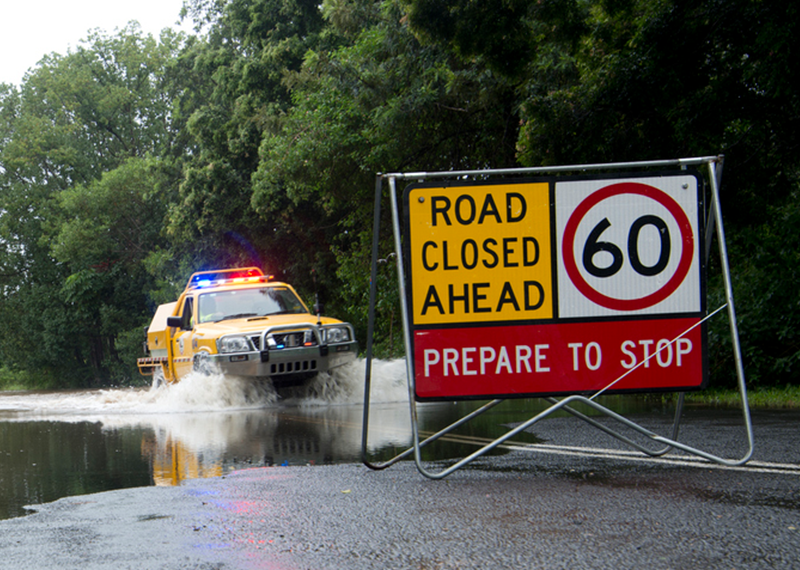
The objective of this audit was to assess whether the award of funding under the Disaster Ready Fund was effective and consistent with the published guidelines.
Entity
National Emergency Management Agency
Contact
Please direct enquiries through our contact page.
Performance audit (Auditor-General Report No. 56 of 2016–17)

Published: Thursday 22 June 2017
Published
The objective of the audit was to assess the effectiveness of the Australian Pesticides and Veterinary Medicines Authority’s (APVMA’s) implementation of reforms to agvet regulation and the extent to which the authority has achieved operational efficiencies and reduced the cost burden on regulated entities.
Entity
Australian Pesticides and Veterinary Medicines Authority
Contact
Please direct enquiries relating to reports through our contact page.
Performance audit (Auditor-General Report No. 16 of 2021–22)

Published: Monday 14 February 2022
Published
The objective of this audit was to assess whether the award of funding under the Safer Communities Fund was effective and consistent with the Commonwealth Grant Rules and Guidelines.
Entity
Department of Home Affairs; Department of Industry, Science, Energy and Resources
Contact
Please direct enquiries through our contact page.
Performance audit (Auditor-General Report No. 11 of 2011–12)
Published: Thursday 3 November 2011
Published
The objective of the audit was to assess the effectiveness of FaHCSIA’s administration of the HAF. To address this objective, the Australian National Audit Office (ANAO) assessed FaHCSIA’s administration against a range of audit criteria, including the extent to which:
- assessment and approval processes were soundly planned and implemented, and were consistent with the requirements of the overarching financial management framework;
- appropriately structured funding agreements were established and managed for each approved grant; and
- the performance of the HAF, including each of the funded projects, was actively monitored and reported.
Entity
Department of Families, Housing, Community Services and Indigenous Affairs; Department of Sustainability, Environment, Water, Population and Communities