Browse our range of reports and publications including performance and financial statement audit reports, assurance review reports, information reports and annual reports.
Performance audit (Auditor-General Report No. 45 of 2011–12)
Published: Wednesday 20 June 2012
Published
The audit objective was to assess the effectiveness of DoHA’s administration in supporting the creation and development of health infrastructure from the HHF, including DoHA’s support for the Health Minister and the HHF Advisory Board.
Entity
Department of Health and Ageing
Performance audit (Auditor-General Report No. 50 of 2013–14)
Published: Tuesday 24 June 2014
Published
The audit objective was to assess selected agencies’ compliance with the four mandatory ICT security strategies and related controls in the Australian Government Information Security Manual.
Entity
Across Agencies
Contact
David Gray, Executive Director - Phone (02) 6203 7377
Performance audit (Auditor-General Report No. 43 of 2013–14)
Published: Wednesday 18 June 2014
Published
The objective of the audit was to assess the effectiveness of the Department of the Environment’s regulation of proponents’ compliance with Part 9 of the Environment Protection and Biodiversity Conservation Act 1999.
Entity
Department of the Environment
Contact
Please direct enquiries relating to reports through our contact page.
Performance audit (Auditor-General Report No. 48 of 1999–2000)
Published: Monday 19 June 2000
Published
The objective of the follow-up audit was to review the effectiveness of the DETYA International Services (DIS) cost recovery operational model. The initial audit of DIS was undertaken in 1997-98 (Audit Report No.35).
Entity
Department of Education, Training and Youth Affairs
Performance audit (Auditor-General Report No. 53 of 2010–11)
Published: Wednesday 22 June 2011
Published
The objective of the audit was to assess the effectiveness of the Department of Agriculture, Fisheries and Forestry’s administration of EC measures and the implementation of the pilot of new drought reform measures.
Entity
Department of Agriculture, Fisheries and Forestry
Performance audit (Auditor-General Report No. 14 of 2010–11)
Published: Thursday 28 October 2010
Published
The objective of the audit was to assess whether entities properly accounted for software assets, and adopted an integrated planning approach to inform software asset investment decisions.
The main focus of the audit was on whether entities accounted for software costs in accordance with relevant accounting standards and the FMOs, paying particular attention to the standard elements of an internal control framework and accounting practices. In addition, in the context of software asset planning, the audit considered whether entities assessed the risks associated with software assets, used life-cycle costing approaches, and aligned ICT and capital management plans, to inform decision-making on software asset investments.
Entity
Australian Bureau of Statistics; Civil Aviation Safety Authority; IP Australia
Performance audit (Auditor-General Report No. 38 of 2010–11)
Published: Wednesday 20 April 2011
Published
The objective of the audit was to assess the effectiveness of annual Certificate of Compliance processes for FMA Act agencies. To form a conclusion against the audit objective, the audit considered: Finance’s administration of the Certificate process at a whole-of-government level; selected agencies’ annual Certificate processes; and, the design and impact of the Certificate.
Entity
Across Agencies
Performance audit (Auditor-General Report No. 47 of 2013–14)
Published: Monday 23 June 2014
Published
The audit objective was to determine whether Australian Government agencies were implementing appropriate policies and processes to identify and manage conflicts of interest.
Entity
Across Agencies
Contact
Please direct enquiries relating to reports through our contact page.
Financial statement audit (Auditor-General Report No. 40 of 2020–21)
Published: Wednesday 2 June 2021
Published
This report is the first in the series of reports for the 2020–21 financial year and focuses on the results of the interim audits, including an assessment of entities’ key internal controls, supporting the 2020–21 financial statements audits. This report examines 25 entities, including all departments of state and a number of major Australian government entities. The entities included in the report are selected on the basis of their contribution to the income, expenses, assets and liabilities of the 2019–20 Consolidated Financial Statements.
Contact
Please direct enquiries through our contact page.
Performance audit (Auditor-General Report No. 4 of 2007–08)
Published: Wednesday 8 August 2007
Published
The objective of this follow up audit was to examine Customs' implementation of the eight recommendations in the ANAO Report No.16 2004–05 and the two related recommendations from JCPAA Report 404. The audit has had regard to issues affecting the implementation of the recommendations and has taken into account changed circumstances and new administrative arrangements since the previous audit.
Entity
Australian Customs Service
Performance audit (Auditor-General Report No. 8 of 2006–07)
Published: Wednesday 18 October 2006
Published
On 9 May 2006, the Auditor-General advised the then Minister for Transport and Regional Services that he would undertake a performance audit and that the specific audit objectives and approach would be established once officers of the Australian National Audit Office (ANAO) had the opportunity to undertake preliminary enquiries with senior staff in Airservices Australia and the Department of Transport and Regional Services (DOTARS). On 31 May 2006, the Auditor-General designated a performance audit under Section 18 of the Auditor-General Act 1997 (Auditor-General Act). The objectives of the performance audit were to: examine the development and administration by Airservices Australia of its contracts with the Solomon Islands Government for upper airspace management; assess the regularity of payments made under the contracts and steps taken by Airservices Australia in respect of any irregularities; and make recommendations for any improvements in the processes employed by Airservices Australia in developing and administering these and similar contractual arrangements.
Entity
Airservices Australia
Performance audit (Auditor-General Report No. 41 of 2012–13)
Published: Friday 31 May 2013
Published
The objective of the audit was to assess the awarding of funding under the Supported Accommodation Innovation Fund against the requirements of the Commonwealth’s grants administration framework.
Entity
Department of Families, Housing, Community Services and Indigenous Affairs
Contact
Please direct enquiries relating to reports through our contact page.
Performance audit (Auditor-General Report No. 20 of 2010–11)
Published: Tuesday 14 December 2010
Published
The objective of the audit was to assess the effectiveness of the Tax Office's administration of the wine tax.
Four key areas were examined in the audit: governance arrangements; interpretative assistance and advice; compliance approaches for Australian entities; and administering the rebate for New Zealand wine producers.
The ANAO conducted fieldwork in the Tax Office's Adelaide office between May and September 2010 and also held discussions with representatives from Customs, the Department of the Treasury (Treasury) and New Zealand Inland Revenue. The ANAO also consulted with representatives of wine producers, wholesalers, retailers, tax agents and key industry associations, seeking their views on elements of the Tax Office's administration of the wine tax.
Entity
Australian Taxation Office
Request for audit
Responded: Friday 18 May 2018
Response provided
The Auditor-General responded on 19 April 2017, and followed-up on 19 July 2017 and 18 May 2018, to correspondence from the Hon. Wayne Swan MP dated 27 March 2017, requesting that the Auditor-General conduct an investigation to examine the operation of the Northern Australia Infrastructure Facility (NAIF), its independence and the quality of the systems and analyses being implemented.
Contact
Please direct enquiries relating to requests for audit through our contact page.
Performance audit (Auditor-General Report No. 42 of 2013–14)
Published: Wednesday 18 June 2014
Published
The objective of the audit was to assess the effectiveness of Agriculture’s and Customs’ arrangements for the targeting and screening of incoming international mail to identify prohibited and restricted goods.
Entity
Department of Agriculture, Australian Customs and Border Protection Service
Contact
Please direct enquiries relating to reports through our contact page.
Performance audit (Auditor-General Report No. 52 of 2006–07)
Published: Thursday 28 June 2007
Published
This is the first of two audit reports concerning the Tax Office's administration of SMSFs pursuant to the provisions of the Superannuation Industry (Supervision) Act 1993.
This audit report examines the efficiency and effectiveness of the Tax Office's approach to regulating and registering self managed superannuation funds. Specifically the ANAO examined the:
- Environment in which SMSFs operate, including the Tax Office's regulatory roles and responsibilities;
- Tax Office's governance of its SMSF regulatory role; and
- Systems, processes and controls the Tax Office uses to register SMSFs, and enforce the lodgement of fund income tax and regulatory returns.
Entity
Australian Taxation Office
Performance audit (Auditor-General Report No. 29 of 2010–11)
Published: Wednesday 16 February 2011
Published
The objective of the audit was to examine the effectiveness of the AFP's approach to its management of the implementation of NPIs.
Entity
Australian Federal Police
Performance audit (Auditor-General Report No. 34 of 2008–09)
Published: Wednesday 20 May 2009
Published
The objective of the audit was to assess the administrative effectiveness of the Tax Office's strategies to address serious non-compliance. In conducting the audit, the ANAO examined the Tax Office's management framework and arrangements to deter, detect and deal with fraud and serious evasion.
Entity
Australian Taxation Office
Performance audit (Auditor-General Report No. 47 of 2012–13)
Published: Tuesday 18 June 2013
Published
The objective of the audit was to assess the effectiveness of the Australian Transaction Reports and Analysis Centre's (AUSTRAC) arrangements for processing financial intelligence, to assist domestic partner agencies and international counterparts in their operations and investigations.
Entity
Australian Transaction Reports and Analysis Centre (AUSTRAC)
Contact
Please direct enquiries relating to reports through our contact page.
Performance audit (Auditor-General Report No. 10 of 2013–14)
Published: Wednesday 11 December 2013
Published
The objective of the audit was to assess the effectiveness of the Torres Strait Regional Authority’s administration of its program and service delivery functions.
Entity
Torres Strait Regional Authority
Contact
Please direct enquiries relating to reports through our contact page.
Performance audit (Auditor-General Report No. 26 of 2011–12)
Published: Thursday 9 February 2012
Published
The objective of the audit was to assess the extent to which FaHCSIA, DEEWR and DoHA seek to reduce service delivery risks posed by capacity constraints in Indigenous organisations.
Entity
Department of Families, Housing, Community Services and Indigenous Affairs, Department of Education, Employment and Workplace Relations and Department of Health and Ageing
Performance audit (Auditor-General Report No. 43 of 2014–15)
Published: Friday 5 June 2015
Published
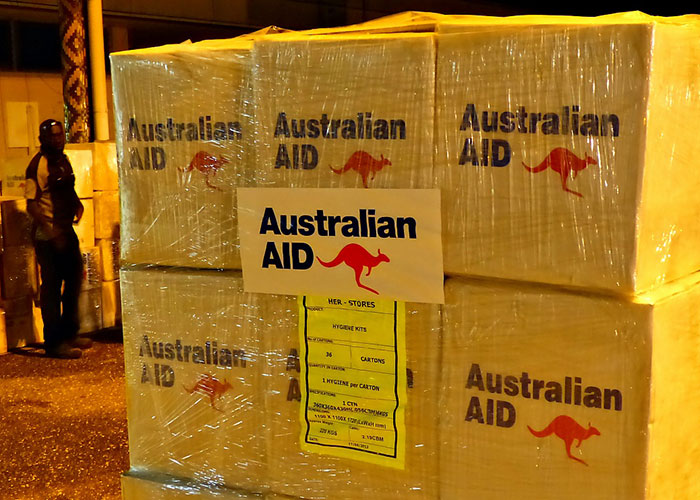
The objective of the audit was to assess the effectiveness of the Department of Foreign Affairs and Trade’s management of Australian aid to Vanuatu.
Entity
Department of Foreign Affairs and Trade
Contact
Please direct enquiries relating to reports through our contact page.
Performance audit (Auditor-General Report No. 23 of 2014–15)

Published: Tuesday 17 February 2015
Published
The audit objective was to assess the effectiveness of the establishment, implementation and operation of the Early Years Quality Fund against the requirements of the Early Years Quality Fund Special Account Act 2013 and the Commonwealth grants administration framework.
Entity
Department of Education and Training; Department of Finance; Department of the Prime Minister and Cabinet
Contact
Please direct enquiries relating to reports through our contact page.
Performance audit (Auditor-General Report No. 42 of 2012–13)
Published: Thursday 6 June 2013
Published
The objective of the audit was to assess the effectiveness of the Department of Human Services' (DHS) administration of the shopfront co-location of DHS services.
Entity
Department of Human Services
Contact
Please direct enquiries relating to reports through our contact page.
Performance audit (Auditor-General Report No. 7 of 2013–14)
Published: Thursday 31 October 2013
Published
The objective of the audit was to assess the effectiveness of Australia’s arrangements to meet its treaty obligations under three selected treaties:
- International Convention on Civil Liability for Bunker Oil Pollution Damage 2001;
- Agreement between Australia and the International Atomic Energy Agency for the Application of Safeguards in connection with the Treaty on the Non-Proliferation of Nuclear Weapons of 1 July 1968 and Additional Protocol; and
- Convention on the Rights of the Child 1990.
Entity
Across Agencies
Contact
Please direct enquiries relating to reports through our contact page.
Performance audit (Auditor-General Report No. 37 of 2009–10)
Published: Thursday 20 May 2010
Published
The objective of this audit was to review the effectiveness of Defence's and the DMO's management of the acquisition arrangements for JP 2070.
Entity
Department of Defence
Performance audit (Auditor-General Report No. 2 of 2009–10)
Published: Monday 7 September 2009
Published
As an element of the arrangements implemented to support the role of the ANAO in reviewing campaigns' compliance with the Guidelines announced on 2 July 2008, the ANAO advised the chair of the JCPAA that the ANAO will provide regular summary reports to Parliament. Section 25 of the Auditor-General's Act 1997 provides for the tabling of such reports.
Entity
Across Agencies
Performance audit (Auditor-General Report No. 39 of 2013–14)
Published: Thursday 12 June 2014
Published
The objective of the audit was to examine the application of the Australian Taxation Office's Compliance Effectiveness Methodology in evaluating the effectiveness of key compliance activities and shaping the development of strategies to promote voluntary compliance.
Entity
Australian Taxation Office
Contact
Please direct enquiries relating to reports through our contact page.
Performance audit (Auditor-General Report No. 43 of 2004–05)
Published: Tuesday 17 May 2005
Published
The objective of the audit was to form an opinion about DVA's management of the current and future demand for VHC services. To form an opinion, the Australian National Audit Office (ANAO) examined whether DVA:effectively planned the distribution of VHC resources; distributed VHC resources according to its planning; and monitored and evaluated how effectively it managed the demand for VHC services. To form an opinion against the audit objective, the ANAO interviewed DVA personnel, examined DVA documents, interviewed personnel at a selection of Agencies, Service Providers and stakeholders, and reviewed relevant literature.
Entity
Department of Veterans' Affairs
Performance audit (Auditor-General Report No. 8 of 2013–14)
Published: Wednesday 6 November 2013
Published
The objective of the audit was to examine the effectiveness of the Australian Government Reconstruction Inspectorate, supported by the National Disaster Recovery Taskforce, in providing assurance that value for money is being achieved in respect to Queensland reconstruction projects.
Entity
Department of Infrastructure and Regional Development
Contact
Please direct enquiries relating to reports through our contact page.