Browse our range of reports and publications including performance and financial statement audit reports, assurance review reports, information reports and annual reports.
Performance audit (Auditor-General Report No. 26 of 2010–11)
Published: Wednesday 9 February 2011
Published
The objective of the audit was to assess the effectiveness of DHS' management of the tender process for a replacement BasicsCard to support the delivery of the income management scheme.
In conducting the audit, the Australian National Audit Office (ANAO) assessed the following five key areas of the replacement BasicsCard procurement process, which are described in the Department of Finance and Deregulation's (Finance) Guidance on the Mandatory Procurement Procedures :
• planning for the procurement;
• preparing to approach the market;
• approaching the market;
• evaluating tender submissions; and
• concluding the procurement, including contract negotiation.
Entity
Department of Human Services
Performance audit (Auditor-General Report No. 4 of 2002–03)
Published: Monday 19 August 2002
Published
The report summarises the audit and other related activities of the ANAO in the period January to June 2002. Key issues arising from performance audits tabled in this period are summarised. Appendix 1 of the Activity Report provides a short summary of each of the audits tabled between 1 January 2002 and 30 June 2002.
Entity
Audit Activity Report
Performance audit (Auditor-General Report No. 23 of 2009–10)
Published: Tuesday 23 February 2010
Published
The objective of the audit was to assess the effectiveness of Customs and Border Protection's performance in managing and coordinating enforcement operations against illegal foreign fishing in Australia's northern waters. The audit focused on Customs and Border Protection's role within the whole of government policy coordination framework; the effectiveness of its intelligence support for operational planning and policy and strategy development; its performance in planning, prioritising and administering effective enforcement operations; and its performance in measuring and reporting on the effectiveness of the program.
Entity
Australian Customs and Border Protection Service
Annual report
Published: Tuesday 28 September 2004
Published
This annual report documents the performance of the Australian National Audit Office (ANAO) in the financial year ending on 30 June 2004. It includes highlights and areas of focus for the year; an introduction by the Auditor-General; an overview of the report; a report on performance; details about management and accountability, and the financial statement for the year.
Performance audit (Auditor-General Report No. 21 of 2006–07)
Published: Wednesday 31 January 2007
Published
The objective of the audit was to:
- assess, in a selection of FMA Act and CAC Act agencies, how well the revised Commonwealth Procurement Guidelines had been implemented; and
- identify any better practice or common problem areas to assist other agencies in their future procurement activities.
The audit focused on procurement requirements that had changed as a result of the revised CPGs, rather than being a more general audit of compliance with all procurement requirements.
The audit was conducted in the following entities:
- Australian Federal Police;
- Bureau of Meteorology;
- Commonwealth Scientific and Industrial Research Organisation (CSIRO);
- Department of Defence;
- Department of Education, Science & Training;
- Family Court of Australia; and
- National Museum of Australia.
Entity
NO-DEPTS-LISTED
Performance audit (Auditor-General Report No. 48 of 2008–09)
Published: Tuesday 30 June 2009
Published
The objective of this audit was to assess whether the strengthened two–pass approval process for major capital equipment projects is being implemented effectively.
Entity
Department of Defence
Financial statement audit (Auditor-General Report No. 60 of 2016–17)
Published: Wednesday 28 June 2017
Published
The Australian National Audit Office (ANAO) publishes two reports annually addressing the outcomes of the financial statement audits of Australian government entities and the Consolidated Financial Statements (CFS) of the Australian Government to provide Parliament an independent examination of the financial accounting and reporting of public sector entities. This report focuses on the results of the interim audit phase, including an assessment of entities’ key internal controls, of the 2016–17 financial statements audits of 25 entities including all departments of state and a number of major Australian government entities.
Entity
Across Entities
Contact
Please direct enquiries relating to reports through our contact page.
Performance audit (Auditor-General Report No. 11 of 2004–05)
Published: Thursday 14 October 2004
Published
This audit focused on the implementation of the Revised Government Foreign Exchange Risk Management Policy. Overall, the audit found the implementation of the Revised Policy with all CAC Act entities was not complete and important elements of the Revised Policy have not been adequately implemented. ANAO made five recommendations aimed at improving the compliance of GGS entities with the revised Policy, central agency consideration of entities' requests for exemption and enhancing the reporting made to Government. Finance and other entities agreed with all the recommendations.
Entity
Department of Finance and Administration
Performance audit (Auditor-General Report No. 21 of 2001–02)
Published: Tuesday 20 November 2001
Published
The audit reviewed the policy advising functions of the Departments of Education, Training and Youth Affairs, Employment, Workplace Relations and Small Business, and Family and Community Services. The objective of the audit was to determine whether departmental quality management systems for policy advising were appropriate and the advice provided met expected standards for policy outputs.
Entity
Department of Education Training and Youth Affairs; Department of Employment Workplace Relations and Small Business; Department of Family and Community Services
Performance audit (Auditor-General Report No. 27 of 2003–04)
Published: Tuesday 10 February 2004
Published
The primary objective of the audit was to assess FaCS' management of the Internet portals for which it had responsibility as lead agency, www.youth.gov.au, www.community.gov.au, and www.families.gov.au. The ANAO also included in the audit a website directed towards youth. The source which provided many of the services expected of a portal. The audit considered governance structures for the portals; measurement of efficiency and effectiveness; and control factors, such as change management,security, and legal issues.
Entity
Department of Family and Community Services
Speeches and papers
Published: Thursday 1 September 2005
Published
Mr Ian McPhee - Auditor-General for Australia, presented to the Australian Institute of Company Directors, in conjunction with the Institute of Internal Auditors Australia
Performance audit (Auditor-General Report No. 41 of 2006–07)
Published: Thursday 31 May 2007
Published
The objective of the audit was to assess the efficiency and the effectiveness of DEWR's administrative oversight for the WfD programme. The components of administration examined included whether:
- the operation of the WfD programme was guided by sound business planning including risk assessment;
- DEWR effectively and efficiently managed, monitored and reported the performance of CWCs in meeting contractual obligations;
- adequate support was provided to DEWR contract managers and account managers to assist in the delivery of WfD outcomes;
- there was evaluation of the performance of CWCs in delivering WfD objectives on behalf of the department;
- DEWR measures the effectiveness of WfD against programme objectives; and
- DEWR had implemented agreed recommendations from the previous WfD audit, where current and relevant.
Entity
NO-DEPTS-LISTED
Performance audit (Auditor-General Report No. 35 of 2012–13)
Published: Thursday 16 May 2013
Published
The audit objective was to assess whether Australian Government agencies were effectively controlling the use of credit cards for official purposes.
Entity
Australian Trade Commission; Department of the Prime Minister and Cabinet; Geoscience Australia
Contact
Please direct enquiries relating to reports through our contact page.
Speeches and papers
Published: Thursday 7 April 2005
Published
Mr P.J. Barrett (AO) - Auditor-General for Australia, Opening Address to the inaugural conference of the Risk Management Institution of Australasia - Bringing Risk Management Together - What the Future Holds
Performance audit (Auditor-General Report No. 28 of 2005–06)
Published: Tuesday 31 January 2006
Published
The objective of this performance audit was to assess agencies' financial management of, and accountability for, the use of net appropriation agreements to increase available appropriations.
Entity
Across Agencies
Performance audit (Auditor-General Report No. 13 of 2006–07)
Published: Tuesday 5 December 2006
Published
The objective of this follow-up audit was to assess the extent to which DVA had implemented the recommendations from the original audit during the period 2002–06, including in its preparation of the IT outsourcing contract which will operate from 2007.
Entity
Department of Veterans' Affairs
Performance audit (Auditor-General Report No. 49 of 2006–07)
Published: Monday 25 June 2007
Published
The objective of the audit was to assess the management practices undertaken by APS agencies to achieve value for money and transparency in dealing with contracts for non-APS workers. The focus of the audit was on circumstances where agencies had a significant reliance on a non-APS workforce to assist in achieving their core functions. Regular reporting by agencies of expenditure on non-APS workers was outside the scope of this audit.
Entity
NO-DEPTS-LISTED
Performance audit (Auditor-General Report No. 42 of 2003–04)
Published: Friday 16 April 2004
Published
The objectives of the audit were to: assess whether financial delegations associated with the expenditure of public monies were determined, applied and managed in accordance with applicable legislation, Government policy and applicable internal controls; and identify better practices and recommend improvements as necessary to current practices.
Entity
AusAID; Australian Competition and Consumer Commission; ComSuper; Department of the Treasury; Office of the Director of Public Prosecutions; Department of Finance and Administration
Performance audit (Auditor-General Report No. 20 of 2005–06)
Published: Tuesday 6 December 2005
Published
The objective of this audit was to assess the Private Health Insurance Administration Council's (PHIAC's) administrative effectiveness as a regulator of private health insurance. In making this assessment, the Australian National Audit Office (ANAO) addressed the following criteria: whether PHIAC monitored compliance with its legislative requirements and analysed related data; whether PHIAC addressed and managed non-compliance with its legislative requirements; and whether PHIAC's governance and organisation supported the performance of its legislative functions. Although the Department of Health and Ageing (Health) also has a role in the regulation of the private health insurance industry under the National Health Act 1953 (Health Act), Health's regulatory activities were outside the scope of this audit.
Entity
Private Health Insurance Administration Council
Performance audit (Auditor-General Report No. 9 of 2006–07)
Published: Thursday 26 October 2006
Published
The objective of the audit was to provide an independent assurance on the effectiveness of Defence and DMO's management of the acquisition of the ASLAV capability to Army. The audit examined the initial capability requirements and approval process, the contract negotiation process, and the management of the Project and Contracts by DMO.
Entity
Department of Defence; Defence Materiel Organisation
Speeches and papers
Published: Wednesday 18 April 2001
Published
Mr P.J. Barrett (AM) - Auditor-General for Australia, presented at the MinterEllison Seminar Series
Annual report
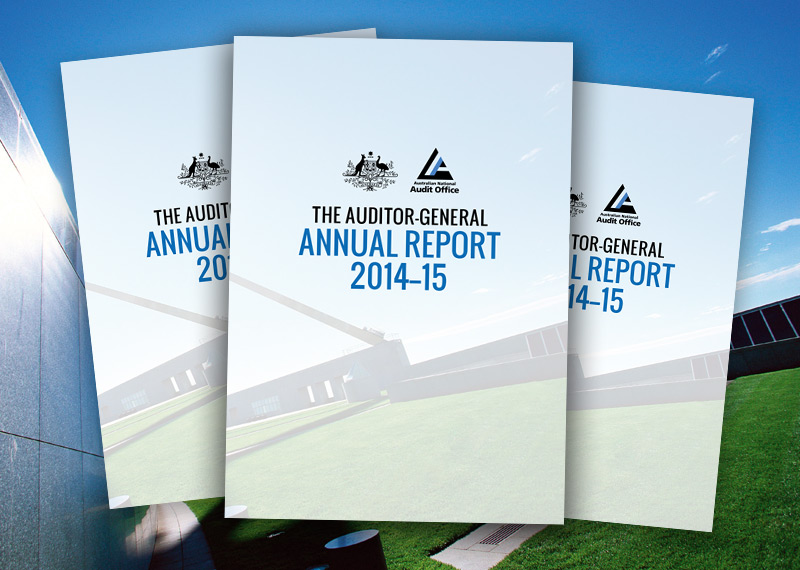
Published: Wednesday 30 September 2015
Published
This annual report documents the performance of the Australian National Audit Office (ANAO) in the financial year ending on 30 June 2015. It addresses the Requirements for Annual Reports for Departments, Executive Agencies and Other Non‑corporate Commonwealth Entities approved by the Joint Committee of Public Accounts and Audit in June 2015; the performance measures set out in the outcome and programs framework in the 2014–15 Portfolio Budget Statements; section 28 of the Auditor‑General Act 1997; and other annual reporting requirements set out in legislation.
Speeches and papers
Published: Thursday 11 August 2005
Published
Mr Mr Ian McPhee - Auditor-General for Australia, presented to the Public Sector Audit Network Group
Performance audit (Auditor-General Report No. 11 of 2013–14)
Published: Thursday 12 December 2013
Published
The objective of the audit was to assess the effectiveness of the delivery of the first and second funding rounds of the Filling the Research Gap program by the Department of Agriculture.
Entity
Department of Agriculture
Contact
Please direct enquiries relating to reports through our contact page.
Speeches and papers
Published: Monday 27 August 2007
Published
Mr Ian McPhee - Auditor-General for Australia, presented at the Australian Corporate Lawyers Association (ACT Division) Conference
Annual report
Published: Thursday 26 September 2002
Published
This annual report documents the performance of the Australian National Audit Office (ANAO) in the financial year ending on 30 June 2002. It includes a comment by the Auditor-General on Audit independence and effectiveness; an overview of the Auditor-General’s role and responsibilities; a report on performance; details about management and accountability, and the financial statement for the year.
Performance audit (Auditor-General Report No. 39 of 2007–08)
Published: Thursday 5 June 2008
Published
The objective of this follow-up audit is to examine DEEWR's implementation of the six recommendations made in the ANAO's 2003 report. This audit has had regard to the issues underlying the recommendations, and new administrative issues affecting their implementation.
Entity
Department of Education, Employment and Workplace Relations
Performance audit (Auditor-General Report No. 9 of 2003–04)
Published: Wednesday 22 October 2003
Published
The audit assessed whether Centrelink has effective Business Continuity Management and/or associated risk management procedures and plans in place that: minimise the likelihood of a significant business outage; and in the event of such an outage, minimise disruption of critical services to customers. The audit also assessed whether Centrelink services satisfy special community demands in times of emergency.
Entity
Centrelink
Performance audit (Auditor-General Report No. 8 of 2007–08)
Published: Wednesday 3 October 2007
Published
The objective of the audit was to determine whether the POI information recorded by Centrelink accords with relevant policy and thereby effectively supports informed decision-making regarding eligibility for the payment of various benefits to Centrelink customers
Entity
Centrelink; Department of Human Services
Performance audit (Auditor-General Report No. 16 of 2006–07)
Published: Wednesday 20 December 2006
Published
The objective of the audit was to assess the ATO's administration of CGT compliance in the individuals market segment. The focus of the audit was the ATO's administration of compliance by individuals with respect to the two most common CGT events: real property and share disposals. The Australian National Audit Office (ANAO) identified three key areas for review:
- governance – the corporate planning and reporting arrangements relevant to the administration of CGT compliance in the individuals market segment, including how these are integrated with the ATO's overall approach to managing CGT;
- identifying and assessing compliance risks – the mechanisms and strategies used to identify and assess CGT compliance risks in the individuals market segment; and
- compliance activities – the products and processes used to manage CGT compliance in the individuals market segment.
Entity
Australian Taxation Office