Browse our range of reports and publications including performance and financial statement audit reports, assurance review reports, information reports and annual reports.
Speeches and papers
Published: Friday 12 March 2004
Published
Mr P.J. Barrett (AM) - Auditor-General for Australia, presented to the Institute of Chartered Accountants of India
Performance audit (Auditor-General Report No. 19 of 2002–03)
Published: Monday 2 December 2002
Published
The audit examined the ATO's management of its relationship with tax practitioners (tax agents and the wider group of professionals working on taxation matters for clients). However, our main focus was the ATO's management of its relationship with tax agents because they are the core element of the tax practitioner grouping and their role is fundamental to the effective operation of the tax system. The objective of the audit was to assess how well the ATO manages its relationship with tax practitioners, focussing on selected ATO relationships with tax practitioners, in particular its regulatory relationship with tax agents, its service support relationship with tax agents and its relationship with tax agents and members of the wider tax practitioner group in the professional bodies as key stakeholders in tax administration.
Entity
Australian Taxation Office
Speeches and papers
Published: Monday 7 October 2002
Published
Mr P.J. Barrett (AM) - Auditor-General for Australia, presented at the 18th Commonwealth Auditors-General Conference, Malaysia
Speeches and papers
Published: Tuesday 3 December 2002
Published
Mr P.J. Barrett (AM) - Auditor-General for Australia, presented at the Department of Finance and Administration's Learning Centre Lecture Series
Annual report
Published: Thursday 30 September 2010
Published
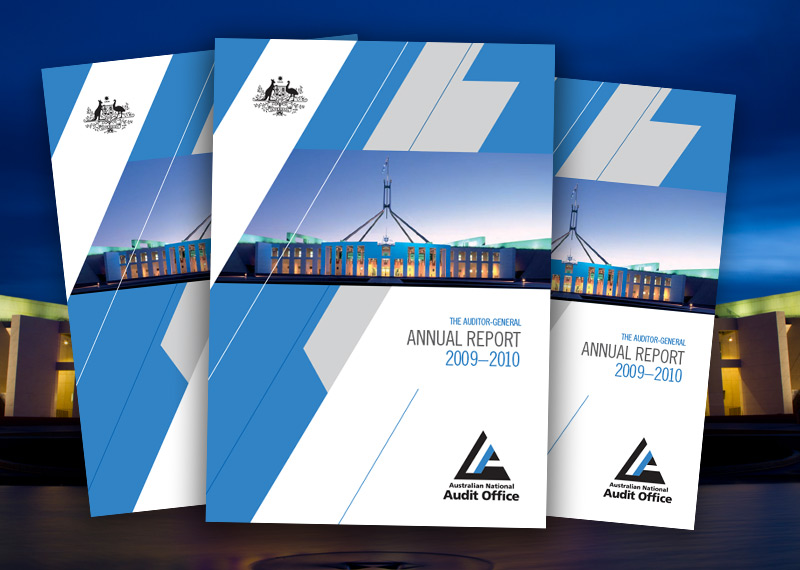
This annual report documents the performance of the Australian National Audit Office (ANAO) in the financial year ending on 30 June 2010. It includes a foreword by the Auditor-General, an overview including the role and responsibilities and vision of the Office, a report on performance, details about management and accountability, and the financial results.
Speeches and papers
Published: Tuesday 5 October 2004
Published
Mr P.J. Barrett (AO) - Auditor-General for Australia, presented at the UN Results Based Management Seminar
Performance audit (Auditor-General Report No. 26 of 2002–03)
Published: Thursday 16 January 2003
Published
The main objectives of the audit were to examine DOTARS' response to the heightened threat environment following the events of 11 September 2001, and to determine the extent to which DOTARS' monitoring and compliance regime ensures that the aviation industry complies with its security obligations. The scope of the audit included:
- the respective roles and responsibilities of the organisations involved in aviation security;
- the setting of security settings; DOTARS' monitoring of airport, airline and cargo security;
- the action DOTARS takes in response to security breaches; and
- evaluation of aviation security.
Entity
Department of Transport and Regional Services
Performance audit (Auditor-General Report No. 33 of 1999–2000)
Published: Monday 13 March 2000
Published
The objective of the performance audit was to assess the administrative effectiveness of DIMA's business entry program against the background of the Business and Temporary Entry program objective, with particular regard to whether:
- the existing performance management mechanisms and compliance monitoring strategies support the achievement of program outcomes and outputs;
- the quality of decision-making;
- business processes facilitate prompt visa decision-making consistent with program objectives; and
- decision-making support mechanisms promote robust and timely decision-making.
Entity
Department of Immigration and Multicultural Affairs
Performance audit (Auditor-General Report No. 7 of 2001–02)
Published: Thursday 9 August 2001
Published
The report summarises the audit and other related activities of the ANAO in the period January to June 2001. Key issues arising from performance audits tabled in this period are summarised against ANAO themes of:
- corporate governance including human resource management, financial management, and performance information;
- service delivery including the impact of e-government;
- procurement and contract management; and
- information technology.
Appendix 1 of the Activity Report provides a short summary of each of the performance audits tabled between 1 January 2001 and 30 June 2001.
Entity
NO-DEPTS-LISTED
Performance audit (Auditor-General Report No. 35 of 2002–03)
Published: Wednesday 26 March 2003
Published
The audit reviewed the Australian Customs Service (Customs) fraud control arrangements. The audit objective was to assess whether Customs has implemented appropriate fraud control arrangements consistent with the Commonwealth's Fraud Control Guidelines and the administrative effectiveness of these arrangements.
Entity
Australian Customs Service
Annual report
Published: Tuesday 28 September 2004
Published
This annual report documents the performance of the Australian National Audit Office (ANAO) in the financial year ending on 30 June 2004. It includes highlights and areas of focus for the year; an introduction by the Auditor-General; an overview of the report; a report on performance; details about management and accountability, and the financial statement for the year.
Performance audit (Auditor-General Report No. 11 of 1997–98)
Published: Thursday 30 October 1997
Published
The objectives of the audit were to:
- review the implementation arrangements in relation to the transfer of the delivery of AUSTUDY to Centrelink and its subsequent inclusion as part of the Youth Allowance; and
- to form an opinion on the efficiency and effectiveness of the front-end processing aspects of AUSTUDY applications.
Entity
Department of Employment, Education, Training and Youth Affairs
Performance audit (Auditor-General Report No. 23 of 2004–05)
Published: Friday 21 January 2005
Published
The Audit Activity Report: July to December 2004 summarises the activity and outputs of the Australian National Audit Office for the first half of the 2004-05 reporting year. The Report outlines the key findings of performance and financial control audits, and summarises audits tabled and better practice guides during July to December 2004.
Entity
Audit Activity Report
Annual report
Published: Thursday 26 September 2002
Published
This annual report documents the performance of the Australian National Audit Office (ANAO) in the financial year ending on 30 June 2002. It includes a comment by the Auditor-General on Audit independence and effectiveness; an overview of the Auditor-General’s role and responsibilities; a report on performance; details about management and accountability, and the financial statement for the year.
Speeches and papers
Published: Friday 31 May 2002
Published
Mr P.J. Barrett (AM) - Auditor-General for Australia, presented at the IPAA ACT Division, Half day seminar
Performance audit (Auditor-General Report No. 4 of 2000–01)
Published: Monday 14 August 2000
Published
This report summarises audit and other related activities of the Australian National Audit Office in the period January to June 2000.
Entity
Audit Activity Report
Performance audit (Auditor-General Report No. 38 of 2002–03)
Published: Thursday 10 April 2003
Published
The audit reviewed the administration of referrals, assessments and approvals processes under the Environment Protection and Biodiversity Conservation Act 1999. The objective of the audit was to examine and report on the quality and timeliness of environmental assessments and approvals under the Act, as well as on Environment Australia's activities to ensure compliance with the Act.
Entity
Across Agency
Performance audit (Auditor-General Report No. 5 of 1996–97)
Published: Thursday 29 August 1996
Published
The objective of the audit was to review AusAID's management of funding to Non-Government Organisations, to assess whether:
- the objectives of overseas development programs to be delivered by NGOs were clearly established;
- funding mechanisms for the delivery of aid programs by NGOs were clearly defined, consistently applied, and in compliance with the law; and
- whether AusAID could provide assurances that NGOs delivering development projects using Commonwealth monies are accountable for: proper expenditure of Commonwealth monies; the achievement of stated objectives; and the achievement of value for money.
The ANAO examined AusAID documentation on overseas development programs delivered by NGOs, looking particularly for clear objectives, performance measures, and evaluation mechanisms. Three levels of documentation were examined:
- government programs;
- grants schemes; and
- individual projects.
Entity
Australian Agency for International Development (AusAID)
Performance audit (Auditor-General Report No. 11 of 1996–97)
Published: Thursday 17 October 1996
Published
Grants Scheme in Audit Report No.33 of 1993-94. The major recommendations in that report related to:
- improved quality of claims and control measures;
- optimisation of management planning and control;
- rationalisation of the strategic planning structure;
- improved responsiveness of the scheme; and
- improved accountability to Parliament.
The objective of this follow-up audit was to form an opinion on Austrade's progress with implementing the recommendations of Audit Report No.33 of 1993-94.
Entity
Australian Trade Commission
Performance audit (Auditor-General Report No. 2 of 2001–02)
Published: Tuesday 10 July 2001
Published
Allegations were made to the Senate Economics References Committee that the Australian Taxation Office and Australian Customs Service (Customs) had failed to pursue several cases of detected sales tax fraud. The Committee believed that this alleged failure may have stemmed from coordination problems between the two agencies. The Committee requested the Auditor-General to investigate this matter and report his findings to the Parliament.
Entity
Australian Customs Service; Australian Taxation Office
Speeches and papers
Published: Friday 21 June 2002
Published
Mr P.J. Barrett (AM) - Auditor-General for Australia, presented at the Senate Occasional Lecture Series
Performance audit (Auditor-General Report No. 63 of 2002–03)
Published: Monday 30 June 2003
Published
The objective of the audit was to assess the Commonwealth's administration of the Automotive Competitiveness and Investment Scheme (ACIS) . The audit reviewed program governance, scheme promotion and registration, management of credit allocations, and compliance processes.
Entity
Department of Industry Tourism and Resources; Australian Customs Service
Speeches and papers
Published: Thursday 14 February 2002
Published
Mr P.J. Barrett (AM) - Auditor-General for Australia, presented at the Global Working Group Meeting, Wellington, New Zealand
Performance audit (Auditor-General Report No. 28 of 1999–2000)
Published: Thursday 3 February 2000
Published
This report summarises audit and other related activities of the Australian National Audit Office in the period July to December 1999.
Entity
Across Agency
Performance audit (Auditor-General Report No. 42 of 2004–05)
Published: Tuesday 19 April 2005
Published
The objective of this audit was to assess the extent to which the recommendations and major findings of the ANAO's 1999 audit of Commonwealth Debt Management have been addressed, and the impact of any changes.
Entity
Australian Office of Financial Management
Speeches and papers
Published: Friday 31 May 2002
Published
Mr P.J. Barrett (AM) - Auditor-General for Australia, presented an Occasional Paper
Performance audit (Auditor-General Report No. 57 of 2001–02)
Published: Friday 14 June 2002
Published
The objective of the audit was to assess DIMIA's management of offshore measures to prevent and detect unlawful entry, and to identify opportunities for improvement. The audit did not cover the processing arrangements, referred to as the Pacific Strategy, introduced as part of the legislative changes in September 2001. Nor did it cover the range of measures use for prevention and detection at the border and on shore. As DIMIA is the lead agency responsible for the development of immigration policy, the audit focussed in the administrative effectiveness of the governance framework used by the department to implement and to support the achievement of Government strategies to prevent unlawful entry to Australian Territory.
Entity
Department of Immigration and Multicultural and Indigenous Affairs
Performance audit (Auditor-General Report No. 16 of 1999–2000)
Published: Monday 15 November 1999
Published
The Superannuation Guarantee, which came into effect on 1 July 1992, was introduced to reduce reliance on the age pension as a means of funding retirement for individuals. The objective of the performance audit was to review the ATO's administration of the Superannuation Guarantee and to identify appropriate opportunities for improvement.
Entity
Australian Taxation Office
Performance audit (Auditor-General Report No. 9 of 2006–07)
Published: Thursday 26 October 2006
Published
The objective of the audit was to provide an independent assurance on the effectiveness of Defence and DMO's management of the acquisition of the ASLAV capability to Army. The audit examined the initial capability requirements and approval process, the contract negotiation process, and the management of the Project and Contracts by DMO.
Entity
Department of Defence; Defence Materiel Organisation
Performance audit (Auditor-General Report No. 31 of 1999–2000)
Published: Wednesday 16 February 2000
Published
The Australian Taxation Office (ATO) is the Commonwealth's principal revenue collection agency. In 1998-99, the ATO accounted for total tax revenue of $135.3 billion. The objective of this audit was to review the ATO's administration of penalties, with particular emphasis on its corporate governance framework and issues relating to consistency, effectiveness and accountability of penalty administration. In particular, the audit examined the administration of two penalty types, Late Lodgement and Tax Shortfall, as case studies.
Entity
Australian Taxation Office