Browse our range of reports and publications including performance and financial statement audit reports, assurance review reports, information reports and annual reports.
Performance audit (Auditor-General Report No. 53 of 2000–01)
Published: Wednesday 27 June 2001
Published
This performance audit is the first property management audit that the ANAO has conducted since the FMA Act came into effect in 1997, with the associated devolution of responsibility to agency heads. The audit included coverage of office accommodation currently leased in Australia from the private sector. This office accommodation was housing the functions and activities of clerical, technical or professional staff, including conference and meeting rooms and ministerial suites but excluding basements, car parks, theatrettes, and cafeterias.
Entity
Across Agency
Performance audit (Auditor-General Report No. 47 of 1998–99)
Published: Tuesday 15 June 1999
Published
The objectives of the audit were to form an opinion on the management of Commonwealth agencies' compliance with the Commonwealth's energy efficiency requirements and to identify areas for better practice in energy management. The audit focussed on:
- the implementation of the Energy Policy by Commonwealth Agencies; promulgation and coordination of energy use targets;
- energy and associated reporting by Commonwealth agencies;
- identification, examination and analysis of systemic and procedural impediments to achieving the Energy Policy; and
- development and discussion of ways to address these impediments.
Entity
Department of Industry, Science and Resources; Australian Greenhouse Office
Performance audit (Auditor-General Report No. 56 of 2001–02)
Published: Thursday 13 June 2002
Published
The objective of the audit was to determine whether DIMIA's workforce planning systems are effectively supporting human resource management practices, which contribute to the efficient and effective achievement of project outcomes.
Entity
Department of Immigration and Multicultural And Indigenous Affairs
Performance audit (Auditor-General Report No. 25 of 2001–02)
Published: Tuesday 11 December 2001
Published
The audit process involved an assessment of the accounts receivable function in eight Commonwealth organisations. The objectives of the audit were to assess whether the processing, collection and overall management of the accounts receivable function was being performed in accordance with applicable legislation, government policy, applicable internal controls, and identify better practices in accounts receivable activities.
Entity
Across Agency
Performance audit (Auditor-General Report No. 6 of 2002–03)
Published: Thursday 29 August 2002
Published
The ANAO reviewed arrangements for the development of the department's fraud policy, fraud risk assessment and fraud control plan within the core functional areas of the department that are responsible for these activities. The audit also examined the operational procedures and guidelines that were in place to implement the departments' fraud policy. The objective of the audit was to assess whether DVA has implemented appropriate fraud control arrangements in line with the Fraud Control Policy of the Commonwealth and whether these arrangements operate effectively in practice.
Entity
Department of Veterans' Affairs
Performance audit (Auditor-General Report No. 33 of 2002–03)
Published: Wednesday 19 March 2003
Published
The objective of the audit was to determine whether DEST has effective governance practices for its IT and e- Business; has adequate systems in place to measure the efficiency and effectiveness of its IT and e-Business; implements and maintains appropriate quality standards within its IT and e-Business systems; and implements proper controls, including risk management, to achieve maximum benefits from its IT and e- Business. The audit examined education and training services provided, or managed, by DEST via IT or the Internet.
Entity
Department of Education Science and Training
Performance audit (Auditor-General Report No. 43 of 1997–98)
Published: Tuesday 12 May 1998
Published
The objective of the audit was to report on whether Defence applies Life-cycle Costing appropriately in support of decisions throughout the acquisition and management of its capital assets, and to make recommendations for any improvement. Criteria were established against each of the issues considered by the audit, namely LCC policy and coordination, use of LCC in investment decisions, use of LCC to support budgeting, data to support LCC and LCC training and education.
Entity
Department of Defence
Performance audit (Auditor-General Report No. 10 of 2001–02)
Published: Monday 17 September 2001
Published
The objectives of the audit were to determine whether agencies have implemented appropriate risk management strategies for the new banking arrangements, which came into operation on 1 July 1999 and whether cash funds are being managed in accordance with the appropriate legislation, the Commonwealth's agency banking guidance and generally accepted accounting practices. The scope of the audit was restricted to the departmental cash funds management and focused on risk management processes and management accounting controls adopted in the forecasting of cash flows, operation of bank accounts and placement of funds. The audit examined seven agencies, which are not named in the report.
Entity
Across Agency
Performance audit (Auditor-General Report No. 35 of 2000–01)
Published: Thursday 17 May 2001
Published
Family and Community Services' Oversight of Centrelink's Assesment of New Claims for the Age Pension
The objective of the audit was to assess whether FaCS had established effective business arrangements with Centrelink to help ensure that new claims for Age Pension were properly assessed in accordance with the Social Security Law and the Guide to the Social Security Law. In the context of the audit objective, the primary issues examined were whether FaCS had:
- established an appropriate business framework;
- adopted an appropriate risk management approach;
- appropriately monitored and evaluated performance; and
- provided relevant business support to Centrelink.
Entity
Department of Family and Community Services
Performance audit (Auditor-General Report No. 42 of 2001–02)
Published: Thursday 18 April 2002
Published
The Commonwealth electoral roll is managed by the Australian Electoral Commission (AEC) and lists the names and addresses of people entitled to vote in federal elections. The objectives of the audit were twofold. The first objective was to provide an opinion on the integrity of the electoral roll, for the purpose of the audit, integrity was defined as accuracy, completeness, validity and security. The second objective was to examine the effectiveness of the AEC's management of the electoral roll in ensuring the roll's integrity.
Entity
Australian Electoral Commission
Contact
Please direct enquiries relating to reports through our contact page.
Performance audit (Auditor-General Report No. 25 of 1996–97)
Published: Friday 20 December 1996
Published
The purpose of this audit was to assess the Department of Social Security's approach to customer service against a recognised good practice methodology, and to identify opportunities for DSS to improve the quality of its customer service, its administrative effectiveness and its overall performance. The ANAO's intention was to identify opportunities to improve customer focus, particularly for those aspects of DSS's administration impacting on customer service. The audit criteria included: customer service environment; human resource management practices; communication with customers; customer-friendly approaches; and systematic approaches to continuous improvement.
Entity
Department of Social Security
Annual report
Published: Tuesday 7 October 2003
Published
This annual report documents the performance of the Australian National Audit Office (ANAO) in the financial year ending on 30 June 2003. It includes a comment by the Auditor-General; an overview of the report; a report on performance; details about management and accountability, and the financial statement for the year.
Annual report
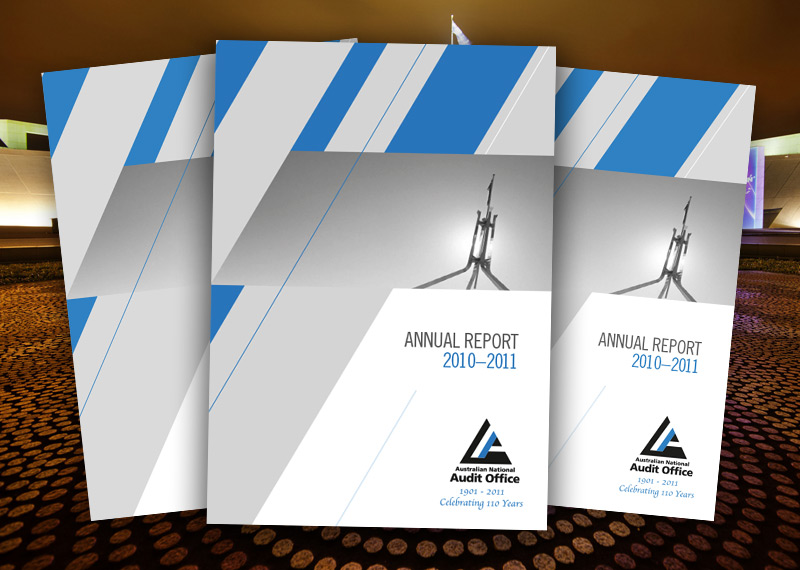
Published: Friday 30 September 2011
Published
This annual report documents the performance of the Australian National Audit Office (ANAO) in the financial year ending on 30 June 2011. It includes a foreword by the Auditor-General, an overview including the role and vision of the Office, a report on performance, details about management and accountability, and the financial results.
Performance audit (Auditor-General Report No. 27 of 1997–98)
Published: Thursday 18 December 1997
Published
The audit surveyed a wide range of Commonwealth agencies' Year 2000 preparedness, their management of the problem and their application of core corporate governance principles, including risk management disciplines. The scope of the audit reflected the wide ranging ramifications of the Year 2000 problem for agencies' overall functions (whole-of-business) internally as well as in terms of external interactions. The audit objectives were to:
- assess the adequacy of agencies' planning in relation to achieving Year 2000 compliance;
- review and assess agencies' implementation, management and monitoring of Year 2000 compliance strategies;
- review agencies' strategic risk assessments in relation to the Year 2000 changeover; and
- raise surveyed agencies' and other Commonwealth agencies' awareness of the various aspects of the Year 2000 problem.
Entity
Across Agency
Annual report
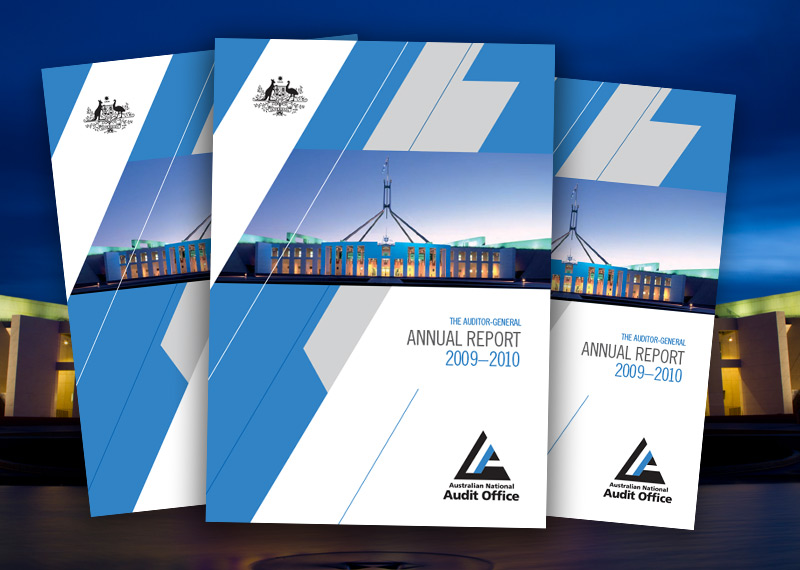
Published: Thursday 30 September 2010
Published
This annual report documents the performance of the Australian National Audit Office (ANAO) in the financial year ending on 30 June 2010. It includes a foreword by the Auditor-General, an overview including the role and responsibilities and vision of the Office, a report on performance, details about management and accountability, and the financial results.
Performance audit (Auditor-General Report No. 34 of 1998–99)
Published: Wednesday 31 March 1999
Published
The objective of the audit was to ascertain and report to Parliament on the Australian Taxation Office's administration of the Fringe Benefits Tax and to identify opportunities for improvement. The ANAO identified five key issues relevant to the effective administration of FBT:
- knowledge of the taxpayer base;
- education of taxpayers;
- client service - advice handling;
- other enforcement activities - audits and reviews; and
- the systems required to support the administration of FBT, including staff skills and training information systems.
Entity
Australian Taxation Office
Performance audit (Auditor-General Report No. 42 of 1999–2000)
Published: Wednesday 10 May 2000
Published
The audit reviewed the effectiveness and probity of the policy development processes and implementation of improved access to Magnetic Resonance Imaging services. The objective of the audit was to examine and report on the effectiveness and probity of the processes involved in:
(a) the development and announcement of the proposal to improve access to Magnetic Resonance Imaging (MRI) services announced in the 1998 Budget, including negotiation with the diagnostic imaging profession; and
(b) the registration of 'eligible providers' and 'eligible equipment' to enable the payment of claims for MRI services on the Medicare Benefits Schedule
Entity
Across Agency
Performance audit (Auditor-General Report No. 33 of 1996–97)
Published: Thursday 15 May 1997
Published
The objectives of the audit were to examine and evaluate the efficiency, economy and administrative effectiveness of the non-judicial activities of the Family Court of Australia. A major aim of the audit was to identify administrative better practices that could be promulgated throughout the Court. The criteria for the audit address the following issues: corporate planning; performance measurement; organisational structure; human resource management; human resource development; management information and reporting systems; and operational processes and procedures.
Entity
Across Agency
Performance audit (Auditor-General Report No. 24 of 1999–2000)
Published: Wednesday 22 December 1999
Published
The audit reviewed the Commonwealth management and regulation of plasma fractionation. The audit objectives were to:
- assess the administrative and financial effectiveness of the Department of Health and Aged Care's contract management of the PFA;
- assess whether the TGA's implementation of post sale regulatory arrangements adequately protects the community's interests; and
- assess the extent to which agencies have implemented the recommendations made in Audit Report No.14 1995-96 concerning funding of plasma products and regulation of plasma products manufactured under the PFA.
Entity
Department of Health and Aged Care
Performance audit (Auditor-General Report No. 31 of 1999–2000)
Published: Wednesday 16 February 2000
Published
The Australian Taxation Office (ATO) is the Commonwealth's principal revenue collection agency. In 1998-99, the ATO accounted for total tax revenue of $135.3 billion. The objective of this audit was to review the ATO's administration of penalties, with particular emphasis on its corporate governance framework and issues relating to consistency, effectiveness and accountability of penalty administration. In particular, the audit examined the administration of two penalty types, Late Lodgement and Tax Shortfall, as case studies.
Entity
Australian Taxation Office
Annual report
Published: Tuesday 28 September 2004
Published
This annual report documents the performance of the Australian National Audit Office (ANAO) in the financial year ending on 30 June 2004. It includes highlights and areas of focus for the year; an introduction by the Auditor-General; an overview of the report; a report on performance; details about management and accountability, and the financial statement for the year.
Performance audit (Auditor-General Report No. 39 of 2002–03)
Published: Thursday 17 April 2003
Published
The Navy Operational Readiness audit examined the systems that Navy uses to manage readiness and concludes coverage of Navy: readiness organisation and management structures (as well as the interface between these systems and Defence enabling operations); management and maintenance of operational readiness (covering personnel, collective training and other components of operational readiness); and readiness performance information processes. The objective of the audit was to provide assurance to Parliament concerning the progress that Navy has made in the development of operational readiness management and evaluation systems and to identify areas for improvement in these systems.
Entity
Department of Defence
Performance audit (Auditor-General Report No. 36 of 2002–03)
Published: Tuesday 1 April 2003
Published
The objective of the performance audit was to review the progress in the delivery of contractual commitments for Industry Development (ID) for the five contracts awarded under the IT Outsourcing Initiative. In particular, the audit examined the effectiveness of the monitoring by DCITA of achievement against contractual commitments for ID; assessed the impact of changes to the IT outsourcing environment on the management and monitoring of ongoing ID obligations; and identified practices that have improved administrative arrangements.
Entity
Department of Communications, Information Technology and the Arts
Annual report
Published: Thursday 7 September 2006
Published
This annual report documents the performance of the Australian National Audit Office (ANAO) in the financial year ending on 30 June 2006. It includes highlights and areas of focus for the coming year; a forward by the Auditor-General; an overview of the report; a report on performance; details about management and accountability, and the financial statement for the year.
Performance audit (Auditor-General Report No. 65 of 2001–02)
Published: Friday 28 June 2002
Published
The audit reviewed the administrative effectiveness of ComSuper in providing benefits to members of the CSS and PSS. The objectives of the audit were to assess the effectiveness of ComSuper's performance in regard to the establishment of new purchaser/provider arrangements; the integrity of the ComSuper databases for the payment of CSS and PSS benefits; and the accuracy and effectiveness of benefit processing and payment for resignation, retirement and retrenchment.
Entity
ComSuper
Annual report
Published: Wednesday 19 September 2007
Published
This annual report documents the performance of the Australian National Audit Office (ANAO) in the financial year ending on 30 June 2007. It includes highlights and areas of focus for the coming year; a forward by the Auditor-General; an overview of the report; a report on performance; details about management and accountability, and the financial statement for the year.
Performance audit (Auditor-General Report No. 28 of 1997–98)
Published: Tuesday 23 December 1997
Published
The objectives for the audit were to report on the efficiency and cost effectiveness of selected agencies' procurement of air travel services. Specifically the audit was to:
- identify the potential for more cost effective procurement in agencies' contracting for air travel services;
- produce estimates of potential savings in expenditure by improved contracting arrangements in agencies where possible; and
- outline any improvements to procurement management practices, including improvement in Commonwealth coordination activities.
Entity
Across Agency
Performance audit (Auditor-General Report No. 15 of 1996–97)
Published: Monday 25 November 1996
Published
The objective of the audit was to assess the efficiency and effectiveness of administrative arrangements for the provision of food to the Australian Defence Force and identify possible areas for improvement. The audit criteria addressed the adequacy of policy guidance, planning, performance information and risk management in all areas of ADF food provisioning.
Entity
Across Agency
Performance audit (Auditor-General Report No. 19 of 2001–02)
Published: Thursday 15 November 2001
Published
The audit process involved an assessment of the payroll arrangements in Commonwealth organisations. The objectives of the audit were to determine whether organisations have established internal control frameworks for the management of payroll operations, assess whether payment of salaries and related expenditures is made in accordance with the relevant terms and conditions of employment, and identify better practices in the management and operations of payroll systems.
Entity
Across Agency
Annual report
Published: Wednesday 28 September 2005
Published
This annual report documents the performance of the Australian National Audit Office (ANAO) in the financial year ending on 30 June 2005. It includes highlights and areas of focus for the year; a forward by the Auditor-General; an overview of the report; a report on performance; details about management and accountability, and the financial statement for the year.