Browse our range of reports and publications including performance and financial statement audit reports, assurance review reports, information reports and annual reports.
Financial statement audit (Auditor-General Report No. 15 of 2015–16)

Published: Thursday 17 December 2015
Published
This report complements the interim phase report published in June 2015, and provides a summary of the final audit results of the audits of the Consolidated Financial Statements for the Australian Government and the financial statements of 253 Australian Government entities.
Entity
Across Entities
Performance audit (Auditor-General Report No. 1 of 1997–98)
Published: Tuesday 26 August 1997
Published
This report is an information document summarising the audit activities of the ANAO in the period January to June 1997.
Entity
Audit Activity Report
Performance audit (Auditor-General Report No. 42 of 2002–03)
Published: Wednesday 7 May 2003
Published
The audit examined the Aged Care Standards and Accreditation Agency Ltd's management of the residential aged care accreditation process. The audit focused on the Agency's implementation of a process to meet its legislative responsibilities, its business operations, people management, budgeting practices, use of information, and its quality assurance processes.
Entity
Aged Care Standards and Accreditation Agency Ltd
Performance audit (Auditor-General Report No. 45 of 1998–99)
Published: Wednesday 2 June 1999
Published
The audit is a follow-up to Audit Report 12, 1995-96 Risk Management by Commonwealth Consumer Product Safety Regulators. The objectives of this follow-up audit were to determine the extent to which ANZFA had implemented the agreed recommendations contained in the 1995 Audit Report, and to determine the effectiveness of the implemented recommendations in improving food safety regulation.
Entity
Australian New Zealand Food Authority
Annual report
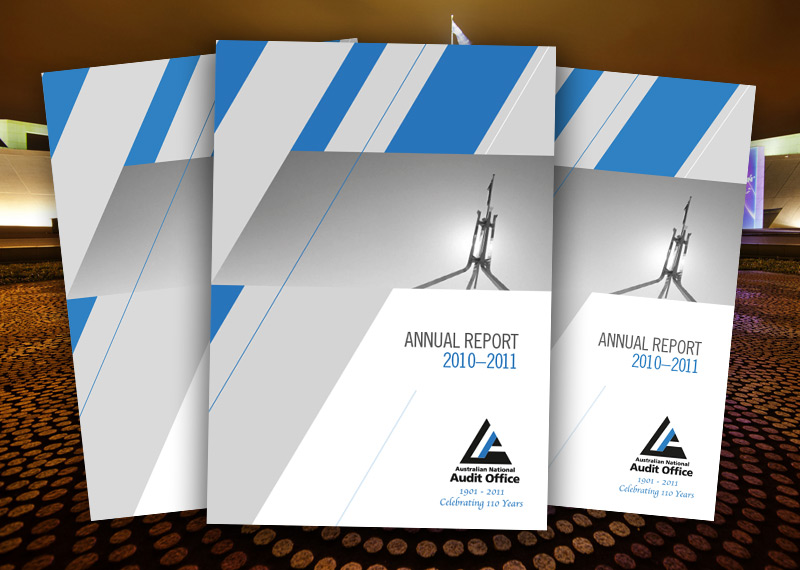
Published: Friday 30 September 2011
Published
This annual report documents the performance of the Australian National Audit Office (ANAO) in the financial year ending on 30 June 2011. It includes a foreword by the Auditor-General, an overview including the role and vision of the Office, a report on performance, details about management and accountability, and the financial results.
Performance audit (Auditor-General Report No. 36 of 2002–03)
Published: Tuesday 1 April 2003
Published
The objective of the performance audit was to review the progress in the delivery of contractual commitments for Industry Development (ID) for the five contracts awarded under the IT Outsourcing Initiative. In particular, the audit examined the effectiveness of the monitoring by DCITA of achievement against contractual commitments for ID; assessed the impact of changes to the IT outsourcing environment on the management and monitoring of ongoing ID obligations; and identified practices that have improved administrative arrangements.
Entity
Department of Communications, Information Technology and the Arts
Performance audit (Auditor-General Report No. 3 of 1999–2000)
Published: Thursday 22 July 1999
Published
All persons, other than Australian nationals, are required to hold a visa to enter and stay in Australia. This audit's focus is on the entry component of the visa process and specifically the Electronic Travel Authority (ETA). The ETA is an electronically-stored authority for travel, which facilitates the entry of tourists and short-term business travellers from countries where the risk of non-compliance with visa conditions is low, that is, in countries classified as ‘low risk'. The objective of the performance audit was to assess the administrative effectiveness of the ETA.
Entity
Department of Immigration and Multicultural Affairs
Annual report

Published: Thursday 24 August 2023
Published
This annual report documents the performance of the Australian National Audit Office (ANAO) in the financial year ended 30 June 2023. The report addresses all applicable obligations under the Public Governance, Performance and Accountability Act 2013; the Public Governance, Performance and Accountability Rule 2014; the Auditor-General Act 1997; the performance measures set out in the outcome and programs framework in the ANAO’s Portfolio Budget Statements 2022–23 and in the ANAO Corporate Plan 2022–23; and annual reporting requirements set out in other relevant legislation.
Contact
Please direct enquiries through our contact page.
Performance audit (Auditor-General Report No. 27 of 2006–07)
Published: Wednesday 21 February 2007
Published
This audit focuses on the Australian Defence Force's (ADF) Air Combat fleet's logistics support, regular maintenance and structural refurbishment. These activities are collectively referred to as fleet in-service support. The current Defence White Paper states that Air Combat is the most important single capability for the defence of Australia.
The audit objective was to assess the effectiveness of the Air Combat fleet's in-service support arrangements to provide capability for air combat operations. Capital equipment acquisition projects covered by this report are limited to the Hornet and F-111 structural refurbishment projects, which aim to ensure these aircraft remain serviceable until their withdrawal from service.
Entity
Department of Defence; Defence Materiel Organisation
Speeches and papers
Published: Thursday 30 October 2003
Published
Mr P.J. Barrett (AM) - Auditor-General for Australia, presented at the Department of Family and Community Services' launch
Performance audit (Auditor-General Report No. 23 of 1999–2000)
Published: Monday 20 December 1999
Published
The objectives of this audit were to improve: the accountability of the Australian Taxation Office to Parliament and the Government by the provision of advice that follows up on the ATO's implementation of the previous ANAO Report; and on the recommendations of the then Joint Committee of Public Accounts arising from its consideration of that Report and the efficiency, effectiveness and equity of debt collection by the ATO.
Entity
Australian Taxation Office
Speeches and papers
Published: Friday 24 March 2006
Published
Mr Ian McPhee - Auditor-General for Australia, presented to the Insititue of Public Administration (ACT Division)
Performance audit (Auditor-General Report No. 25 of 1998–99)
Published: Friday 18 December 1998
Published
The audit reviewed the sale of DASFLEET, a business unit of the Department of Administrative Services, which provided passenger and general commercial vehicle leasing, rental and fleet management and maintenance services. The objectives of the audit were to review the efficiency and effectiveness of the management of the sale.
Entity
Department of Finance; Office of Asset Sales and Information Technology Outsourcing
Corporate
New
Updated: Thursday 15 October 2026
Updated
The ANAO gifts and benefits policy recommends that ANAO employees do not accept any gifts or benefits in their role as an employee of the ANAO. Updates to this page have been made as of 30 June 2026, to include the Auditor-General gifts and benefits, the substantive classification of the staff member accepting or declining the gift or benefit, and to remove the approving officer column. On a monthly basis, the ANAO publicly reports all gifts and benefits accepted and declined, by the Auditor-General, Deputy-Auditor General, and all ANAO employees in the course of their official duties. To protect privacy while maintaining transparency, the register identifies recipients by substantive classification rather than publishing employee names.
Contact
Please direct enquiries through our contact page.
Performance audit (Auditor-General Report No. 32 of 1999–2000)
Published: Thursday 17 February 2000
Published
Industry levies play a significant role in the provision of many public services and fund a range of activities undertaken by regulatory bodies such as the Australian Prudential Regulation Authority (APRA), through to financing reform of the Australian waterfront labour force. The objectives of this audit were to assess:
- the coverage, revenue and expenses of non-primary industry levies;
- the effectiveness of selected entities' financial management of non-primary industry levies; and
- areas of better administrative practice relating to the financial management of non-primary industry levies.
Entity
Across Agency
Performance audit (Auditor-General Report No. 11 of 1998–99)
Published: Wednesday 21 October 1998
Published
Fedlink was to comprise two elements: a high capacity telecommunications infrastructure (phase 1) and information technology applications which support Internet and Intranet communication, and transactions in a secure environment (phase 2) [which never went ahead]. OGIT sought the services of the ANAO to provide an opinion on the probity of the methodology and procedures applied in the evaluation process for phase 1. Therefore the objectives of this audit were to assist OGIT in the timely identification of any deficiencies in the evaluation of responses from suppliers and options for addressing the deficiencies.
Entity
Department of Finance and Administration; Office of Government Information Technology
Performance audit (Auditor-General Report No. 18 of 2002–03)
Published: Wednesday 27 November 2002
Published
The audit reviewed the management of trust monies in five Commonwealth organisations. The objectives of the audit were to:
- assess whether selected Commonwealth organisations were managing trust monies in accordance with legal and administrative requirements and better practice principles;
- identify better practices in the management of trust monies; and
- recommend improvements in the controls and practices relating to the management of trust monies.
Entity
Across agency
Performance audit (Auditor-General Report No. 48 of 2010–11)
Published: Thursday 16 June 2011
Published
The audit objective was to assess the effectiveness of monitoring arrangements (by the Accreditation Agency) and compliance activities (by DoHA) put in place to achieve residential aged care homes’ compliance with the Accreditation Standards and their other, related, responsibilities under the Act and its associated instruments.
The ANAO’s assessment considered whether:
— a sector-wide compliance strategy was in place and aligned with effective monitoring and compliance activities at the operational level;
— there was a clear articulation of the separat but complementary roles and responsibilities of DoHA and the Accreditation Agency; and
— performance information gathered by both agencies to support public reporting and business improvements was useful and enabled comparison of performance over time.
Entity
Department of Health and Ageing; Aged Care Standards and Accreditation Agency Ltd
Performance audit (Auditor-General Report No. 2 of 2011–12)
Published: Thursday 25 August 2011
Published
This audit is the thirteenth in a series of audits that have fulfilled the Senate’s request for the Auditor-General to provide an annual report on agencies’ compliance with the Order, since it was introduced in 2001. The audit objective was to assess the appropriateness of the use and reporting of confidentiality provisions in Australian Government contracts.
Entity
Australian Communications and Media Authority (ACMA); Department of Climate Change and Energy Efficiency (DCCEE); Department of Finance and Deregulation; Murray-Darling Basin Authority (MDBA)
Performance audit (Auditor-General Report No. 18 of 2003–04)
Published: Wednesday 10 December 2003
Published
The Australian National Audit Office (ANAO) completed a performance audit of the ATO's use of AUSTRAC data in August 2000, titled The AustralianTaxation Office's Use of AUSTRAC Data, Audit Report No. 7 2000-2001. It found that the ATO had used AUSTRAC data to achieve a significant improvement in the collection of taxation revenue. The ANAO considered that the ATO could build on this success by using AUSTRAC data more effectively at both the strategic and operational levels. The audit made six recommendations. The ATO agreed with all recommendations. The objective of this follow-up performance audit was to assess the ATO's progress in implementing the recommendations of Audit Report No 7 2000-2001, The Australian Taxation Office's Use of AUSTRAC Data.
Entity
Australian Taxation Office
Speeches and papers
Published: Thursday 21 February 2008
Published
Mr Ian McPhee - Auditor-General for Australia, presented at the Canberra Evaluation Forum
Performance audit (Auditor-General Report No. 60 of 2001–02)
Published: Thursday 20 June 2002
Published
In 1999-2000, the ANAO conducted an audit in Centrelink to determine whether its planning, monitoring and costing arrangements provided a sound basis to underpin its delivery of quality, cost effective customer services. The report of that audit, Audit Report No. 43 1999-2000 Planning and Monitoring for Cost Effective Service Delivery, Staffing and Funding Arrangements, was tabled in Parliament in May 2000. The objective of this follow-up audit was to assess whether Centrelink had implemented a comprehensive costing system as a basis for planning productivity improvements and accounting for its expenditure of purchaser funds. The ANAO examined Centrelink's current costing system to determine if it reflected the design and implementation characteristics that were outlined in Audit Report No. 43.
Entity
Centrelink
Performance audit (Auditor-General Report No. 54 of 2013–14)
Published: Thursday 26 June 2014
Published
The objective of the audit was to assess the extent to which agencies have arrangements to establish and use multi-use lists to support value for money, efficiency and effectiveness in procurement.
Entity
Across Agencies
Contact
Please direct enquiries relating to reports through our contact page.
Performance audit (Auditor-General Report No. 28 of 1997–98)
Published: Tuesday 23 December 1997
Published
The objectives for the audit were to report on the efficiency and cost effectiveness of selected agencies' procurement of air travel services. Specifically the audit was to:
- identify the potential for more cost effective procurement in agencies' contracting for air travel services;
- produce estimates of potential savings in expenditure by improved contracting arrangements in agencies where possible; and
- outline any improvements to procurement management practices, including improvement in Commonwealth coordination activities.
Entity
Across Agency
Performance audit (Auditor-General Report No. 37 of 2012–13)
Published: Wednesday 22 May 2013
Published
The audit objective was to assess the effectiveness of the Department of Industry, Innovation, Science, Research and Tertiary Education’s (DIISRTE’s) administration of the Education Investment Fund grants program.
(DIISRTE was the department that had responsibility for the administration of the EIF grants program during the course of the audit. The recommendations and suggestions for improvement are, however, directed to the Department of Industry, Innovation, Climate Change, Science, Research and Tertiary Education because this department now has responsibility for the administration of the program).
Entity
Department of Industry, Innovation, Climate Change, Science, Research and Tertiary Education; Department of Education, Employment and Workplace Relations
Contact
Please direct enquiries relating to reports through our contact page.
Performance audit (Auditor-General Report No. 47 of 2001–02)
Published: Tuesday 7 May 2002
Published
The 30 per cent Private Health Insurance Rebate is a financial incentive for individuals to purchase health insurance cover. The rebate provides for a reimbursement or discount of 30 per cent of the cost of private health insurance. It is available to all Australians who are eligible for Medicare and have private health insurance. The objective of the audit was to determine the effectiveness of Commonwealth Government agencies administration of the rebate.
Entity
Australian Taxation Office; Department of Finance and Administration; Department of Health and Aged Care; Department of the Treasury; Health Insurance Commission
Performance audit (Auditor-General Report No. 34 of 1996–97)
Published: Tuesday 27 May 1997
Published
The objective of the audit was to assess the efficiency and effectiveness of the provision of health services to the Australian Defence Force Regular forces. Audit criteria were developed which examined health services policy and strategic planning, resource management, the tri-Service provision of medical, dental and other health care, the operation of and planning for major medical facilities, health care management information systems, occupational health and safety and the supply of health materiel.
Entity
Department of Defence
Major projects report (Auditor-General Report No. 13 of 2021–22)

Published: Monday 13 December 2021
Published
The major projects report (MPR) is an annual review of the Department of Defence’s major defence equipment acquisitions, undertaken at the request of the Parliament’s Joint Committee of Public Accounts and Audit (JCPAA).
The purpose of the MPR is to provide information and assurance to the Parliament on the performance of selected acquisitions as at 30 June 2021. This is the 14th MPR since its commencement in 2007–08.
Entity
Department of Defence
Contact
Please direct enquiries through our contact page.
Other report (Auditor-General Report No. 11 of 2022–23)

Published: Thursday 2 February 2023
Published
The purpose of this information report is to provide transparency of, and insights on, Commonwealth entities’ self-reporting of procurement contracts on AusTender. This information report is neither an audit or assurance review and presents no conclusions or opinions. The report is presented in a variety of ways, including tables, figures, and publicly available data from public sector procurement activity recorded in AusTender.
Entity
Across Entities
Contact
Please direct enquiries through our contact page.
Speeches and papers
Published: Wednesday 25 August 2004
Published
Mr P.J. Barrett (AM) - Auditor-General for Australia, address to the Department of Environment and Heritage - Sustainability Reporting by the Public Sector