Browse our range of reports and publications including performance and financial statement audit reports, assurance review reports, information reports and annual reports.
Performance audit (Auditor-General Report No. 52 of 2013–14)
Published: Wednesday 25 June 2014
Published
The audit objective was to assess the Department of Defence’s progress in delivering Multi-Role Helicopters (MRH90 aircraft) to the ADF through AIR 9000 Phases 2, 4 and 6, within approved cost, schedule and performance parameters.
Entity
Department of Defence; Defence Materiel Organisation
Contact
Please direct enquiries relating to reports through our contact page.
Performance audit (Auditor-General Report No. 46 of 2004–05)
Published: Tuesday 31 May 2005
Published
Following on from the 2002 audit, the ANAO decided to conduct an audit of trust monies in entities operating under the Commonwealth Authorities and Companies Act 1997 (CAC Act). The objectives of the current audit were to: · assess whether the selected entities were managing trust monies in accordance with legal and administrative requirements and better practice principles; · identify better practice in the management of trust monies; and · as necessary, recommend improvements in the controls and practices relating to the management of trust monies.
Entity
Across agency
Annual report
Published: Wednesday 28 September 2005
Published
This annual report documents the performance of the Australian National Audit Office (ANAO) in the financial year ending on 30 June 2005. It includes highlights and areas of focus for the year; a forward by the Auditor-General; an overview of the report; a report on performance; details about management and accountability, and the financial statement for the year.
Performance audit (Auditor-General Report No. 15 of 2004–05)
Published: Tuesday 23 November 2004
Published
The audit examined the financial management of all Special Appropriations in the period 1998-99 to 2002-03, with the exception of those related to Special Accounts and those administered by Government Business Enterprises. The audit objectives were to: identity all Special Appropriations and ascertain which entities are responsible for their financial management and reporting; and assess entities' financial management and reporting of Special Appropriations against the Commonwealth's financial management and reporting frameworks.
Entity
Across Entities
Performance audit (Auditor-General Report No. 41 of 2002–03)
Published: Wednesday 7 May 2003
Published
Since 2000, there has been a requirement under the Environment Protection and Biodiversity Conservation Act 1999 (EPBC Act) for Commonwealth agencies to report annually on their environmental performance as well as their contribution to Ecologically Sustainable Development (ESD). The audit objective was to examine and report on the quality of Commonwealth agencies' annual reports on ESD and environment performance. The audit reviewed current practice in light of legal requirements, and provided examples of better practice.
Entity
Across Agency
Major projects report (Auditor-General Report No. 12 of 2013–14)

Published: Tuesday 17 December 2013
Published
The objective of this report is to provide the Auditor-General’s independent assurance over the status of selected Major Projects, as reflected in the Project Data Summary Sheets (PDSSs) prepared by the DMO, and the Statement by the Chief Executive Officer (CEO) DMO. Assurance from the ANAO’s review of the preparation of the PDSSs by the Defence Materiel Organisation (DMO) is conveyed in the Auditor-General’s Independent Review Report, prepared pursuant to the endorsed Guidelines, contained in Part 3.
Entity
Defence Materiel Organisation
Contact
Michael White, Executive Director, Phone: (02) 6203 7393
Performance audit (Auditor-General Report No. 47 of 2013–14)
Published: Monday 23 June 2014
Published
The audit objective was to determine whether Australian Government agencies were implementing appropriate policies and processes to identify and manage conflicts of interest.
Entity
Across Agencies
Contact
Please direct enquiries relating to reports through our contact page.
Performance audit (Auditor-General Report No. 18 of 1998–99)
Published: Monday 7 December 1998
Published
Consistent with the ANAO's practices, and in response to a request from AusAID, a follow-up audit was conducted in the period May to November 1998 to assess the extent of implementation of the recommendations of a 1996 audit into the Management of Funding to Non-Government Organisations (NGOs)and whether the implementation of recommendations has effectively improved the management of funding to NGOs. The ANAO examined AusAID's key funding accountability documentation, tested the revised accountability arrangements and consulted a number of key stakeholders, including NGO representatives.
Entity
Australian Agency for International Development (AusAID)
Performance audit (Auditor-General Report No. 17 of 1998–99)
Published: Wednesday 25 November 1998
Published
Simulators are devices that provide personnel with training and practice by reproducing the behaviour of operational equipment. Defence records indicate that since 1960 the Defence Organisation has spent about $1 billion on acquiring simulators for training purposes. Over the next five years Defence proposes to spend a further $1.1 billion on simulation. The objective of the audit was to assess whether Defence had developed appropriate policies to provide guidance to personnel in the acquisition and use of aerospace simulators and the effectiveness of its procedures in achieving best value for the Commonwealth in relation to aerospace simulators.
Entity
Department of Defence
Performance audit (Auditor-General Report No. 41 of 1997–98)
Published: Wednesday 15 April 1998
Published
The ANAO first examined asset management in the general government sector in 1995. The outcome of that review was presented in Audit Report No. 27, 1995-96, Asset Management. The primary objectives of the current review were to:
- ascertain the degree of acceptance of the previous audit recommendations;
- establish the extent to which organisations were managing their assets in accordance with the asset management principles espoused in the Asset Management Handbook; and
- examine any central coordination initiatives in asset management.
Meeting these objectives permits the ANAO to express an updated opinion on the state of asset management in the general government sector other than for specialised military equipment.
Entity
Across Agency
Performance audit (Auditor-General Report No. 51 of 2000–01)
Published: Friday 15 June 2001
Published
This audit followed up the ANAO's 1997 performance audit report on ADF health services (Audit Report No.34 1996-97 Australian Defence Force Health Services), which focused on the delivery of non-operational health services to entitled members. The objective of the follow-up audit was to assess Defence's implementation of recommendations made in the original audit report and their effectiveness in improving ADF health services.
Entity
Department of Defence
Performance audit (Auditor-General Report No. 23 of 2005–06)
Published: Thursday 22 December 2005
Published
This audit is a part of the ANAO's protective security audit coverage. The objective of this audit was to determine whether agencies audited had developed and implemented sound IT security management principles and practices supported by an IT security control framework, in accordance with Australian Government policies and guidelines. The audit at each agency examined the framework for the effective management and control of IT security, including the management of IT operational security controls and, where applicable, was based on the Australian Government protective security and information and communications technology (ICT) security guidelines that were current at that time.
Entity
Across Agency
Performance audit (Auditor-General Report No. 33 of 2000–01)
Published: Monday 7 May 2001
Published
The objective of the ANAO audit was to identify possible areas for improvement in the Australian Defence Force's management of its Reserve forces. The audit focused on major aspects of the Reserves including roles and tasks, force structure, capability, training, individual readiness, equipment, facilities, recruitment, retention, conditions of service and administration. The audit covered the Australian Naval Reserve, the Australian Army Reserve and the Royal Australian Air Force Reserve. However, due to its size and cost, the Army Reserve was a major focus of the audit activity.
Entity
Department of Defence
Annual report
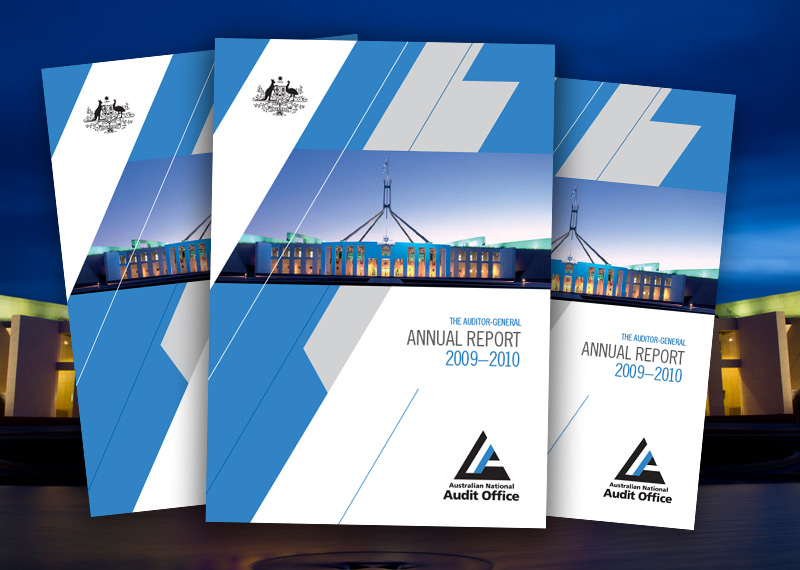
Published: Thursday 30 September 2010
Published
This annual report documents the performance of the Australian National Audit Office (ANAO) in the financial year ending on 30 June 2010. It includes a foreword by the Auditor-General, an overview including the role and responsibilities and vision of the Office, a report on performance, details about management and accountability, and the financial results.
Performance audit (Auditor-General Report No. 6 of 2001–02)
Published: Thursday 9 August 2001
Published
This follow-up audit reviewed the operations of the Australian Fisheries Management Authority (AFMA) which is responsible for ensuring the sustainable use and efficient management of Commonwealth fisheries resources. The objective of this follow-up audit was to assess the extent to which AFMA addressed the issues that gave rise to the recommendations of ANAO Report No.32 1995-96, and the related recommendations of the House of Representatives Standing Committee Report 1997, that were supported by the Government.
The follow-up audit focussed on the key issues identified in the recommendations and grouped these in the themes of:
- strategic and performance management;
- management of the advisory process;
- implementation of fisheries management methods;
- managing AFMA's environmental responsibilities as they relate to Commonwealth fisheries
management; - compliance, monitoring and enforcement responsibilities; and
- management of information and research.
Entity
Australian Fisheries and Management Authority
Performance audit (Auditor-General Report No. 29 of 2003–04)
Published: Friday 20 February 2004
Published
The audit objective was to assess the effectiveness of the National Health and Medical Research Council's governance and administrative systems. In order to achieve this objective, the audit addressed three criteria to determine whether the Council had: identified its legislated responsibilities and monitored its legislative compliance; a sound corporate governance framework to support the performance of its legislated functions; and established robust administrative systems to support the performance of its legislated functions.
Entity
National Health and Medical Research Council; Department of Health and Ageing
Performance audit (Auditor-General Report No. 50 of 2013–14)
Published: Tuesday 24 June 2014
Published
The audit objective was to assess selected agencies’ compliance with the four mandatory ICT security strategies and related controls in the Australian Government Information Security Manual.
Entity
Across Agencies
Contact
David Gray, Executive Director - Phone (02) 6203 7377
Performance audit (Auditor-General Report No. 10 of 2002–03)
Published: Thursday 3 October 2002
Published
The Department of the Treasury (Treasury) manages Australia's relations with the International Monetary Fund (IMF) and various development banks, including those belonging to the World Bank Group. The audit examined Treasury's management of these obligations. In view of the size of Australia's investments and obligations, the audit focussed on financial management issues.
Entity
Department of the Treasury; Reserve Bank of Australia
Performance audit (Auditor-General Report No. 55 of 2001–02)
Published: Friday 7 June 2002
Published
Although the audit examined broader aspects of the ATO's administration (such as, tobacco excise governance arrangements, intelligence capability and compliance and investigations activities), we placed particular emphasis on the strategies used by the ATO to address the proliferation of chop-chop (Australian grown tobacco sold illicitly in a chopped up form for $80 to $100 per kilogram. In comparison, 50 grams of legal roll-you-own tobacco costs around $16 i.e. $320 per kilogram) in the Australian markets, as it is an area of major risk to tobacco excise revenue.
Entity
Australian Taxation Office
Financial statement audit (Auditor-General Report No. 8 of 2022–23)
Published: Wednesday 14 December 2022
Published
This report complements the Interim Report on Key Financial Controls of Major Entities financial statement audit report published in June 2022. It provides a summary of the final results of the audits of the Consolidated Financial Statements for the Australian Government and the financial statements of Australian Government entities for the period ended 30 June 2022.
Entity
Across Entities
Contact
Please direct enquiries through our contact page.
Performance audit (Auditor-General Report No. 5 of 1996–97)
Published: Thursday 29 August 1996
Published
The objective of the audit was to review AusAID's management of funding to Non-Government Organisations, to assess whether:
- the objectives of overseas development programs to be delivered by NGOs were clearly established;
- funding mechanisms for the delivery of aid programs by NGOs were clearly defined, consistently applied, and in compliance with the law; and
- whether AusAID could provide assurances that NGOs delivering development projects using Commonwealth monies are accountable for: proper expenditure of Commonwealth monies; the achievement of stated objectives; and the achievement of value for money.
The ANAO examined AusAID documentation on overseas development programs delivered by NGOs, looking particularly for clear objectives, performance measures, and evaluation mechanisms. Three levels of documentation were examined:
- government programs;
- grants schemes; and
- individual projects.
Entity
Australian Agency for International Development (AusAID)
Performance audit (Auditor-General Report No. 49 of 2002–03)
Published: Tuesday 17 June 2003
Published
The audit reviewed the Australian Maritime Safety Authority's management of the navigation aids network, which is an important factor in shipping safety. The objectives of the audit were to determine whether AMSA's management of the network provides for the strategic needs of marine navigation in Australian waters, and whether AMSA's management was efficient and effective. The audit focused on AMSA's strategic planning, the management of revenue and expenditure to support the network, its contract management practices, and its accountability and performance reporting arrangements.
Entity
Australian Maritime Safety Authority
Performance audit (Auditor-General Report No. 21 of 2000–01)
Published: Thursday 8 February 2001
Published
ANAO found that the actions taken by the Department during the course of the audit to update and improve the Notes on Administration and administrative processes, by commissioning various specialist studies and reviewing governance issues, has established a sound basis for ongoing effective management of the National Highway System. The Department advised ANAO that changes to the Notes on Administration reflect joint work done with the ANAO to identify where improvements could be made and incorporate not only suggestions and recommendations that the ANAO has made in the final report but also during the audit. ANAO considers that the comprehensive revision of the Notes on Administration undertaken by the Department should foster marked improvements in the management of the National Highway System.
Entity
Department of Transport and Regional Services
Performance audit (Auditor-General Report No. 49 of 2004–05)
Published: Thursday 2 June 2005
Published
The objectives of the audit were to:determine whether entities had established effective internal control frameworks and processes to mitigate the risks associated with FBT obligations and transactions;assess whether the internal control frameworks and processes supported the payment of FBT and the reporting of reportable fringe benefit amounts (RFBAs) on employee payment summaries in accordance with the legislation;identify sound and better practices in the administration, management and operation of systems for collecting, collating, calculating, reporting and remitting FBT; and as necessary, recommend improvements in the controls and practices relating to the administration of FBT in the audited entities.
Entity
Commonwealth Scientific and Industrial Research Organisation; Department of Defence; Australian Taxation Office
Performance audit (Auditor-General Report No. 17 of 2006–07)
Published: Tuesday 23 January 2007
Published
The Department of the Treasury (the Treasury) manages Australia's relations with the International Monetary Fund (IMF) and various development banks. As of
30 June 2006, the Treasury's administered assets in the IMF and other international financial institutions totalled A$7.1 billion. Liabilities totalled A$4.8 billion. In addition to the liabilities of A$4.8 billion, there were contingent liabilities of A$7.3 billion, comprising uncalled share capital subscriptions.
In October 2002 a performance audit of the Treasury's management of international financial commitments (ANAO Audit Report No.10 of 2002–03 Treasury's Management of International Financial Commitments) was tabled in the Parliament. This audit is a follow-up to that audit. The objective was to assess the progress made by the Treasury in addressing the four major audit findings and two recommendations of the 2002 audit report.
Entity
NO-DEPTS-LISTED
Performance audit (Auditor-General Report No. 49 of 2000–01)
Published: Tuesday 12 June 2001
Published
The audit was conducted as a joint financial statement and performance audit of HIC's IT systems. The objective of the financial statement component of the audit was to express an opinion on whether HIC could rely on its IT systems to support production of a reliable set of balances for the financial statements. The objective of the performance audit component was to determine whether HIC's IT systems' outputs met quality and service delivery targets.
Entity
Health Insurance Commission
Performance audit (Auditor-General Report No. 3 of 2002–03)
Published: Wednesday 31 July 2002
Published
HMAS Cerberus is a Navy base situated south-east of Melbourne, Victoria. As a major Navy training establishment, it conducts initial recruit training, and specialist category training in areas such as communications and engineering. The Australian Defence Force (ADF) Schools of Catering and Physical Training are situated there, as is a major health centre for operational and training needs. The health centre and other facilities at HMAS Cerberus were re-developed several years ago. In August 2001, the then Minister for Defence announced that, in response to continuing concern over facilities management at HMAS Cerberus, he had asked the Australian National Audit Office (ANAO) to conduct an independent investigation. The ANAO agreed to review these matters. The objective of the audit was to examine facilities management issues at HMAS Cerberus with a view to clarifying those of concern and ensuring that lessons would be learned from them to assist Defence facilities management generally.
Entity
Department of Defence
Speeches and papers
Published: Friday 2 March 2012
Published
Mr Mr Ian McPhee - Auditor-General for Australia, presented at the 5th Symposium of the Asian Organization of Supreme Audit Institutions (ASOSAI), Jaipur, India
Performance audit (Auditor-General Report No. 22 of 2000–01)
Published: Thursday 14 December 2000
Published
The objective of this audit was to establish whether Defence has developed sound fraud control arrangements that are consistent with better practice and fulfil its responsibilities for the protection of public property, revenue, expenditure, and rights and privileges from fraudulent exploitation.
Entity
Department of Defence
Performance audit (Auditor-General Report No. 41 of 2004–05)
Published: Friday 15 April 2005
Published
The objective of the audit was to evaluate the policies and practices of selected organisations to determine whether they had established sound arrangements for, and maintained effective control over, the administration of security incidents and investigations.
Entity
Australian Crime Commission; Australian Customs Service; Australian Maritime Safety Authority; Child Support Agency; Department of Finance and Administration; Attorney-General’s Department