Browse our range of reports and publications including performance and financial statement audit reports, assurance review reports, information reports and annual reports.
Performance audit (Auditor-General Report No. 8 of 1995–96)
Published: Wednesday 15 November 1995
Published
Audit Report No.5 1993-94, Explosive Ordnance, Department of Defence, was tabled in the Parliament in September 1993. The report was structured in three parts. The first part covered explosive ordnance (EO) issues common to all three Services; the second part focused on the management of explosive ordnance by the Navy; and the third part was a follow-up of the 1987 audit report on Air Force explosive ordnance. The report made 39 recommendations. Defence agreed to implement most of them.
It was considered timely to undertake a follow-up audit into key issues of the recommendations contained in the audit report, given the elapsed time since the report was tabled and the issues associated with public safety.
Entity
Department of Defence
Annual report
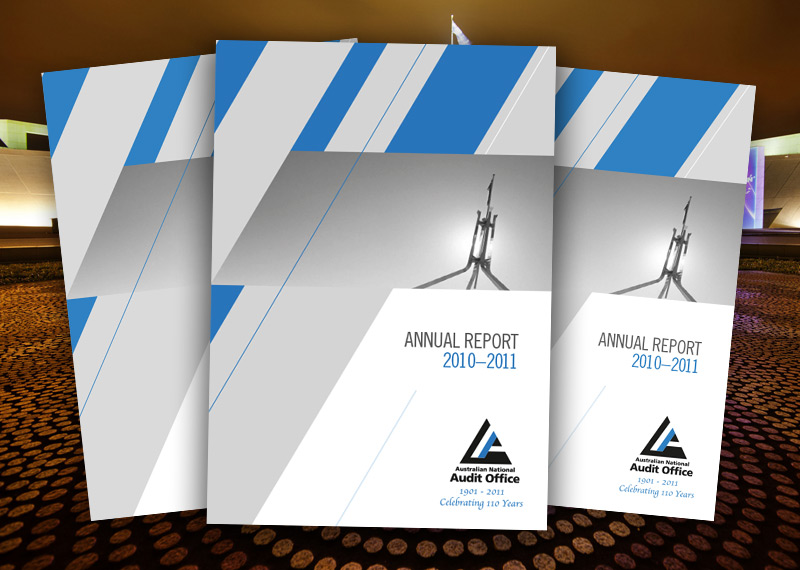
Published: Friday 30 September 2011
Published
This annual report documents the performance of the Australian National Audit Office (ANAO) in the financial year ending on 30 June 2011. It includes a foreword by the Auditor-General, an overview including the role and vision of the Office, a report on performance, details about management and accountability, and the financial results.
Annual report
Published: Thursday 26 September 2002
Published
This annual report documents the performance of the Australian National Audit Office (ANAO) in the financial year ending on 30 June 2002. It includes a comment by the Auditor-General on Audit independence and effectiveness; an overview of the Auditor-General’s role and responsibilities; a report on performance; details about management and accountability, and the financial statement for the year.
Insights: Audit lessons

Published: Monday 16 October 2023
Published
The aim of Insights: Audit Lessons (formerly Audit Insights) is to communicate lessons from our audit work and to make it easier for people working within the Australian public sector to apply those lessons.
This edition of Insights: Audit Lessons is targeted at Australian Government officials who are working in governance roles or who have responsibility for ensuring effective oversight and management of probity. Although it is based on audits of financial regulators, the lessons for managing probity risks can be applied across the public sector.
Contact
Please direct enquiries through our contact page.
Annual report
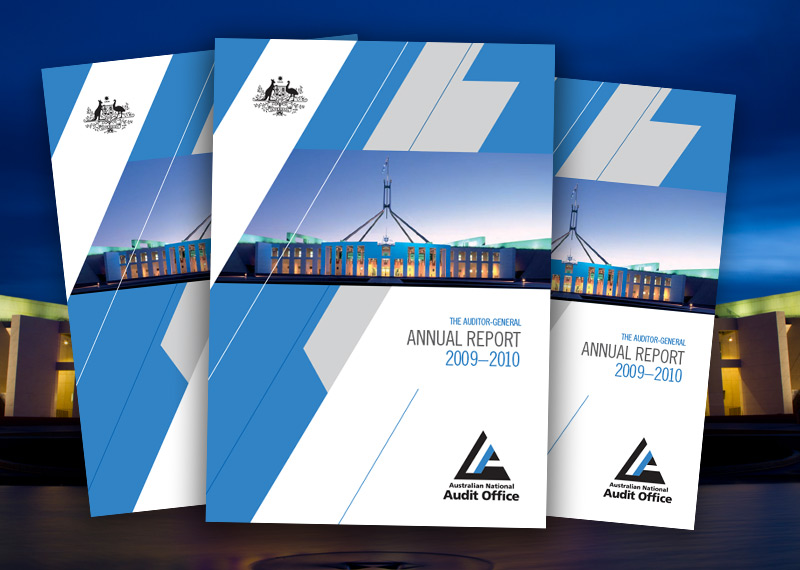
Published: Thursday 30 September 2010
Published
This annual report documents the performance of the Australian National Audit Office (ANAO) in the financial year ending on 30 June 2010. It includes a foreword by the Auditor-General, an overview including the role and responsibilities and vision of the Office, a report on performance, details about management and accountability, and the financial results.
Speeches and papers
Published: Thursday 20 November 2003
Published
Mr P.J. Barrett (AM) - Auditor-General for Australia, presented at the CPA Australia National Public Sector Convention, Perth
Performance audit (Auditor-General Report No. 52 of 2003–04)
Published: Tuesday 15 June 2004
Published
The objective of this audit was to follow up DVA's implementation of the recommendations in Audit Report No. 44, 2000-01, Information Technology in the Department of Veterans' Affairs. The ANAO made two recommendations in the report (the second having five parts). The recommendations addressed the monitoring of IT changes; IT performance information; information systems model documentation; and the facilitation of the interpretation of performance information.
Entity
Department of Veterans' Affairs
Audit Matters
Published: Friday 13 December 2024
Published
Welcome to the second edition of the ANAO’s quarterly Audit Matters newsletter. The purpose of Audit Matters is to provide updates on the ANAO’s work and provide insights on what we are seeing in the Australian Government sector.
Audit Matters complements the range of reports we table in the Parliament as well as our insights products and events and seminars. I hope you find it useful and please forward it on to your colleagues, and encourage them to sign-up for future editions.
It’s no secret that a federal election is due to happen. No doubt your minds will turn to your entities’ preparedness for this event now or in the near future. At the time the election is called, I’ll write out to entities to help people understand how the ANAO operates during an election period.
Rona Mellor PSM, Deputy Auditor-General
Contact
Please direct enquiries through our contact page or subscribe to receive the email version of Audit Matters in the future.
Performance audit (Auditor-General Report No. 41 of 2007–08)
Published: Wednesday 18 June 2008
Published
The objective of this audit was to assess the effectiveness of personnel security arrangements at selected Australian Government organisations, including whether they satisfied the requirements of the PSM.
To address this objective, the audit examined the extent to which the selected organisations implemented the 14 recommendations from the three previous reports.
Entity
NO-DEPTS-LISTED
Performance audit (Auditor-General Report No. 12 of 2004–05)
Published: Tuesday 19 October 2004
Published
The ANAO Audit Report No. 51 of 2001/02, Research Project Management, Commonwealth Scientific and Industrial Research Organisation, assessed the effectiveness of CSIRO in administering research projects to deliver required results. The audit made nine recommendations designed to improve project management in CSIRO. The purpose of this follow-up audit was to assess the extent to which CSIRO has implemented the recommendations of the previous audit and of the JCPAA.
Entity
Commonwealth Scientific and Industrial Research Organisation
About

Updated: Thursday 27 March 2025
Updated
The Auditor-General is an independent officer of the Australian Parliament and has discretion in the performance or exercise of Auditor-General functions or powers. In exercising the mandated and discretionary functions and powers, the Auditor-General is not subject to direction from anyone in relation to: whether or not a particular audit is to be conducted; the way in which a particular audit is to be conducted; or the priority to be given to any particular matter. The Auditor-General must, however, have regard to the audit priorities of the Parliament, as determined by the Joint Committee of Public Accounts and Audit (JCPAA).
Contact
Please direct enquiries through our contact page.
Performance audit (Auditor-General Report No. 31 of 2007–08)
Published: Tuesday 29 April 2008
Published
The objective of the audit was to assess whether APS agencies had sound approaches to recruitment, to assist in providing the workforce capability to deliver government programs effectively. Sound approaches to recruitment involve agencies:
- establishing and implementing strategic approaches to recruitment to address current and future workforce priorities and goals;
- managing and supporting recruitment activities through the provision of expert advice and support, legislative and procedural guidance material, and training for staff involved in recruitment activities;
- conducting recruitment activities effectively and in compliance with legislative and administrative requirements; and
- systematically monitoring and evaluating the effectiveness and efficiency of recruitment strategies, policies and activities.
Entity
NO-DEPTS-LISTED
Performance audit (Auditor-General Report No. 48 of 2003–04)
Published: Thursday 27 May 2004
Published
The objective of the performance audit was to report to Parliament our assessment as to how well the ATO manages and uses the AIIR data in taxation administration. The ANAO considered the following four key areas in addressing the audit objective. 1. Governance arrangements within the ATO, focussing on whole of ATO and whole-of-government aspects of the AIIR data, as distinct from solely business line applications. 2. Receipt of AIIR data and how well the ATO facilitates the collection of complete and valid AIIR data from investment bodies 3. Management of AIIR data through the construction by the ATO of valid entity records by using the AIIR data in conjunction with existing ATO client identification master files. 4: Use of the AIIR data on a systematic basis to inform active compliance activities.
Entity
Australian Taxation Office
Request for audit
Responded: Thursday 14 November 2019
Response provided
The Auditor-General responded on 14 November 2019 to correspondence from the Minister for Finance, Senator the Hon Mathias Cormann, regarding annual performance statements audits. The Minister requested that the Auditor-General conduct a program of pilot assurance audits of annual performance statements of Commonwealth entities subject to the PGPA Act, in consultation with the Joint Committee of Public Accounts and Audit (JCPAA). The Auditor-General has agreed to the request and proposes to conduct a pilot to audit the 2019–20 performance statements of three entities.
Contact
Please direct enquiries through our contact page.
Corporate
Published: Friday 1 November 2024
Published
The ANAO regards integrity as a core value of the organisation — critical in sustaining the confidence of Parliament, strengthening public trust in government and delivering quality audit products. Maintaining strong institutional integrity is critical to the operations and reputation of the ANAO.
The ANAO Integrity Framework provides an overarching structure to the integrity control system, supporting our institution’s integrity. The framework serves to assist in ethical decision-making and risk, fraud and misconduct management.
Beyond its control system, the ANAO maintains an enduring focus on promoting integrity as a value that is embedded in our work and culture. The ANAO recognises that integrity demands quality not only in our products but also in the behaviours of our people.
The ANAO Integrity Advisor supports the effective and ongoing application of the Integrity Framework by providing advice to staff regarding integrity matters. The Integrity Advisor is responsible for increasing integrity awareness across the organisation and for reporting annually to the ANAO Executive Board of Management on actions taken under the Framework. The Auditor-General publishes the ANAO Integrity Framework and annual Integrity Report to provide increased transparency of the measures we undertake to maintain a high-integrity culture in the ANAO.
Contact
Please direct enquiries through our contact page.
Corporate

Published: Thursday 20 November 2025
Published
The ANAO regards integrity as a core value of the organisation — critical in sustaining the confidence of Parliament, strengthening public trust in government and delivering quality audit products. Maintaining strong institutional integrity is critical to the operations and reputation of the ANAO.
The ANAO Integrity Framework provides an overarching structure to the integrity control system, supporting our institution’s integrity. The framework serves to assist in ethical decision-making and risk, fraud and misconduct management.
Beyond its control system, the ANAO maintains an enduring focus on promoting integrity as a value that is embedded in our work and culture. The ANAO recognises that integrity demands quality not only in our products but also in the behaviours of our people.
The ANAO Integrity Advisor supports the effective and ongoing application of the Integrity Framework by providing advice to staff regarding integrity matters. The Integrity Advisor is responsible for increasing integrity awareness across the organisation and for reporting annually to the ANAO Executive Board of Management on actions taken under the Framework. The Auditor-General publishes the ANAO Integrity Framework and annual Integrity Report to provide increased transparency of the measures we undertake to maintain a high-integrity culture in the ANAO.
Contact
Please direct enquiries through our contact page.
Insights: Audit practice
Published: Thursday 26 April 2018
Published
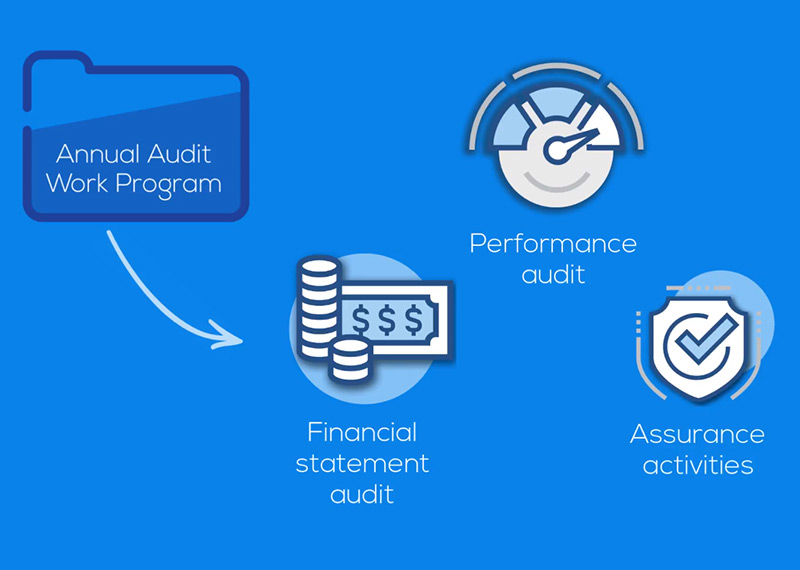
The Auditor-General publishes an annual audit work program in July each year, which takes regard of the priorities of the Parliament as outlined in the Auditor-General Act. The purpose of the program is to inform the Parliament, government sector entities and the public of the audits we propose to deliver throughout the financial year. The program covers financial statement and performance audits, and other assurance activities.
Contact
Please direct enquiries relating to audit insights through our contact page.
Performance audit (Auditor-General Report No. 56 of 2002–03)
Published: Wednesday 25 June 2003
Published
The objective of the audit was to report to Parliament on the progress Defence has made since June 2001 in implementing appropriate strategies for recruiting, developing and retaining skilled IT personnel. The audit focused on management of specialist information system skills and did not examine skills needed by users of information systems, although the latter is of obvious importance for overall performance. In June 2001, the Joint Committee of Public Accounts and Audit (JCPAA), after reviewing the ANAO's Audit Report No. 11 Knowledge System Equipment Acquisition Projects in Defence, commented that its major concern about Defence's ability to develop a knowledge edge with adequate coherence, centred on Defence's ability to recruit, develop and retain skilled individuals needed in all parts of the DIE. The JCPAA recommended that the ANAO conduct an audit of Defence's strategies for recruiting, developing and retaining skilled IT personnel.
Entity
Department of Defence
Speeches and papers
Published: Friday 20 September 2002
Published
Mr P.J. Barrett (AM) - Auditor-General for Australia, presented at the CPA Australia's Government Business Symposium, Melbourne
Events and seminars
Published: Monday 22 July 2024
Published
The speech delivered by the Acting Deputy Auditor-General and the presentations by ANAO speakers at the Financial and Performance Reporting Forum held on Friday 5 July 2024 are now available.
If you would like a copy of the video recording please contact External.Relations@anao.gov.au
Contact
If you have any questions about the Financial and Performance Reporting Forum please contact External.Relations@anao.gov.au
Performance audit (Auditor-General Report No. 9 of 2016–17)

Published: Wednesday 31 August 2016
Published
The audit objective was to assess the adequacy and effectiveness of the Department of Health’s implementation of the recommendations made in the ANAO Report No.25 2014–15 Administration of the Fifth Community Pharmacy Agreement.
Entity
Department of Health
Contact
Please direct enquiries relating to reports through our contact page.
Performance audit (Auditor-General Report No. 18 of 2003–04)
Published: Wednesday 10 December 2003
Published
The Australian National Audit Office (ANAO) completed a performance audit of the ATO's use of AUSTRAC data in August 2000, titled The AustralianTaxation Office's Use of AUSTRAC Data, Audit Report No. 7 2000-2001. It found that the ATO had used AUSTRAC data to achieve a significant improvement in the collection of taxation revenue. The ANAO considered that the ATO could build on this success by using AUSTRAC data more effectively at both the strategic and operational levels. The audit made six recommendations. The ATO agreed with all recommendations. The objective of this follow-up performance audit was to assess the ATO's progress in implementing the recommendations of Audit Report No 7 2000-2001, The Australian Taxation Office's Use of AUSTRAC Data.
Entity
Australian Taxation Office
Performance audit (Auditor-General Report No. 52 of 2004–05)
Published: Monday 20 June 2005
Published
The objectives of the Australian National Audit Office's (ANAO) performance audit were to: examine the efficiency and effectiveness of agencies' procurement and management of legal services arrangements; determine adherence to Australian Government policy requirements; examine the effectiveness of the OLSC's monitoring of agencies' compliance with Government policy requirements; examine the OLSC's role in assisting agencies to comply with Government policy.
Entity
Across Entities
Performance audit (Auditor-General Report No. 8 of 2003–04)
Published: Monday 20 October 2003
Published
The audit is a follow-up of ANAO Audit Report No.33 of 1997-98, which assessed the effectiveness and efficiency of the Commonwealth's management of the Great Barrier Reef and made seven recommendations for improvement. The objective of the follow-up audit was to assess the extent to which the Great Barrier Reef Marine Park Authority, which is responsible for advising the Commonwealth on the care and developement of the Marine Park, has implemented the recommendations of the earlier audit.
Entity
The Great Barrier Reef Marine Park Authority
Performance audit (Auditor-General Report No. 30 of 2006–07)
Published: Wednesday 14 March 2007
Published
The objectives of this follow-up audit were to:
- examine the ATO's implementation of the ten recommendations in The Australian Taxation Office's Management of its Relationship with Tax Practitioners (Audit Report No.19, 2002–03), having regard to any changed circumstances, or new administrative issues, affecting implementation of those recommendations; and
- identify scope for improvement in the ATO's management of its relationship with tax practitioners.
Follow up audits are recognised as an important element of the accountability processes of Commonwealth administration. Parliament looks to the Auditor General to report, from time to time, on the extent to which Commonwealth agencies have implemented recommendations of previous audit reports. Follow up audits keep Parliament informed of progressive improvements and current challenges in areas of Commonwealth administration that have previously been subject to scrutiny through performance audits.
Entity
Australian Taxation Office
Performance audit (Auditor-General Report No. 23 of 2018–19)

Published: Thursday 17 January 2019
Published
The objective of this audit was to assess the extent to which the Department of Agriculture and Water Resources (Agriculture) has addressed the recommendations from ANAO Audit Report No. 46 of 2011–12, Administration of the Northern Australia Quarantine Strategy (NAQS).
Entity
Department of Agriculture and Water Resources
Contact
Please direct enquiries through our contact page.
Performance audit (Auditor-General Report No. 13 of 2000–01)
Published: Wednesday 4 October 2000
Published
The audit examined a range of issues in relation to the development of certified agreements in the APS with particular emphasis on the link between improved pay and conditions and increased productivity, and the funding of agreements. The objectives of the audit were to:
- provide an overview of the range of wage outcomes included in the first round of APS certified agreements;
- identify the administrative arrangements agencies have in place to measure any improvements in productivity that were linked to pay increases;
- determine how agencies funded their certified agreements;
- review the reporting and accountability arrangements agencies have in place to monitor progress and to evaluate the outcomes of their certified agreements;
- determine the extent to which agencies complied with the employment terms and conditions outlined in their certified agreements that contributed to paying for their agreement or measuring and/or assessing improvements in productivity; and
- examine the role of central coordinating agencies in reviewing agencies' certified agreements.
Entity
Across Agency
Speeches and papers
Published: Wednesday 9 May 2012
Published
Mr Mr Ian McPhee - Auditor-General for Australia, presented at the Global Working Group of Auditors-General, Stockholm, Sweden
Performance audit (Auditor-General Report No. 3 of 2001–02)
Published: Tuesday 17 July 2001
Published
Taxation rulings are a key mechanism used by the Australian Taxation Office (ATO) to disseminate the Commissioner of Taxation's interpretative advice on Australian taxation law. The objective of the audit was to:
report to Parliament on the operation of the ATO's administration of taxation rulings (public, private and oral rulings); and where appropriate, make recommendations for improvements, having regard to considerations of: efficiency and effectiveness of the ATO's administration of the rulings system, particularly in relation to the achievement of the objectives set by Parliament for the rulings system; the ATO's systems' capacity to deliver consistency and fairness for taxpayers; and good corporate governance, including the control framework.
Entity
Australian Taxation Office
Financial statement audit (Auditor-General Report No. 13 of 2013–14)

Published: Wednesday 18 December 2013
Published
This report complements the interim phase report released in June 2013 (Audit Report No.49 2012–13), and provides a summary of the final audit results of the audits of the financial statements of all Australian Government entities, including the Consolidated Financial Statements for the Australian Government.
Entity
Across Agencies
Contact
Please direct enquiries relating to reports through our contact page.