Browse our range of reports and publications including performance and financial statement audit reports, assurance review reports, information reports and annual reports.
Performance audit (Auditor-General Report No. 19 of 1999–2000)
Published: Monday 22 November 1999
Published
The audit reviewed the operations of the Civil Aviation Authority (CASA), which has prime responsibility for regulating aviation safety in Australia. The audit objectives were to assess the efficiency and effectiveness of the management systems and procedures used by CASA to ensure compliance with regulatory controls by Air Operator's Certificate holders operating passenger-carrying aircraft within High Capacity Regular Public Transport; Low Capacity Regular Public Transport and charter industry sectors; and Certificate of Approval holders. Aviation safety compliance includes entry control, surveillance and enforcement.
Entity
Civil Aviation Safety Authority
Performance audit (Auditor-General Report No. 41 of 2005–06)
Published: Wednesday 24 May 2006
Published
The audit objective was to assess Health's administration of primary care funding, with a focus on the administrative practices of the Primary Care Division and Health's State and Territory Offices. In forming an opinion on the audit objective, the ANAO reviewed 41 agreements, with a combined value of $252 million. The ANAO also reviewed relevant documentation and files, interviewed programme officers and met with a number of stakeholders. The audit comments on a range of issues, including the utility of funding agreements, monitoring, payments, and support for administrators.
Entity
Department of Health and Ageing
Performance audit (Auditor-General Report No. 47 of 1998–99)
Published: Tuesday 15 June 1999
Published
The objectives of the audit were to form an opinion on the management of Commonwealth agencies' compliance with the Commonwealth's energy efficiency requirements and to identify areas for better practice in energy management. The audit focussed on:
- the implementation of the Energy Policy by Commonwealth Agencies; promulgation and coordination of energy use targets;
- energy and associated reporting by Commonwealth agencies;
- identification, examination and analysis of systemic and procedural impediments to achieving the Energy Policy; and
- development and discussion of ways to address these impediments.
Entity
Department of Industry, Science and Resources; Australian Greenhouse Office
Annual report
Published: Thursday 29 August 2024
Published
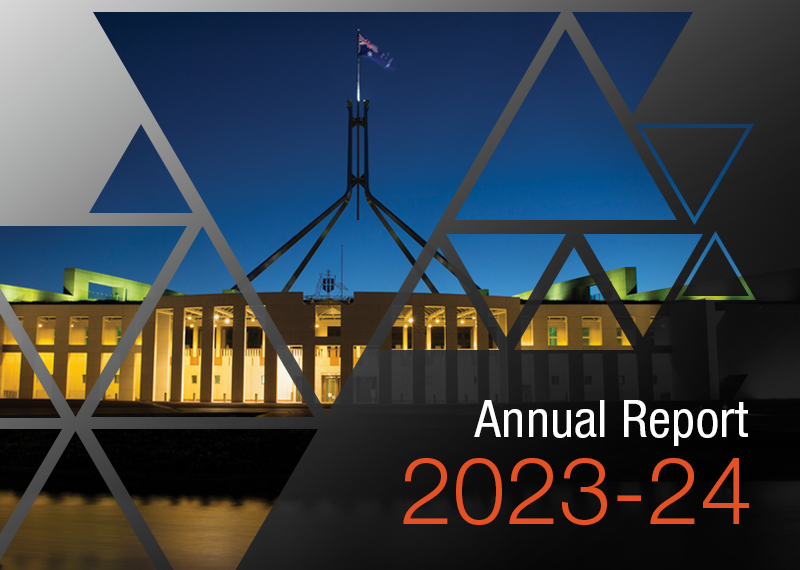
This annual report documents the performance of the Australian National Audit Office (ANAO) in the financial year ended 30 June 2024. The report addresses all applicable obligations under the Public Governance, Performance and Accountability Act 2013; the Public Governance, Performance and Accountability Rule 2014; the Auditor-General Act 1997; the performance measures set out in the outcome and programs framework in the ANAO’s Portfolio Budget Statements 2023–24 and in the ANAO Corporate Plan 2023–24; and annual reporting requirements set out in other relevant legislation.
Contact
Please direct enquiries through our contact page.
Performance audit (Auditor-General Report No. 37 of 2008–09)
Published: Monday 25 May 2009
Published
The objectives of the audit were to:
- determine the extent to which government entities complied with the requirement to publish and maintain documents online that were presented to the Parliament;
- evaluate selected government entities' policies and practices regarding online publishing; and
- assess AGIMO's policy and guidance in support of online publishing.
To address this objective the audit was conducted in three parts. Firstly, we reviewed a sample of papers tabled between 2000 and 2008 in order to assess their availability online. Next, we examined the online publishing practices of five government entities. These were the: Australian Federal Police (AFP); Department of the House of Representatives (DHR); Department of Infrastructure, Transport, Regional Development and Local Government (Infrastructure); Department of the Treasury (Treasury); and National Archives of Australia (NAA). Finally, we reviewed AGIMO's role in supporting government entities in their online publishing practices.
Entity
Across Agencies
Performance audit (Auditor-General Report No. 38 of 2014–15)

Published: Tuesday 2 June 2015
Published
The objective of the audit was to assess the effectiveness of the Australian Securities and Investments Commission’s administration of enforceable undertakings.
Entity
Australian Securities and Investments Commission
Contact
Please direct enquiries relating to reports through our contact page.
Performance audit (Auditor-General Report No. 36 of 2006–07)
Published: Wednesday 16 May 2007
Published
The audit objectives were to examine if:
- DCITA had effectively planned and administered the HiBIS and BC Stage 1 programs; and
- the programs had achieved their objectives.
The audit focused on DCITA's activities to support the planning, implementation, monitoring and reporting of HiBIS and BC Stage 1 programs.
Entity
NO-DEPTS-LISTED
Performance audit (Auditor-General Report No. 32 of 2011–12)
Published: Thursday 3 May 2012
Published
The audit objective was to assess the effectiveness of the Department of Veterans’ Affairs management of complaints and other feedback to support service delivery. The audit criteria were that DVA has:
- a well-designed framework for managing complaints and other feedback;
- effective processes and practices to manage complaints; and
- appropriately analysed complaints to inform service delivery.
Entity
Department of Veterans' Affairs
Performance audit (Auditor-General Report No. 6 of 2003–04)
Published: Monday 15 September 2003
Published
The audit reviewed APRA's regulation of approved Trustees and superannuation funds registered under the Superannuation Industry (Supervision) Act 1993. The audit evaluated APRA's superannuation supervisory activities: and assessed the effectiveness of its supervision of superannuation entities. Particular attention was paid to the supervisory framework and the risk-based supervisory methodologies of APRA's frontline supervisory divisions.
Entity
Australian Prudential Regulation Authority
Performance audit (Auditor-General Report No. 18 of 2014–15)
Published: Wednesday 28 January 2015
Published
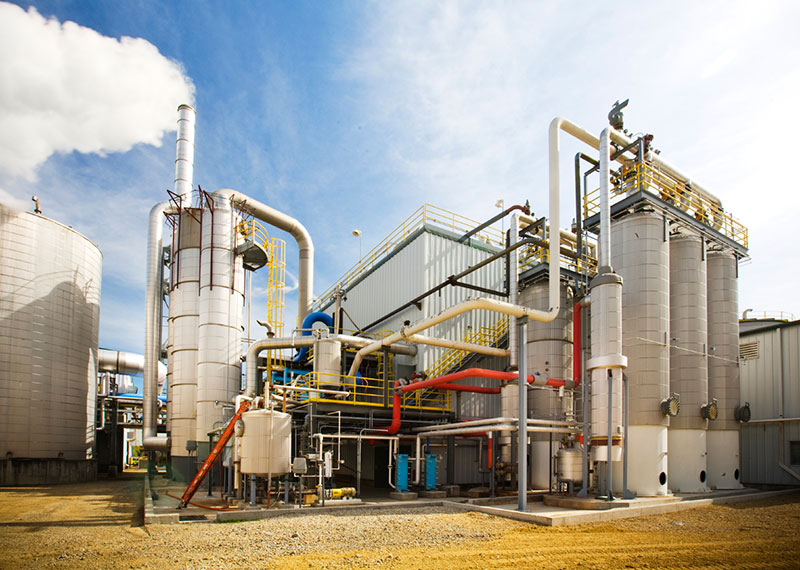
The objective of the audit was to examine the effectiveness of Industry’s administration of the Ethanol Production Grants Program, including relevant advice on policy development.
Entity
Department of Industry and Science
Performance audit (Auditor-General Report No. 42 of 2000–01)
Published: Wednesday 30 May 2001
Published
The Australian Prudential Regulation Authority (APRA) was established on 1 July 1998 as the prudential regulator of banks and other authorised deposit-taking institutions (ADIs), life insurance companies (including friendly societies), general insurance companies, superannuation funds and retirement savings accounts. ANAO's objectives for this audit were to assess the efficiency and effectiveness of APRA's prudential supervision of banks. Prudential supervision aims to protect depositors by ensuring that financial institutions adopt prudent risk management practices designed to ensure their continuing solvency and liquidity. APRA is a relatively new organisation, established in July 1998 and becoming responsible for prudential supervision of all ADIs from July 1999. ANAO concluded that there are steps APRA can take in a number of areas to improve its supervisory practices, including improving the administration of the ADI supervisory levy; strengthening its risk management approach; and maintaining closer adherence to international standards for prudential supervision issued by the Basle Committee on Banking Supervision. ANAO made five recommendations concerning administration of levies, risk-based supervision and supervision of cross-border banking. APRA agreed, or agreed with qualifications, to all recommendations, as well as agreeing with the overall audit conclusions.
Entity
Australian Prudential Regulation Authority
Annual report
Published: Monday 28 September 2020
Published
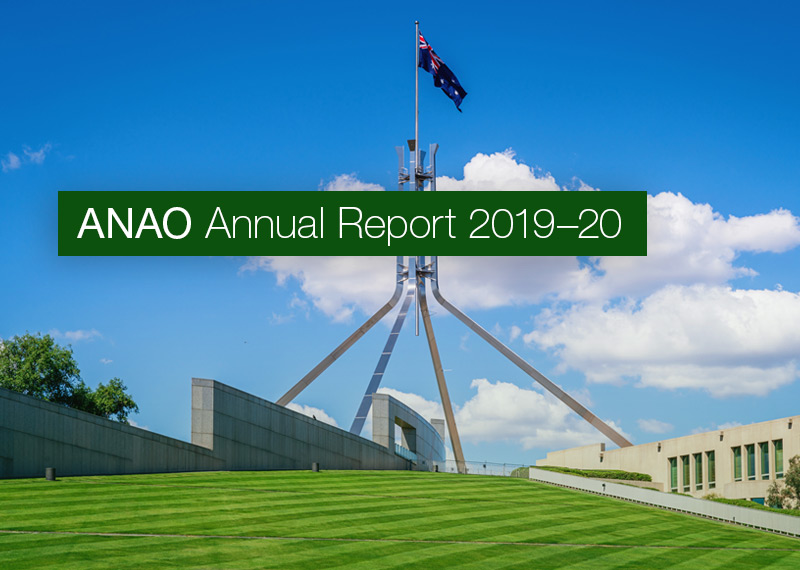
This annual report documents the performance of the Australian National Audit Office (ANAO) in the financial year ended 30 June 2020. The report addresses all applicable obligations under the Public Governance, Performance and Accountability Act 2013; the Public Governance, Performance and Accountability Rule 2014; the Auditor-General Act 1997; the performance measures set out in the outcome and programs framework in the ANAO's Portfolio Budget Statements 2019–20 and the ANAO Corporate Plan 2019–20; and annual reporting requirements set out in other relevant legislation.
Contact
Please direct enquiries relating to annual reports through our contact page.
Performance audit (Auditor-General Report No. 34 of 2003–04)
Published: Friday 5 March 2004
Published
In 1997, and subsequently in 1999, the Australian Government introduced two major spending packages with a total value of almost $1 billion. These spending packages were designed to address the challenges posed by the issue of climate change and to meet Australia's domestic and international commitments. Since its inception in 1998, the Australian Greenhouse Office has been responsible for the implementation of greenhouse related programs from these two major spending packages. The objective of the audit was to examine and report on the administrative efficiency and effectiveness of seven major programs administered by the Australian Greenhouse Office.
Entity
Australian Greenhouse Office
Performance audit (Auditor-General Report No. 3 of 2014–15)

Published: Thursday 30 October 2014
Published
The audit objective was to examine the selected entities’ effectiveness in implementing entity-wide fraud control arrangements, including compliance with the requirements of the 2011 Commonwealth Fraud Control Guidelines (2011 Guidelines), and the overall administration of the fraud control framework by the Attorney-General’s Department.
Entity
Across Entities
Annual report
Published: Tuesday 14 August 2018
Published
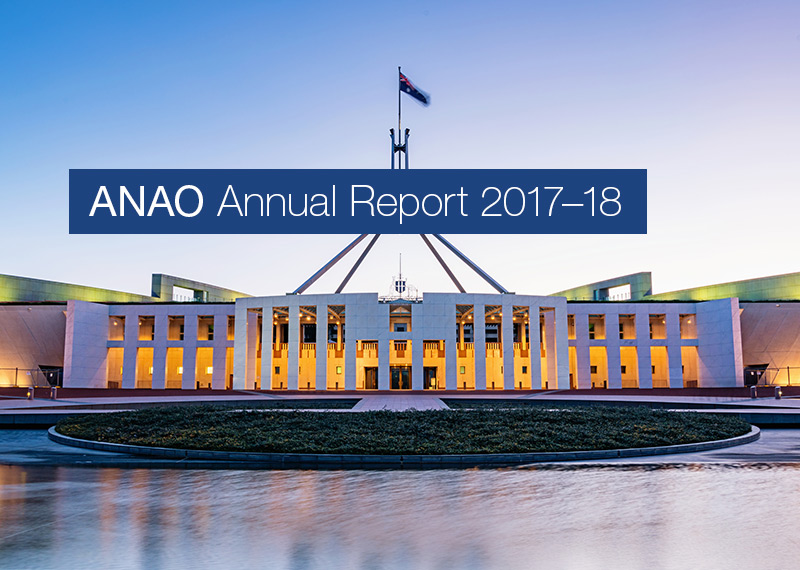
This annual report documents the performance of the Australian National Audit Office (ANAO) in the financial year ending on 30 June 2018. The report addresses all applicable obligations under the Public Governance, Performance and Accountability Act 2013 (PGPA Act); the Public Governance, Performance and Accountability Rule 2014 (PGPA Rule); the Auditor-General Act 1997; the performance measures set out in the outcome and programs framework in the ANAO’s 2017–18 Portfolio Budget Statements (PBS) and the ANAO 2017–18 Corporate Plan and annual reporting requirements set out in other relevant legislation.
Contact
Please direct enquiries relating to annual reports through our contact page.
Performance audit (Auditor-General Report No. 53 of 2016–17)

Published: Wednesday 31 May 2017
Published
The objective of the audit was to assess the effectiveness of Australian Government-funded aged care services delivered to Aboriginal and Torres Strait Islander people.
Please note: Aboriginal and Torres Strait Islander people should be aware that this website may contain images of deceased people.
Entity
Department of Health; Australian Aged Care Quality Agency
Contact
Please direct enquiries relating to reports through our contact page.
Speeches and papers
Published: Thursday 12 August 1999
Published
Mr P.J. Barrett (AM) - Auditor-General for Australia, presented at the Health Insurance Commission Senior Management Group
Performance audit (Auditor-General Report No. 32 of 2007–08)
Published: Thursday 8 May 2008
Published
The objective of the audit was to assess the completeness and reliability of the estimates reported in Tax Expenditures Statement 2006 (TES 2006). That is, the audit examined the development and publication of the detailed statement of actual tax expenditures required by Division 2 of Part 5 of the CBH Act. The development and publication of aggregated information on projected tax expenditures included in the Budget Papers pursuant to Division 1 of Part 5 of the CBH Act was not examined.
Entity
Department of Treasury
Speeches and papers

Published: Wednesday 8 August 2018
Published
Grant Hehir, Auditor-General for Australia, attended the 18th Meeting of INTOSAI Working Group on Environmental Auditing in Bundung Indonesia in July 2018, and presented a keynote address titled Sharing experience on auditing urban environmental management. The accompanying paper to the speech is available here.
Contact
Please direct enquiries through our contact page.
Speeches and papers
Published: Thursday 1 September 2005
Published
Mr Ian McPhee - Auditor-General for Australia, presented to the Australian Institute of Company Directors, in conjunction with the Institute of Internal Auditors Australia
Performance audit (Auditor-General Report No. 33 of 2024–25)

Published: Wednesday 21 May 2025
Published
The audit objective was to assess the effectiveness of the Department of the Prime Minister and Cabinet’s administration of the IA framework to enable well-informed and transparent Australian Government decision-making.
Entity
Department of the Prime Minister and Cabinet
Contact
Please direct enquiries through our contact page.
Performance audit (Auditor-General Report No. 24 of 1997–98)
Published: Monday 15 December 1997
Published
The objective of the audit was to review the efficiency, economy and administrative effectiveness of departmental activities leading to the letting of the contract with SPCL and its subsequent administration. This included, among other things, an examination of action taken to protect the Commonwealth's interests and the adequacy of relevant departmental guidelines and processes. A primary aim of the audit was to identify the facts of the particular case, including any administrative inadequacies that led to unnecessary financial exposure for the Commonwealth and less than satisfactory outcomes. In particular, the audit aimed to identify elements of better practice that could be followed under similar circumstances or programs in the future.
Entity
Department of Education, Training and Youth Affairs
Speeches and papers
Published: Friday 1 November 2013
Published
Mr Mr Ian McPhee - Auditor-General for Australia, presented to the Risk Management Institute of Australia and the Australasian Compliance Institute, at the 2nd Annual GRC Conference, Melbourne
Performance audit (Auditor-General Report No. 23 of 2015–16)

Published: Thursday 25 February 2016
Published
The objective of the audit was to assess the effectiveness of the Australian Competition and Consumer Commission in managing compliance with fair trading obligations.
Entity
Australian Competition and Consumer Commission (ACCC)
Contact
Please direct enquiries relating to reports through our contact page.
Performance audit (Auditor-General Report No. 26 of 2009–10)
Published: Tuesday 20 April 2010
Published
The objective of this audit was to assess the effectiveness of the administration of specific climate change programs by the departments of the Environment, Water, Heritage and the Arts and Resources, Energy and Tourism. In undertaking this audit, particular emphasis was given to the implementation of good administrative practice and the extent to which the program objectives were being met. The audit followed four lines of inquiry:
- development of program objectives and assessment of program risks;
- assessment and approval of competitive grant applications;
- assessment and approval of rebate applications; and
- measurement and reporting of program outcomes.
Entity
Department of the Environment, Water, Heritage and the Arts; Department of Climate Change and Energy Efficiency; Department of Resources, Energy and Tourism
Speeches and papers

Published: Friday 31 March 2017
Published
Grant Hehir, Auditor-General for Australia, attended the XXIII Commonwealth Auditors-General Conference in New Delhi, India, and presented a keynote speech on 22 March 2017 titled Environmental Audit: A Commonwealth Perspective.
Contact
Please direct enquiries relating to speeches through our contact page.
Performance audit (Auditor-General Report No. 31 of 2014–15)

Published: Thursday 23 April 2015
Published
The audit objective was to assess the effectiveness of the (former) Department of Industry’s administration of the Australian Apprenticeships Incentives Program.
Entity
Department of Education and Training
Contact
Please direct enquiries relating to reports through our contact page.
Performance audit (Auditor-General Report No. 3 of 2023–24)

Published: Monday 28 August 2023
Published
The objective of the audit was to assess the effectiveness of the department’s management of non-compliance with the Therapeutic Goods Act 1989 for unapproved therapeutic goods.
Entity
Department of Health and Aged Care
Contact
Please direct enquiries through our contact page.
Performance audit (Auditor-General Report No. 1 of 2002–03)
Published: Thursday 18 July 2002
Published
The overall objective of the audit was to determine whether Health's management and operation of selected IT systems:
- met industry better practice;
- met quality and service delivery parameters set by Health and, if applicable, by the Government; and
- operate effectively, efficiently and economically.
The audit applied selected processes from CobiT (Control Objectives for Information and Related Technology) to assist with the assessment of key aspects of Health's management and operation of IT. The audit builds on ANAO's earlier IT audits using CobiT.
Entity
Department of Health and Ageing
Performance audit (Auditor-General Report No. 4 of 2021–22)

Published: Monday 13 September 2021
Published
The objective of this audit was to examine the effectiveness of the Department of Defence's administration of contractual obligations relating to the Defence Industry Security Program.
Entity
Department of Defence
Contact
Please direct enquiries through our contact page.