Browse our range of reports and publications including performance and financial statement audit reports, assurance review reports, information reports and annual reports.
Performance audit (Auditor-General Report No. 33 of 2000–01)
Published: Monday 7 May 2001
Published
The objective of the ANAO audit was to identify possible areas for improvement in the Australian Defence Force's management of its Reserve forces. The audit focused on major aspects of the Reserves including roles and tasks, force structure, capability, training, individual readiness, equipment, facilities, recruitment, retention, conditions of service and administration. The audit covered the Australian Naval Reserve, the Australian Army Reserve and the Royal Australian Air Force Reserve. However, due to its size and cost, the Army Reserve was a major focus of the audit activity.
Entity
Department of Defence
Performance audit (Auditor-General Report No. 52 of 2004–05)
Published: Monday 20 June 2005
Published
The objectives of the Australian National Audit Office's (ANAO) performance audit were to: examine the efficiency and effectiveness of agencies' procurement and management of legal services arrangements; determine adherence to Australian Government policy requirements; examine the effectiveness of the OLSC's monitoring of agencies' compliance with Government policy requirements; examine the OLSC's role in assisting agencies to comply with Government policy.
Entity
Across Entities
Performance audit (Auditor-General Report No. 23 of 2001–02)
Published: Friday 7 December 2001
Published
The audit reviewed the broadcasting planning and licensing operations of the Australian Broadcasting Authority, which is responsible for planning the availability of segments of the broadcasting services bands used by radio and television for analogue and digital broadcasting. The objective was to assess the ABA's management of licence area planning and the subsequent issue of broadcasting licences, focussing on analogue radio planning and identifying improved administrative practices, where possible, together with the main factors that have contributed to the delays to date in achieving the planning timetable.
Entity
Australian Broadcasting Authority
Performance audit (Auditor-General Report No. 22 of 1998–99)
Published: Tuesday 15 December 1998
Published
The audit reviewed six budget-funded agencies (Australian Customs Service, Australian Taxation Office, Centrelink, Department of Defence, Department of Education, Training and Youth Affairs, and Department of Immigration and Multicultural Affairs) and two off-budget entities (Airservices Australia and Reserve Bank of Australia). The ANAO also examined the Office for Government Online's (OGO, formerly the Office of Government Information Technology, or OGIT) whole-of-government coordination of the Commonwealth's Year 2000 efforts.
Entity
Australian Customs Service; Australian Taxation Office; Centrelink; Department of Defence; Department of Education, Training and Youth Affairs; Department of Immigration and Multicultural Affairs
Performance audit (Auditor-General Report No. 51 of 2013–14)
Published: Wednesday 25 June 2014
Published
The objective of the audit was to assess the effectiveness of the administration of the Improving School Enrolment and Attendance through Welfare Reform Measure.
Entity
Department of the Prime Minister and Cabinet, Department of Human Services
Contact
Please direct enquiries relating to reports through our contact page.
Performance audit (Auditor-General Report No. 40 of 2005–06)
Published: Wednesday 17 May 2006
Published
The objective of the audit was to examine processes used by Defence and the DMO to procure explosive ordnance for the ADF, with an emphasis on Army requirements. The audit reviewed the extent to which the DMO effectively translated the explosive ordnance requirements of the ADF, and particularly of Army, into procurement and through life support arrangements.
Entity
Department of Defence; Defence Materiel Organisation
Performance audit (Auditor-General Report No. 26 of 2012–13)
Published: Thursday 28 February 2013
Published
The objective of the current audit was to assess the effectiveness of remediation arrangements put in place by Defence and the Defence Materiel Organisation (DMO) to resolve issues impacting on the achievement of the desired lightweight torpedo capability. It focuses on project management and contractual arrangements, and the progress made with platform integration and test and evaluation.
Entity
Department of Defence; Defence Materiel Organisation (DMO)
Performance audit (Auditor-General Report No. 41 of 2013–14)
Published: Tuesday 17 June 2014
Published
The audit objective was to assess the effectiveness of the Department of Industry's administration of the Commercialisation Australia Program.
Entity
Department of Industry
Contact
Please direct enquiries relating to reports through our contact page.
Major projects report (Auditor-General Report No. 9 of 2008–09)
Published: Thursday 27 November 2008
Published
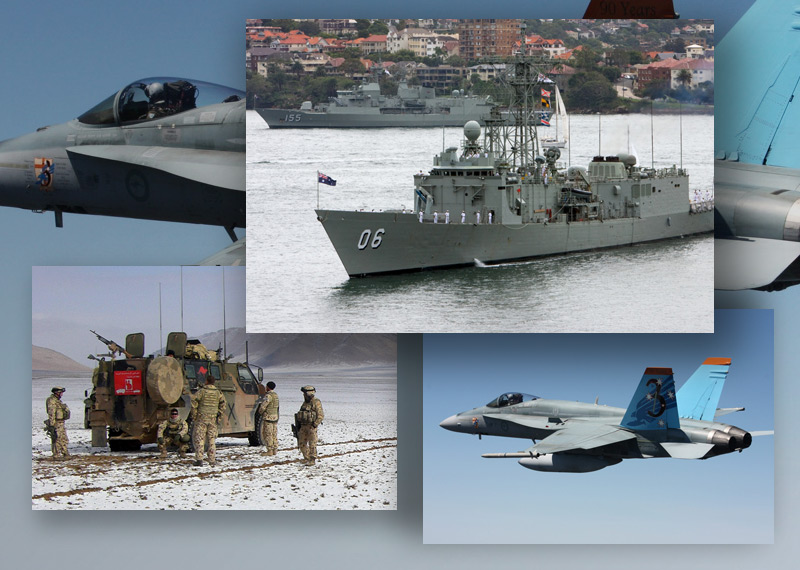
This first Assurance Report on the status of selected Defence equipment acquisition projects, which has the support of the Parliament and the Government, represents a substantial step towards improving transparency and public accountability in major Defence procurement projects. It is the pilot of an annual Defence Materiel Organisation (DMO) Major Projects Report, and was developed in conjunction with the DMO. It covers the cost, schedule and capability progress achieved by nine DMO projects, which had an approved budget totalling $13.535 billion as at 30 June 2008.
This report is organised into three parts. Part 1 comprises an ANAO overview and Auditor–General's Foreword. Part 2 comprises the Major Projects Report prepared by DMO, including an overview reflecting DMO's perspective on their business and on the nine projects included in the. Part 3 incorporates the Auditor-General's Review Report, the statement by the CEO DMO, and the information prepared by DMO in the form of standardised Project Data Summary Sheets covering each of the nine pilot projects.
In the next 12 months, the ANAO will review 15 DMO projects planned for inclusion in the 2008-09 DMO Major Projects Report, with the number of projects rising to 30 projects in subsequent years. The ANAO will also work with DMO to refine the approach adopted for providing assurance on each project's progress toward achieving Final Operational Capability. The ANAO will also consider the inclusion of an analysis of each project's emerging trends, as appropriate, to complement DMO's intention to provide improved analysis of project management performance regarding all projects included in the Major Projects Report.
Entity
Defence Materiel Organisation
Performance audit (Auditor-General Report No. 29 of 2008–09)
Published: Thursday 23 April 2009
Published
The objective of this performance audit of construction projects on the AusLink National Network was to assess the effectiveness of the administration by DITRDLG in working with the States to deliver the outcomes expected by the Government and the broader community. To inform the audit assessment, the methodology included examination of both Australian Government and State Government records as well as site inspections in relation to 21 projects being delivered in three States (New South Wales (NSW), Queensland and Tasmania). DITRDLG and the respective State road transport authorities were consulted in the selection of projects to be examined in detail.
Entity
Department of Infrastructure, Transport, Regional Development and Local Government