Browse our range of reports and publications including performance and financial statement audit reports, assurance review reports, information reports and annual reports.
Performance audit (Auditor-General Report No. 47 of 2006–07)
Published: Thursday 21 June 2007
Published
The objective of the audit was to assess the coordination of Australian Government assistance to Solomon Islands through RAMSI, including the establishment of objectives and an outcomes monitoring framework. In particular, the audit examined arrangements for: coordination between Australian Government agencies; strategic planning and risk management; measuring the effectiveness of RAMSI; and reporting to RAMSI's Australian stakeholders.
Entity
Department of Foreign Affairs and Trade; Australian Agency for International Development
Performance audit (Auditor-General Report No. 32 of 2007–08)
Published: Thursday 8 May 2008
Published
The objective of the audit was to assess the completeness and reliability of the estimates reported in Tax Expenditures Statement 2006 (TES 2006). That is, the audit examined the development and publication of the detailed statement of actual tax expenditures required by Division 2 of Part 5 of the CBH Act. The development and publication of aggregated information on projected tax expenditures included in the Budget Papers pursuant to Division 1 of Part 5 of the CBH Act was not examined.
Entity
Department of Treasury
Performance audit (Auditor-General Report No. 3 of 2007–08)
Published: Thursday 19 July 2007
Published
The audit objective was to form an opinion on the effectiveness of DEST's planning, assessment, and Funding Agreements management for the Australian Technical Colleges programme. At the time of the audit fieldwork (prior to the 2007–08 Budget) the Government had announced the establishment of 21 of the then target of 25 colleges. After fieldwork was completed the Government announced its intention to fund an additional three colleges in three new regions.
The criteria for this audit were designed to test whether DEST's management of the programme complied with its plans, procedures and guidelines, with the Act, and better practices for grants administration. For these purposes, the ANAO focused on DEST's:
- planning for the implementation of the programme;
- assessment of proposals to establish and operate the colleges; and
- management of the Funding Agreements.
Entity
Department of Education, Science and Training
Performance audit (Auditor-General Report No. 6 of 2018–19)

Published: Tuesday 11 September 2018
Published
The objective of the audit was to assess the effectiveness and value for money of Defence’s acquisition of light protected vehicles, under Defence project Land 121 Phase 4.
Entity
Department of Defence
Contact
Please direct enquiries through our contact page.
Performance audit (Auditor-General Report No. 22 of 2019–20)

Published: Tuesday 14 January 2020
Published
The audit objective was to examine the effectiveness of the Department of Defence's administration of the Future Submarine Program to date.
Entity
Department of Defence
Contact
Please direct enquiries through our contact page.
Performance audit (Auditor-General Report No. 53 of 2006–07)
Published: Friday 29 June 2007
Published
The objective of the audit is to examine and report on the efficiency and effectiveness of AFP's administration and management of its overseas deployments. The audit specifically examines two deployments and focuses on strategic and operational planning and logistics. The audit examines a planned, long-term overseas deployment (as part of the Participating Police Force (PPF) within the Regional Assistance Mission to Solomon Islands (RAMSI)) and a crisis-driven deployment in response to a specific event (Disaster Victim Identification (DVI) assistance to Thailand following the Indian Ocean Tsunamis of 26 December 2004).
Entity
Australian Federal Police
Performance audit (Auditor-General Report No. 26 of 2025–26)
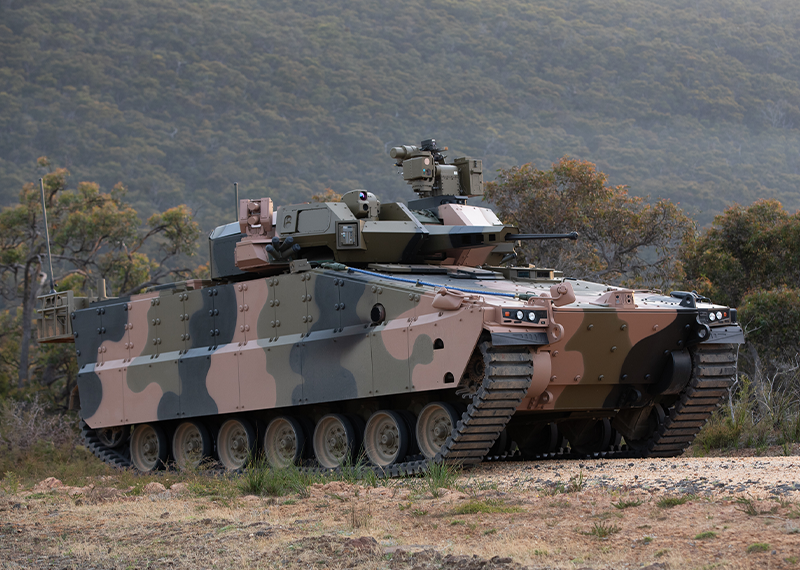
Published: Monday 30 March 2026
Published
The objective of the audit was to assess the effectiveness to date of Defence’s procurement of infantry fighting vehicles under Land 400 Phase 3.
Entity
Department of Defence
Contact
Please direct enquiries through our contact page.
Performance audit (Auditor-General Report No. 40 of 2010–11)
Published: Tuesday 17 May 2011
Published
The objective of the audit was to assess whether Defence is effectively managing the EO Services Contract.
The audit focused mainly on Defence's contract management framework, including the arrangements to monitor the contractor’s performance in delivering services under the contract. The audit also examined the processes used by Defence to develop the current version of the contract and the extent to which the revised contract, as negotiated in 2006, provides an assurance of better value for money when compared to the original contract signed in 2001.
Entity
Department of Defence
Performance audit (Auditor-General Report No. 36 of 2012–13)
Published: Tuesday 21 May 2013
Published
The objective of the audit was to assess the effectiveness of the Commonwealth Environmental Water Office’s administration of environmental water holdings.
Entity
Department of Sustainability, Environment, Water, Population and Communities
Contact
Please direct enquiries relating to reports through our contact page.
Annual report
Published: Thursday 26 September 2002
Published
This annual report documents the performance of the Australian National Audit Office (ANAO) in the financial year ending on 30 June 2002. It includes a comment by the Auditor-General on Audit independence and effectiveness; an overview of the Auditor-General’s role and responsibilities; a report on performance; details about management and accountability, and the financial statement for the year.