Browse our range of reports and publications including performance and financial statement audit reports, assurance review reports, information reports and annual reports.
Performance audit (Auditor-General Report No. 26 of 2012–13)
Published: Thursday 28 February 2013
Published
The objective of the current audit was to assess the effectiveness of remediation arrangements put in place by Defence and the Defence Materiel Organisation (DMO) to resolve issues impacting on the achievement of the desired lightweight torpedo capability. It focuses on project management and contractual arrangements, and the progress made with platform integration and test and evaluation.
Entity
Department of Defence; Defence Materiel Organisation (DMO)
Performance audit (Auditor-General Report No. 15 of 2011–12)
Published: Wednesday 30 November 2011
Published
The objective of the audit was to assess Customs and Border Protection’s use of risk management to assist in the processing of sea and air cargo imports.
Entity
Australian Customs and Border Protection Service
Performance audit (Auditor-General Report No. 43 of 2005–06)
Published: Wednesday 31 May 2006
Published
The overall objective of the audit was to assess whether the RSS Programme is effective and efficient in providing assurance on the levels of payment error and the resultant risks to the integrity of Australian Government outlays for payments administered by Centrelink. Specifically, the audit assessed whether: the RSS Programme meets the objectives outlined for it in the Portfolio Budget Statements under which funding was provided; there is an adequate methodology underpinning the RSS reviews; the RSS reviews are conducted effectively and efficiently, and adequate quality assurance mechanisms exist to assure the results obtained from the RSS reviews; and reporting by the agencies of the results of the RSS Programme is adequate and takes into consideration the issues identified in Audit Report No. 44 2002–03 Review of the Parenting Payment Single Program, and Audit Report No. 17 2002–03 Age Pension Entitlements.
Entity
Department of Family Community Services and Indigenous Affairs; Department of Employment and Workplace Relations; Department of Education Science and Training; Centrelink
Performance audit (Auditor-General Report No. 32 of 2005–06)
Published: Thursday 2 March 2006
Published
The objective of this audit was to assess DIMIA's management of the tender, evaluation and contract negotiation processes for the Detention Services Contract. Specifically, the audit considered DIMIA's processes for determining value for money based on the department's: evaluation of the request for tender, including the announcement of the preferred tenderer; negotiations with the successful and unsuccessful tenderers; and management of liability, indemnity and insurance.
Entity
Department of Immigration and Multicultural Affairs
Performance audit (Auditor-General Report No. 48 of 1997–98)
Published: Monday 22 June 1998
Published
The objective of the audit was to assess the efficiency, effectiveness and accountability of data management by government agencies. The audit focused mainly on data collected by departments and agencies from non-departmental organisations and institutions.
Entity
Across Agency
Speeches and papers
Published: Wednesday 14 October 2009
Published
Mr Ian McPhee - Auditor-General for Australia, presented at the Australian Institute of Company Directors Public Sector Governance Conference
Annual report
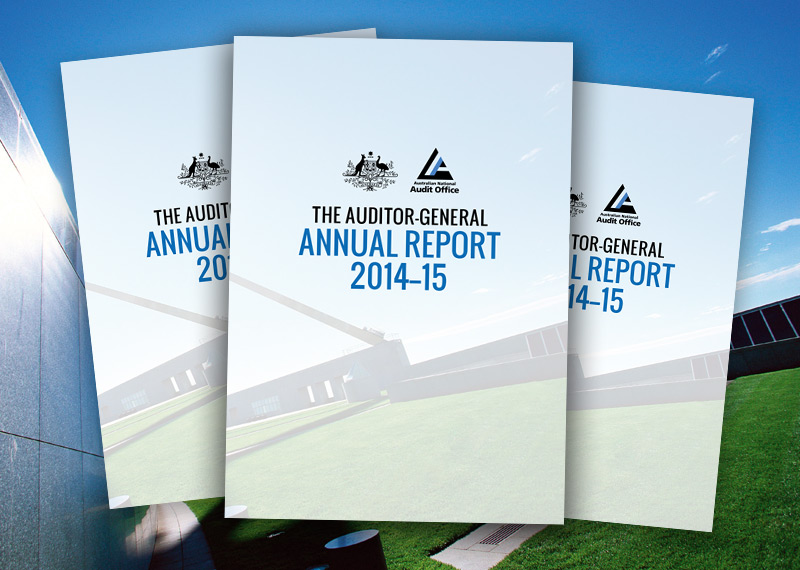
Published: Wednesday 30 September 2015
Published
This annual report documents the performance of the Australian National Audit Office (ANAO) in the financial year ending on 30 June 2015. It addresses the Requirements for Annual Reports for Departments, Executive Agencies and Other Non‑corporate Commonwealth Entities approved by the Joint Committee of Public Accounts and Audit in June 2015; the performance measures set out in the outcome and programs framework in the 2014–15 Portfolio Budget Statements; section 28 of the Auditor‑General Act 1997; and other annual reporting requirements set out in legislation.
Performance audit (Auditor-General Report No. 25 of 2011–12)
Published: Thursday 9 February 2012
Published
The objective of the audit was to assess the effectiveness of the Project Wickenby taskforce in making Australia unattractive for international tax fraud and evasion by detecting, deterring and dealing with the abusive use of secrecy havens by Australian taxpayers.
Entity
Australian Taxation Office, Australian Crime Commission and Australian Federal Police
Performance audit (Auditor-General Report No. 35 of 1996–97)
Published: Tuesday 3 June 1997
Published
The objectives of the audit were to examine the Australian Bureau of Statistics' management of the procedures and processes associated with the planning and operational aspects of the 1996 Census to ascertain: whether the results of the 1991 Census evaluations were used to improve the 1996 Census; whether the Census could be undertaken more efficiently while still yielding data of the required quality; and how privacy concerns were being satisfied by the processes employed. The scope of the audit was limited to reporting on the efficiency and effectiveness of the management by the ABS of the development, collection and initiation of the processing phases of the 1996 Census. The ANAO conducted an assessment of the procedures and processes used in the 1996 Census against the ABS performance indicators and by an examination of ABS documentation. The audit did not seek to review the ABS statistical methodology.
Entity
Australian Bureau of Statistics
Speeches and papers
Published: Monday 16 October 2006
Published
Mr Ian McPhee - Auditor-General for Australia, presented at the launch of the ANAO-PM&C Better Practice Guide: Implementation of Programme and Policy Initiatives