Browse our range of reports and publications including performance and financial statement audit reports, assurance review reports, information reports and annual reports.
Performance audit (Auditor-General Report No. 3 of 2004–05)
Published: Friday 23 July 2004
Published
The objective of the audit was to assess whether selected Commonwealth organisations had utilised better practice principles when establishing the role, and managing the use of their internal audit groups. In order to evaluate internal audit, the Australian National Audit Office (ANAO) first considered the status and accountabilities of internal audit within the overall governance framework of the organisations audited, in particular its accountabilities to the audit committee.
Entity
Department of Defence
Performance audit (Auditor-General Report No. 16 of 2000–01)
Published: Wednesday 29 November 2000
Published
The objective of this audit was to assess the administration of internal fraud control arrangements in the ATO and to identify areas with potential for improvement as well as identified better practice. To achieve this objective the ANAO focussed on five key areas. These were:
- the application of the ATO's corporate governance processes to the internal fraud control activities;
- the prevention of internal fraud within the ATO;
- the related use of information technology to minimise fraud risks;
- the detection of internal fraud within the ATO; and
- ATO fraud investigation procedures and practices.
Entity
Australian Taxation Office
Performance audit (Auditor-General Report No. 18 of 2001–02)
Published: Thursday 1 November 2001
Published
The ANAO examined the performance information in the 2000-01 Portfolio Budget Statements (PBS) for a mix of ten small and large agencies. The objective of the audit was to assess the appropriateness of the performance information in the selected PBS, the reporting of performance information in annual reports and agency arrangements to identify and collect this information.
Entity
Across Agency
Performance audit (Auditor-General Report No. 26 of 2016–17)

Published: Wednesday 23 November 2016
Published
The objective of the audit was to assess the effectiveness of the Australian Prudential Regulation Authority's processes for the prudential regulation of superannuation entities.
Entity
Australian Prudential Regulation Authority
Contact
Please direct enquiries relating to reports through our contact page.
Performance audit (Auditor-General Report No. 3 of 2014–15)

Published: Thursday 30 October 2014
Published
The audit objective was to examine the selected entities’ effectiveness in implementing entity-wide fraud control arrangements, including compliance with the requirements of the 2011 Commonwealth Fraud Control Guidelines (2011 Guidelines), and the overall administration of the fraud control framework by the Attorney-General’s Department.
Entity
Across Entities
Performance audit (Auditor-General Report No. 6 of 1996–97)
Published: Thursday 12 September 1996
Published
The objectives for the audit were to examine Commonwealth guarantees, indemnities and letters of comfort in relation to:
- the potential size of the Commonwealth's exposure to these instruments;
- the extent to which the overall exposures of the Commonwealth are managed and monitored;
- the adequacy of administrative reporting arrangements;
- areas of better administrative practice relating to their management; and
- to raise agencies' awareness of appropriate risk management and accountability practices in relation to these instruments.
The audit set out to quantify the Commonwealth's exposure to guarantees, indemnities and letters of comfort.
Entity
Across Agency
Performance audit (Auditor-General Report No. 34 of 2018–19)
Published: Thursday 18 April 2019
Published
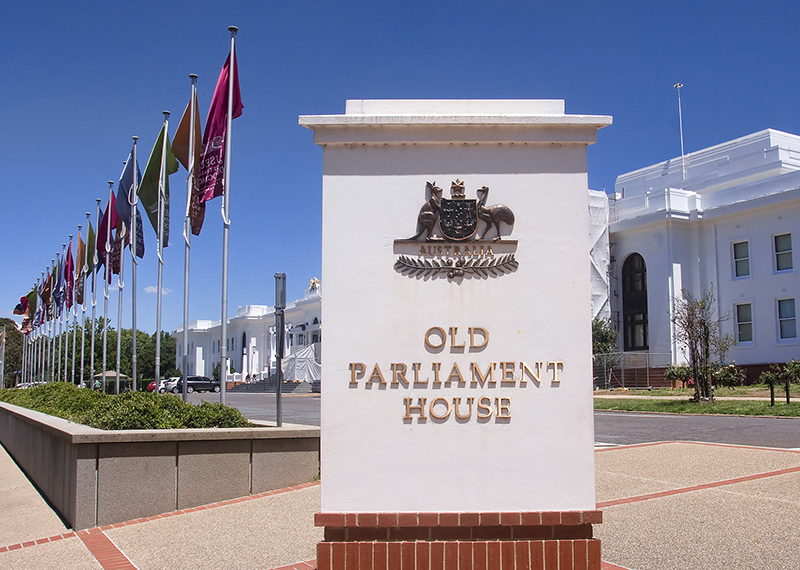
The objective of the audit was to assess the effectiveness of the governance board in Old Parliament House.
Entity
Old Parliament House
Contact
Please direct enquiries through our contact page.
Performance audit (Auditor-General Report No. 41 of 2005–06)
Published: Wednesday 24 May 2006
Published
The audit objective was to assess Health's administration of primary care funding, with a focus on the administrative practices of the Primary Care Division and Health's State and Territory Offices. In forming an opinion on the audit objective, the ANAO reviewed 41 agreements, with a combined value of $252 million. The ANAO also reviewed relevant documentation and files, interviewed programme officers and met with a number of stakeholders. The audit comments on a range of issues, including the utility of funding agreements, monitoring, payments, and support for administrators.
Entity
Department of Health and Ageing
Performance audit (Auditor-General Report No. 30 of 2007–08)
Published: Thursday 24 April 2008
Published
The objective of the audit was to evaluate the Tax Office's corporate management of data matching, including analytics.
The ANAO examined the Tax Office's strategic goals and governance arrangements for data matching and analytics, its compliance with privacy requirements and whether the Tax Office is achieving intended results, which include revenue collection, optimised compliance and provision of improved services to taxpayers.
Tax Office executives have been increasingly drawing on the interrelationships and conceptual commonalities of Tax Office data matching and analytics activity. Accordingly, the audit included these relationships and conceptual commonalities within the scope of the audit. The audit was guided, therefore, by a broader definition of ‘data matching': meaning ‘finding relationships and patterns in large volumes of data'. This includes the more traditional idea of data matching as ‘bringing together data from different sources and comparing it'.
Entity
Australian Taxation Office
Speeches and papers

Published: Wednesday 8 August 2018
Published
Grant Hehir, Auditor-General for Australia, attended the 18th Meeting of INTOSAI Working Group on Environmental Auditing in Bundung Indonesia in July 2018, and presented a keynote address titled Sharing experience on auditing urban environmental management. The accompanying paper to the speech is available here.
Contact
Please direct enquiries through our contact page.