Browse our range of reports and publications including performance and financial statement audit reports, assurance review reports, information reports and annual reports.
Performance audit (Auditor-General Report No. 24 of 2006–07)
Published: Wednesday 7 February 2007
Published
The objectives of the audit were to:
- examine Customs' management of the CMR project; and
- determine whether the ICS and CCF met:
- project and operational objectives; and
- user capability and functionality requirements.
Particular emphasis was given to the following areas:
- the project management framework that supported the CMR project;
- implementation arrangements for the ICS; and
- ongoing operational arrangements.
After this audit commenced, Customs engaged Booz Allen Hamilton to undertake a separate review of the ICS. The purpose of that review was to provide Customs with a forward looking report on the lessons to be learned from the implementation of the ICS, its current status and the opportunities to enhance benefits for both Government and industry. The ANAO consulted closely with the Booz Allen Hamilton team and is supportive of the recommendations in their report, which was released in May 2006. The review made thirteen recommendations relating to the ongoing management and governance of the Cargo Management Re-engineering Program at both strategic and tactical levels.
Entity
Australian Customs Service
Performance audit (Auditor-General Report No. 53 of 2002–03)
Published: Monday 23 June 2003
Published
In January 2000, the ANAO published a Better Practice Guide (BPG) Business Continuity Management, Keeping the wheels in motion (the Guide). The Guide established that the objective of Business Continuity Management (BCM) is to ensure the uninterrupted availability of all key business resources required to support essential (or critical) business activities. This is achieved by organisations building resilience (controls and redundancy) into business operations to prevent, or minimise, the likelihood of business continuity risks occuring and, also, developing plans that minimise the impact should they occur. The primary objective of this audit was to examine BCM arrangements across four Commonwealth organisations, to assess whether their existing BCM frameworks ( or frameworks under development) exhibit the principles espoused in the Guide. At the Commonwealth - wide level, the ANAO considered the continuing relevance of the principles presented in the Guide.
Entity
Across Agency
Annual report
Published: Thursday 16 October 2008
Published
This annual report documents the performance of the Australian National Audit Office (ANAO) in the financial year ending on 30 June 2008. It includes highlights and areas of focus for the coming year; a forward by the Auditor-General; an overview of the report; a report on performance; details about management and accountability, and the financial statement for the year.
Performance audit (Auditor-General Report No. 59 of 2001–02)
Published: Thursday 20 June 2002
Published
The overall objective of the audit was to assess AusAID's management of commercial contracts to deliver Australia's overseas aid program. To this end, the audit examined whether:
- there are sound supporting structures for contract management;
- AusAid effectively manages risks;
- contracts clearly define deliverables;
- services are delivered and payments are made in accordance with the contract;
- there are appropriate arrangements to manage contractor performance;
- strategies appropriately assess and allocate risk between AusAid and contractors; and
- contracts deliver the desired aid outcomes.
Entity
Australian Agency for International Development (AusAID)
Annual report
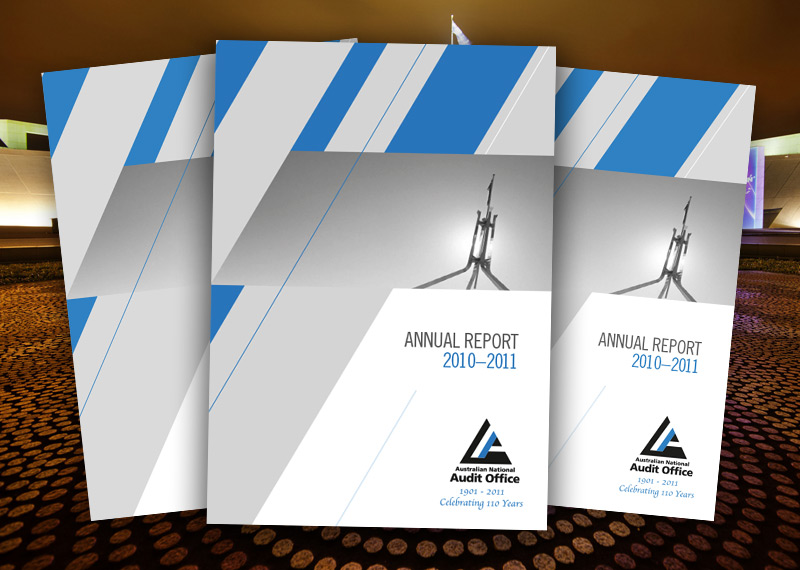
Published: Friday 30 September 2011
Published
This annual report documents the performance of the Australian National Audit Office (ANAO) in the financial year ending on 30 June 2011. It includes a foreword by the Auditor-General, an overview including the role and vision of the Office, a report on performance, details about management and accountability, and the financial results.
Performance audit (Auditor-General Report No. 13 of 2002–03)
Published: Wednesday 23 October 2002
Published
This benchmarking study was a follow on from ANAO Report No. 14 of 2000-01, Benchmarking the Internal Audit Function, which was published in October 2000. The objective of the study was to obtain and report qualitative and quantitative data on aspects of the internal audit function and compare the public sector internal audit results with equivalent international data to identify better practices and highlight areas for improvement.
Entity
Across Agency
Performance audit (Auditor-General Report No. 42 of 1998–99)
Published: Wednesday 26 May 1999
Published
The objective of the audit was to examine the effectiveness and efficiency of the administrative arrangements for the establishment and operation of the Green Corps program. Green Corps is a voluntary program for young Australians between 17 and 20 years old to receive accredited training in a range of skills such as bush regeneration and habitat protection. The program is delivered through a contractual arrangement. It was introduced in 1996 with a program allocation of $41.7 million over three years. The focus of the audit was on the Department of Education, Training and Youth Affair's administration of the program, including the management of the contract.
Entity
Department of Education, Training and Youth Affairs
Performance audit (Auditor-General Report No. 2 of 2012–13)
Published: Thursday 30 August 2012
Published
To assess the effectiveness of the Department of Broadband, Communications and the Digital Economy’s (DBCDE’s) administration of the Regional Backbone Blackspots Program (RBBP), involving the establishment and ongoing management of the program.
Entity
Department of Broadband and Communications and the Digital Economy
Performance audit (Auditor-General Report No. 12 of 2011–12)
Published: Thursday 10 November 2011
Published
The objective of the audit was to assess the effectiveness of the implementation of the NPARIH in the Northern Territory from the perspective of the Australian Government.
Entity
Department of Families, Housing, Community Services and Indigenous Affairs
Performance audit (Auditor-General Report No. 48 of 2012–13)
Published: Wednesday 19 June 2013
Published
The objective of the audit was to assess the effectiveness of the Department of Families, Housing, Community Services and Indigenous Affairs' (FaHCSIA) administration and management of the Targeted Community Care (Mental Health) Program.
Entity
Department of Families, Housing, Community Services and Indigenous Affairs
Contact
Please direct enquiries relating to reports through our contact page.